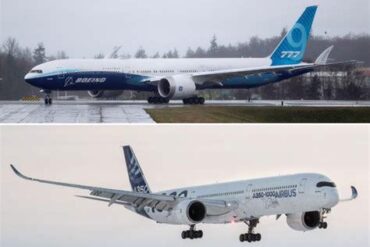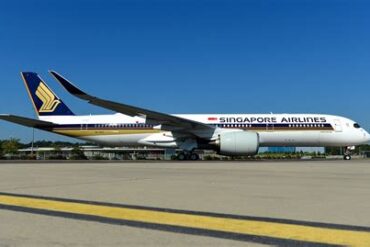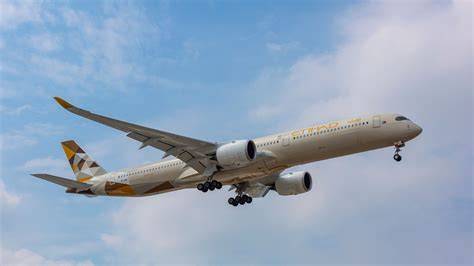
The Airbus A350-1000 and Boeing 777-300ER represent two generations of long-haul aircraft engineering, each designed to dominate the world’s most demanding international routes. Both aircraft are capable of flying thousands of miles across oceans while carrying hundreds of passengers and significant cargo loads. However, when it comes to maximum range, the newer Airbus A350-1000 holds a clear advantage over the long-established Boeing 777-300ER.
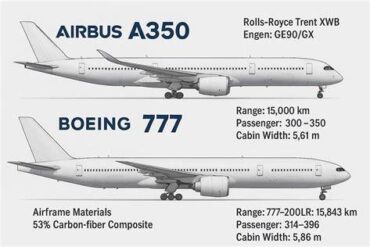
The A350-1000 has a published maximum range of approximately 8,700 nautical miles (16,100 kilometers), while the 777-300ER is rated at around 7,370 nautical miles (13,649 kilometers). On paper, this gives Airbus’ flagship twin-engine widebody a difference of about 1,330 nautical miles (2,463 kilometers), representing a range advantage of roughly 15–17 percent.
However, aircraft range is not determined by a single number printed on a specification sheet. Real-world airline operations involve complex factors such as passenger loads, cargo demand, weather conditions, fuel requirements, and route planning. While the A350-1000 offers greater theoretical range, the Boeing 777-300ER remains one of the most capable long-haul aircraft ever produced and continues to serve many of the world’s busiest international routes.
Airbus A350-1000 vs Boeing 777-300ER: Two Generations of Long-Haul Aircraft
The Airbus A350-1000 and Boeing 777-300ER were created with different philosophies in mind. Airbus developed the A350-1000 as a next-generation replacement for older four-engine and large twin-engine aircraft, focusing heavily on efficiency, lightweight construction, and reduced operating costs.
The Boeing 777-300ER, meanwhile, emerged as an evolution of the highly successful 777 family. Introduced in the mid-2000s, it quickly became one of the most popular aircraft for airlines operating high-capacity international routes. Its combination of enormous passenger capacity, powerful engines, and excellent reliability made it a preferred choice for carriers such as Emirates, Qatar Airways, Singapore Airlines, and many others.
The two aircraft occupy a similar market segment but represent different eras of aviation technology. The A350-1000 uses advanced composite materials, modern aerodynamics, and newer-generation engines to improve efficiency. The 777-300ER relies on proven engineering, a strong airframe, and the unmatched power of its General Electric GE90 engines.
Both aircraft can connect major global hubs including London Heathrow, Dubai International, Singapore Changi, Los Angeles International, and Sydney Kingsford Smith. Their ability to operate nonstop intercontinental services has made them essential tools for airlines competing in the global aviation market.
Published Range Numbers: Airbus A350-1000 Takes the Lead
According to Airbus specifications, the A350-1000 maximum range reaches 8,700 nautical miles, placing it among the longest-range commercial aircraft currently available. This capability allows airlines to consider routes that require exceptional endurance, including potential ultra-long-haul connections between Asia, North America, and Europe.
The Boeing 777-300ER, although older, remains extremely competitive with its 7,370 nautical mile range. Its capability is still sufficient for the vast majority of long-haul missions operated today. Many airlines continue to use the aircraft on routes exceeding 12 hours because of its excellent payload capability and operational reliability.
The numerical difference between the two aircraft appears substantial when viewed purely through specifications. The A350-1000 can theoretically fly about 2,463 kilometers farther than the 777-300ER. That additional distance could create opportunities for new nonstop routes or allow airlines to carry more fuel reserves without sacrificing payload.
However, maximum range figures represent ideal conditions. Manufacturers calculate these numbers based on specific assumptions involving aircraft weight, fuel quantity, cruising altitude, and operating conditions. Airlines rarely operate aircraft exactly at those limits because commercial aviation requires balancing profitability and performance.
Real-World Range: Why the Difference Becomes Smaller
Although the A350-1000 has a published range advantage, actual airline operations reveal a much more complicated picture. A flight’s achievable distance depends on numerous variables that can change from one day to another.
Long-haul flights are particularly affected by wind conditions. Strong headwinds over the Atlantic or Pacific Ocean can significantly increase fuel consumption, reducing effective range. Conversely, favorable tailwinds can improve performance and allow aircraft to complete longer routes with less fuel usage.
Passenger demand also plays a major role. A fully booked aircraft carrying heavy baggage and cargo may have less practical range than an aircraft flying with fewer passengers. Airlines must constantly balance revenue-generating payload with fuel requirements.
For example, a carrier operating a long-distance route may choose to reduce cargo loading to maintain nonstop capability during challenging weather conditions. This means that the theoretical range advantage of the A350-1000 does not always translate directly into a major operational difference.
In many situations, the Boeing 777-300ER can perform similar missions because its slightly lower range remains sufficient for existing global networks. Airlines typically design routes around realistic operating conditions rather than maximum aircraft capability.
Why the Airbus A350-1000 Has Greater Range
The A350-1000’s range advantage comes largely from its modern engineering approach. One of the aircraft’s most important features is its extensive use of carbon-fiber-reinforced polymer composites.
These lightweight materials reduce structural weight while maintaining strength and durability. A lighter aircraft requires less fuel to achieve the same performance, allowing more energy to be used for carrying passengers, cargo, or additional fuel.
The A350-1000 also benefits from its highly optimized wing design. The aircraft features advanced aerodynamics designed specifically for efficient long-distance cruising. Its wings provide excellent lift performance while reducing aerodynamic drag.
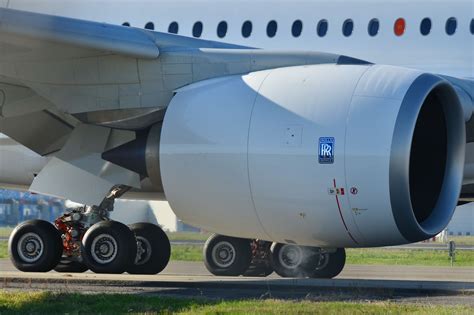
Powering the aircraft are Rolls-Royce Trent XWB engines, which were developed specifically for the A350 family. These engines deliver high efficiency and lower fuel consumption compared with previous-generation powerplants.
The Boeing 777-300ER uses the legendary GE90-115B engines, among the most powerful commercial aircraft engines ever built. These engines provide exceptional thrust and allow the aircraft to carry enormous payloads. However, the aircraft’s older design means it cannot match the A350-1000’s combination of lightweight construction and aerodynamic efficiency.
Payload Capacity: Where the Boeing 777-300ER Fights Back
Range is only one part of aircraft performance. Airlines also consider payload capacity, and this is where the Boeing 777-300ER remains highly competitive.
The 777-300ER has a higher maximum takeoff weight of approximately 775,000 pounds (351,534 kilograms) compared with the A350-1000’s 679,000 pounds (308,000 kilograms). This additional weight capability gives Boeing’s aircraft advantages when carrying heavy passenger loads and large amounts of cargo.
Cargo revenue is especially important on international routes. Many airlines use the 777-300ER because it can transport significant belly cargo while still carrying hundreds of passengers. For freight-heavy markets, this capability can offset the aircraft’s lower fuel efficiency.
The A350-1000 takes a different approach. Instead of maximizing payload, it focuses on improving efficiency and reducing operating costs. This makes it attractive for airlines seeking lower fuel consumption, fewer emissions, and improved economics on long-distance passenger routes.
The difference highlights an important reality in aviation: the aircraft with the longest range is not always the most profitable aircraft for every mission.
Passenger Capacity and Operational Flexibility
Both aircraft are designed to carry similar numbers of passengers, although exact configurations vary widely depending on airline choices.
The A350-1000 typically accommodates between 350 and 410 passengers, while the Boeing 777-300ER can carry approximately 350 to 450 passengers depending on cabin layout.
Airlines operating premium-heavy configurations may install fewer seats to provide larger business-class cabins, while high-density operators may maximize passenger numbers.
The A350-1000 offers a newer passenger environment with larger windows, lower cabin altitude, higher humidity, and improved air quality. These features are part of Airbus’ strategy to compete not only through efficiency but also through passenger experience.
The 777-300ER remains popular because of its proven reliability and spacious cabin. Many travelers recognize it as one of the most comfortable aircraft for long international flights, particularly when operated with premium seating products.
Final Verdict: A350-1000 Wins Range, But the 777-300ER Remains a Giant
When comparing the Airbus A350-1000 range versus Boeing 777-300ER range, Airbus clearly comes out ahead. With a maximum capability of 8,700 nautical miles compared with 7,370 nautical miles, the A350-1000 offers a meaningful technical advantage.
That additional range demonstrates how far commercial aviation has progressed, allowing airlines to explore longer routes with improved efficiency. The aircraft’s composite structure, advanced aerodynamics, and Trent XWB engines give it a clear edge in fuel economy and endurance.
However, the Boeing 777-300ER should not be considered outdated. Its combination of payload capability, reliability, and operational flexibility has made it one of the most successful long-haul aircraft in history.
For airlines focused on efficiency and future operating costs, the A350-1000 provides a strong advantage. For carriers prioritizing cargo capacity, proven performance, and high passenger volume, the 777-300ER remains an exceptional aircraft.
Ultimately, the A350-1000 wins the range battle, but the Boeing 777-300ER continues to prove that successful airline operations depend on far more than a single specification number.