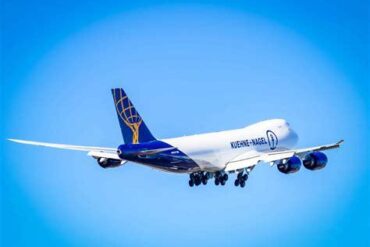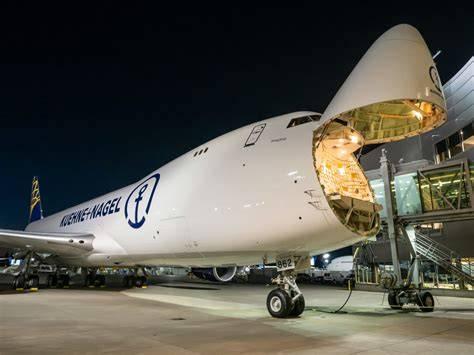
For years, an eighth-floor window overlooking Tan Son Nhat International Airport in Ho Chi Minh City offered one of the world’s most instructive lessons in commercial aviation. Passenger jets cycled through SGN relentlessly, but the Cargolux and Asiana Cargo freighters that appeared between them told a different story: the giant Boeing 747s taxiing slowly past A321s, dwarfing ground vehicles and stoking a sense of awe that few modern aircraft can match. That spectacle is now a vanishing relic. The final 747 was delivered in 2023, closing a production run of roughly half a century and ending the era of the Queen of the Skies as a new-build freighter. In its place stands the twin-engine Boeing 777 Freighter, an aircraft with a smaller payload that nonetheless offers more range, dramatically lower fuel burn, and superior operating economics. Even Boeing now frames the future of freighters as a twin-engine future, and the numbers behind that admission explain why the switch became all but inevitable.
From Supersonic Stopgap to Air Cargo Icon: How the Boeing 747 Shaped Global Freight
The 747 was never meant to be a legend. It was conceived as a short-term bridge between conventional jet travel and the supersonic airliners that manufacturers expected to dominate long-haul skies within a decade. Pan American World Airways operated the type’s first scheduled commercial service on January 22, 1970, carrying 335 passengers and 20 crew members from New York’s John F. Kennedy International Airport to London Heathrow, a flight that redefined scale in civil aviation. Boeing records that more than 100 customers purchased 1,574 aircraft, logging over 118 million flight hours and nearly 23 million flight cycles across the program’s life. Few machines in industrial history have touched as much of the world.
Its iconic silhouette carries a direct link to military logistics. The high fuselage and elongated body formed the heart of Boeing’s heavy-lift proposal to the U.S. Air Force during the 1960s, a competition Lockheed ultimately won with the C-5 Galaxy. When Boeing adapted the concept for the commercial market, the rear ramp and high wing gave way to a conventional layout, yet the ability to load freight through the nose survived. That requirement pushed the cockpit above the main deck and created the distinctive hump and upper-deck cabin that turned an engineering compromise into the most recognizable profile in aviation.
Boeing’s early embrace of cargo handling produced a freighter lineage almost from the outset. The first dedicated cargo variant, the 747-200F, was delivered to Lufthansa on March 9, 1972, a moment that opened a new chapter in air freight. The 200F could lift roughly 231,485 lb (104,999 kg) of freight on a single flight, nearly three times the 74,957 lb (34,000 kg) accommodated by its predecessor, the 707 Freighter. Despite higher fuel and capital costs, that payload capability made the jumbo freighter considerably more profitable across long-haul networks, and it cemented the 747 as the backbone of global cargo operations.
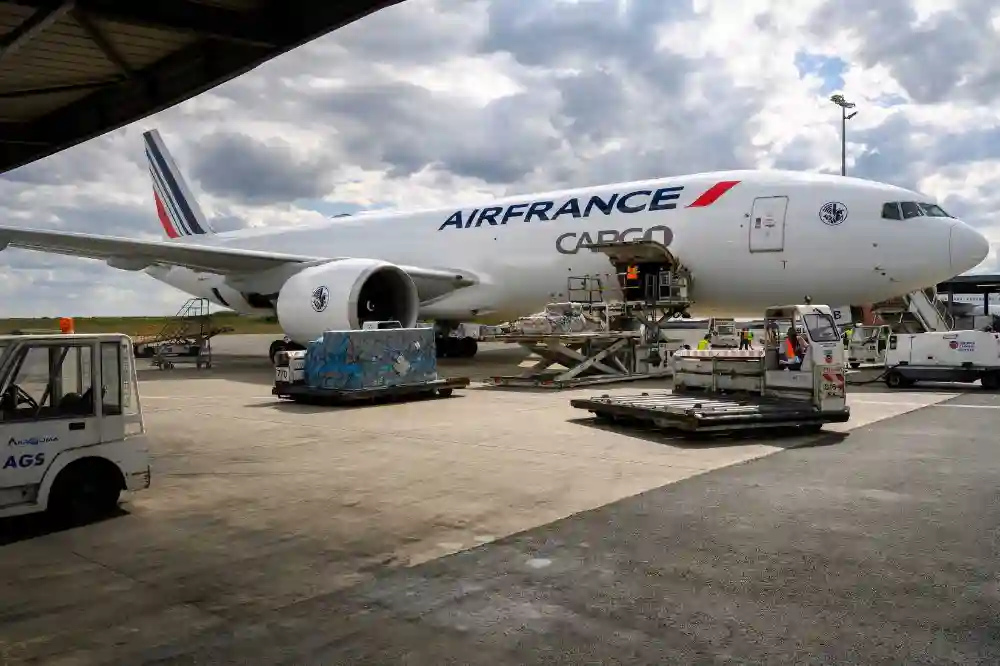
The final purpose-built freighter, the 747-8F, arrived at precisely the wrong moment in market history. Entering a landscape already tilting toward more economical twin-engine designs, it sold 109 units across its 2005–2021 production window, while the 777F accumulated 362 orders after launching in 2009, more than triple the 747-8F’s total in a fraction of the time. The market had already answered the question of which architecture would define the next generation of air logistics, and the answer was not four engines.
Less Is More: Why Twin-Engine Jets Beat the Jumbo Jet on Economics
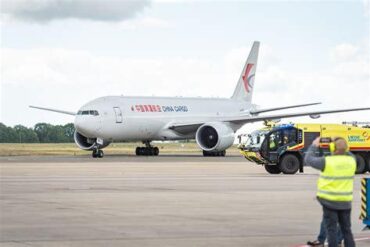
A smaller payload on a larger aircraft seems, at first glance, illogical. The 747-400F lists a maximum revenue payload of 249,100 lb (112,900 kg), while Boeing publishes the 777F’s maximum payload at 235,895 lb (107,000 kg), a gap of roughly 13,000 lb in the jumbo’s favor. That narrow advantage evaporates once range and fuel efficiency enter the equation. Atlas Air records the 747-400F’s maximum design range at 4,455 nautical miles (8,250 km), roughly the span between New York and Istanbul, against the 777F’s 5,000 nautical miles (9,260 km) at its full 107,000 kg payload, a distance comparable to Los Angeles to London. The twinjet carries barely less while flying meaningfully farther, allowing carriers to pair distant city pairs without technical stops or payload penalties.
Fuel economics widen the separation. While the Government Accountability Office’s observation that the 777 can be up to 30 percent more fuel-efficient than older 747 models compares passenger aircraft on a per-seat basis rather than dedicated freighters, the direction of the gap holds across the freighter fleet. Two engines rather than four mean fewer hours of engine maintenance, lower overhaul costs, and less burned kerosene on every sector. In an industry with razor-thin margins, operating economics rather than raw capacity became the deciding variable. The 777F’s rise reflects that shift with unusual clarity: Boeing’s twinjet carried US$4 trillion in global trade during 2025, represents roughly 40 percent of global freighter capacity, and has overtaken the 747 as the most widely operated freighter type in the world.
Boeing’s 2045 Forecast: A Freighter Fleet of 4,000 Aircraft
Boeing’s October 28, 2026 outlook projects that global air cargo traffic will double over the next two decades, driving the worldwide freighter fleet beyond 4,000 aircraft by 2045. The company attributes that expansion to time-sensitive shipments for advanced manufacturing and AI hardware, diversifying supply chains, and rising e-commerce volumes, alongside carriers adapting route networks to shifting trade lanes and geopolitical disruption. From 2,395 freighters operating in 2025, the fleet is expected to reach 4,010 airframes by 2045, growth of roughly 67 percent. Boeing also forecasts that dedicated freighters will carry more than half of global air cargo traffic in the long term, a striking reversal for a sector where belly capacity on widebody airliners has long done much of the lifting.
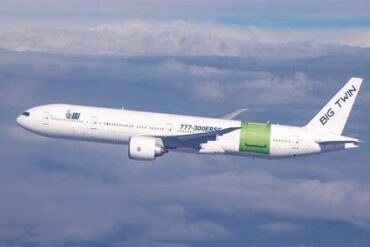
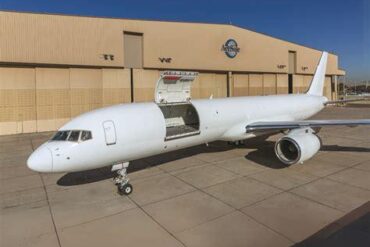
Freighter deliveries are forecast at 2,900 aircraft, with approximately 45 percent replacing retiring airplanes and the remainder expanding the fleet. About two-thirds of new builds will be converted passenger aircraft, and nearly 60 percent of those conversions will come from the standard-body family, a reminder that the freighter market is far broader than long-haul jumbos. Efficiency is also stretching capacity without new airframes: the 777-300ERSF conversion, developed by Israel Aerospace Industries with GE Capital Aviation Services, converts passenger 777-300ERs into freighters with a 180,000 lb payload and about 25 percent more capacity than existing twins. Boeing’s own 20-year forecast sees a market of $14.2 trillion through 2045, a scale that rewards every percentage point of cost saved.
Diversified Supply Chains Are Multiplying Demand for Air Freight
The demand story extends well beyond e-commerce. The COVID-19 pandemic exposed how heavily global manufacturing depended on a single export hub, and corporations have responded by repositioning production. Northeastern University’s Center for Emerging Markets reports that sixty percent of American and European companies are now seeking to relocate suppliers and production facilities closer to home or diversify their sources of supply to blunt future shocks. China remains a manufacturing powerhouse, but Vietnam and India have emerged as credible additional centers for electronics, apparel, and components. Every new factory floor needs an air bridge, and dispersed production means more city pairs, more frequencies, and more dedicated freighters rostered on lanes that once barely existed.
Supply chain diversification also reshapes fleet planning. Hub-and-spoke freight networks built around a handful of mega-hubs are giving way to point-to-point connectivity between secondary manufacturing cities and consumer markets, routes where the 747’s colossal payload rarely makes economic sense but a twin-engine freighter’s efficiency and range do. That structural change helps explain why Boeing expects deliveries to skew toward converted standard-body aircraft, which feed regional and domestic express networks, alongside long-haul twins serving intercontinental trade. The aircraft mix is becoming as varied as the trade lanes it serves.
The 777-8F and GE9X Engines: Boeing’s Next Freighter Generation
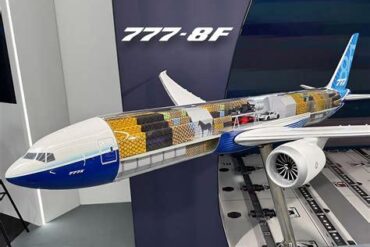
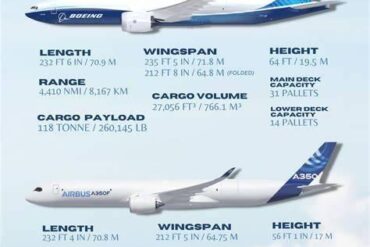
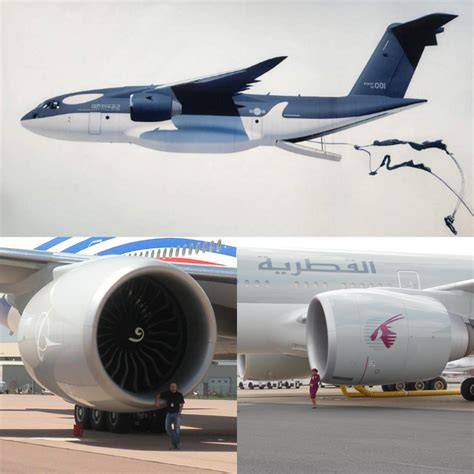
The 777F remains in demand, and Boeing’s successor is already positioned to extend its dominance. The 777-8F will offer a maximum structural payload of 260,145 lb (118,000 kg), making it the highest-capacity twin-engine freighter ever built, while powered by the new GE9X engines. Boeing projects the aircraft will deliver a 30 percent reduction in fuel consumption and CO2 emissions compared with the 747-400F, combining the payload of a jumbo with the efficiency profile of a modern twin. Commercially, Emirates has committed to the 777-8F for Emirates SkyCargo, Qatar Airways placed a large 777-8F order, and Boeing has simultaneously launched the 777-200LR conversion program, ensuring the existing 777 fleet continues feeding express and regional networks.
The 747’s legacy therefore does not disappear so much as evolve. The capabilities that once justified four engines, including enormous payload and nose-loading access, are being re-engineered into twin-engine platforms that burn less fuel, emit less carbon, and cost less to maintain. For airlines weighing fleet renewal against volatile fuel prices and tightening emissions rules, the calculation favors the twinjet every time.
The End of the Queen of the Skies and the Twin-Engine Future of Freight
Watching a 747 freighter lumber across the apron at Tan Son Nhat once felt like witnessing aviation history in motion. It now reads as an epilogue. With production closed, the world’s remaining jumbos will serve out their lives in cargo and charter roles before retiring to museums and storage deserts. The twin-engine freighter is no longer the future of air freight in theory; it is the present standard, and the 777F, the 777-8F, and the converted 777-300ERSF will carry the bulk of global trade as air cargo demand doubles toward 2045. Boeing’s own market data, from the 40 percent capacity share held by the 777F to the projected 4,010-aircraft fleet, says plainly what the industry already concluded: bigger is not better when efficiency, range, and economics decide who wins the world’s freight.