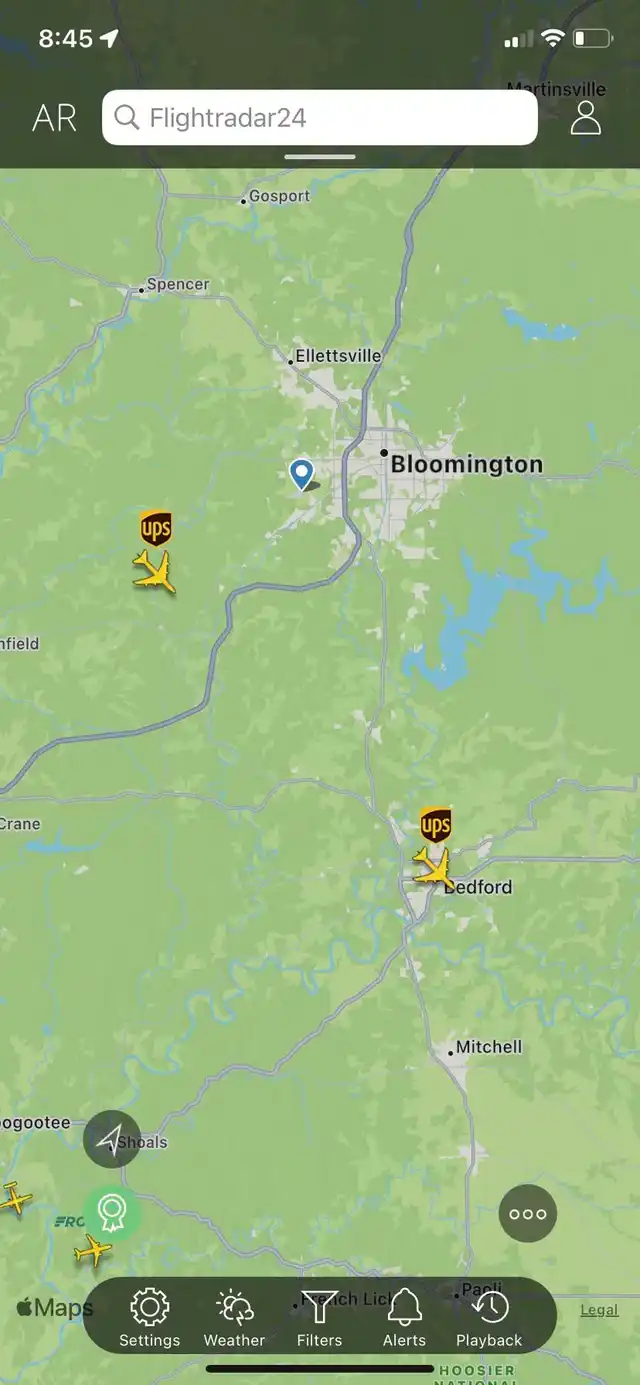
The sight of two UPS Boeing 747 freighters flying closely together might prompt curiosity from casual observers and seasoned aviation enthusiasts alike. While the visual of these giants soaring in parallel through the skies may appear unusual, there are precise logistical, operational, and strategic reasons behind such patterns. This is not a random occurrence, nor is it merely a quirk of coincidence — it’s a reflection of UPS’s high-efficiency global cargo network, primarily anchored between Asia, Anchorage, and Louisville.
Anchorage: The Linchpin in the Pacific Cargo Network
The city of Anchorage, Alaska plays a pivotal role in the logistics chain of many cargo airlines, and UPS is no exception. Strategically located at the crossroads of transpacific air routes, Anchorage serves as a natural refueling, crew transition, and consolidation point for aircraft traveling between Asia and the United States.
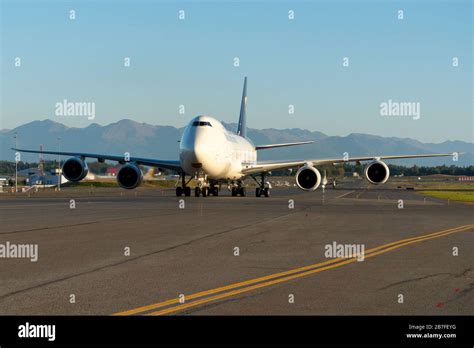
UPS frequently utilizes Ted Stevens Anchorage International Airport (ANC) as a halfway point for flights originating in East Asia — including hubs such as Tokyo, Shenzhen, and Seoul. The importance of Anchorage lies in its:
- Proximity to Asia, minimizing air time before a fuel stop
- Favorable air traffic conditions, reducing delays
- 24-hour cargo operations infrastructure, ideal for night-time logistics
- UPS crew base, allowing crew changes without complex repositioning
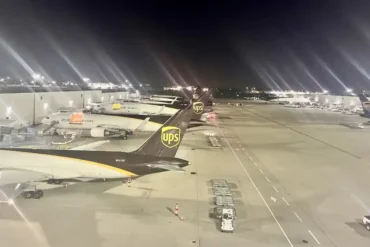
For example, it is common to see multiple 747-400Fs departing Asia within minutes of each other, all converging at Anchorage before continuing onward. Thus, if two UPS 747s appear to fly together, it’s likely they just completed refueling or crew swaps at ANC and are now continuing as part of a larger nightly push to UPS’s primary hub in Louisville, Kentucky (SDF).
Louisville: The Beating Heart of UPS Logistics
Louisville Muhammad Ali International Airport (SDF) — more specifically, the UPS Worldport facility — is one of the largest automated package handling facilities on Earth. Capable of processing over 400,000 packages per hour, this hub operates nearly around the clock.
To meet this demand, flights must arrive in narrow, tightly coordinated time windows, particularly for the overnight sort. Cargo aircraft from across the world converge here in timed streams so that packages can be:
- Unloaded and sorted
- Rerouted to outbound aircraft
- Loaded for delivery within a few hours
The UPS 747s that fly closely together from Anchorage to Louisville are not just companions in the sky — they are part of a carefully choreographed logistics ballet. They typically launch from ANC in 15-30 minute intervals, ensuring their arrival aligns with sorting operations in Louisville.
Shared Origins, Shared Destinations
In many cases, the closely flying UPS 747s come from different Asian origins. One might depart from Tokyo Narita (NRT), the other from Shenzhen Bao’an International Airport (SZX), both converging at ANC and then departing in quick succession for SDF. This pattern reflects the hub-and-spoke strategy of global cargo airlines.
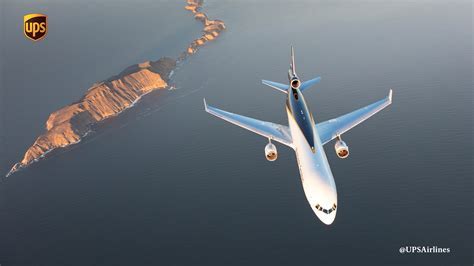
Each aircraft carries time-sensitive cargo from different regions, but both need to arrive at Louisville in the same processing window. Because they must be synchronized with Worldport’s sorting rhythm, they often:
- Depart ANC within minutes of each other
- Fly identical or parallel routes across the continental U.S.
- Maintain similar airspeeds and altitudes assigned by ATC (Air Traffic Control)
This operational consistency leads to the visual of aircraft seemingly “flying in tandem,” although in practice, they’re separated by standard FAA-required distances.
The Role of Flightradar24 and Perception
To casual users of tracking platforms like Flightradar24, two UPS 747s moving in near-lockstep may spark surprise or amusement. However, the technology only reveals what’s already a well-rehearsed logistical pattern. These are not anomalies; they’re nightly occurrences within a complex network.
According to enthusiasts and industry workers on platforms such as Reddit, it’s common to observe:
- 6 to 8 UPS widebody aircraft departing ANC for SDF each night
- Most of them being 747-400Fs, with some 767s supplementing capacity
- Similar flight numbers, tail IDs, and time stamps for multiple aircraft
These observations align with standard logistics planning, not only for UPS but also for other carriers like FedEx (operating from Memphis), though it should be noted FedEx does not operate 747s.
UPS 747s: Built for Mass Volume and Overnight Pushes
The use of Boeing 747-400F freighters is central to UPS’s ability to carry massive amounts of cargo efficiently across continents. These aircraft are engineered for:
- Maximum payloads of up to 248,000 lbs
- Range exceeding 4,000 nautical miles with full cargo
- High cruising speeds (Mach 0.85)
- Rapid loading/unloading via nose cargo doors
When two or more of these jets operate as a pair on high-priority routes like ANC-SDF, it’s usually because there was simply that much cargo to move — especially during peak demand periods such as Black Friday, Christmas, or even large-scale Amazon promotions.
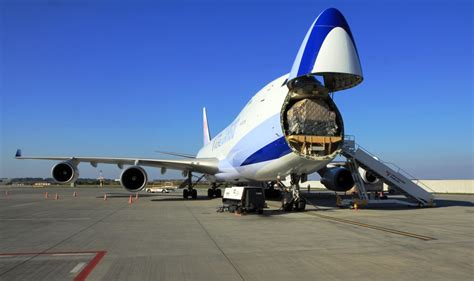
This is not a luxury; it is operational necessity. High demand from Asia, coupled with tight service level guarantees, demands redundancy, reliability, and volume capability, all of which are met by the 747 fleet.
Crew Coordination and Safety Regulations
UPS also benefits from crew base operations in Anchorage, enabling flexible routing and scheduling. FAA regulations governing maximum flight hours and duty periods make ANC a logical place to rotate flight crews. If two 747s leave ANC together, it’s often because:
- Both just completed their regulated rest periods
- A new shift of pilots has taken over
- Airspace slot planning permits a near-simultaneous departure
Additionally, flying in parallel or sequence across high-altitude routes can provide increased ATC efficiency and fuel savings through shared weather data and routing adjustments.
Are They Really Flying Side-by-Side?
In most cases, while two 747s may appear close on radar, they are separated vertically or longitudinally by thousands of feet or several nautical miles. FAA spacing requirements mandate:
- 5 miles horizontal separation under radar control
- 1,000 feet vertical separation above 29,000 feet
Even if two UPS aircraft appear to be flying “in formation,” they are following distinct ATC clearances. Still, it remains visually impressive when viewed from the ground — especially when their navigation lights twinkle against the night sky, often in tightly grouped patterns.
A Daily Ballet of Global Logistics
What we are witnessing is not a rarity, but rather a nightly manifestation of global commerce at its most synchronized. The dance of multiple UPS 747s over North America is part of a larger strategy: enabling a seamless overnight network that delivers packages to homes and businesses across the country before morning.
As one aviation spotter observed: “They go over my house every night in groups of 2 to 5.” That routine — often unseen or underappreciated — is the backbone of modern supply chains.
Whether it’s electronics from Shenzhen, garments from Ho Chi Minh City, or machine parts from Tokyo, chances are good that the journey included a refueling stop in Anchorage and a tightly timed descent into Louisville.
So next time you glance at the skies and notice two UPS 747s cruising in proximity, know that it’s not happenstance — it’s logistics operating with the precision of a Swiss watch, delivering on a promise of global overnight delivery.