UPS Airports: The Backbone of Global Logistics
UPS Airlines, a subsidiary of United Parcel Service, operates one of the most expansive and sophisticated air cargo networks in the world. With over 500 aircraft under its command and 815 global destinations, the company has redefined the capabilities of air freight logistics. Central to this operation is its robust infrastructure of strategically located UPS airports, which include a mix of primary and secondary domestic and international hubs. These facilities are not mere transit points — they are meticulously engineered nerve centers that enable overnight deliveries, international cargo movement, and time-critical shipping on a global scale.
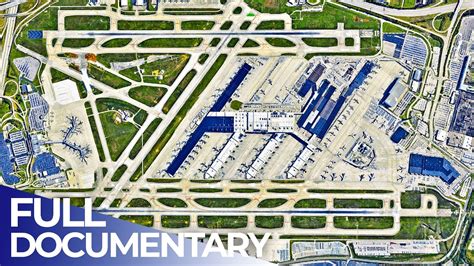
The core of UPS’s airport network revolves around Louisville Muhammad Ali International Airport (SDF) in Kentucky, known within the company as Worldport. Opened in 1980 and subsequently expanded into a 5.2 million square foot cargo powerhouse, Worldport has transformed Louisville into a global epicenter of logistics. It enables automated package sorting at a rate of 416,000 packages per hour, supported by more than 300 flight arrivals and departures daily.
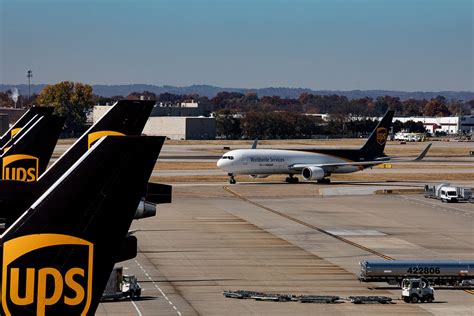
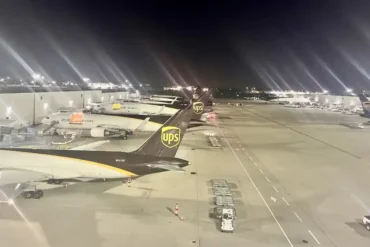
UPS’s second-tier domestic hubs are no less critical. Facilities in Chicago–Rockford (RFD), Philadelphia (PHL), Dallas/Fort Worth (DFW), Columbia (CAE), Ontario (ONT), and Miami (MIA) allow for redundancy, route flexibility, and enhanced regional coverage. These locations are carefully selected for their proximity to industrial corridors and major population centers, reducing linehaul times and optimizing network performance. Each hub is equipped with specialized ground support, dedicated maintenance teams, and “hot spare” aircraft capable of launching within 30 minutes — a contingency system unique to UPS.
From Blue Label Air to Global Hubs: A Historical Perspective
UPS’s aviation journey began humbly between 1929 and 1931 when it relied on Ford Trimotors for shipping. However, the Great Depression ended this early experiment. The next significant chapter arrived in the 1950s with the “Blue Label Air” service, using passenger airlines to achieve coast-to-coast delivery in two days. By 1975 and 1976, UPS expanded into Canada and West Germany, foreshadowing its international ambitions.
The 1980s marked a pivotal transformation. The launch of Next-Day Air in 1982 coincided with the formation of strategic partnerships with Evergreen and Orion. These relationships laid the groundwork for what would become UPS Airlines in January 1988 — a fully certified airline under FAA Part 121. That same decade also saw the establishment of a sorting hub in Anchorage, Alaska, which acted as a critical trans-Pacific link, especially for operations involving Asia-bound freight.

By the mid-1990s, UPS was flying into 41 countries, and new aircraft types such as the Boeing 757 and 767 freighters were integrated into the fleet. The company also launched several domestic hubs, including Rockford and Philadelphia. In 1999, the first major expansion of Worldport began, doubling the facility’s size to 4 million square feet by 2002. A further expansion in 2010 pushed it to its current footprint, cementing its status as one of the largest automated package handling facilities on Earth.
Modern Operations: The Engineering Behind Efficiency
Today, UPS Airports are marvels of logistics engineering. The Worldport hub alone handles over 300 daily flights, connecting North America to Europe, Asia, and the Middle East. Flights are meticulously choreographed to arrive in narrow windows to maximize package sorting efficiency. Aircraft turnaround times are minimized to under 90 minutes, with automated tugs, scanning systems, and AI-enhanced package routing algorithms streamlining operations.
UPS employs a 14-aircraft “hot spare” program, maintaining two aircraft at each of its seven primary hubs. These aircraft are fully fueled, staffed, and ready to launch within 30 minutes to compensate for any mechanical issues or delays in the scheduled fleet. It’s an approach rarely seen even in the passenger aviation sector.
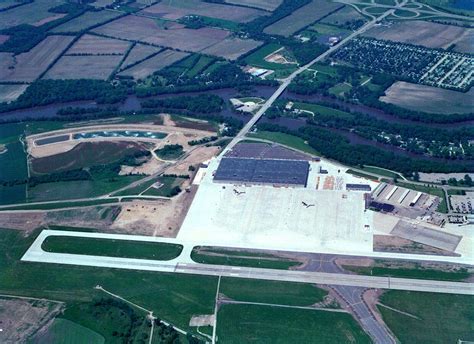
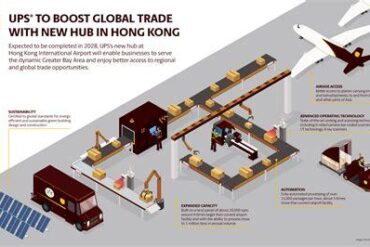
In Europe, Cologne/Bonn Airport (CGN) serves as UPS’s European Air Hub. Strategically located in Germany’s industrial heartland, it provides time-definite delivery options throughout the EU. The East Midlands Airport (EMA) in the UK supports operations post-Brexit and links to transatlantic networks. In Asia, key hubs include Hong Kong (HKG), Shanghai Pudong (PVG), Shenzhen (SZX), and Kuala Lumpur (KUL), with Clark (CRK) in the Philippines recently growing in importance due to e-commerce expansion.
The Fleet: Built for Versatility and Global Reach
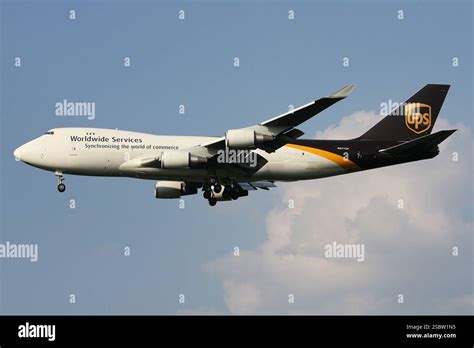
The operational backbone of UPS Airports is its all-jet fleet, comprising more than 290 owned aircraft and 210 leased units. The dominant types include:
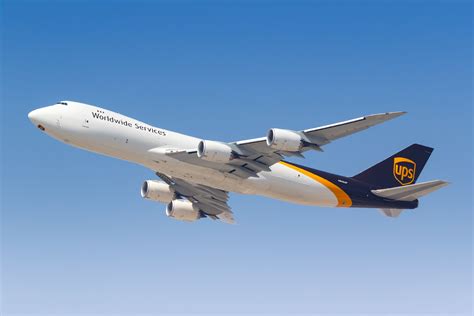
- Boeing 747-8F: UPS is the largest global operator with 30 aircraft
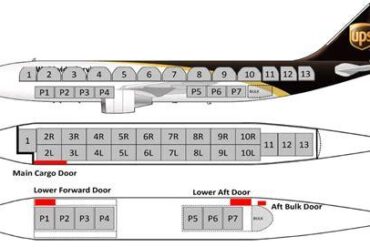
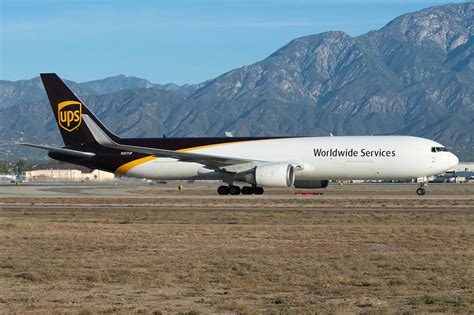
- Boeing 767-300F: Workhorse for both domestic and long-haul international routes
- Boeing 757-200F: Ideal for medium-range cargo missions
- Airbus A300F: Used for high-volume short-haul operations
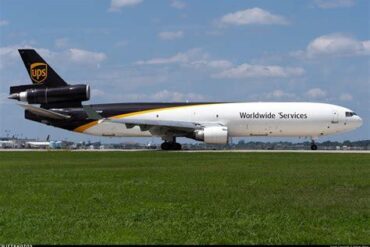
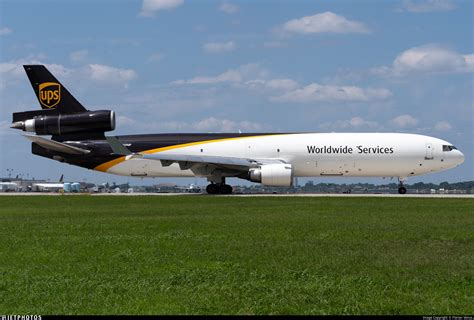
- MD-11F: Being phased out due to higher fuel burn
The company has taken major steps toward fleet modernization, including orders for 19 new 767Fs in 2021 and acquiring secondhand 747-8Fs in 2023. Fuel efficiency and noise compliance have guided recent purchasing decisions, along with payload optimization.
Innovation and Environmental Stewardship
UPS Airports have led innovation in both logistical efficiency and sustainability. The company was among the first to implement Continuous Descent Approaches (CDAs) at Worldport — a landing technique that saves up to 465 pounds of fuel per flight by reducing engine thrust and optimizing glide paths.
Advanced software systems monitor aircraft health, sortation performance, and real-time load factors, ensuring minimal waste and maximizing delivery speed. Electric ground support equipment (GSE), LED lighting, and hybrid belt loaders are now commonplace across UPS air hubs.
Safety Record and Resilience
Despite the complexity of its operations, UPS has maintained a strong safety culture. Over decades of high-frequency flying, only a handful of serious incidents have occurred:
- 2006: DC-8 fire on landing in Philadelphia; no fatalities
- 2010: 747-400F crash in Dubai due to onboard fire; 2 fatalities
- 2013: A300F crash in Birmingham, Alabama; 2 fatalities
- 2016: MD-11F runway excursion in Seoul; no fatalities
These incidents prompted enhancements in fire suppression systems, cockpit procedures, and crew training. Today, UPS Airlines is viewed as an industry benchmark for operational discipline and crew readiness.
FAQ: UPS Airports and Air Cargo Logistics
What is the primary hub for UPS Airlines?
The main hub is Worldport, located at Louisville Muhammad Ali International Airport (SDF). This facility handles more than 300 flights daily and is the central node of UPS’s global package sort and distribution network.
How many airports does UPS operate from globally?
UPS Airlines flies to over 815 destinations, supported by a vast network of primary and secondary hubs across North America, Europe, Asia, and the Caribbean. This includes major facilities in Cologne/Bonn, Hong Kong, and Ontario.
What types of aircraft does UPS use in its fleet?
UPS operates an all-jet fleet primarily composed of Boeing 747-8Fs, 767-300Fs, 757-200Fs, Airbus A300Fs, and a diminishing number of MD-11Fs. The fleet is configured for maximum cargo volume and long-range international service.