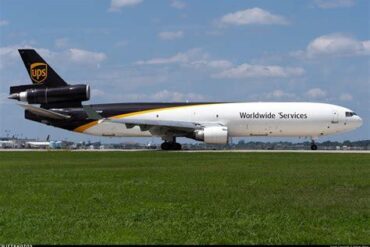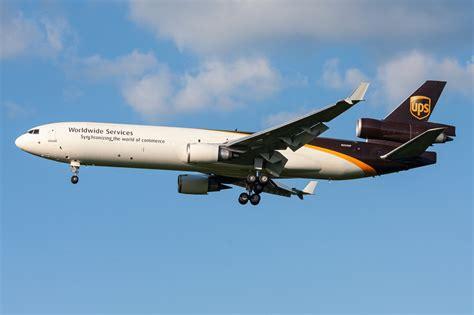
The retirement of the McDonnell Douglas MD-11 from UPS Airlines marks the end of one of the most recognizable chapters in modern cargo aviation. For more than three decades, the tri-engine widebody served as a powerful backbone for global logistics networks, hauling enormous loads across continents while becoming a familiar sight at major cargo hubs.
However, after the November 2025 crash of UPS Flight 2976, the company accelerated the retirement of the entire MD-11 fleet. The decision closed the curtain on a fleet that had once numbered 43 aircraft, though only 26 remained active when the retirement was finalized. While the aircraft had already been scheduled for gradual phase-out, the abrupt decision forced UPS to rethink how it would maintain cargo capacity without its long-standing tri-jet workhorse.
The financial impact was immediate. UPS recorded a $238 million after-tax charge associated with the early retirement of the MD-11s. Yet the strategic question mattered even more than the accounting line item: what aircraft could realistically replace the MD-11’s capabilities in the UPS fleet?
The answer, perhaps surprisingly, does not come from a new generation of freighters but from a long-trusted platform already deeply embedded in the carrier’s operations—the Boeing 767-300F.
The End of the MD-11 Era at UPS Airlines
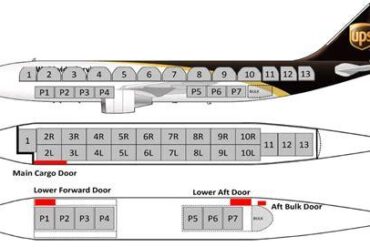
The MD-11 entered service in the early 1990s as the final evolution of the famous DC-10 lineage. Designed as a long-range widebody with three engines, the aircraft promised airlines and cargo operators a balance between capacity and intercontinental performance. For freight carriers, the type proved particularly attractive thanks to its large payload capability and cavernous cargo hold.
UPS quickly became one of the aircraft’s most committed operators. Over the years, the carrier relied heavily on the MD-11 to connect its growing network of hubs in North America, Europe, and Asia. At its peak, the aircraft formed a crucial layer between smaller regional freighters and the massive Boeing 747 cargo jets.
But the MD-11 was born in an era when fuel efficiency and maintenance economics looked very different from today’s standards. Its three-engine configuration, once viewed as an advantage for long overwater routes, gradually became a liability as twin-engine aircraft improved in reliability and efficiency.
Operating three engines means:
- Higher fuel burn
- Greater maintenance requirements
- Increased operating costs per flight hour
In the intensely competitive world of cargo logistics, these disadvantages accumulate rapidly. Over time, modern twin-engine freighters began outperforming tri-jets economically, even if their payload capacity was somewhat lower.
The tragic UPS Flight 2976 crash in 2025 accelerated a decision that had already been forming behind the scenes: the MD-11’s operational era had reached its end.
Why the Boeing 767-300F Became the Natural Successor
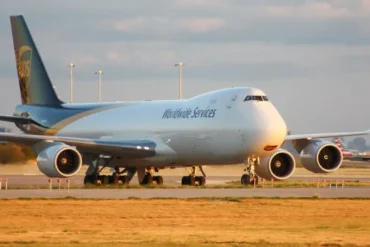
UPS did not have to look far to identify the most practical replacement for its retiring tri-jets. The Boeing 767-300F already represented the largest segment of the airline’s fleet and had long been considered one of the most reliable cargo aircraft ever produced.
In fact, UPS holds a unique place in aviation history as the launch customer for the 767 freighter variant in 1995. Since then, the aircraft has evolved into a cornerstone of the company’s global logistics system.
Today the carrier operates around 100 Boeing 767-300F aircraft, making it the largest operator of the type. An additional 17 aircraft are scheduled for delivery, all part of an earlier order placed in 2022.
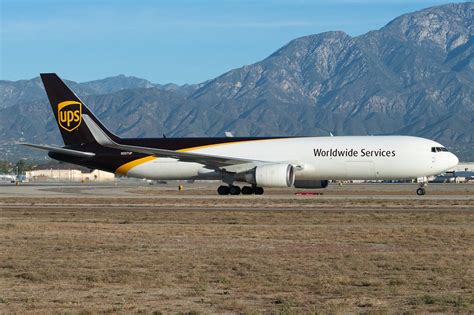
The continued production of the 767 freighter is itself something of an aviation oddity. Passenger versions of the aircraft ceased production in 2014, yet Boeing has continued assembling the cargo variant due to strong demand from express logistics operators such as UPS and FedEx.
UPS leadership has repeatedly emphasized the aircraft’s versatility. According to company executives, the 767 can operate across virtually every region of the UPS network, making it ideal for the carrier’s global hub-and-spoke logistics model.
Several characteristics explain why the aircraft fits so well:
- Efficient twin-engine design
- Moderate payload capacity suited for express shipments
- Excellent range for intercontinental routes
- Proven reliability across decades of operation
Rather than introducing a completely new aircraft type, UPS is expanding the role of a platform it already knows intimately.
Comparing the Boeing 767-300F and the MD-11F
At first glance, replacing the MD-11 with the 767 might appear counterintuitive. The MD-11 is clearly the larger aircraft, capable of carrying substantially more cargo on each flight. Yet the economics of cargo aviation rarely revolve around raw capacity alone.
A closer look at the aircraft specifications highlights the differences between the two designs.
The MD-11F boasts a maximum payload of approximately 201,000 pounds (91.2 tonnes), nearly double that of the Boeing 767-300F, which carries around 116,000 pounds (52.7 tonnes). The tri-jet also features a significantly higher maximum takeoff weight of 630,500 pounds compared with 412,000 pounds for the 767.
In terms of physical dimensions, the MD-11 is longer as well. The aircraft measures 202 feet in length, while the 767 spans roughly 180 feet.
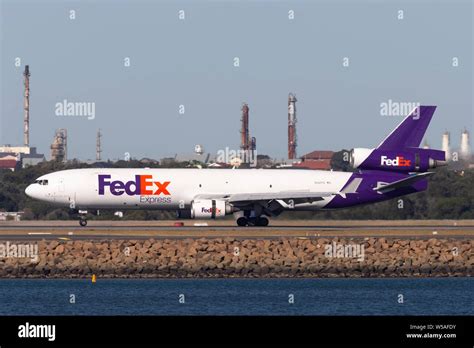
However, these advantages come with substantial operational costs. The MD-11’s third engine, mounted at the base of the vertical stabilizer, increases both fuel consumption and maintenance complexity. Modern twin-engine aircraft like the 767 benefit from decades of advances in engine reliability and efficiency.
Despite carrying less cargo, the 767 can often transport shipments more economically per pound, particularly on routes where demand does not fully justify the MD-11’s massive capacity.
Range figures between the aircraft are also surprisingly close. With maximum payload, the MD-11 can travel roughly 3,533 nautical miles, while the 767 manages around 3,255 nautical miles. For many regional and transcontinental cargo routes, the difference is operationally negligible.
In short, the 767 trades raw capacity for efficiency, and in modern cargo logistics that tradeoff frequently makes sense.
UPS Airlines’ Diverse Cargo Fleet
UPS Airlines operates one of the largest dedicated cargo fleets in the world. As of early 2026, the airline manages approximately 270 aircraft, placing it among the leading integrator carriers alongside FedEx and DHL Express.
The fleet consists of four primary aircraft families that serve different roles within the network.
- Airbus A300-600F – medium-capacity regional freighter
- Boeing 757-200F – narrow-body cargo aircraft for short routes
- Boeing 767-300F – mid-size widebody backbone
- Boeing 747-400F and 747-8F – high-capacity intercontinental freighters
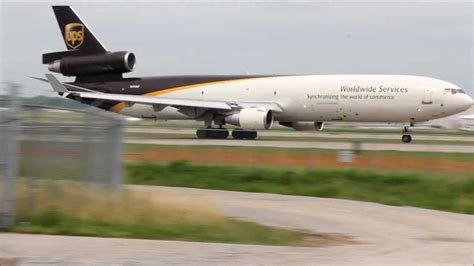
The only Airbus aircraft in the UPS fleet is the A300-600F, of which the airline operates 52 units. These aircraft typically handle regional cargo flows and shorter international segments.
The Boeing 757-200F, meanwhile, forms the workhorse of domestic operations. With 75 aircraft in service and an average age exceeding 32 years, these narrow-body freighters continue to shuttle packages between smaller airports and major sorting hubs.
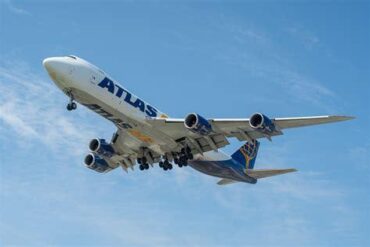
At the top end of the capacity spectrum sit the Boeing 747 freighters. UPS currently operates 13 older 747-400Fs and 30 newer 747-8Fs, the latter representing the most modern aircraft in the fleet. These giants handle long-haul trunk routes where massive cargo volumes justify their enormous capacity.
Within this layered structure, the Boeing 767 occupies a strategic middle ground, connecting regional feeders with intercontinental cargo jets.
How the UPS Logistics Network Shapes Aircraft Choice
Understanding the role of the 767 requires a closer look at how integrator logistics networks actually function. Unlike traditional cargo airlines, integrators such as UPS control the entire delivery chain—from pickup trucks to sorting facilities to aircraft.
This vertically integrated model depends on a sophisticated hub-and-spoke system.
Packages collected during the day are transported to regional airports and flown in the evening to a central hub. There, massive automated sorting facilities process millions of parcels before dispatching them on overnight flights to their final destinations.
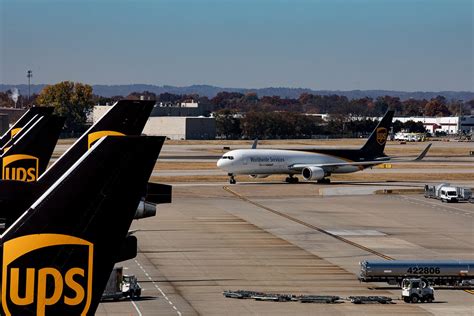
UPS’s primary global hub is located at Louisville Muhammad Ali International Airport (SDF) in Kentucky. Known as Worldport, this facility acts as the beating heart of the company’s global network. From here, aircraft depart in waves during the late evening hours carrying shipments across North America and overseas.
Another major hub sits in Cologne Bonn Airport (CGN) in Germany, serving as the airline’s European gateway.
Because aircraft must often wait on the ground for cargo to be sorted, utilization rates are lower than those of passenger airlines. Many freighters spend hours parked at feeder airports before flying relatively short routes to hubs.
This operational reality explains why cargo airlines often operate older aircraft for longer periods. Fuel efficiency matters, but reliability and acquisition cost frequently matter more.
Within this framework, the Boeing 767 proves almost perfectly sized. It offers enough capacity to move large volumes of parcels while remaining efficient on the shorter segments typical of feeder routes.
Why UPS Did Not Choose a Larger Replacement
Some observers initially speculated that UPS might replace the MD-11 with larger aircraft such as the Boeing 777 Freighter or additional 747-8Fs. These aircraft can easily match or exceed the MD-11’s payload capacity.
However, integrating them as direct replacements would create new logistical challenges.
Large freighters work best on high-volume intercontinental routes where cargo demand is consistently strong. The MD-11, by contrast, frequently operated on mid-range routes with fluctuating demand.
Replacing one MD-11 with a 777F might produce too much capacity for many routes. In cargo aviation, flying with unused payload space is economically inefficient.
By deploying multiple 767 flights instead of a single MD-11, UPS gains flexibility. Aircraft can be scheduled more precisely to match demand patterns, improving network efficiency while reducing fuel burn.
This strategy reflects a broader trend across the cargo industry: smaller, more efficient aircraft operating at higher frequency rather than fewer flights with extremely large payloads.
The Future of the UPS Cargo Fleet
The retirement of the MD-11 signals a broader generational shift within the UPS fleet. Over the coming decade, the airline is likely to continue modernizing its aircraft mix while balancing the realities of cargo economics.
The Boeing 767-300F will remain central to this strategy for the foreseeable future. Even though Boeing plans to end production in the coming years as the 777-8 Freighter enters the market, the aircraft’s reliability and proven performance ensure it will stay in service for decades.
Meanwhile, the Boeing 747-8F will continue handling high-volume global trunk routes, linking major hubs across continents. Together, these aircraft form a layered logistics system designed for both flexibility and scale.
The MD-11 once stood as a symbol of cargo aviation’s power and reach. Its distinctive tail engine and towering profile made it unmistakable on airport ramps around the world.
Now, as quieter and more efficient twin-engine aircraft take over its duties, the industry enters a new chapter—one defined less by brute capacity and more by precision logistics, fuel efficiency, and network adaptability.
For UPS Airlines, the transition is not simply about replacing an aircraft. It represents the evolution of a global delivery machine that moves millions of packages every day, connecting businesses and households across the planet with remarkable speed.