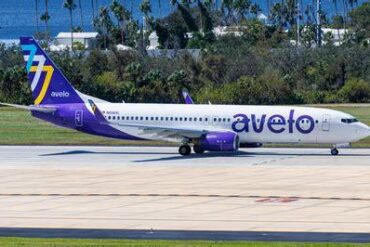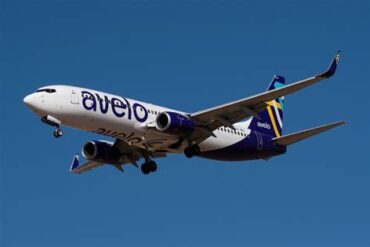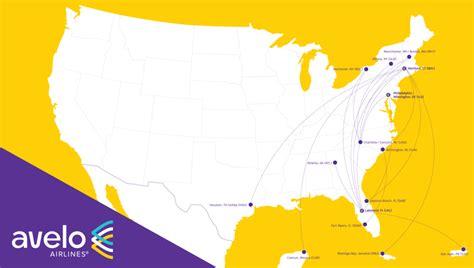
Avelo Airlines has dramatically downsized its route map in one of the most significant network retrenchments seen among US ultra-low-cost carriers in recent years. After an aggressive expansion strategy stretched the airline across dozens of secondary airports and niche leisure markets, the carrier is now reversing course with the elimination of 50 routes, the closure of multiple operational bases, and the removal of all international flying.
The cuts represent far more than seasonal adjustments. They signal a major restructuring effort aimed at stabilizing Avelo’s finances ahead of a long-term fleet transformation centered around Embraer’s E195-E2 aircraft. The airline is effectively shrinking today in hopes of building a more sustainable network tomorrow.
Avelo’s revised Summer 2026 schedule reveals a carrier becoming far more selective about where it operates. Compared to the same period last year, the airline has removed more than 3,000 flights, equating to a staggering 29% reduction in scheduled operations.
The strategy reflects a decisive pivot away from broad experimentation toward concentrated growth in a handful of core markets where Avelo believes it can maintain low operating costs while avoiding direct competition with dominant legacy carriers.
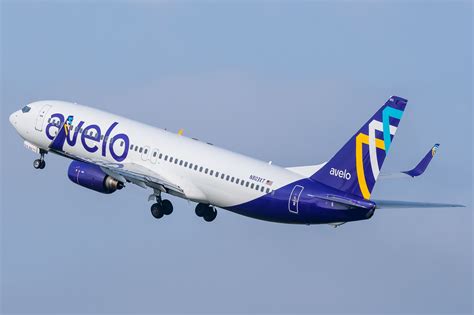
Avelo Airlines Retreats To Four Core Bases
The backbone of Avelo’s new strategy is consolidation. Instead of spreading resources across numerous small and mid-sized airports, the airline is narrowing its operational focus to four primary bases:
- Tweed New Haven Airport (HVN)
- Wilmington Airport Delaware (ILG)
- Lakeland International Airport (LAL)
- Concord-Padgett Regional Airport (USA)
This restructuring follows the shutdown of key operational hubs, particularly on the West Coast and in North Carolina. The airline’s decision to exit Hollywood Burbank Airport marked the clearest indication that its previous growth trajectory had become unsustainable.
Burbank had once been central to Avelo’s western expansion strategy. The airport offered lower fees and less congestion than Los Angeles International Airport, making it attractive for an ultra-low-cost business model. However, many of the surrounding leisure-focused routes lacked sufficient long-term demand, particularly outside peak travel seasons.
At the same time, Avelo faced mounting competition in several eastern markets. Raleigh-Durham became increasingly difficult terrain as Delta Air Lines strengthened its presence while Breeze Airways aggressively expanded overlapping low-cost services.
The result was a strategic retreat that reduced operational complexity while concentrating aircraft utilization around stronger-performing bases.
Interestingly, despite the massive route cuts, Avelo has actually increased flying activity at its remaining core hubs. Nearly 60% of all operations now touch New Haven, reinforcing the airport’s status as the airline’s primary anchor.
Lakeland has also emerged as a surprisingly important growth market. Positioned between Tampa and Orlando, the airport allows Avelo to target Central Florida demand without facing the operational costs associated with major airports.
Concord-Padgett Regional Airport plays a similar role near Charlotte, offering access to a rapidly growing metropolitan area while avoiding the dominance and high fees of American Airlines’ fortress hub at Charlotte Douglas International Airport.
Hollywood Burbank And West Coast Flying Suffer Major Losses
The most visible casualties of Avelo’s restructuring are found across the western United States. Nearly all of the carrier’s smaller West Coast leisure routes have disappeared from the schedule.
Among the most notable cuts are routes connecting Hollywood Burbank to destinations such as:
- Eugene
- Medford
- Arcata/Eureka
- Pasco/Tri-Cities
- Salem
- Kalispell/Glacier Park
Additional reductions at Santa Rosa/Sonoma County Airport further underscore the scale of the retreat. Routes linking Sonoma County with Boise, Las Vegas, Palm Springs, Salt Lake City, and Redmond/Bend have all been eliminated.
These routes were originally designed around underserved point-to-point demand, a hallmark of the ultra-low-cost carrier model. Yet many smaller leisure markets proved highly seasonal and vulnerable to fluctuating demand patterns.
The economics became even more challenging after Avelo retired its smaller Boeing 737-700 fleet. Operating larger 189-seat Boeing 737-800 aircraft on thin regional routes created greater pressure to consistently fill seats.
Without the flexibility offered by smaller aircraft, several marginal routes simply no longer made financial sense.
International Expansion Ends Completely
Perhaps the most surprising aspect of the restructuring is Avelo’s complete withdrawal from international operations.
The airline previously operated Caribbean services from Hartford Bradley International Airport and Raleigh-Durham International Airport to destinations including:
- Cancun
- Montego Bay
- Punta Cana
Those flights have now disappeared entirely from the network.
The Caribbean represented an ambitious attempt by Avelo to diversify beyond domestic leisure traffic. However, international flying introduces additional operational complexity, including customs coordination, longer turnaround requirements, and greater exposure to seasonal tourism fluctuations.
Competition also intensified rapidly. Breeze Airways expanded aggressively into many of the same Caribbean markets using a similar low-cost strategy but with newer Airbus A220 aircraft offering superior economics and passenger comfort.
For Avelo, retreating from international operations simplifies scheduling and allows management to concentrate on rebuilding profitability in domestic markets first.
The exit is also symbolically important because it reflects a broader shift away from experimentation. Avelo is no longer chasing rapid geographic expansion. Instead, the airline is prioritizing operational discipline and concentrated execution.
North Carolina Sees Deep Service Reductions
North Carolina has been one of the hardest-hit regions in Avelo’s network overhaul.
The closure of operational bases at both Wilmington International Airport and Raleigh-Durham International Airport significantly reduced the airline’s footprint across the state.
Multiple routes from Wilmington have been removed, including flights to:
- Detroit
- Fort Lauderdale
- Fort Myers
- Houston Hobby
- Miami
- Orlando
- Washington Dulles
Raleigh-Durham also lost numerous connections, including services to Albany, Grand Rapids, Manchester, Fort Myers, Montego Bay, and Punta Cana.
These reductions illustrate the growing competitive challenges facing ultra-low-cost carriers in medium-sized US markets. As larger airlines strengthen their domestic networks and newer low-cost rivals enter secondary airports, carriers like Avelo are finding fewer uncontested opportunities.
Raleigh-Durham became particularly difficult because it evolved into a more competitive airport environment far faster than originally anticipated. Delta’s continued investment transformed the airport into an increasingly important focus city, while Breeze Airways aggressively pursued similar leisure-oriented routes.
For a small airline operating limited fleet resources, sustaining profitability in those conditions became increasingly difficult.
New Haven Emerges As Avelo’s Most Important Hub
If one airport defines Avelo’s future strategy, it is Tweed New Haven Airport in Connecticut.
The carrier continues doubling down on New Haven as its primary gateway, leveraging its geographic position near the densely populated New York metropolitan region while avoiding the congestion and high costs associated with JFK, LaGuardia, and Newark.
The strategy has largely worked. Avelo has cultivated strong brand recognition in southern Connecticut by offering nonstop service to leisure destinations that previously required lengthy drives to major airports.
Even amid widespread cuts, New Haven continues seeing targeted expansion.
Recent additions include routes to:
- Key West
- Cleveland
- Indianapolis
These new services suggest Avelo still sees growth potential in carefully selected underserved city pairs where competition remains limited and operational simplicity can be maintained.
The concentration around New Haven also improves aircraft efficiency. Instead of scattering operations across dozens of lightly served stations, Avelo can maximize crew utilization, maintenance coordination, and scheduling reliability.
The Embraer E195-E2 Is Driving Long-Term Strategy
Behind the network cuts lies an even larger transformation involving Avelo’s future fleet.
The airline recently committed to an order for up to 100 Embraer E195-E2 aircraft, including 50 firm orders and purchase rights for another 50. Deliveries are now expected later than originally projected, potentially beginning in 2028 rather than 2027.
That delay matters because it means Avelo must continue relying on its Boeing 737-800 fleet for several more years.
The current network reduction is therefore partly designed to bridge the gap until the E2 arrives.
The Embraer E195-E2 offers substantially better fuel efficiency and more flexible economics than the larger Boeing 737-800. With fewer seats and lower operating costs, the aircraft is better suited to many of the thinner regional markets Avelo originally attempted to serve.
In many ways, Avelo expanded too quickly using aircraft that were not ideally sized for every route. The E195-E2 promises to solve that problem by allowing the airline to profitably serve markets that could not consistently support nearly 190 seats.
Until then, management appears focused on simplifying the operation as much as possible.

A Smaller Airline With A Clearer Direction
Avelo Airlines today looks very different from the ambitious startup that rapidly expanded across both coasts just a few years ago.
The carrier’s network map is smaller, simpler, and more concentrated. International flying is gone. West Coast operations have been heavily reduced. Multiple bases have closed. Experimental routes have disappeared.
Yet beneath the cuts lies a more disciplined strategy.
Instead of attempting to be everywhere at once, Avelo is increasingly concentrating on airports where it can maintain structural cost advantages and build customer loyalty without facing overwhelming competitive pressure.
The coming years will determine whether that reset succeeds. Much depends on the eventual arrival of the Embraer E195-E2 fleet and the airline’s ability to align capacity with realistic demand.
For now, Avelo’s massive network cull represents an airline stepping back from aggressive expansion in order to preserve its long-term future.