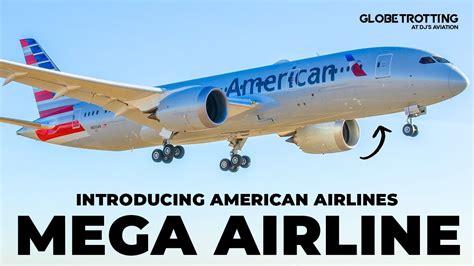
The idea of a mega airline acquisition involving United Airlines, JetBlue, and even American Airlines sounds less like a conventional merger and more like a high-stakes chess match played across the entire U.S. aviation landscape. Yet beneath the shock value of such proposals lies a calculated strategic narrative—one that reveals how extreme scenarios can reshape regulatory perception and corporate leverage in ways that quieter negotiations never could.
In an era defined by rising fuel costs, geopolitical instability, and a sharply divided airline market, consolidation is no longer theoretical. It is increasingly viewed as inevitable. Airlines are either scaling up to survive or quietly drifting toward irrelevance. Against this backdrop, the suggestion that United Airlines CEO Scott Kirby floated the idea of acquiring American Airlines—whether serious or strategic—deserves closer scrutiny, not dismissal.
What appears at first glance to be an implausible merger may actually represent something far more deliberate: a strategic decoy designed to make a United–JetBlue merger appear not only reasonable but necessary.
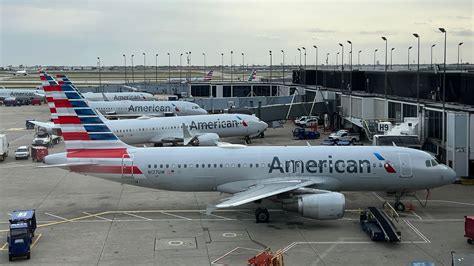
The Logic Behind an “Impossible” American Airlines Acquisition
At face value, a merger between United Airlines and American Airlines would create an aviation titan of unprecedented scale. With a combined fleet exceeding 2,000 mainline aircraft, dominance across 16 major hub airports, and control of approximately 35% of the U.S. domestic market, such an entity would dwarf competitors and redraw the competitive map overnight.
But scale alone is precisely why this proposal struggles to survive serious regulatory consideration. Even in a political environment perceived as more tolerant of mergers, the sheer size and influence of a combined United-American entity would raise immediate antitrust alarms. The Department of Justice would likely view such a deal as fundamentally anti-competitive, threatening consumer choice and pricing dynamics across key markets.
This is where the brilliance—or audacity—of the idea emerges. By introducing an extreme consolidation scenario, United effectively reframes the conversation. Compared to swallowing American Airlines whole, acquiring JetBlue begins to look like a modest, even logical, step.
Strategic Framing: Making JetBlue the “Reasonable” Option
In corporate negotiations, perception often shapes outcomes as much as financials. By placing an enormous, controversial merger on the table, United creates a contrast effect that shifts how regulators, investors, and the public interpret alternative deals.
A United–JetBlue merger, which might otherwise face intense scrutiny due to overlapping routes and market concentration in the Northeast, suddenly appears measured and justifiable. It becomes the middle ground between inaction and excess.
This tactic aligns with a broader truth in aviation strategy: timing and narrative are as critical as network synergies. With the current administration perceived as more merger-friendly, airline executives understand that the window for consolidation may be narrow. Presenting regulators with a spectrum of possibilities—ranging from extreme to moderate—can subtly guide approvals toward the preferred outcome.
United Airlines’ Strategic Need for JetBlue
Behind the negotiation tactics lies a very real operational gap in United Airlines’ network: New York’s John F. Kennedy International Airport (JFK).
Despite being a global aviation leader, United lacks a meaningful presence at JFK, one of the most lucrative and strategically important airports in the world. Its primary New York hub, Newark Liberty International Airport (EWR), offers scale but not the same level of prestige or access to high-value corporate clients.
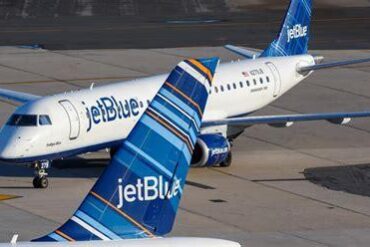
JetBlue, by contrast, holds a powerful position at JFK, ranking as the second-largest carrier at the airport. Acquiring JetBlue would give United immediate access to:
- Prime JFK slots, which are otherwise nearly impossible to obtain
- A strong foothold in high-yield transcontinental and international routes
- Enhanced appeal to premium travelers and corporate contracts
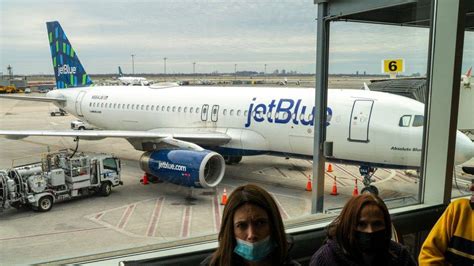
Beyond JFK, JetBlue’s presence in Boston Logan International Airport adds another layer of strategic value. Boston represents one of the wealthiest and most business-intensive markets in the United States, offering strong demand for premium travel. For United, which lacks a dominant position there, this is an opportunity to capture high-margin traffic.
Network Synergies and Geographic Complementarity
JetBlue’s network fills several gaps in United’s otherwise extensive system. While United dominates hubs like Chicago O’Hare, Denver, and San Francisco, it has relatively limited reach in the Southeastern United States. JetBlue’s operations in Fort Lauderdale and Orlando provide immediate access to high-demand leisure markets that generate consistent passenger volume.
At the same time, JetBlue’s strength in the Northeast complements United’s existing infrastructure rather than duplicating it entirely. This creates a network synergy that is both operationally efficient and commercially attractive.
However, synergy alone does not guarantee success. Integration challenges—ranging from fleet differences to corporate culture—can quickly erode the theoretical benefits of any merger.
The Debt Dilemma: JetBlue’s Financial Burden
One of the most significant obstacles to a United–JetBlue merger is not regulatory approval but financial risk. JetBlue’s mounting debt, projected to reach as high as $9 billion under sustained fuel pressure, presents a serious concern.
United itself carries substantial debt, estimated at around $31 billion, making any additional financial burden a carefully calculated gamble. Taking on JetBlue would not simply be an acquisition—it would be a balance sheet transformation.
This raises a critical question: Is the strategic value of JetBlue’s network worth the financial strain it would impose?
For United’s leadership, the answer is far from straightforward. The airline must weigh long-term market positioning against short-term financial stability, a balancing act that has defined many failed mergers in aviation history.
Why Other Airlines Are Unlikely Buyers
While JetBlue has explored potential buyers, alternatives to United appear limited and, in many cases, impractical.
Alaska Airlines, though strategically compatible due to its West Coast dominance, has only recently completed its acquisition of Hawaiian Airlines. Pursuing another large-scale merger so soon would stretch both its financial and operational capacity.
Southwest Airlines presents an even more challenging scenario. Its single-fleet model centered on Boeing 737 aircraft is fundamental to its cost efficiency. Integrating JetBlue’s Airbus fleet would disrupt this model, introducing complexity that Southwest has historically avoided at all costs.
These constraints leave United as the most plausible acquirer—not necessarily because it is the perfect fit, but because it is the least incompatible option available.
JetBlue’s Competitive Struggles in a Changing Market
JetBlue’s challenges extend beyond debt. The airline operates in one of the most competitive regions in the world, facing intense pressure from Delta Air Lines, which has established itself as the dominant premium carrier in the United States.
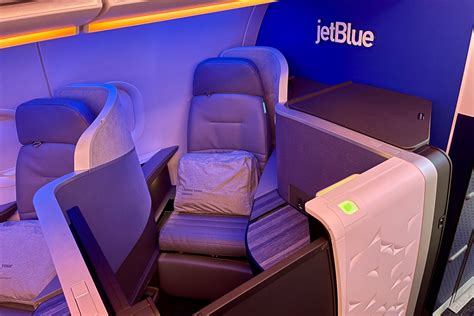
While JetBlue’s Mint business class product has received praise, the airline lacks a consistent premium offering across its network. This limits its ability to capture high-paying customers, particularly on domestic routes where first-class cabins generate significant revenue.
Operational reliability has also become a weak point. In the congested airspace of the Northeast, delays and disruptions are common, but JetBlue’s performance has lagged behind competitors, damaging its brand perception.
As fuel prices rise and margins tighten, these weaknesses become more pronounced. Predictions of multi-billion-dollar losses underscore the urgency of JetBlue’s situation. Without a significant strategic shift—whether through restructuring or acquisition—the airline risks being squeezed out of relevance.
The Role of American Airlines as a Strategic Catalyst
This brings the discussion back to American Airlines. While a United-American merger is highly unlikely, its role in the broader narrative is far from irrelevant.
By introducing the possibility of acquiring American, United effectively reshapes the negotiation landscape. It signals ambition, tests regulatory boundaries, and, most importantly, makes other deals appear more feasible by comparison.
In this sense, American Airlines becomes a strategic catalyst rather than a genuine target. Its presence in the conversation influences outcomes without ever needing to materialize into a transaction.
Regulatory Realities and Political Dynamics
Any major airline merger in the United States must navigate a complex web of regulatory scrutiny. Antitrust concerns, consumer protection considerations, and political optics all play critical roles in determining whether a deal is approved.
Even a United–JetBlue merger would face significant challenges, particularly in the Northeast, where both airlines have strong market positions. Slot divestitures, route concessions, and operational restrictions would likely be required to secure approval.
However, compared to the seismic impact of a United-American merger, these challenges are manageable rather than prohibitive.
Conclusion: Strategy, Perception, and the Future of Airline Consolidation
The speculation surrounding a United–American Airlines mega merger is less about execution and more about strategy. It illustrates how industry leaders use bold ideas to shape negotiations, influence regulators, and reposition more realistic deals.
At its core, the situation reveals a simple truth: JetBlue represents both an opportunity and a risk, and United must decide whether the potential rewards outweigh the financial and regulatory hurdles.
American Airlines, meanwhile, serves as a powerful reminder that in high-stakes corporate strategy, sometimes the most important moves are the ones never intended to happen.