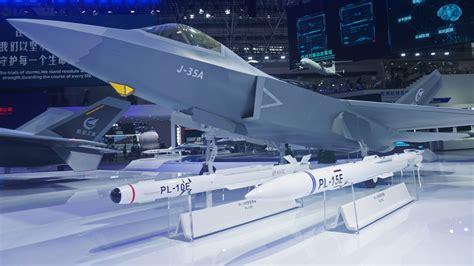
PL-15 Missile Allegedly Makes Combat Debut Amid India–Pakistan Skirmishes
In a conflict landscape defined by stealth, precision, and extended engagement ranges, the alleged deployment of the Chinese PL-15 air-to-air missile marks a significant inflection point in modern aerial warfare. As reports continue to emerge from the recent India–Pakistan hostilities, mounting evidence suggests that the PL-15, a flagship of China’s missile engineering prowess, has seen its first operational use in combat — a watershed moment with sweeping geopolitical and military implications.
The event appears to have unfolded amid a murky series of aerial skirmishes and retaliatory strikes between India and Pakistan. Although both nations have kept operational details shrouded, wreckage found in Punjab’s Hoshiarpur district — bearing identifiable serial markings and what appears to be a seeker test port — has become the most concrete clue that the PL-15 was used in an active engagement.
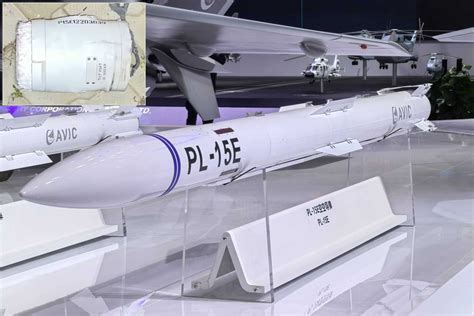
Tracing the Wreckage: The Technical Trail of the PL-15
Social media imagery circulated by regional defense watchers reveals a radome housing an AESA (Active Electronically Scanned Array) radar seeker, a hallmark feature of the PL-15. Additional fragments show internal components consistent with dual-pulse solid-propellant motors — a design element optimized for long-range propulsion and terminal maneuverability. Although the missile’s kill status remains unconfirmed, its mere presence over Indian territory signifies a historic deployment.
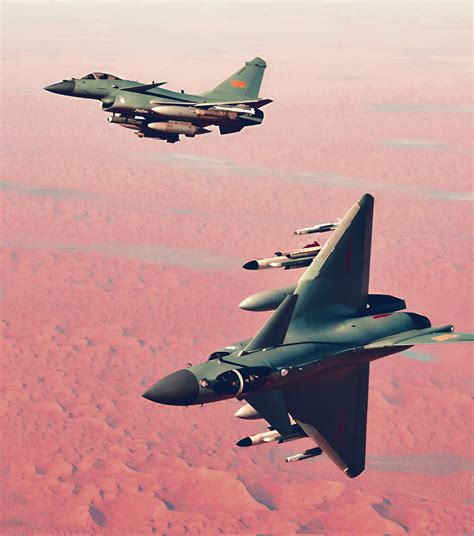
Pakistan, reportedly employing JF-17 Block III or J-10C fighters in the engagement, is known to operate the export variant PL-15E. This version, slightly reduced in capability from the Chinese domestic configuration, boasts a range of approximately 145 kilometers (90 miles) and maintains the two-way datalink functionality for mid-course updates and enhanced target discrimination in ECM-heavy environments.
The use of such a missile in a real-world setting adds operational legitimacy to what has, until now, been a platform largely discussed in defense journals and military expos.
The Strategic Leap: Why PL-15 Matters
The PL-15’s architecture represents a seismic shift in air-to-air missile development. It was purpose-built to challenge the dominance of Western missiles such as the AIM-120D AMRAAM and MBDA’s Meteor, integrating technologies once seen only in elite NATO arsenals. Its AESA radar seeker, long considered a cutting-edge asset, allows for greater target acquisition accuracy and resistance to jamming — crucial in a region where electronic warfare assets are increasingly prevalent.
China’s internal variant, fielded with the Chengdu J-20 stealth fighter, includes cropped fins for compatibility with internal weapons bays and boasts a maximum range exceeding 200 kilometers (124 miles). The PL-15E, while less capable in range, retains enough of the missile’s core traits to pose a formidable threat within contested airspace, especially when guided by AWACS assets or ground-based radar relays.
India’s Response: Meteor and BrahMos in Focus
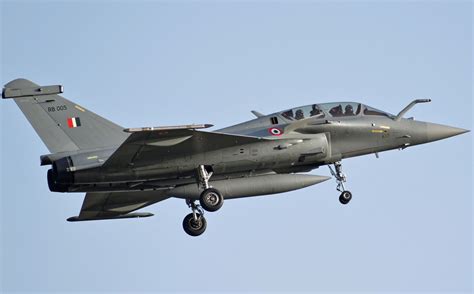
India’s aerial doctrine relies heavily on multinational interoperability and sensor fusion, with the French-origin Meteor missile forming the backbone of its beyond-visual-range (BVR) air combat strategy. Equipped on the Dassault Rafale, the Meteor features a ramjet propulsion system, enabling a larger no-escape zone than traditional solid-fuel missiles like the AMRAAM or PL-15.
Despite this technological advantage, the recent claims by Pakistan — which include the downing of up to five Indian aircraft — have raised unsettling questions about the efficacy of these platforms under combat stress. Among the evidence circulating:
- A tailfin bearing serial number BS-001, linked to a Rafale jet, was reportedly recovered in the Bathinda region.
- MICA missile rails, compatible with Mirage 2000 aircraft, were discovered near Aklian Kalan.
- A K-36DM ejection seat, used in Russian-origin MiG-29 fighters, was allegedly found in Ramban.
While India has not confirmed these losses, the proliferation of physical debris and photographic documentation presents a strong case that some high-value assets were indeed lost — possibly to the PL-15 or other advanced BVR missiles.
Fog of War: Unconfirmed Losses and Friendly Fire Possibilities
As is often the case in modern air conflicts, the truth is obscured by propaganda, misinformation, and the complexities of layered engagements. Some analysts have speculated that blue-on-blue incidents or surface-to-air missile (SAM) engagements may have caused the reported losses. Others argue that the disparate nature of debris sites indicates multiple aircraft types and points to a coordinated Pakistani air operation — potentially the first in which PL-15-class weaponry was used.
Regardless of attribution, what remains clear is that air superiority is no longer determined solely by airframes and missile ranges. Factors such as electronic warfare capabilities, pilot training, situational awareness, and data fusion from networked assets now play a dominant role in deciding the outcome of aerial engagements.
Cross-Border Escalation: Operation Sindoor and Retaliatory Strikes
Parallel to the high-altitude dogfights was India’s Operation Sindoor, a precision strike mission that reportedly targeted nine militant training camps operated by Jaish-e-Mohammed and Lashkar-e-Taiba. Indian sources claim that BrahMos cruise missiles, with operational ranges between 300 and 500 kilometers, were employed against sites in Pakistan-administered Kashmir and deeper into Pakistan’s sovereign territory.
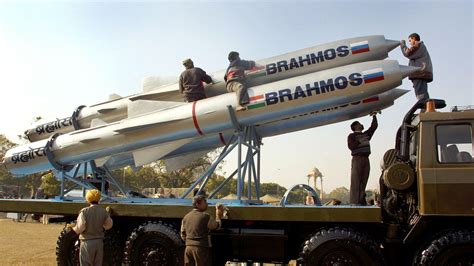
Islamabad swiftly responded with what it termed ‘corresponding actions,’ claiming six Indian military sites were hit. Pakistan’s official narrative emphasized that no militant infrastructure was damaged, while 26 civilian fatalities were reported. India, in turn, accused Pakistan’s response of killing seven Indian civilians and injuring over 30.
These exchanges have triggered international concern, with regional powers and global institutions urging restraint. However, the underlying dynamic of the conflict has unmistakably shifted. The emergence of the PL-15 as a credible operational asset opens a new technological chapter in South Asia’s arms race.
Implications for South Asian Airpower Balance
The operational debut of the PL-15 redefines the calculus of deterrence in the Indo-Pakistani air domain. With Pakistan now fielding a missile that can potentially challenge or exceed the performance of India’s Meteor, the onus is on both sides to upgrade not just their missiles, but the entire kill chain — from detection to interception.
For India, this may necessitate:
- Accelerating integration of next-gen indigenous BVR missiles such as Astra Mk2
- Enhanced deployment of AEW&C platforms to support beyond-horizon targeting
- Upgrades to fighter avionics for better sensor fusion and ECM capabilities
For Pakistan, the successful use — or at least credible deployment — of the PL-15E affirms China’s growing role as a technological benefactor and solidifies the JF-17 Block III as a serious multirole platform.
A Missile’s Message: More Than Just a Weapon
In modern geopolitics, the debut of a missile like the PL-15 is not just an event — it is a statement. It underscores China’s evolving strategy to export high-end military technology to allies and leverage combat-proven results as a form of soft power projection. For regional players, it serves as both a wake-up call and a catalyst for strategic recalibration.
The battlefield may have offered no official confirmation of kills, but in terms of influence and perception, the PL-15 has already made an impact.
Conclusion
If the reports hold true, the combat deployment of the PL-15 represents a pivotal moment in the evolution of air combat in South Asia. It elevates the threat perception matrix and compels all actors — India, Pakistan, and external allies — to reevaluate their aerial doctrines. More importantly, it signals that the age of next-generation air-to-air warfare has decisively arrived in the region, not in theory, but in practice.