Fighter jets represent the pinnacle of modern military aviation—fast, agile, and technologically superior. Some fighters, however, stand out not just for their capabilities, but for an astonishing combat record: zero losses in air-to-air engagements. In this in-depth analysis, we examine five remarkable fighter jets that have earned an unblemished record in aerial combat, showcasing their engineering, missions, and the strategic roles they’ve played in modern warfare.
The British Aerospace Sea Harrier: A Vertical Takeoff Legend
The British Aerospace Sea Harrier, famously capable of vertical and short takeoffs and landings (V/STOL), holds a special place in aviation history. Developed for the Royal Navy and introduced in the late 1970s, it became a symbol of technological ingenuity and combat effectiveness.
Its claim to fame came during the Falklands War in 1982. The Sea Harrier flew more than 1,500 sorties and shot down 23 Argentinian aircraft without a single air-to-air combat loss. Despite being subsonic, maxing out at Mach 0.9, it demonstrated extraordinary agility and situational awareness in close-range dogfights.
The Harrier’s design allowed it to operate from small aircraft carriers and even make emergency landings on roads. Armed with AIM-9 Sidewinders and Blue Fox radar, the aircraft was an unpredictable and formidable adversary.
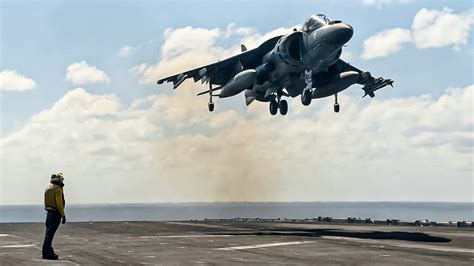
Later versions served in the Gulf War, Bosnia, and Kosovo under NATO flags. Although vulnerable to ground fire and technical faults, no Sea Harrier was ever shot down in air-to-air combat before its retirement from frontline service.
Saab JAS 39 Gripen: Sweden’s Silent Sentinel
The Saab JAS 39 Gripen is Sweden’s answer to the global fighter market. Introduced in 1996, the multirole aircraft was designed for cost-efficiency, agility, and modularity, ideal for export to air forces with limited budgets. Despite its widespread use and longevity, the Gripen has never suffered an air-to-air combat loss.
A standout moment in its early career came during Exercise Red Flag 2006, where three Swedish Gripens decisively defeated five Dutch F-15s in mock combat, recording scores of 5-0, 5-0, and 5-1. These exercises demonstrated the Gripen’s excellent beyond-visual-range (BVR) capabilities and electronic warfare potential.
Its only significant real-world operations include Operation Unified Protector over Libya and patrolling duties in South America. In simulated war games, such as those analyzing potential conflict with China, the Gripen achieved 88% victory rates in BVR engagements.
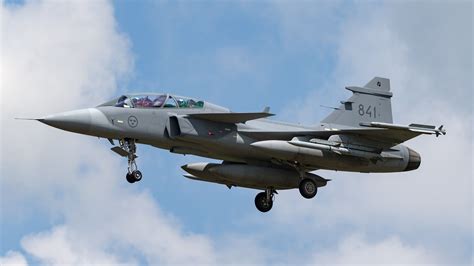
Countries like Brazil, Thailand, and South Africa continue to operate variants, including the advanced Gripen E, equipped with AESA radar, infrared search and track (IRST), and enhanced data fusion systems. The fighter’s pristine record is a result of cautious deployments and solid Scandinavian engineering.
Lockheed Martin F-22 Raptor: The Apex Predator
The F-22 Raptor is arguably the most dominant air superiority fighter ever built. Developed under the Advanced Tactical Fighter (ATF) program and first flown in 1997, it entered operational service in 2005 as the world’s first true fifth-generation stealth fighter.
Its stealth profile, supercruise capability, vector thrust, and advanced avionics make it almost untouchable in aerial combat. Yet, despite flying numerous missions in operations such as Inherent Resolve and Noble Eagle, no F-22 has ever been downed by enemy aircraft.
Ironically, its first and only confirmed air-to-air kill came in 2023 when it destroyed a Chinese surveillance balloon with an AIM-9X missile—not exactly a dogfight, but a demonstration of precision.
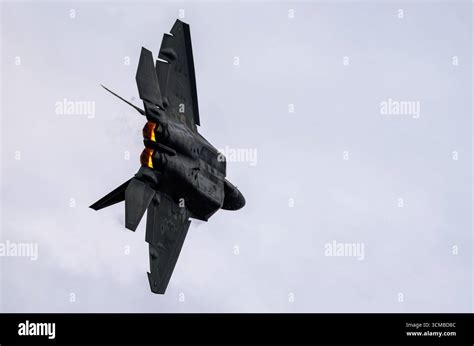
The Raptor’s low observable design allows it to engage targets long before being detected, while its AN/APG-77 AESA radar, electronic warfare systems, and sensor fusion offer pilots unmatched situational awareness. Though production ended at just 195 units, it remains the most elite aircraft in the U.S. Air Force arsenal.
Mikoyan MiG-31 Foxhound: The Hypersonic Hunter
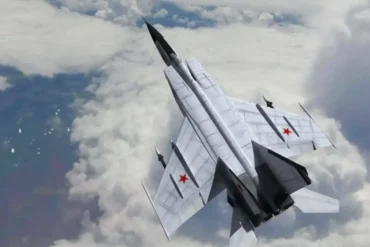
The Mikoyan MiG-31 Foxhound is a Cold War-era Soviet interceptor introduced in 1982. Despite its age, the MiG-31 continues to be one of the fastest operational fighter jets, reaching speeds up to Mach 2.83.
Built to defend vast Russian airspace, it was optimized for high-speed interception, carrying R-33 long-range missiles and powerful phased-array radar. The aircraft can simultaneously engage multiple airborne targets hundreds of kilometers away.
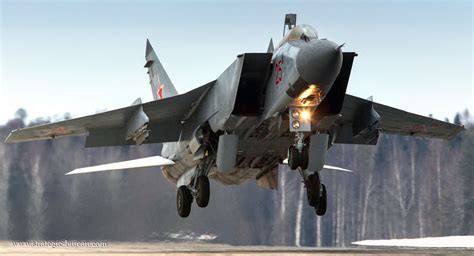
During the Syrian Civil War and Russo-Ukrainian conflict, the MiG-31 was deployed by Russia for air patrols and missile launches. While a few were destroyed on the ground, and one was lost to a friendly fire accident in 2017, none have been lost in hostile air-to-air combat.
Modern variants like the MiG-31BM feature upgraded avionics, improved data links, and compatibility with hypersonic missiles like the Kinzhal. The Russian Aerospace Forces plan to keep them in service well into the 2030s, maintaining their strategic importance as ultra-fast interceptors.
McDonnell Douglas F-15 Eagle: The Sky’s Undisputed Champion
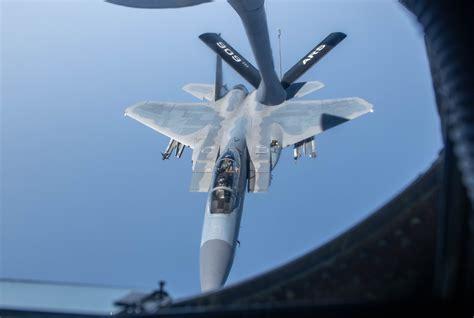
The F-15 Eagle has earned an unparalleled combat record: 104 air-to-air kills with zero losses. Developed in the early 1970s to replace the F-4 Phantom, the F-15 was born out of the mantra “not a pound for air-to-ground.”
Since its introduction in 1976, the F-15 has flown in dozens of conflicts, including the Gulf War, Lebanon War, Yemen, and Kosovo. Its powerful Pratt & Whitney F100 engines, APG-63 radar, and high thrust-to-weight ratio make it one of the most lethal fighters ever produced.
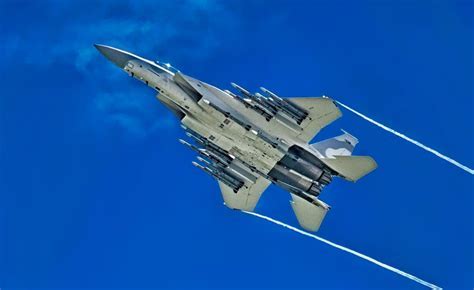
Nations like Israel, Japan, and Saudi Arabia continue to operate F-15s. The Israeli Air Force, in particular, has utilized the aircraft with astounding success, reportedly claiming over 60 air-to-air kills during the 1982 Lebanon War.
Modernized variants like the F-15EX Strike Eagle II carry advanced radars, fly-by-wire controls, and can haul up to 22 air-to-air missiles. Despite being nearly 50 years old, the F-15 remains undefeated in aerial combat, a record no other aircraft has come close to matching.
Conclusion: Engineering Mastery and Tactical Superiority
These five aircraft represent the highest standards in aerospace engineering, pilot training, and operational strategy. Their perfect air-to-air combat records are not just products of luck—they result from a blend of superior design, sophisticated technology, and decisive command doctrine.
From the versatile Harrier to the stealthy F-22, each of these jets showcases how different nations approach the doctrine of air superiority. Their common thread? Absolute dominance in the sky, with no losses to enemy aircraft. As future generations of fighters emerge, these five legends remain gold standards in aerial warfare history.