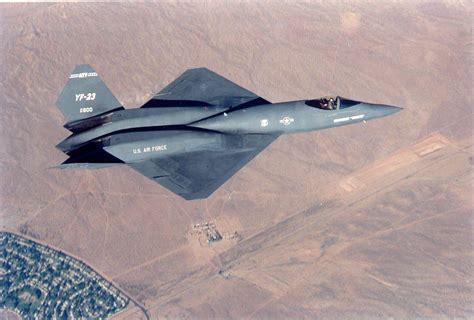
The ongoing debate between the Northrop YF-23 and the Lockheed Martin F-22 Raptor remains one of the most captivating what-ifs in modern military aviation. While the F-22 went on to define a new standard for air superiority, the YF-23 remains a haunting symbol of unrealized potential. It’s not just about aesthetics or nostalgia — the YF-23 possessed design elements and performance characteristics that continue to inspire strong preferences in the aviation community.
The question isn’t just “How many prefer the YF-23?” — it’s why so many do.
The YF-23’s Stealth and Speed: A Different Philosophy of Combat
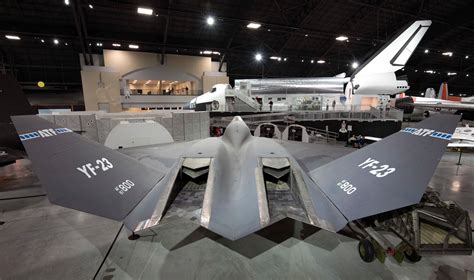
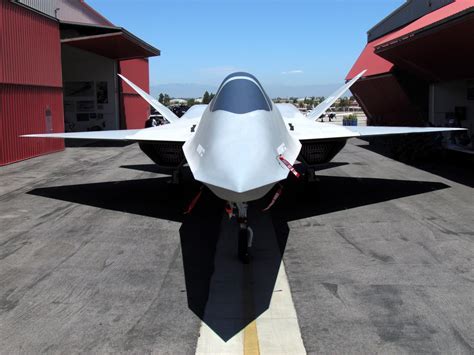
When the Advanced Tactical Fighter (ATF) competition launched in the 1980s, both Lockheed and Northrop were instructed to produce a next-generation stealth fighter. The YF-23, nicknamed “Black Widow II,” was a strikingly unconventional aircraft. Its stealth-centric diamond-shaped planform and V-tail configuration offered extremely low radar cross-section, superior to that of the YF-22.
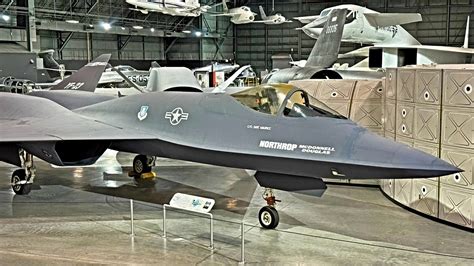
According to Karl2241, an insider who worked on both the F-22 and F-35A, the YF-23 was engineered less around dogfighting and more toward speed, stealth, and multi-role versatility. The emphasis on stealth-first doctrine, or “First Look, First Kill,” suggested that the YF-23 would dominate not through brute agility, but by never being seen in the first place. It was a strategy shaped by the Cold War but perfectly suited for modern stand-off and strike operations.
This philosophy aligned more closely with what many now recognize as the future of air combat — long-range engagements, electronic warfare, and survivability in dense threat environments. In this sense, the YF-23 was ahead of its time.
Why the YF-23 Would Thrive Today: The Strike Bomber That Never Was
Multiple commentators like blackknight16 have argued that the YF-23 had serious potential as a long-range strike platform, far more adaptable than its rival. Imagining an “FB-23” variant as a successor to the F-111 Aardvark or even the F-15E Strike Eagle, Northrop’s design could have evolved into a supersonic deep strike aircraft.
Such an FB-23, they suggest, would boast:
- Supercruise capability without afterburners
- Extremely low radar signature
- A larger fuselage for fuel and payload
- Room for advanced strike avionics and precision munitions
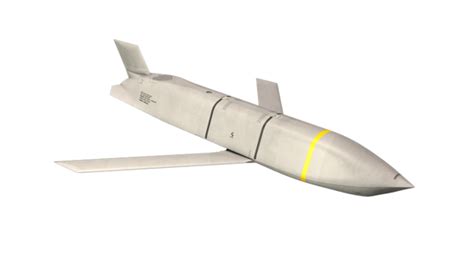
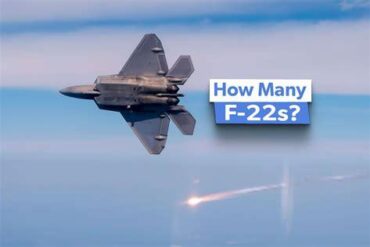
In comparison, the F-22 remains largely air-superiority focused, with limited strike capabilities and internal carriage constraints. With modern mission demands in mind — such as Suppression of Enemy Air Defenses (SEAD), or extended-range strike in Pacific scenarios — the YF-23’s concept feels painfully relevant.
Operational Flexibility vs. Air Superiority Doctrine
foolproofphilosophy reflects on lessons from Ukraine, emphasizing the value of long-range missile salvos and survivable platforms like the B-21. The argument goes that while the F-22 excels in traditional air combat, the YF-23’s stealth, range, and speed would make it ideal for missions beyond visual-range engagements — including homeland defense intercepts and even cruise missile delivery.
In the words of Aninja262, the YF-23’s speed and endurance would have made it ideal for continental intercept roles, especially against modern hypersonic threats. This leads us to another critical angle: the YF-23’s strategic versatility — the capacity to morph into roles not originally intended but desperately needed.
The Political Backdrop and Lockheed’s Edge
The decision to select Lockheed Martin over Northrop was not purely based on performance. Several contributors, including tyrusrexx and tempeaster, note that political and industrial dynamics played a major role.
Lockheed, fresh off the B-2 program, needed a large military contract to maintain viability. Northrop’s proposed vendor chain and limited plant distribution made it a less attractive candidate for spreading defense dollars across congressional districts.
Additionally, thrust-vectoring technology on the F-22 gave it an edge in close-in agility — a critical factor in pilot evaluations. Yet ironically, the YF-23 was faster, had greater sustained high-AOA performance, and potentially better supercruise capability than the F-22, according to engineers cited by BackgroundSwimmer299.
In retrospect, the Air Force favored a sure thing: a powerful dogfighter from Lockheed with demonstrable maneuvering dominance over a stealthier, faster, more mysterious rival.
Design Trade-Offs: The Fighter We Didn’t Get
Both the YF-22 and YF-23 met the ATF operational requirements (ORD), but took radically different paths to get there. The YF-23’s split tail design reduced radar signature but raised control complexity. The blended wing-body shape provided stealth and lift, but restricted rapid production adaptation.
MrWillyP highlights the crucial trade-off: the YF-23 was superior in range and stealth, while the F-22 prioritized agility, safety, and cost-efficient manufacturability. Lockheed’s bird was slightly more rugged, slightly more refined, and perhaps just more reassuring to decision-makers.
Still, the stealth advantages of the YF-23 cannot be ignored. With radar cross-sections reportedly smaller than even the F-117, the YF-23 would have excelled in the kinds of contested environments where radar-guided systems dominate.
Dogfighting vs. Doctrine: An Evolving Battlefield
The original ATF doctrine emphasized dogfighting, and many in the Air Force, like the chief engineers cited by Karl2241, stuck to that mentality. But modern conflicts rarely play out in visual range. Instead, we see increasing emphasis on:
- Stand-off weapons
- Electronic warfare
- Sensor fusion and stealth dominance
- Long-endurance strike aircraft
It’s this shift that causes so many aviation experts and military commentators to reconsider the YF-23, not as a lost fighter, but as a premature solution to 21st-century air warfare problems.
Community Sentiment: Style, Strategy, and What Could’ve Been
Beyond performance metrics and mission adaptability, many in the aviation community simply prefer the YF-23 — for its looks, its mystery, and what it represented. Its design exudes menace and confidence. It looks like it belongs in 2040.
This affection is more than nostalgia. It’s an acknowledgment that visionary designs are often punished for being early, while safer choices win contracts. The YF-23 wasn’t just a stealth aircraft — it was a paradigm shift.
Aesthetic preference is often the surface of deeper strategic appreciation. As EveningTangerine9 notes, the closure of Northrop’s production lines and its exclusion from fighter development had long-term economic and innovation consequences.
Conclusion: How Many Prefer the YF-23? Perhaps More Than Ever
While no official numbers exist, online discourse suggests a growing segment of military enthusiasts, engineers, and veterans lean toward the YF-23 — not just for what it was, but for what it could have been. In a world moving toward multi-role stealth platforms, extended strike, and minimal exposure, the YF-23 would thrive.
Had Northrop been awarded the contract, we might today be flying a fleet of adaptable stealth bombers with fighter agility and bomber reach. Instead, the YF-23 remains a museum piece — a sleek shadow of an alternate future.
In answering “how many of you prefer the YF-23 over the F-22?” — the response may not be unanimous, but it’s growing louder and more informed. And perhaps, finally, more correct.