Throughout aviation history, engineers and designers have continually pushed the boundaries of size, speed and versatility. While most military aircraft are known for their imposing presence on runways and in hangars, a select few prototypes and production models have embraced a radically different philosophy: miniaturization. These compact machines were conceived to occupy minimal space on aircraft carriers or bombers, conserve scarce materials during wartime or provide low‑cost, specialized capabilities on the battlefield. Although many never advanced beyond experimental stages, their innovations laid groundwork for future vertical‑takeoff systems, parasite fighters and ultralight reconnaissance platforms.
Early efforts in vertical‑takeoff and landing (VTOL) technology sought to free aircraft from the constraints of long runways, leading to some of the most unusual designs of the post‑WWII era. Equally inventive were emergency‑production fighters built from non‑strategic materials and light trainers repurposed for combat. In each case, the goal was clear: pack as much aerodynamic performance and firepower as possible into the smallest airframe imaginable. Despite technical setbacks and limited operational use, these mini military aircraft represent a testament to human ingenuity under pressure. Their stories reveal bold experiments in propulsion, airframe geometry and flight control that still resonate in modern rotorcraft and jet designs.
By exploring these twelve diminutive flying machines, we gain insight into the trials and triumphs of engineers who refused to accept size as an immutable limitation. From circular ‘flying pancakes’ to bomber‑borne parasite fighters, each aircraft demonstrates a unique solution to a specific tactical problem. Whether motivated by material shortages, carrier deck restrictions or the desire for on‑demand strike capability, these compact aircraft left a lasting legacy—even if only a handful ever took to the skies.
Lockheed XFV‑1
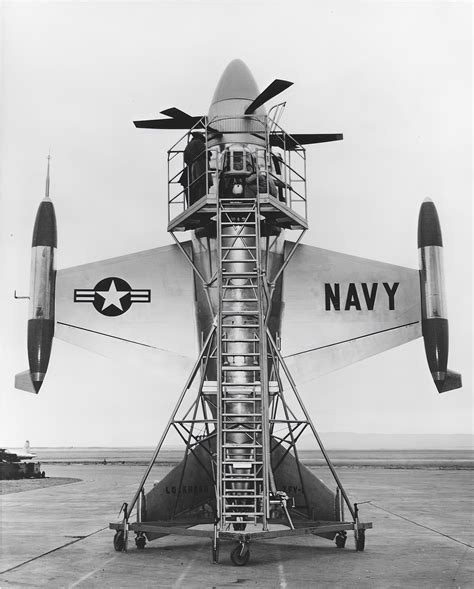
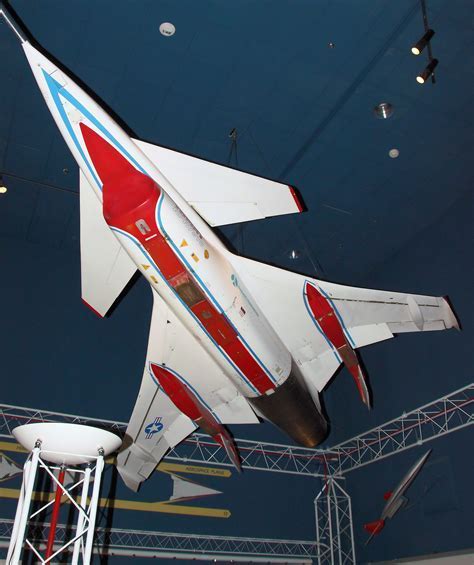
The Lockheed XFV‑1 emerged in the late 1940s as the U.S. Navy’s answer to fleet defense without traditional runways. Powered by two three‑bladed Curtiss‑Wright propellers rotating in opposite directions, its most striking feature was its ability to sit upright on tall ventral fins and blast off vertically with over 10,000 pounds of thrust. Measuring just 37 feet in length with a 30‑foot wingspan, the XFV‑1 was dwarfed by contemporary jet fighters but offered a radical VTOL concept that anticipated later jump‑jet designs. During testing, the prototype achieved several conventional horizontal takeoffs, but pilots reported alarming difficulty sensing climb, sink and rotation rates during vertical operations. As a result, the XFV‑1 never transitioned from tail‑standing tests to full VTOL flights, and the program was quietly canceled despite demonstrating the viability of counter‑rotating propeller thrust for vertical liftoff.
De Havilland DH100 Vampire
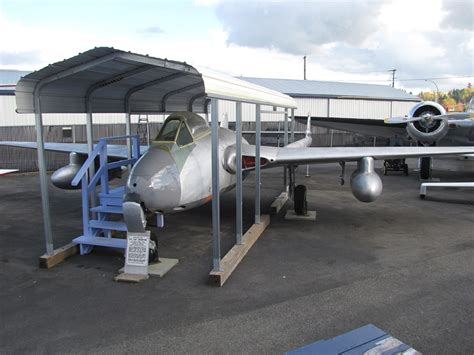
Among the earliest jet‑powered fighters, the De Havilland DH100 Vampire combined pioneering British and Australian engineering. Entering service in 1945, its compact airframe measured 31 feet long with a 38‑foot wingspan and featured thin straight wings that optimized early turbojet performance. Notably, it carried Australia’s first domestically built Goblin jet engine and achieved the first successful carrier deck operations by a pure jet fighter aboard HMS Ocean in December 1945. The Vampire’s distinctive twin‑boom tail and egg‑shaped fuselage provided stability at moderate speeds, and its simplicity made it an excellent trainer and export success. Though superseded by swept‑wing designs in front‑line service, the DH100 remained in secondary roles into the 1960s, illustrating how miniaturized jet fighters could fulfill multi‑role requirements at lower cost and complexity.
Folland Gnat / HAL Ajeet
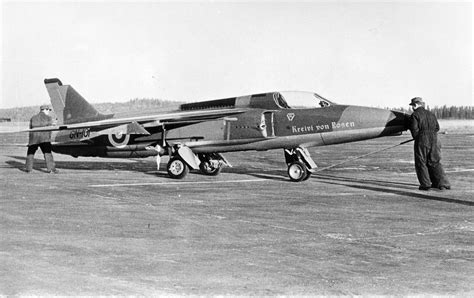
Designed to deliver low operational costs without sacrificing performance, the British Folland Gnat was one of history’s smallest supersonic fighters. At 31 feet long and standing just 10 feet tall, its lightweight frame and Bristol Orpheus turbojet allowed it to hit Mach 1 in shallow dives. Introduced in 1955, the Gnat’s low acquisition and maintenance expenses made it attractive to air forces with limited budgets, though the Royal Air Force ultimately relegated it to advanced trainer duties due to logistical challenges. In Indian service, however, the Gnat—rebranded as HAL Ajeet—proved its combat worth during the 1965 and 1971 wars, earning the nickname “Sabre Slayer” for its success against Pakistani F‑86 Sabres. With two 30 mm Aden cannons and hardpoints for bombs and rockets, the Gnat/Ajeet balanced compact dimensions with genuine combat capability, demonstrating that miniaturized fighters could deliver real battlefield impact.
Heinkel He 162 “Spatz”
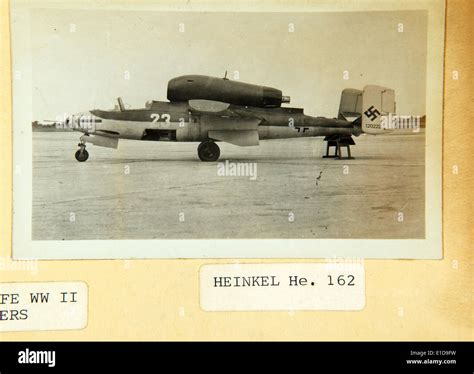
As the Third Reich faced critical shortages in late WWII, German engineers devised the Heinkel He 162 Spatz—an emergency fighter built primarily of plywood and designed for rapid mass production. This 29‑foot‑long jet was powered by a single BMW 003 turbojet mounted atop its fuselage, driving the aircraft to speeds approaching 540 mph. Its 23‑foot wingspan and lightweight structure allowed for extreme climb rates, but stability issues and structural fragility made it perilous to fly. Intended for minimally trained Hitler Youth pilots, the He 162’s wooden airframe suffered from adhesive failures and abrupt stalls, leading to numerous accidents. Despite achieving brief test flights in early 1945, only a handful ever entered operational squadrons before the war’s end. The Spatz remains a stark reminder of how resource scarcity and desperation shaped radical, if ultimately doomed, aviation experiments.
Ryan X‑13 Vertijet
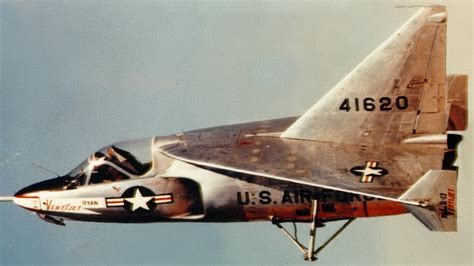
In the mid‑1950s, Ryan Aeronautical pursued a pure‑jet VTOL concept with the X‑13 Vertijet, a 23‑foot delta‑wing prototype designed to launch vertically like a rocket and transition seamlessly to horizontal flight. Pilots used a tilting-jet exhaust system to control attitude during the yaw, pitch and roll phases of vertical takeoff and landing. The Vertijet successfully completed six transition flights in 1957, rising to 12,000 feet before returning to a vertical landing on a trailer-mounted platform. Its sleek cigar‑shaped fuselage and 21‑foot wingspan demonstrated that jet thrust alone could enable compact VTOL operations without bulky lift fans or tilt‑rotors. Although the U.S. Air Force ultimately canceled funding, lessons from the X‑13 informed later Harrier and tilt‑jet developments, showcasing how miniaturized jet VTOL platforms could offer flexible deployment from improvised sites.
Rockwell HiMAT
The Highly Maneuverable Aircraft Technology (HiMAT) program of the late 1970s brought NASA and the Air Force into collaboration with Rockwell to trial advanced flight‑control systems on a 0.4‑scale remotely piloted vehicle. At approximately 22 feet long with a 15‑foot wingspan, the HiMAT drone tested canard arrangements, composite materials and digital autopilots that would later appear in front‑line fighters. Its tapered slender fuselage and subscale dimension allowed precise evaluation of high‑angle‑of‑attack behaviors without risking full‑size prototypes. Despite maintenance complexities and limited endurance, HiMAT logged over 150 successful flights, validating the Flight Test Maneuver Autopilot (FTMAP) and aerodynamic refinements that contributed to the F‑18E/F Super Hornet and F‑16 upgrades. Today, two HiMAT airframes reside in museums, testament to the enduring value of small‑scale experimental platforms.
Vought V‑173 “Flying Pancake”
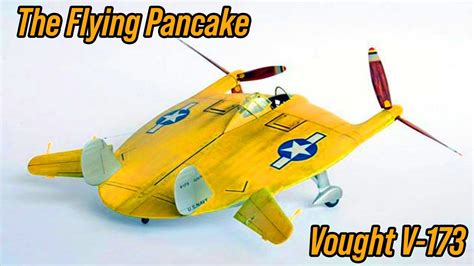
Decades before jets, visionary Charles Zimmerman and Chance Vought introduced the V‑173 Flying Pancake, a circular‑winged, propeller‑driven demonstrator with a 23‑foot diameter main lifting surface and a 26‑foot overall length. Zimmerman’s goal was to achieve a uniform airflow over the wing’s entire surface, minimizing induced drag and enabling ultra‑low landing and stall speeds. Two 1200 hp Pratt & Whitney radial engines drove massive front‑mounted contra‑rotating propellers, while small tail fins provided directional stability. Flight tests from 1942–44 proved the concept’s benign stall characteristics and tight turning radius, but the advent of high‑speed turbojets rendered the ‘pancake’ obsolete. Nonetheless, its bold aerodynamics influenced subsequent lifting‑body experiments, underscoring the lessons learned from compact, unorthodox airframe geometries.
AvroCar
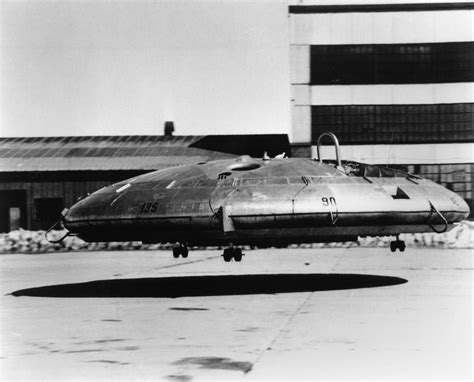
During the 1950s, Avro Aircraft Ltd. tackled hovering and ground‑effect flight with the AvroCar, a saucer‑shaped VTOL platform barely 18 feet in diameter. Driven by a central turbo‑rotor that expelled air beneath its circular hull, designers envisioned radar‑evading reconnaissance and supersonic troop transport. In practice, the AvroCar struggled to sustain stable hover above three feet—suffering uncontrollable pitching and rolling—and maxed out at 35 mph, far below supersonic goals. Weight limits and engine inefficiencies compounded the instability, leading both the U.S. Army and Air Force to abandon the project by 1961. Though never militarized, the AvroCar’s attempt at miniaturized hovercraft flight foreshadowed later ground‑effect and lift‑fan research.
Dornier Do 32
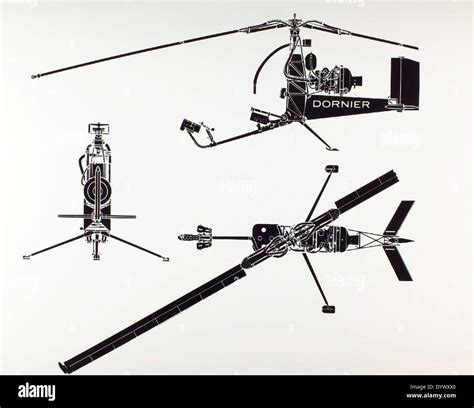
Post‑war German innovation in rotorcraft culminated in the Dornier Do 32, an ultralight single‑seat helicopter under 13 feet in length with a 24‑foot folding rotor. Designed for easy transport, the Do 32 disassembled into a trailer‑towed container that doubled as its takeoff pad. Its minimalist frame housed a 40 hp engine and a unique recoil‑recovery rotor start system, enabling 50 minutes of flight endurance. Though showcased at the 1963 Paris Air Show in a two‑seat variant, lack of commercial interest and marginal performance confined the Do 32 to a handful of prototypes. Nevertheless, its compact folding design influenced later personal and urban air mobility concepts, proving that helicopter technology could be miniaturized for rapid deployment.
Curtiss‑Wright VZ‑7
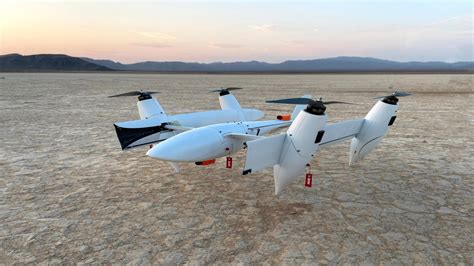
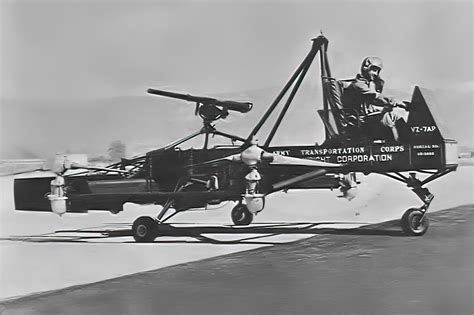
The U.S. Army’s search for a light VTOL utility vehicle produced the Curtiss‑Wright VZ‑7, a 17 ft by 16 ft quad‑prop platform intended for battlefield logistics. Four 200 hp turboshaft engines powered ducted rotors mounted at each corner of a rectangular open‑deck frame. Despite its crude appearance, pilots found the VZ‑7 remarkably stable and easy to control in hover and low‑speed flight. However, top speed under 80 mph and a service ceiling below 4,000 feet fell well short of Army requirements. Funding was pulled after 15 flight tests, but the VZ‑7’s quadcopter layout presaged modern unmanned aerial vehicles and personal air vehicles.
Hiller YH‑32 Hornet
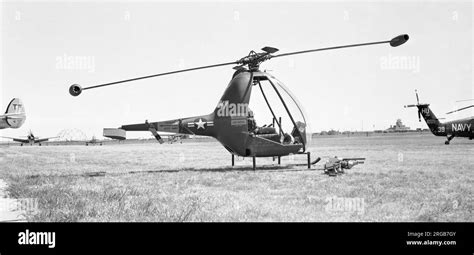
In the late 1950s, Hiller Aircraft experimented with ramjet tip‑jets on its YH‑32 Hornet, creating a compact two‑seat helicopter just 13 feet long with a 23‑foot rotor diameter. Instead of a central gearbox, small ramjet engines mounted at each rotor tip generated lift by combusting fuel drawn through hollow blades. While this eliminated complex transmission systems, the extreme noise and vibration made the Hornet unsuitable for covert missions. Tests by the U.S. Army and Navy revealed high fuel consumption and limited endurance, as ramjets only reach peak efficiency at supersonic tip speeds. The project ended in 1961, but the Hornet demonstrated an unconventional path to helicopter lift that informed later research into tip‑jet and electric‑drive rotorcraft.
McDonnell XF‑85 Goblin
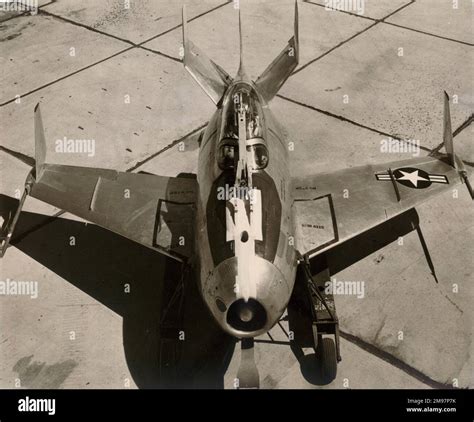
Finally, the McDonnell XF‑85 Goblin stands as the ultimate parasite fighter concept. Conceived in 1947 to defend Convair B‑36 bombers beyond fighter‑escort range, this 14‑foot‑long jet tucked into the bomber’s bomb bay and deployed via a trapeze mechanism. Its stubby 21‑foot wings and tailless design prioritized compact stowage over high speed. Test launches from a modified B‑29 in 1949 proved the Goblin could fly and re‑hook under safe conditions, yet turbulence from the mother ship made consistent recovery impossible. By 1950, aerial refueling had matured enough to negate the parasite concept, and the XF‑85 program was terminated. Though it never saw combat, the Goblin’s bold integration of miniature fighters into strategic bombers remains a singular achievement in military aviation lore.