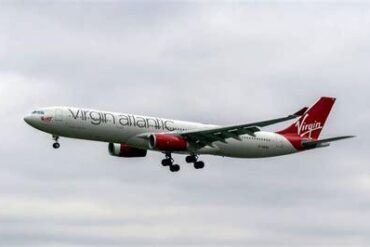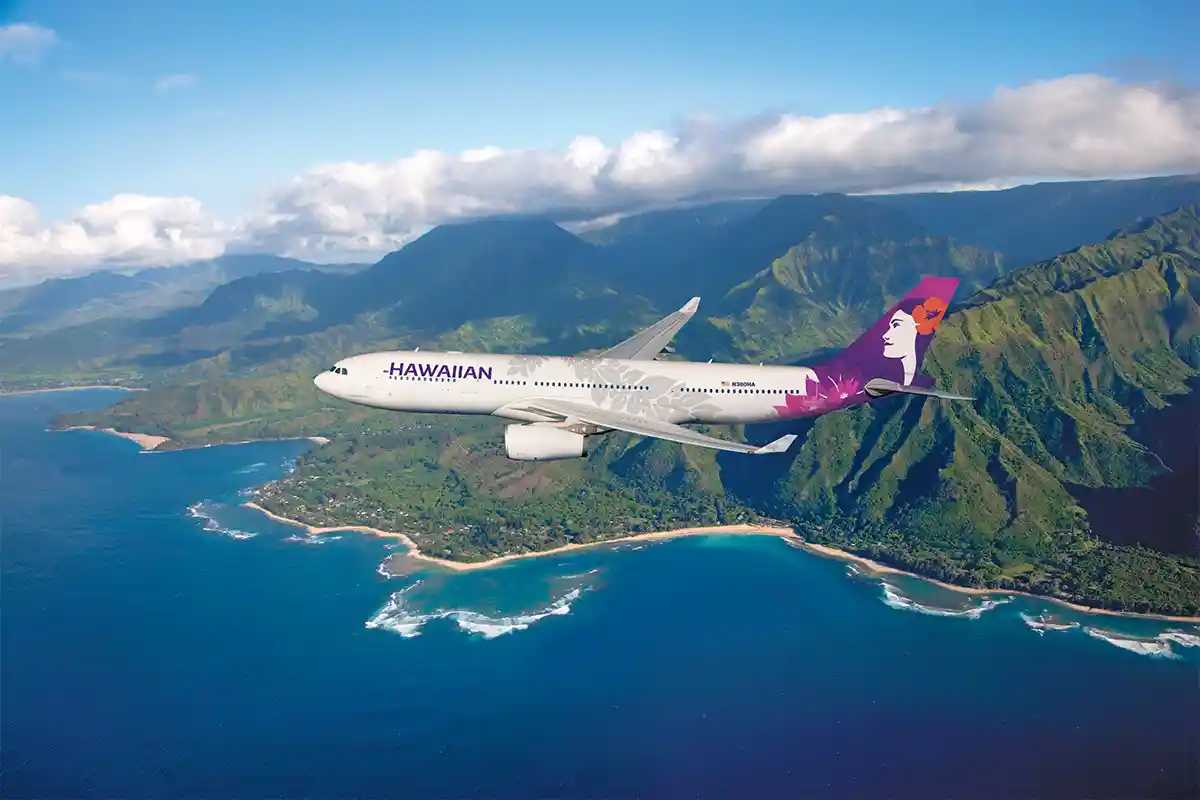
Despite the global popularity of the Airbus A330, only two US-based airlines—Delta Air Lines and Hawaiian Airlines—currently operate the widebody twinjet in their fleets. In a country where long-haul operations and fleet expansion are pivotal to market dominance, the limited adoption of the A330 by American carriers is not merely a matter of aircraft performance or cost-efficiency. It is a reflection of decades-long industrial loyalties, strategic fleet planning, and geopolitical undercurrents that extend beyond aviation economics.
The A330, with its reliable performance and competitive operational costs, enjoys widespread usage in Europe, Asia, and the Middle East. Yet, its footprint in the United States is surprisingly narrow. Understanding this curious divide requires an in-depth look at fleet history, airline mergers, strategic alliances, and even international trade policies.
The Boeing Bond: A Legacy of Loyalty and Economics
The “Big Three” US carriers—Delta, United, and American Airlines—have long demonstrated unwavering support for Boeing, America’s aerospace titan. For decades, these airlines have prioritized Boeing aircraft for widebody needs, such as the 757, 767, 777, and more recently, the 787 Dreamliner. This loyalty is not purely sentimental—it’s entrenched in the mutual economic interest of supporting a domestic manufacturer that employs thousands of American workers and maintains deep institutional ties with the federal government.
The Airbus A330, although technologically competitive, never gained the same traction due to the presence of these entrenched Boeing models. The 757 and 767 already filled the market gap the A330 was designed to serve—medium- to long-haul, high-efficiency routes. Meanwhile, the 777 took over ultra-long-range, high-capacity missions. The 747’s retirement further elevated the role of Boeing’s own offerings, solidifying Boeing’s dominance in American widebody fleets.
Delta’s A330s: Inherited, Expanded, and Evolving
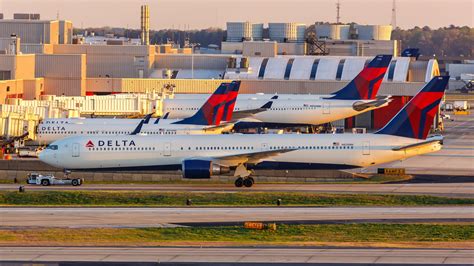
Delta Air Lines didn’t originally choose the A330—it inherited them. When Delta merged with Northwest Airlines in 2008, it absorbed 32 A330 aircraft already in operation, including 11 A330-200s and 21 A330-300s. What could have been a transitional fleet proved instead to be a valuable asset. Delta opted not just to keep them, but to expand its Airbus widebody portfolio.
Over the next decade, Delta deepened its Airbus investment by acquiring more A330-300s and eventually ordering nearly 40 A330-900neos. Today, the carrier operates both the older and newer variants of the A330, integrating them into its global route network across the Atlantic, South America, and Asia.
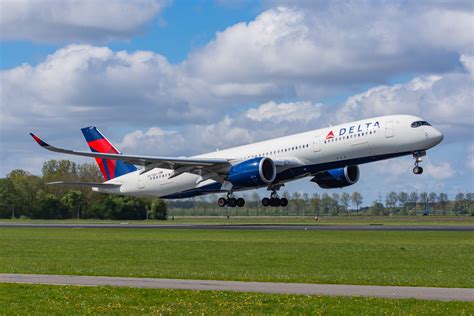
These aircraft now form a critical part of Delta’s long-haul strategy. In fact, Delta has retired its entire Boeing 777 fleet, choosing instead to standardize its international operations around Airbus’ A350-900 and A330neo. This decision further cements Airbus’ relevance within Delta’s strategy and signals a significant, possibly permanent, shift away from Boeing widebodies.
Hawaiian Airlines: A Practical Choice Turned Strategic Asset
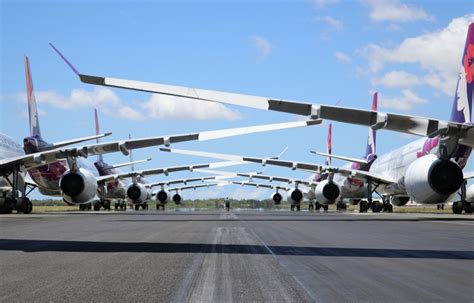
Hawaiian Airlines, operating from one of the world’s most geographically isolated archipelagos, needed an aircraft that could efficiently and reliably connect Hawaii to both North America and Asia. Over a decade ago, the airline selected the Airbus A330-200 as its widebody of choice, valuing the jet’s range, payload capacity, and fuel efficiency.
With a range of over 5,500 nautical miles and strong economics, the A330 allowed Hawaiian to provide nonstop service from Honolulu to destinations such as Los Angeles, Tokyo, and Seoul. The aircraft also improved customer experience through enhanced in-flight entertainment systems, making long-haul leisure travel more attractive.
According to fleet data, Hawaiian currently operates 24 A330-200s and 10 A330-300s. However, the future of these aircraft is now uncertain. With Alaska Airlines acquiring Hawaiian, some reports suggest a potential phase-out of the A330 in favor of Boeing 737 MAX aircraft or a realignment of long-haul operations toward Seattle.
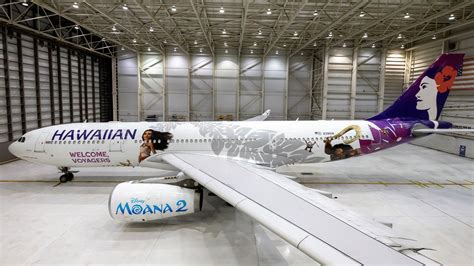
If Hawaiian shifts to narrowbody-focused operations or retires the A330s in favor of newer Boeing 787s on order, it could leave Delta as the only A330 operator in the United States, a dramatic testament to the aircraft’s tenuous position in American commercial aviation.
United Airlines and the A330: An Opportunity Never Realized
United Airlines, now the largest US carrier by fleet size, has conspicuously never flown the A330. Despite its vast international footprint and more widebodies than Delta and American combined, United has consistently favored Boeing’s long-haul offerings. The carrier’s fleet includes a substantial number of 777s and 787s, which dominate both transpacific and transatlantic routes.
United’s reluctance to diversify into Airbus widebodies isn’t just about performance metrics—it’s about fleet commonality, training efficiency, and geopolitical alignment. These factors make it less likely United will consider A330s, especially with its recent focus on consolidating 787 operations and preparing for the delayed 777X series.
The Airbus-Boeing Trade War: Tariffs, Subsidies, and Turbulence
The limited presence of the A330 in the United States is also shaped by international trade disputes. The US-EU aircraft subsidy conflict, one of the longest-running cases at the World Trade Organization (WTO), has added tariffs to Airbus aircraft imported into the United States. These penalties increased the purchase cost of European jets like the A330 for US airlines.
Although these tariffs have fluctuated with changing administrations, the uncertainty makes long-term planning around Airbus products less attractive to some American carriers. Boeing has also benefited from state-level tax incentives and direct federal aid, which the WTO later ruled were effectively illegal subsidies. Still, the result is the same—Airbus aircraft, especially those not already in fleets, face an uphill battle in entering the US market.
Narrowbody Dominance and Changing Route Strategies
Another reason why most US airlines haven’t embraced the A330 is due to changing route dynamics. Many carriers are shifting away from hub-and-spoke international systems and instead focusing on point-to-point travel using narrowbody aircraft with extended range. The rise of the A321XLR and 737 MAX 8/10 enables transatlantic and transcontinental service at a fraction of the cost of a widebody operation.
This shift has reduced the need for an aircraft like the A330 on many mid-capacity routes. Airlines like JetBlue have even launched transatlantic routes using narrowbody Airbus jets, bypassing traditional widebody choices altogether. The economics of long-haul flying are changing, and the A330’s sweet spot is being crowded from below by ultra-long-range narrowbodies and from above by newer, more efficient widebodies like the 787 and A350.
The Future of the A330 in the US: A Niche Role?
While the A330 remains a valuable part of Delta’s international operations and Hawaiian’s Pacific footprint, its future in the US looks increasingly niche. With American Airlines doubling down on the 787 Dreamliner, United’s deepening ties with Boeing, and Hawaiian possibly retiring the A330 fleet post-acquisition, there’s little indication of a broader A330 resurgence among US carriers.
Delta, however, is a notable exception. It has leaned heavily into Airbus, acquiring not only A330neos but also used A350s from LATAM. Delta CEO Ed Bastian confirmed the airline’s widebody future likely lies in Airbus hands, describing the fleet plan as a “pretty healthy stream” of new aircraft.
Unless there’s a seismic shift in market conditions or a breakdown in US-European trade tensions, the A330 may remain a two-airline story in the United States—an oddity in a global landscape where the aircraft continues to deliver value.