The Boeing 747, affectionately known as the “Jumbo Jet,” has been a symbol of global aviation for over half a century. Yet today, only four passenger airlines continue to operate this iconic aircraft — a far cry from its golden age when it dominated long-haul skies. This sharp decline raises an essential question: Why do so few airlines still fly the Boeing 747 as a passenger jet? The answer lies in a complex interplay of economics, efficiency, fleet strategy, and global aviation trends.
The Golden Era of the Boeing 747
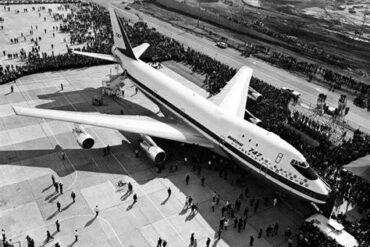
When the Boeing 747 first entered service in 1970 with Pan American World Airways, it was nothing short of revolutionary. It introduced long-haul, high-capacity travel, dramatically lowering per-seat costs and opening international air travel to the masses. For decades, it was the backbone of many flag carriers — Japan Airlines, British Airways, Qantas, Singapore Airlines, United, and Delta — moving millions of passengers across oceans. With 1,573 units delivered over five decades, the 747 cemented itself as one of the most important commercial aircraft in aviation history.
However, the same features that made the 747 a marvel of its time — its four-engine configuration, massive size, and long-range capabilities — ultimately became the very reasons for its gradual decline in the modern aviation landscape.
Why Only Four Airlines Still Operate Passenger 747s
As of 2025, just four airlines still operate the 747 in scheduled passenger service:
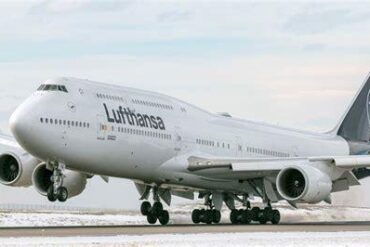
- Lufthansa – 24 units (747-400s and 747-8s)
- Air China – 5 units (747-400s and 747-8s)
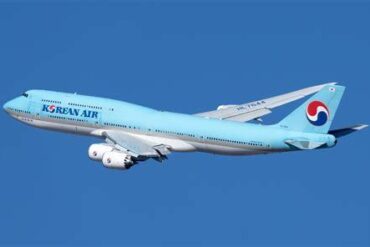
- Korean Air – 4 units (747-8s)
- Rossiya Airlines – 2 units (747-400s)
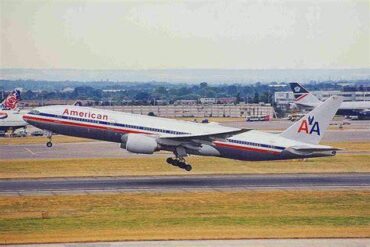
This is a sharp reduction compared to the 1990s and early 2000s when dozens of carriers used the jumbo jet. British Airways, once the world’s largest 747 operator, retired its fleet in 2020. Delta and United retired theirs in 2017. Air France ended 747 operations in 2016, while Japan Airlines bowed out as early as 2011.
The Efficiency Problem: Quad-Engines vs. Twin-Engines
The core reason for the 747’s decline is fuel efficiency. The quad-engine configuration, once essential for transoceanic flights, now lags far behind the twin-engine giants like the Boeing 787 Dreamliner and Airbus A350. These new aircraft can carry nearly as many passengers as a 747 but at 30–40% less fuel burn per seat, making them significantly cheaper to operate.
Airlines today are laser-focused on operational efficiency, and a fully loaded 747 often cannot match the cost per available seat mile (CASM) of its modern counterparts. Simply put, why fly a 747 when a 787 or A350 can do the job cheaper and more sustainably?
Lufthansa: The Last True Jumbo Jet Operator
Of the remaining operators, Lufthansa is by far the largest with 24 Boeing 747s, including six 747-400s and 18 747-8 Intercontinentals. These aircraft remain essential to Lufthansa’s high-capacity long-haul routes. However, Lufthansa is also preparing for the future, with 83 new widebodies on order — including Airbus A350s, Boeing 787-9s, and the much-delayed Boeing 777-9. The German flag carrier has made it clear: the 747s are staying only until replacements arrive, likely making Lufthansa the last true operator of the type well into the 2030s.
Korean Air & Air China: Hanging On For Now
Korean Air operates four 747-8s (plus one stored) and has already sold five 747-8s to Sierra Nevada Corp for conversion into E-4B replacement aircraft for the US Air Force. The airline’s CEO, Walter Cho, has openly stated that the 747s and even the A380s are only still in service because of delayed aircraft deliveries. Korean Air has Boeing 787s, 777-9s, and Airbus A350s on order, and once these are delivered, the 747 fleet will be retired.
Air China, meanwhile, operates a mix of 747-400s and 747-8s. It has not made significant new widebody orders recently, possibly due to geopolitical tensions and its potential reliance on the upcoming Chinese-built COMAC C929. Some of its 747-8s are used for VIP governmental transport, keeping the type active longer than purely commercial needs would justify.
Rossiya Airlines: A Return Forced by Sanctions
Perhaps the most unusual story belongs to Rossiya Airlines, a subsidiary of Aeroflot. After initially retiring its 747-400 fleet, Rossiya reactivated several aircraft in 2024 due to Western sanctions and the seizure of foreign-leased planes. These aging jumbo jets now operate domestic routes within Russia, such as Moscow to Sochi and Magadan, with an average aircraft age of 25 years. It’s unlikely these aircraft will see long-term service beyond a stopgap role.
The 747-8: Boeing’s Last Attempt at a Passenger Jumbo
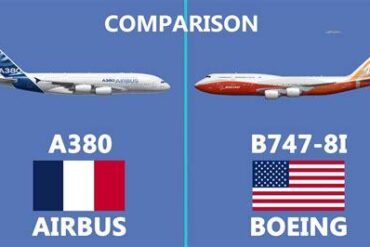
The Boeing 747-8 was meant to revitalize the 747 family. Launched in the late 2000s, it featured new engines, improved aerodynamics, and increased capacity. Yet, it failed to attract many customers, with only 48 passenger units delivered out of more than 150 total 747-8s (the rest were freighters). Only three airlines — Lufthansa, Korean Air, and Air China — purchased the passenger variant, compared to 251 Airbus A380s delivered before production ended.
The Jumbo Jet’s Future: A Freighter and VIP Icon
While its passenger role is dwindling, the 747 remains a workhorse in cargo operations. Airlines like Atlas Air, UPS, Cargolux, and Kalitta Air operate dozens of 747 freighters worldwide. Moreover, the 747 still enjoys specialized roles: the U.S. Air Force’s new Air Force One will be a 747-8, and several governments continue to use the 747 as VIP transport.
In total, around 424 Boeing 747s remain in service globally, though most are now freighters.
When Will the Last Passenger 747 Fly?
The retirement timeline for the last passenger 747 is approaching. Korean Air intends to phase out its remaining 747-8s by 2026, while Lufthansa is likely to continue operating them into the early 2030s. Air China and Rossiya could exit even sooner depending on replacement availability. Thus, Lufthansa may well become the final passenger airline flying the iconic jumbo jet.
Conclusion: The End of an Era, But a Lasting Legacy
The Boeing 747 changed aviation forever, making long-haul international travel accessible, luxurious, and iconic. Its distinctive hump and vast cabins became symbols of a new era of global connectivity. Yet in a world driven by efficiency, sustainability, and cost-cutting, the jumbo jet is no longer viable for most airlines.
Still, as freighters, VIP transports, and cultural icons, the 747’s legacy will endure long after the last passenger flight. For aviation enthusiasts, flying on a 747 in 2025 is not just a journey — it’s a chance to experience a piece of aviation history before it disappears from our skies.