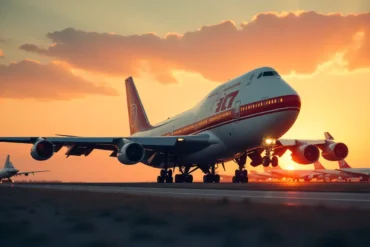
The mid-1960s marked a moment of profound uncertainty and ambition in commercial aviation. Airlines were expanding faster than airports could handle, passenger numbers were climbing at unprecedented rates, and manufacturers were forced to confront a fundamental question: should the future of flight be faster, or should it be bigger? While much of the industry fixated on the seductive promise of supersonic travel, Boeing made a counterintuitive decision that would redefine global air transport. It chose capacity over speed, accessibility over exclusivity, and scale over elegance. That decision led directly to the creation of the Boeing 747, the world’s first widebody jetliner and one of the most consequential machines ever built.
This aircraft was not conceived as a safe or incremental evolution. It was a radical departure that challenged existing assumptions about aircraft size, airport infrastructure, engine technology, and airline economics. At a time when many experts believed that subsonic airliners would soon be rendered obsolete by Mach 2 transports, Boeing committed its entire corporate future to a giant airplane that prioritized volume, range, and cost efficiency. The fact that this gamble succeeded so spectacularly is one of the great industrial stories of the twentieth century.
Understanding why Boeing built the 747 requires looking beyond its iconic silhouette. It demands an examination of market pressures, technological breakthroughs, competitive rivalries, and strategic philosophy. The 747 was not the product of a single insight, but the convergence of multiple forces that made such an aircraft not only desirable, but inevitable.
The Boeing 707 Had Reached Its Absolute Limits
Before the widebody era could begin, Boeing first had to confront the limitations of its own success. The Boeing 707 had revolutionized air travel when it entered service in the late 1950s, transforming jet flight from a novelty into a commercial standard. Airlines loved it, passengers trusted it, and Boeing dominated the global market because of it. Yet by the mid-1960s, cracks were beginning to appear in what had once seemed like an endlessly adaptable design.
Passenger traffic was growing at roughly fifteen percent per year, driven by economic growth, rising middle-class incomes, and the normalization of international travel. Airlines needed more seats, not marginally more, but dramatically more. The 707’s narrow fuselage, however, was a product of early jet-age conservatism. It simply could not accommodate wider seating without a fundamental redesign. Stretching the fuselage added weight and drag, compromising range and performance while delivering only modest capacity gains.
By the time Boeing engineers evaluated the idea of a so-called “Super 707,” it became clear that such an aircraft would require new wings, new engines, new systems, and new structural solutions. In practical terms, it would not be a 707 at all. This realization forced Boeing to abandon incrementalism and embrace a clean-sheet design philosophy. Instead of refining the narrowbody concept, the company began to envision a twin-aisle cabin capable of seating ten passengers abreast and carrying more than twice the number of travelers across oceans in a single flight.
In hindsight, the limitations of the 707 were not a failure but a catalyst. They compelled Boeing to recognize that the future of long-haul aviation lay not in stretching old ideas, but in inventing an entirely new class of aircraft.
Pan Am and Juan Trippe Forced the Issue
Few aircraft in history are as closely associated with a single airline as the Boeing 747 is with Pan American World Airways. At the center of this relationship stood Juan Trippe, Pan Am’s visionary and famously demanding founder. Trippe had already reshaped aviation once by partnering with Boeing to introduce the 707, and by the mid-1960s, he was determined to do it again.
Airports like New York’s JFK and London Heathrow were becoming congested, with runway slots increasingly scarce. Trippe understood that the only sustainable solution was to move more passengers per flight rather than simply adding more flights. He pressed Boeing’s leadership to design an aircraft that could carry twice as many passengers as the 707 while dramatically reducing seat-mile costs.
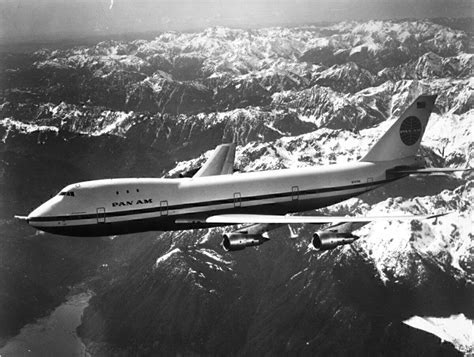
The resulting exchange between Trippe and Boeing president Bill Allen has since become aviation legend. When Allen suggested that Boeing would build such an aircraft only if Pan Am committed to buying it, Trippe responded that he would buy it if Boeing committed to building it. The handshake agreement that followed culminated in a staggering order for twenty-five aircraft, valued at over half a billion dollars. This single decision effectively launched the 747 program and provided the financial credibility Boeing needed to proceed.
Pan Am’s influence went beyond funding. Its emphasis on passenger experience shaped the aircraft’s interior philosophy, from spacious cabins to the now-famous upper-deck lounge. When Pan Am inaugurated 747 service between New York and London in January 1970, it did more than introduce a new airplane. It ushered in the era of mass international tourism, forever altering who could afford to cross oceans by air.
Engine Technology Finally Caught Up With Ambition
The true enabler of the widebody concept was not structural ingenuity or aerodynamic insight, but propulsion. Without a new generation of engines, an aircraft the size of the 747 would have been economically and operationally impossible. The breakthrough came in the form of the Pratt & Whitney JT9D, one of the world’s first high-bypass turbofan engines.
Earlier jetliners relied on turbojets or low-bypass turbofans that were loud, thirsty, and limited in thrust. The JT9D changed that equation entirely. With thrust ratings exceeding forty-six thousand pounds and a bypass ratio far higher than anything previously in service, it delivered both power and efficiency at unprecedented levels. This allowed Boeing to design an aircraft that could lift enormous weights while still achieving the range airlines demanded.
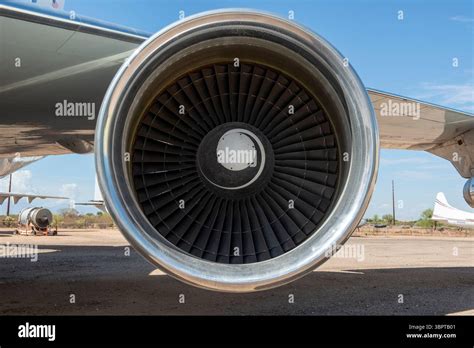
The transition was not smooth. Early testing revealed severe challenges, including engine reliability problems and structural distortions in the nacelles. At one point, the entire program teetered on the edge of collapse, with delays and cost overruns threatening Boeing’s survival. Yet through relentless engineering effort and close collaboration between Boeing and Pratt & Whitney, the issues were resolved.
The success of the JT9D extended far beyond the 747. It laid the groundwork for an entire generation of widebody aircraft, powering designs from multiple manufacturers and proving that large, efficient subsonic airliners were not only viable, but commercially dominant.
A Military Defeat That Shaped a Civilian Icon
One of the most ironic chapters in the 747’s origin story is that it owes much of its existence to a failure. In the early 1960s, the U.S. Air Force launched the CX-HLS competition to develop a massive strategic transport aircraft. Boeing invested heavily in the project, proposing a wide-fuselage design with a raised cockpit that allowed unobstructed nose loading.
When the contract was awarded to Lockheed instead, Boeing was left without a customer but not without knowledge. The research conducted for the military program had forced Boeing engineers to confront the challenges of building extremely large aircraft, from structural loads to manufacturing logistics. Rather than discarding this expertise, Boeing repurposed it for a commercial application.
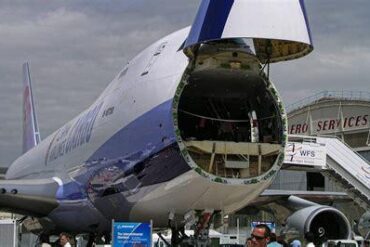
The raised cockpit concept, initially intended for military cargo operations, became one of the 747’s defining features. It allowed the aircraft to retain nose-loading capability for freighter versions while creating the distinctive upper-deck “hump” that passengers would come to associate with prestige and luxury. What began as a military requirement evolved into one of the most recognizable silhouettes in aviation history.
Outmaneuvering Competitors Through Scale
Boeing’s decision to pursue a very large widebody did not occur in isolation. Both Douglas and Lockheed were exploring their own widebody concepts, many of them inspired by the same military research programs. Douglas briefly studied enormous double-deck aircraft capable of carrying well over five hundred passengers, while Lockheed proposed commercial derivatives of the C-5 Galaxy that bordered on the fantastical.
Yet these concepts struggled to balance ambition with economics. The aircraft were either too heavy, too complex, or too dependent on uncertain market demand. Ultimately, both companies pivoted toward smaller trijets: the DC-10 and the L-1011 TriStar. These aircraft competed fiercely with each other, splitting a market segment that could not sustain two nearly identical designs.
Boeing, by contrast, occupied a category of its own. The 747 offered unmatched capacity, range, and cost-per-seat efficiency. For airlines seeking a true flagship capable of intercontinental operations at scale, there was no alternative. By committing to size when its competitors hesitated, Boeing secured a dominant position that would endure for decades.
A Product-First Philosophy That Risked Everything
The 747 was not merely a technological gamble; it was a financial one of staggering proportions. Development costs soared, pushing Boeing’s debt to levels that exceeded the company’s net worth. Critics openly questioned whether the program would bankrupt the firm. Internally, there was little margin for error.
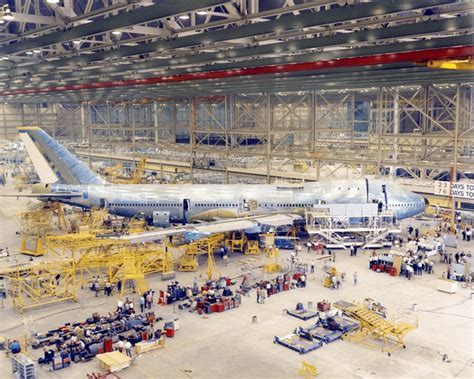
What distinguished Boeing’s approach was its unwavering commitment to engineering excellence. The 747 incorporated advanced high-lift wing designs, multiple layers of system redundancy, and structural innovations that set new industry standards. The company assembled a team of thousands under the leadership of Joe Sutter, compressing development timelines that would be considered impossible by modern standards.
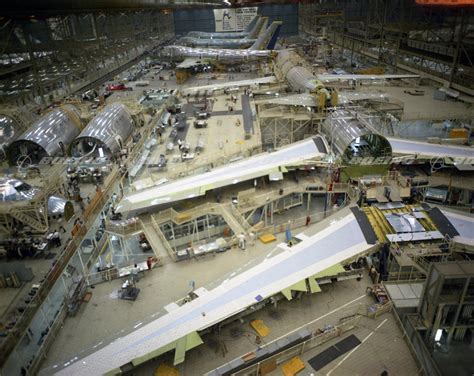
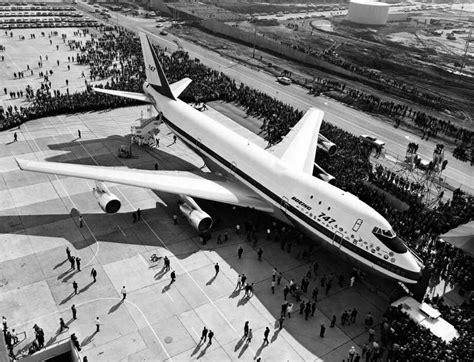
To build the aircraft, Boeing constructed the world’s largest factory in Everett, Washington, a physical manifestation of its belief that scale itself was a competitive advantage. This product-first philosophy prioritized long-term capability over short-term profit, betting that airlines would ultimately reward superior engineering with loyalty and volume orders.
When the 747 entered service in 1970, it validated that philosophy decisively. The aircraft did not merely meet expectations; it exceeded them, reshaping airline networks, airport design, and passenger culture on a global scale.
How the Boeing 747 Changed the World Forever
The legacy of the Boeing 747 extends far beyond production numbers or technical specifications. As the first widebody, it democratized long-haul travel, making international journeys accessible to millions who had previously been priced out of the market. It enabled the rise of global tourism, accelerated cultural exchange, and became a symbol of modernity for cities around the world.
Its adaptability ensured longevity. Passenger variants gave way to freighters, special missions, and even space shuttle transport. Decades after its first flight, the 747 remained relevant not because it was fast, but because it was useful on a scale no other aircraft could match.
The decision to build the 747 was born from constraints, shaped by competition, and enabled by technology. Yet its success ultimately rested on a deeper truth: Boeing understood that aviation’s future belonged to those who could move people efficiently, reliably, and at scale. By choosing size over speed, the company did not merely build an airplane. It built the foundation of modern global air travel.