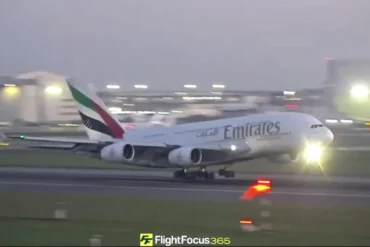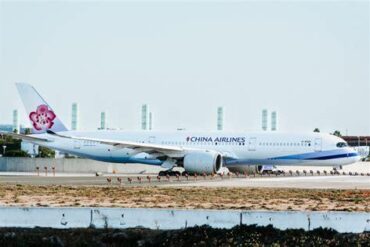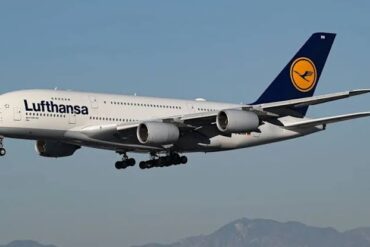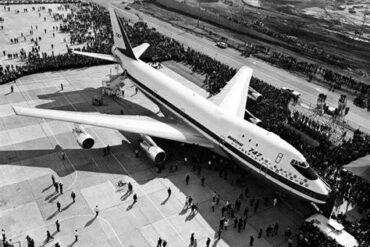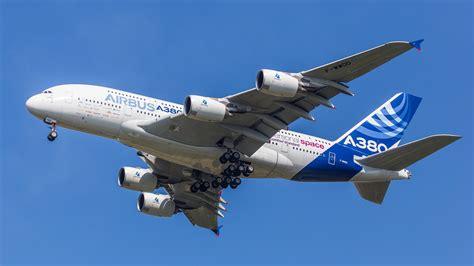
Modern airports are engineering marvels, but for decades their design philosophy revolved around one aircraft: the Boeing 747. The iconic jumbo jet established the dimensions, pavement standards, gate layouts, and operational assumptions that shaped international aviation infrastructure throughout the late twentieth century. Then came the Airbus A380. With a maximum takeoff weight of 575 tonnes and dimensions that pushed beyond every established standard, the world’s largest passenger aircraft forced airports to rethink everything beneath and above the concrete.
Instead of fitting comfortably into existing facilities, the superjumbo demanded an entirely new category of infrastructure. Runways, taxiways, terminal gates, bridges, passenger flow systems, and even air traffic spacing rules had to evolve. The arrival of the A380 became one of the most expensive and ambitious periods of airport modernization in aviation history.
After years of airports being optimized around the Boeing 747-400, the introduction of a much larger aircraft transformed engineering assumptions that many experts had expected to remain unchanged for generations.
The result was a global wave of upgrades costing billions of dollars and permanently changing the physical landscape of international aviation.
Airbus A380 Dimensions Broke Airport Standards Built Around The Boeing 747
For decades, the Boeing 747 represented the upper limit of commercial aircraft design. Airport planners worldwide constructed terminals, taxiways, and runway spacing according to ICAO Code E standards. Those standards accommodated aircraft with wingspans up to 65 meters, perfectly matching the Boeing 747-400.
The Airbus A380 shattered those assumptions.
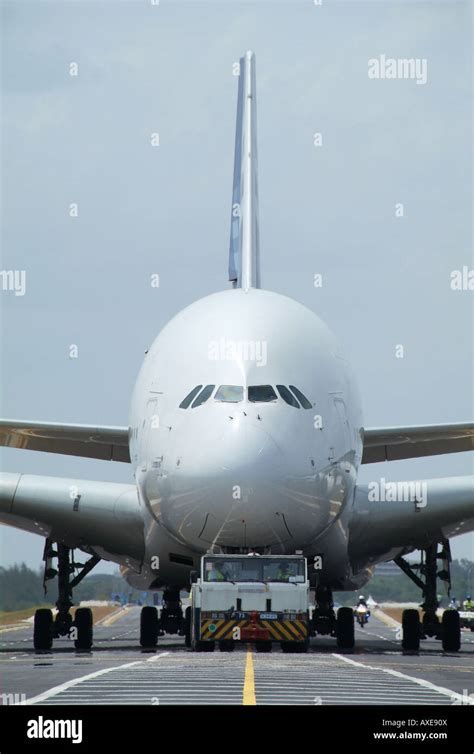
With a wingspan measuring nearly 80 meters, the giant double-decker exceeded Code E limitations and became the first major passenger aircraft requiring widespread adoption of ICAO Code F infrastructure. The increase may appear modest on paper, but it fundamentally altered how airports handled aircraft movements.
Many major hubs, including London Heathrow, Tokyo Narita, New York JFK, and Frankfurt, had been designed with tightly spaced taxiways that maximized efficiency. The A380’s enormous wingspan suddenly introduced the risk of wingtip conflicts between adjacent aircraft.
Ground controllers had to impose wider separation distances, preventing simultaneous operations on neighboring taxiways. In busy airports where every meter mattered, the movement of a single A380 often slowed traffic around it.
This transformed ordinary taxi operations into carefully coordinated sequences involving temporary restrictions and altered traffic flows.
Why The A380’s 575-Tonne Weight Created Hidden Structural Problems
Although the aircraft’s massive size attracted attention, its extraordinary weight posed even greater challenges.
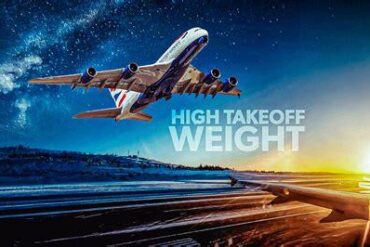
At maximum takeoff weight, the Airbus A380 tips the scales at approximately 1,268,000 pounds, or 575 tonnes. Such mass generated concerns extending far beneath the visible pavement surface.
Airbus engineers equipped the aircraft with a sophisticated landing gear arrangement featuring twenty-two wheels to spread loads across a wider area. This design prevented excessive surface pressure and kept wheel loads comparable to those of the Boeing 747.
However, airport engineers soon discovered that the challenge was not limited to runways.
The problem originated underneath.
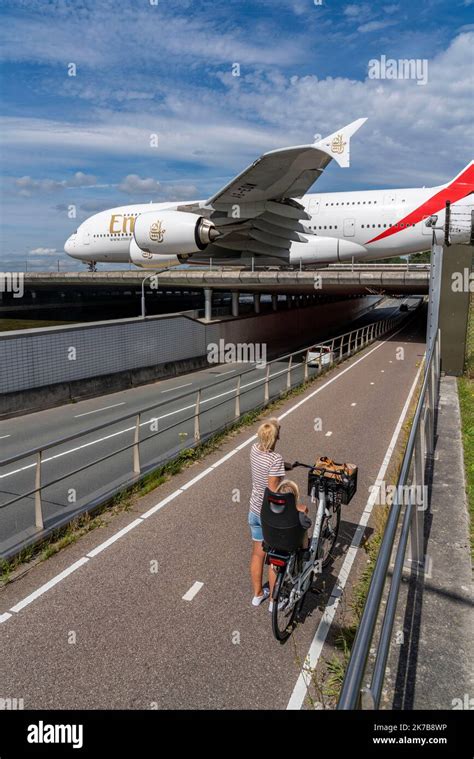
Aircraft loads penetrate through asphalt and concrete into supporting foundations and subsoil layers. Existing underground structures—including culverts, tunnels, utility corridors, drainage systems, and fuel pipelines—were often designed around the stresses imposed by the 747.
The A380 introduced entirely new bending forces.
Many taxiway bridges and overpasses required extensive reinforcement to prevent cracking or structural failure. Specialized concrete and deep foundation strengthening became necessary at numerous airports.
These upgrades frequently cost tens of millions of dollars and involved years of engineering studies.
Pavement Damage Became A Major Long-Term Concern
Runways generally handle moving aircraft loads efficiently because the stresses are temporary.
Stationary aircraft represent a different problem.
When an A380 remains parked at a gate for hours while passengers board and fuel tanks are filled, its immense weight creates concentrated pressure points. Engineers discovered that prolonged static loads could gradually deform asphalt surfaces, causing rutting and settlement.
Gate areas required thicker pavement layers and stronger foundations.
Without these reinforcements, repeated A380 operations could accelerate deterioration and increase maintenance requirements. Airports faced the prospect of more frequent repairs and operational disruptions.
In many cases, strengthening invisible infrastructure beneath terminal aprons became one of the largest expenses associated with accommodating the superjumbo.
Wider Turns Required Airports To Redesign Taxiways
The Airbus A380 is not simply wider than the Boeing 747; its wheel track and turning characteristics are also significantly different.
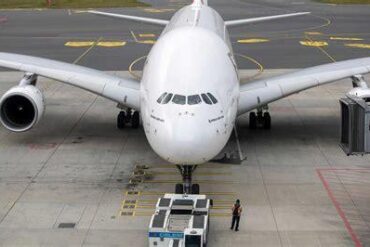
During sharp turns, the aircraft’s landing gear follows a much tighter path than its nose. If pavement edges are too narrow, outer wheels can slip onto soft shoulders, potentially causing structural damage or becoming stuck.
Existing taxiway curves designed for 747 operations often proved inadequate.
Airports had to enlarge turning radii and install wider paved shoulders. Additional safety areas became essential to protect against accidental excursions.
The Federal Aviation Administration initially considered widening runways from 150 feet to 200 feet to accommodate the aircraft. Eventually, authorities adopted an alternative approach involving extensive shoulder construction instead of full runway widening.
These shoulders provided valuable protection against jet blast erosion and prevented loose debris from being sucked into engines.
The modifications extended far beyond cosmetic changes. Entire sections of airfields had to be reconstructed to maintain safe operations.
Land Constraints Made Airport Expansion Extremely Difficult
New airports built on open land could incorporate Code F requirements relatively easily.
Older airports faced a different reality.
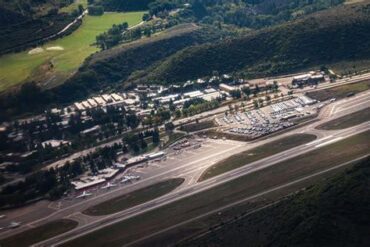
Many international hubs operate within tightly confined environments surrounded by roads, urban development, cargo facilities, rail lines, and existing terminals.
Expanding taxiway separation distances often meant demolishing existing infrastructure.
Some airports simply lacked the physical space required for major modifications.
As a result, airports adopted operational compromises. Special routes were created exclusively for A380 movements. Certain taxiways could not be used simultaneously. In some locations, tug vehicles were required to tow aircraft through narrow areas instead of allowing pilots to taxi under engine power.
These restrictions reduced flexibility and complicated airport operations.
Jet Blast Forces Introduced New Engineering Challenges
Each of the A380’s four engines produces enormous thrust.
During taxi and takeoff, the resulting jet blast can damage pavement, destroy lighting systems, and propel debris at dangerous speeds.
Loose stones or fragments entering engines pose serious risks to both the A380 and surrounding aircraft.
To mitigate these hazards, airports reinforced pavement shoulders and strengthened lighting fixtures. Additional safety zones reduced the likelihood of debris being ingested by engines.
Ground infrastructure that functioned perfectly with Boeing 747 traffic suddenly required significant upgrades.
The superjumbo’s size transformed airfield durability requirements.
Terminal Gates Designed For The Boeing 747 Became Inadequate
Infrastructure challenges continued after the aircraft reached the gate.
A standard Boeing 747 typically carries around 400 passengers. The Airbus A380 can accommodate more than 500 passengers in conventional layouts and nearly 850 in all-economy configurations.
Terminal waiting areas designed around 747 passenger volumes struggled to process such numbers efficiently.
Security checkpoints, boarding areas, immigration counters, baggage systems, and customs facilities experienced severe congestion whenever multiple A380 flights operated simultaneously.
The bottlenecks highlighted a reality often overlooked during airport planning.
Handling passengers can be as demanding as handling aircraft.
Multi-Level Boarding Bridges Required Massive Investments
Traditional jet bridges proved insufficient for the double-decker giant.
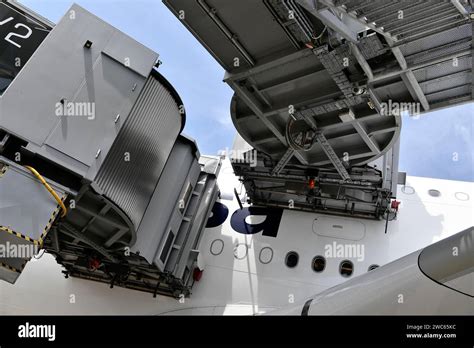
Efficient boarding required access to both decks simultaneously. Airports invested heavily in sophisticated dual and triple boarding bridge systems capable of connecting with upper and lower cabin doors.
These structures incorporated hydraulic systems, alignment sensors, and reinforced support mechanisms.
Installing them involved strengthening terminal walls and redesigning gate areas.
The costs were substantial.
Furthermore, gates customized for A380 operations lost flexibility. They became specialized facilities unsuitable for many smaller aircraft.
Airports effectively sacrificed versatility to accommodate a limited number of superjumbo flights.
Ground Equipment Had To Grow Alongside The Aircraft
Airport support equipment also required modernization.
Conventional catering trucks lacked sufficient height to reach upper-deck galleys. Standard baggage loaders struggled with elevated cargo compartments. Maintenance platforms and service vehicles required redesign.
Fueling systems needed greater capacity to service enormous fuel loads efficiently.
Pushback tractors became more powerful.
Even lavatory service trucks and cleaning equipment evolved to handle the dimensions of the giant airliner.
Entire ecosystems of support infrastructure changed because of one aircraft.
The A380 Created An Air Traffic Control Paradox
The superjumbo was designed to maximize airport capacity by transporting more passengers per flight.
Ironically, it also reduced runway throughput.
The massive wings generate powerful wake vortices behind the aircraft. These turbulent air currents can upset smaller airplanes following too closely.
To ensure safety, regulators established a separate wake turbulence category called “Super.”
Aircraft behind an A380 require greater spacing during approach and departure.
Heavy aircraft such as the Boeing 747 typically maintain five nautical miles of separation. Smaller aircraft require even larger distances.
These expanded intervals slow arrival and departure rates.
At congested airports, inserting a single A380 into the traffic sequence could disrupt the rhythm of operations and reduce the number of aircraft handled each hour.
The aircraft intended to ease congestion sometimes contributed to it.
Why Billions Spent On The A380 Continue To Benefit Aviation
Although airlines increasingly favor fuel-efficient twin-engine aircraft, the infrastructure investments inspired by the Airbus A380 remain highly valuable.
Modern aircraft such as the Airbus A350-1000 and Boeing 777X benefit directly from Code F airfield standards established during the superjumbo era.
The Boeing 777X employs folding wingtips, allowing it to take advantage of larger aerodynamic surfaces while maintaining compatibility with existing gate infrastructure.
Wider taxiways, stronger bridges, reinforced pavement, and advanced terminal systems continue serving newer aircraft generations.
The legacy of the A380 extends far beyond the aircraft itself.
How The Airbus A380 Permanently Changed Global Airport Design
The Airbus A380 represented more than a larger airliner. It became an engineering catalyst that forced airports to challenge assumptions established during the Boeing 747 era.
Its 575-tonne maximum weight exposed weaknesses hidden beneath pavement. Its enormous wingspan exceeded established standards. Its passenger capacity stretched terminals to their limits. Its wake turbulence altered air traffic procedures.
Airports around the world responded with billions of dollars in upgrades that transformed aviation infrastructure forever.
Even as airlines retire portions of their A380 fleets, the reinforced runways, widened taxiways, strengthened bridges, and towering multi-level jet bridges remain.
They stand as monuments to an era when aviation dared to build an aircraft so enormous that the world itself had to adapt.