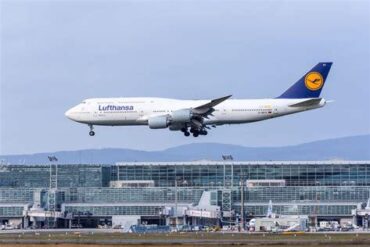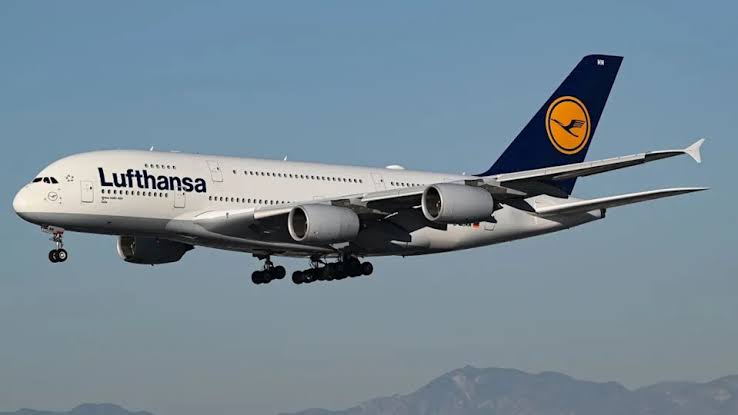
A Lufthansa Airbus A380 operating a transatlantic service from San Francisco to Munich was forced into an unexpected diversion to Boston after a serious onboard disturbance escalated into a safety intervention. The aircraft, carrying 508 passengers, was mid-journey over the North Atlantic when crew members responded to an alleged assault incident in the cabin. Following the situation onboard, the flight crew made the decision to land at Boston Logan International Airport, a move that immediately transformed a routine long-haul service into a complex and costly operational disruption. What should have been a standard intercontinental rotation quickly became a case study in how human behavior can trigger significant consequences for modern aviation systems, especially when large widebody aircraft are involved.
The Airbus A380, as the world’s largest passenger aircraft, introduces a level of operational complexity that amplifies every disruption. Diversions involving the type are not simply rerouted landings; they are coordinated logistical events requiring rapid alignment between airport authorities, ground handlers, security teams, and airline operations centers. At airports like Boston, even with advanced infrastructure, accommodating an unscheduled superjumbo arrival demands immediate resource allocation, specialized gate positioning, and extensive passenger handling procedures. Costs begin accumulating from the moment the diversion is declared, including fuel adjustments, landing charges, and extended ground services that must be scaled to support more than five hundred passengers.
Operational Shockwaves of an A380 Diversion Across Atlantic Networks
Beyond the immediate airport response, the ripple effects of a diversion extend deep into airline network planning and fleet utilization. Lufthansa’s operations are tightly scheduled across continents, meaning that any unscheduled stop can disrupt aircraft rotations, crew duty limits, and onward connections in Munich and other European hubs. The sudden need to manage passengers, reposition aircraft, and adjust staffing creates a chain reaction that operational control centers must resolve in real time.
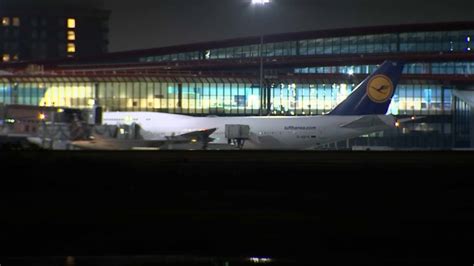
Financially, the burden of such events can escalate rapidly. Industry estimates suggest that an A380 diversion can range from tens of thousands of dollars to well over half a million, depending on the severity and duration of the disruption. Factors such as airport fees, fuel consumption, passenger accommodation, rebooking obligations, and ground service intensity all contribute to the final figure. With 508 passengers onboard this Lufthansa service, the scale of logistical recovery alone places upward pressure on costs, especially when overnight accommodation or extended delays are required to reposition aircraft and crew.
EU261 Framework and Lufthansa’s Limited Compensation Exposure
From a regulatory standpoint, Lufthansa is unlikely to face standard compensation liabilities under EU261 passenger rights rules. Incidents involving unruly passengers are generally classified as extraordinary circumstances, particularly when safety and security are directly affected. In such cases, airlines are exempt from paying fixed compensation amounts that can reach several hundred euros per passenger. However, exemption from compensation does not eliminate responsibility entirely, as carriers are still required to provide care, including meals, refreshments, and accommodation where necessary during extended disruptions. These obligations add another layer of cost to an already expensive operational event, reinforcing how regulatory protections and passenger welfare considerations intersect during irregular operations.
Industry observers note that Lufthansa has not disclosed the exact financial impact of the diversion, but historical benchmarks from similar A380 incidents provide a useful reference point. Previous estimates, including those cited in industry reporting, suggest that costs can vary widely depending on how quickly normal operations are restored and how efficiently aircraft and crew are repositioned. Even short diversions can generate disproportionate expenses when widebody aircraft and full passenger loads are involved, particularly on intercontinental routes where recovery options are limited.
Cost Escalation and the Economics of Widebody Disruption
The financial exposure in this case extends beyond immediate airport operations. Once a long-haul aircraft deviates from its planned route, airlines must manage cascading effects across their broader schedule, including potential delays to subsequent services, repositioning of aircraft, and adjustments to crew rotations under strict duty-time regulations. Lufthansa’s A380 fleet, while efficient on high-demand routes, offers limited operational redundancy, meaning disruptions can have amplified consequences across the network.
These outcomes reinforce the importance of robust onboard security measures and coordinated ground response capabilities at major diversion airports. They also emphasize how airline economics are increasingly shaped not only by fuel prices and demand cycles but also by unpredictable human factors that can disrupt even the most carefully planned operations. In this context, Lufthansa’s experience in Boston stands as a clear example of how operational resilience is tested in real world conditions. Ultimately, the incident demonstrates the high stakes of modern long haul aviation management where safety, timing, and financial exposure converge under extreme operational pressure highlighting the complexity of global airline disruption recovery planning in real practice.