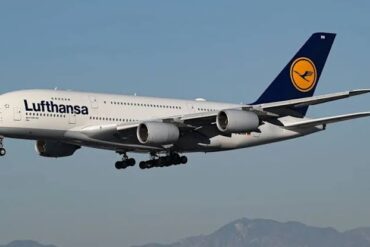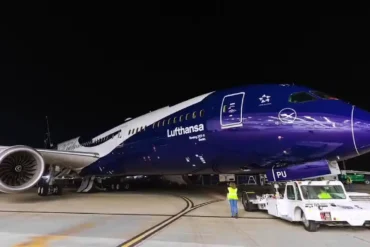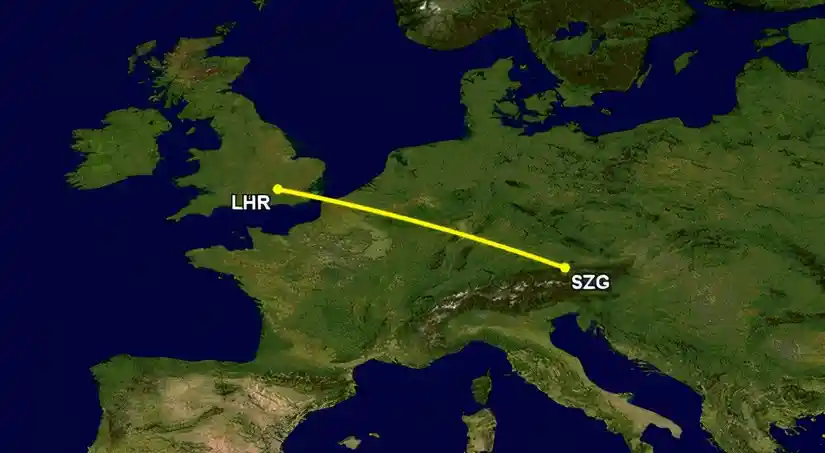
Lufthansa, long regarded as a symbol of German aviation, has built its network around two major hubs—Frankfurt and Munich. Its routes typically radiate from these cities like spokes from a wheel, reinforcing the airline’s national footprint. However, in a departure from the norm and against the backdrop of post-Brexit complexities, Lufthansa operates a rare and unusual route—one that neither begins nor ends in Germany. The London Heathrow to Salzburg connection stands out as a geographical and regulatory anomaly within the airline’s vast European network.
The Legal Quirk Behind the Route
Following the United Kingdom’s departure from the European Union, many assumed that such cross-border connections operated by EU-based airlines would become difficult, if not impossible. However, UK-EU traffic rights have remained sufficiently liberal, enabling carriers like Lufthansa to continue operating select non-hub services. While most international traffic flows from the German carrier’s home soil, this Heathrow–Salzburg route is facilitated through existing agreements that mirror those used by Ryanair, whose Irish registration enables extensive UK–EU flights.
Lufthansa’s ability to tap into these legal pathways is what allows the route to exist. Despite not being a member of the UK or based in Austria, the airline leverages its Star Alliance status and pan-European presence to maintain connectivity, especially during high-demand seasonal periods.
Salzburg: A Seasonal Gem for British Travelers
Salzburg, Austria’s second-largest city, is a magnet for tourists, especially in winter. From its snow-draped Alpine resorts to its festive Christmas markets, the city offers a blend of culture and recreation. UK travelers are particularly drawn to Salzburg for skiing holidays, and data from the UK Civil Aviation Authority shows a significant travel volume: over 421,000 round-trip passengers annually, with London accounting for the lion’s share at 337,000.
Spread evenly, this equates to over 920 daily passengers—a robust figure that justifies seasonal services. Beyond tourism, Salzburg’s UNESCO World Heritage-listed old town, ties to Wolfgang Amadeus Mozart, and the immortalization in The Sound of Music cement its allure.
Lufthansa clearly recognized this demand and entered the fray with its Heathrow–Salzburg service, albeit in a time-limited, winter-only format.
A Standalone Seasonal Service: Unconnected to Hubs
This route is entirely decoupled from Lufthansa’s operations in Frankfurt or Munich. It does not function as a feeder into a broader network but rather serves as a point-to-point leisure route. Unlike other Lufthansa flights that might maintain the same flight number across multiple legs or utilize fifth-freedom rights, this service is operated on a standalone basis. It represents an unambiguous strategy aimed at capturing winter holiday traffic between two specific cities.
Limited Frequency, Strategic Timing
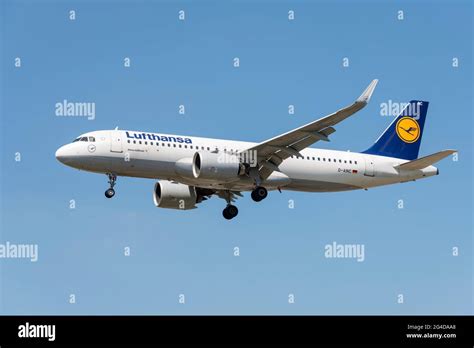
The Heathrow–Salzburg route is highly targeted in its execution. Operated once weekly on Saturdays, it aligns precisely with traditional ski holiday turnover days, when travelers arrive for or depart from week-long alpine getaways. The flight uses the 180-seat Airbus A320neo for most departures, with the 215-seat A321neo appearing during periods of peak demand, such as Valentine’s Day weekends in February.
The most recent schedule for Winter 2025/2026 includes 14 round-trip flights, reflecting a gradual reduction from 19 in the first year (2023/2024) and 16 the following season. This tapering hints at performance-driven decisions, likely influenced by yield management and load factor optimization. The operational period now concludes by March 14, as opposed to the late-March endings of prior years, further emphasizing Lufthansa’s precise targeting of peak season demand.
Operational Design: Munich-Based W Pattern
Although the route bypasses Germany geographically, it still draws from Lufthansa’s Munich base for logistical support. Flights operate in a W-pattern, meaning the same aircraft and crew rotate through Munich–Heathrow–Salzburg–Heathrow–Munich in a single day.
- LH2472 arrives at Heathrow at 10:25 AM local time.
- LH2673 departs Heathrow at 11:10 AM, reaching Salzburg at 2:00 PM.
- LH2676 departs Salzburg at 2:50 PM, returning to Heathrow at 3:50 PM.
- LH2477 departs again at 4:40 PM, bound for Munich.
This design maintains fleet and crew efficiency, allowing Lufthansa to use Munich as a tactical anchor without compromising its German base identity.
Lufthansa’s Expanding Heathrow Presence
Despite its German heritage, Lufthansa has built a noteworthy presence at London Heathrow, becoming the sixth-largest airline by departure count in December, with an average of 15 daily departures. Nearly all use the A320neo family, and while widebody operations ceased in 2009, the carrier maintains strong visibility.
When factoring in Eurowings, its low-cost sibling within the Lufthansa Group, the group collectively becomes Heathrow’s third-largest operator. Eurowings operates non-hub routes from Cologne, Düsseldorf, Hamburg, and Stuttgart, and will soon resume Berlin–Heathrow flights after a six-year hiatus, competing directly with British Airways.
This increasing footprint further contextualizes the Heathrow–Salzburg service as part of a broader strategy to maintain Lufthansa Group relevance in the UK market post-Brexit.
A Curious Outlier With Strategic Relevance
Lufthansa’s Heathrow–Salzburg route may seem like a curiosity at first glance, a deviation from its core model of hub-and-spoke efficiency. Yet, upon closer examination, it reveals an airline attuned to seasonal demand, legal flexibility, and market opportunity. By deploying a carefully calculated winter-only service, Lufthansa leverages its strengths while sidestepping the limitations imposed by geopolitics and geography.
It is a reminder that legacy carriers, while often perceived as rigid, can be surprisingly agile—bending the rules of convention without breaking the rules of aviation. In Lufthansa’s vast route map, this standalone winter link between London and Salzburg may be a single thread, but it is one woven with precision and purpose.