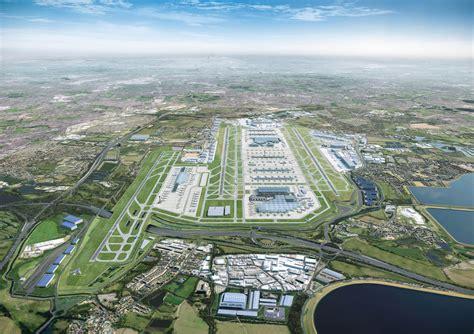
We explore London Heathrow Airport’s long-haul hierarchy at a moment when expansion has finally shifted from political theatre to practical reality. With the UK Government selecting Heathrow Airport Limited’s longer but more feasible third-runway plan, the airport stands on the brink of a capacity transformation. The added runway will relieve the bottleneck that has defined Heathrow for decades, offering room for growth across global markets and strengthening its role as Britain’s premier intercontinental gateway. This December, 16,320 long-haul flights are scheduled to operate to and from the hub, reflecting both its resilience and its irreplaceable importance in global aviation.
As Heathrow settles in for one of its busiest winter travel seasons in years, long-haul connectivity is dominated—predictably yet impressively—by the home carriers. These airlines wield unmatched frequency depth, expansive fleets, and carefully curated global networks that funnel millions of passengers through West London each month. Their activity forms the spine of Heathrow’s long-haul system, though a diverse cast of international carriers ensures that the airport’s global reach remains richly layered and highly competitive.
At the top of the rankings sits the flag carrier whose identity is deeply intertwined with Heathrow’s evolution. British Airways continues to anchor the airport’s long-haul performance with a commanding schedule built on widebody versatility and strong transatlantic demand. Its December footprint reflects a route network that has been refined over decades and remains unmatched in scale and breadth.
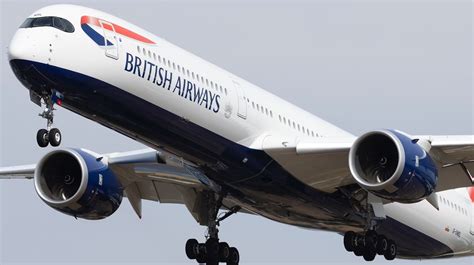
British Airways has scheduled 5,363 long-haul flights this month, representing nearly one-third of Heathrow’s total intercontinental traffic. Its operation spans the Airbus A350 and A380, as well as Boeing’s 777 and 787 families, providing flexibility across leisure peaks, premium-heavy markets, and key business corridors. New York JFK stands far above all other destinations, supported by an extraordinary level of daily service—between six and eight round trips depending on the day. Dubai follows at a solid distance with three daily rotations, while Boston, Cape Town, Los Angeles, and Mumbai each see more than two daily flights on average.
British Airways has also doubled down on premium consistency. Every Mumbai flight now includes a First Class cabin, reinforcing the carrier’s strategic focus on India’s high-yield market. The introduction of an enhanced Meet & Assist service further streamlines the travel experience for passengers requiring additional support, ensuring seamless access to onward connections throughout the network.
Virgin Atlantic Secures A Strong Second Place
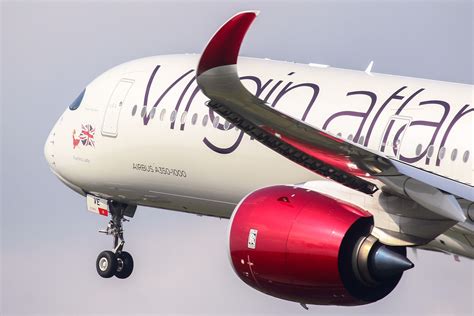
Virgin Atlantic remains Heathrow’s vibrant long-haul challenger with 1,850 flights scheduled for December. Its widebody lineup—A330, A330neo, A350, and 787—continues to support a transatlantic-heavy route strategy enriched by expansion in India and the West Coast of the United States. JFK once again emerges as the anchor route, supported by four daily flights, while Delhi, Los Angeles, Miami, and Mumbai settle in comfortably with double-daily frequencies.
The US Big Three Take Center Stage
Aviation’s transatlantic super-corridor remains fiercely competitive, with American, United, and Delta collectively providing thousands of long-haul seats into Heathrow daily.
American Airlines ranks third with 1,132 flights, operating exclusively with Boeing 777s and 787s. Dallas/Fort Worth leads its Heathrow network with four daily operations, closely followed by Charlotte’s three. This consistent deployment underscores Heathrow’s value as a crucial hub-to-hub link within American’s global system.
United Airlines stands just behind with 1,108 flights, relying on the 767, 777, and 787 families to connect its key hubs. Newark, Chicago O’Hare, and Washington Dulles form the backbone of its schedule, each offering reliable onward connectivity across the United States. United’s near-parity with American highlights the intensity of the US-UK market, where frequency and schedule optimization carry significant strategic importance.
Delta Air Lines ranks fifth with 603 flights, maintaining a durable presence built primarily on its Airbus A330 and Boeing 767 fleets. Atlanta remains its strongest Heathrow route, supported by three daily frequencies, while New York JFK holds steady at two. Though smaller in scale, Delta’s schedule remains an essential pillar of SkyTeam’s visibility at Heathrow.
Qatar Airways Brings Global Reach And Capacity Power
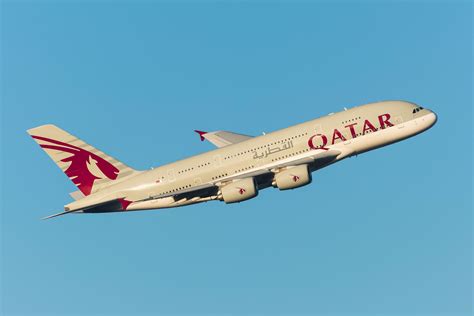
Any discussion of Heathrow’s long-haul heavyweights would be incomplete without Qatar Airways, which ranks sixth with 584 flights this December. The Doha-based carrier wields one of the airport’s most diverse widebody fleets, deploying the A380, A350, and 777 across its schedule. Its seat count would place it even higher in the rankings, supported by the immense capacity of the A380—a staple of its Heathrow operations. With as many as ten daily flights in each direction, Doha emerges as one of Heathrow’s most heavily served global hubs.
Air Canada Completes The Lineup
Air Canada concludes the top tier with 496 long-haul flights, maintaining strong connectivity between Canada’s major eastern cities and the UK. Its operations rely on the A330, 777, and 787 widebodies, with an occasional 737 MAX 8 serving Halifax. The airline’s steady frequencies ensure robust transatlantic options for both business and leisure travelers during one of the busiest holiday seasons in recent years.
From British Airways’ sprawling global footprint to Qatar Airways’ high-capacity Gulf operations and the unrelenting momentum of North America’s largest carriers, Heathrow’s long-haul hierarchy this December reflects a dynamic interplay of strategy, fleet strength, and global demand. Heathrow’s looming expansion promises to shift this landscape yet again, opening the door to deeper competition and new levels of international access.