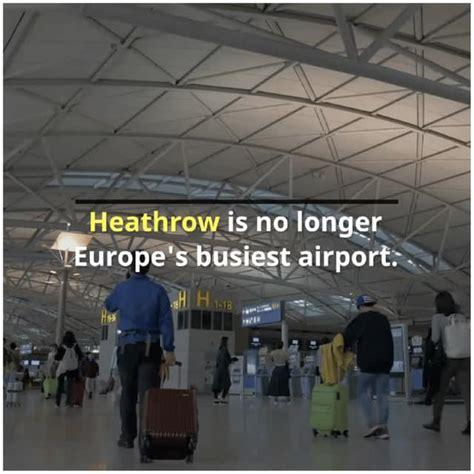
A Title Held by a Thread: Europe’s Busiest Airport at a Crossroads
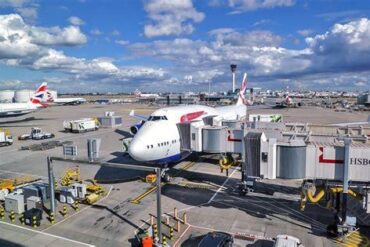
For decades, London Heathrow Airport has worn the crown as Europe’s busiest airport, a title that symbolized Britain’s global reach and London’s gravitational pull in international aviation. In 2025, Heathrow still technically leads the continent. Yet the margin of victory tells a different story—one of fragility rather than dominance. According to ACI Europe data, Heathrow handled 84.48 million passengers, just 40,000 more than Istanbul Airport’s 84.44 million. A difference so small it could vanish within weeks of shifting travel patterns.
This razor-thin gap is not merely statistical trivia. It signals a historic turning point. Heathrow’s growth in 2025 stood at a modest 0.7%, while Istanbul surged ahead with 5.5% growth, demonstrating momentum that Heathrow simply cannot match under its current constraints. The crown has not yet slipped—but it is tilting.
The dynamics behind these figures reveal more than passenger counts. They expose the structural realities of European aviation in 2026: legacy hubs built for the 20th century confronting 21st-century capacity ceilings, while ambitious mega-hubs rise with expansion baked into their design.
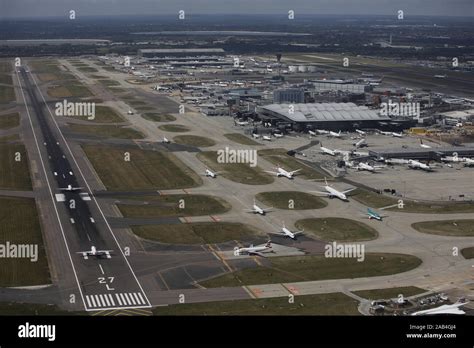
Heathrow’s Structural Limits: Growth Without Space
Heathrow’s challenge is not demand. The airport remains one of the most sought-after gateways in the world, particularly for transatlantic flights, premium business travel, and long-haul connectivity. The problem is physical limitation.
Operating with just two runways, Heathrow functions at or near full capacity for much of the year. Every additional flight requires delicate slot allocation negotiations. Airlines compete fiercely for limited departure and arrival windows, which constrains organic growth. Even when demand spikes, Heathrow cannot easily add frequencies.
Plans for a third runway have been approved, but completion is projected for the mid-2030s. That timeline may be strategically sound for the long term, yet it offers no relief for the immediate contest. Passenger growth in the near future will remain incremental rather than transformative.
This is the paradox of Heathrow in 2026: enormous global influence paired with finite operational headroom. Demand without scalability becomes stagnation.
Istanbul Airport’s Expansion Engine
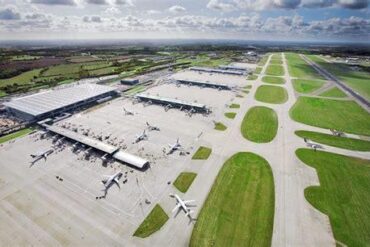
In contrast, Istanbul Airport, opened in 2019, was designed explicitly as a mega-hub built for future growth. Its infrastructure remains young, adaptable, and scalable. Additional capacity can be absorbed without the operational bottlenecks that define Heathrow’s daily rhythm.
Turkey’s geographic position provides an intrinsic advantage. Istanbul sits at the crossroads of Europe, Asia, and the Middle East, enabling airlines to funnel passengers between continents with remarkable efficiency. For travelers moving between secondary cities in Europe and destinations across Asia or Africa, Istanbul often offers shorter total journey times than traditional Western hubs.
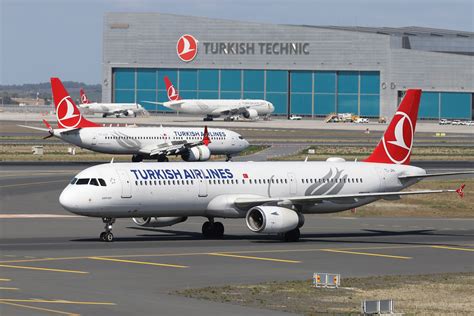
Turkish Airlines has capitalized on this geography with aggressive route expansion. The carrier’s network strategy centers on Istanbul as a global transfer point, weaving together long-haul and regional routes into a seamless hub model. The result is rising flight frequencies and expanding connectivity.
Network Strategy: The Rise of the Global Connector Model
The battle for Europe’s busiest airport is no longer about simple origin-and-destination traffic. It is about network architecture.
Heathrow historically thrived as Europe’s primary transatlantic gateway. The London–New York corridor remains one of the world’s most lucrative aviation routes. However, modern aviation economics increasingly reward airports that efficiently integrate intercontinental and regional flows. Istanbul’s model excels here.
Turkish Airlines leverages Istanbul to connect travelers from smaller European cities to destinations across Central Asia, Africa, and Southeast Asia—markets often underserved by Western hubs. This connecting strategy boosts transfer volumes dramatically, elevating total passenger throughput.
Furthermore, visa policies and transit flexibility give Istanbul an additional competitive edge. Transit passengers holding weaker passports frequently find smoother passage through Turkey than through the UK’s stricter entry requirements. This nuance subtly but powerfully shapes passenger decisions and airline routing strategies.
Post-Pandemic Divergence in Recovery Patterns
The COVID-19 pandemic reshaped global aviation unevenly. While many European airports experienced recovery, growth trajectories diverged sharply.
Legacy airports such as Heathrow faced regulatory complexities, staffing pressures, and structural capacity caps that slowed expansion. Meanwhile, airports with room to grow seized pent-up demand. Istanbul not only recovered—it accelerated.
In several months during 2025, Istanbul reportedly led Europe in average daily flight numbers, underscoring its operational dynamism. Heathrow’s passenger volumes rebounded, but its ability to outpace competitors remained limited by runway saturation.
This divergence is not temporary noise. It reflects structural advantages that favor airports designed with scalability from inception.
A Dual-Hub Advantage: Istanbul’s Broader Aviation Ecosystem
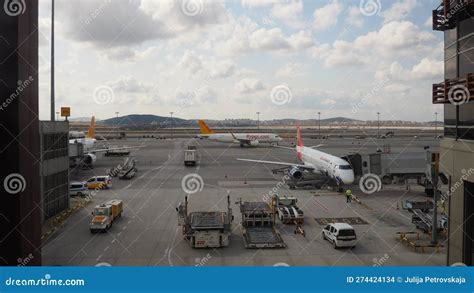
The competitive equation extends beyond a single airport. Istanbul benefits from a secondary powerhouse: Istanbul Sabiha Gökçen International Airport. Together, the two airports create a dual-hub system capable of absorbing both full-service and low-cost carrier growth.
While Heathrow dominates London’s premium long-haul market, much of London’s low-cost traffic flows to other airports such as Gatwick, Stansted, and Luton. The fragmentation dilutes Heathrow’s ability to capture total metropolitan traffic growth under a single umbrella.
Istanbul’s complementary airports, by contrast, strengthen the city’s overall throughput in a coordinated manner. Growth at Sabiha Gökçen enhances Istanbul’s aviation ecosystem rather than diverting traffic away from its flagship hub.
Competitive Pressure Across Europe
Heathrow’s situation is further complicated by intensifying competition from other European hubs. Paris Charles de Gaulle, Amsterdam Schiphol, and Frankfurt Airport continue refining their own networks. Airlines now have multiple viable options for transatlantic and intercontinental transfers.
Amsterdam’s slot constraints and environmental limits echo some of Heathrow’s struggles, but Paris and Frankfurt continue adjusting strategies to preserve competitiveness. This broader European competition fragments the traditional dominance of any single airport.
The European aviation map is evolving from a pyramid with Heathrow at its apex into a network of powerful nodes competing on efficiency, geography, and expansion capacity.
2026: The Likely Turning Point
If current growth trends persist, analysts widely expect Istanbul Airport to surpass London Heathrow in total passengers during 2026. The momentum differential—5.5% growth versus 0.7%—creates a trajectory that is difficult to reverse without dramatic structural change.
Even modest continued expansion in Istanbul, paired with Heathrow’s constrained scaling, makes the outcome increasingly predictable. The shift would represent more than a symbolic ranking change. It would signal a rebalancing of European aviation power from Western Europe toward a multi-continental crossroads.
The “King of European skies” narrative that once centered on London may soon yield to a new sovereign hub positioned between continents.
What the Loss of the Crown Really Means
Heathrow’s potential dethronement does not imply decline or irrelevance. The airport will remain one of the world’s most influential long-haul gateways, particularly for premium traffic and transatlantic commerce. Yet the distinction of being Europe’s busiest airport carries symbolic weight.
Passenger rankings reflect broader shifts in economic gravity, geopolitical connectivity, and airline strategy. Istanbul’s ascent mirrors Turkey’s ambition to position itself as a bridge between East and West, while Heathrow’s plateau underscores the limits of legacy infrastructure in a growth-driven industry.
By 2026, Europe’s aviation hierarchy may look subtly but decisively different. The numbers suggest the change is no longer speculative. It is approaching inevitability.
The crown does not fall overnight. It slips gradually—by 40,000 passengers, by incremental growth rates, by the silent arithmetic of runway slots and expansion plans deferred. And in 2026, the title of Europe’s busiest airport may belong not to London Heathrow, but to Istanbul’s soaring mega-hub at the crossroads of continents.