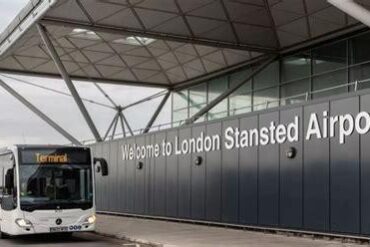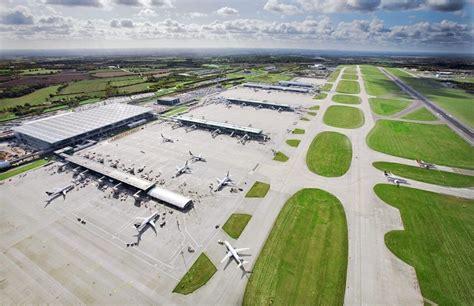
London Stansted Airport (IATA: STN, ICAO: EGSS) stands as a critical international aviation gateway located 42 miles northeast of Central London in Essex. As of 2024, it facilitated 29.8 million passengers, reflecting a 5.9% year-on-year increase, and supported 179,135 aircraft movements. Owned and operated by Manchester Airports Group (MAG), Stansted plays a strategic role in London’s air infrastructure and functions as Ryanair’s largest operational base, connecting over 180 destinations across four continents.
Its infrastructure includes a single grooved-asphalt runway, designated 04/22, stretching 3,049 meters, and one main terminal building, inaugurated in 1991, supported by three satellite terminals and an Advanced Passenger Vehicle (APV) facility. Stansted’s design, capacity, and evolving facilities reflect both historic legacies and ambitious modernisation strategies.
From War Airbase to Commercial Nexus: Stansted’s Deep Historical Roots
The origin of London Stansted Airport is embedded in military necessity. It opened in July 1943 as RAF Stansted Mountfitchet and served under the USAAF Eighth Air Force. Primarily used as a bomber base and maintenance depot during World War II, it transitioned to the Air Ministry in 1945. By 1946, civil aviation had taken hold with the initiation of cargo and charter services. Control passed to the Ministry of Civil Aviation in 1949.
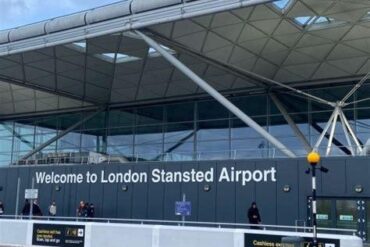
In 1966, the British Airports Authority (BAA) assumed control, marking a turning point. With the sharp rise in demand for air travel, a vision for Stansted as London’s third airport materialised. The UK government approved a redevelopment scheme in 1985, leading to the construction of an avant-garde terminal by Norman Foster, completed in 1991 for £100 million. The terminal’s futuristic design earned the 1990 Mies van der Rohe Award, showcasing Britain’s commitment to architectural innovation.
Growth, Ownership Changes, and Resilience Post-COVID
The airport experienced rapid growth from 1997 to 2007, peaking at 24 million annual passengers. After a brief downturn during the financial crisis, it rebounded to 24.3 million by 2016. In February 2013, the facility was acquired by Manchester Airports Group, launching a new era of strategic investment.
A notable milestone was the £80 million terminal improvement project that concluded in 2013. This involved relocating security zones, adding seating, and expanding retail offerings. However, the COVID-19 pandemic delivered a substantial blow—passenger numbers plummeted to 7.5 million in 2020, even as cargo operations rose by 53%. Stansted demonstrated remarkable resilience, recovering to 97% of pre-pandemic volumes by late 2022.
Terminal and Satellite Operations: Stansted’s Core Infrastructure
London Stansted’s terminal is designed for efficiency and modular scalability. It integrates a main concourse and check-in area located at the front of the building. The terminal divides into the departures area to the south and the international arrivals zone to the north.
The airport’s gate system is distributed across:
- Satellite 1: Gates 1–19, accessible via an automated transit system.
- Satellite 2: Gates 29–39, reachable via transit or walkway.
- Satellite 3: Gates 40–59, accessible on foot.
- APV Building: Gates 90–93, dedicated to peak Ryanair operations.
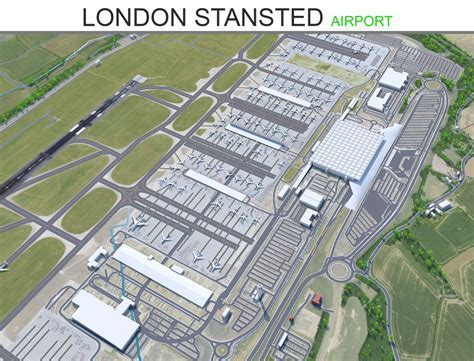
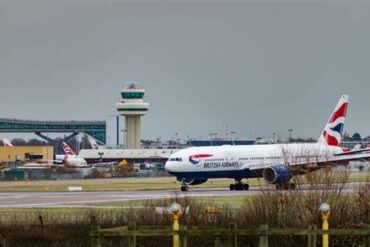
Stansted also houses the UK’s tallest air traffic control tower (built in 1996), a significant landmark adjacent to the terminal, reflecting operational ambition and technological foresight.
Transport, Parking, and On-Site Conveniences
Ground connectivity and vehicle access play vital roles in airport performance. Stansted offers multiple parking solutions, including:
- Long-Stay, Mid-Stay, and Short-Stay car parks.
- Valet and meet-and-greet services.
- Express drop-off zone, located near the short-stay area.
- Free shuttle buses from mid-stay locations.
The previously free drop-off zone was removed in 2013, reshaping short-term access policy. In addition, the airport integrates rail and bus connectivity to Central London and broader Essex, further boosting accessibility.
Hotels situated within the airport complex include Holiday Inn Express, Novotel, Premier Inn, Radisson Blu, and Hampton by Hilton, catering to transit passengers and business travelers alike.
Cargo Handling and Aviation Services
In parallel with its passenger function, Stansted operates as a significant cargo and logistics hub. A dedicated cargo centre situated near the control tower handles large aircraft such as MD-11s and Boeing 747s.
Private aviation services flourish on-site, supported by facilities for:
- Harrods Aviation
- Titan Airways (headquartered here)
- XJet private terminals
Historically, Stansted also hosted the head offices for carriers like Buzz, AirUK, and Go Fly, underscoring its influence within British commercial aviation.
Sustainable Expansion: The £1.1 Billion Vision for the Future
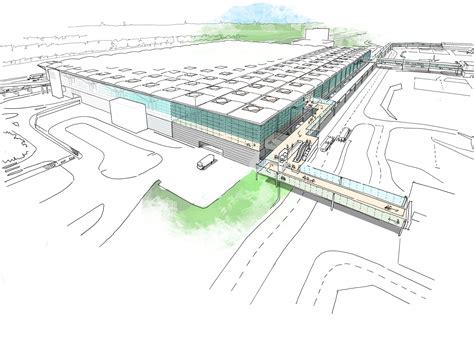
In 2023, MAG unveiled a £1.1 billion expansion strategy to elevate the airport’s capacity from 35 million to 43 million passengers annually. The approved plan includes a 16,500 m² three-bay extension to the existing terminal. Key features involve:
- Replacing the automated transit system with new passenger walkways.
- Enlarging the departure lounge and international baggage reclaim areas.
- Upgrading to next-generation security scanners.
- Expanding retail and hospitality outlets, including new shops and bars.
- Introducing a 14.3 MW solar energy farm for sustainable operation.
Construction is slated to begin in 2025, with completion anticipated within two to three years. This approach aligns with MAG’s sustainability-first agenda while scaling infrastructure for long-term demand.
Abandoned Projects and Community Pushback
Not all of Stansted’s proposed developments came to fruition. A notable cancellation was the second runway proposal from 2008, which was officially withdrawn in 2010 amid Competition Commission resistance and political pressure. The Stop Stansted Expansion campaign, formed in 2002, played a pivotal role in opposing unchecked airport growth.
Another shelved project was the £130 million arrivals terminal, initially greenlit in 2016 and intended for completion by 2018. Despite gaining planning approval in 2021, it was eventually cancelled in 2023 to focus resources on expanding the original 1991 terminal.
Similarly, Satellite 4, once approved in 1999 and revised in 2005, was never built. The site was ultimately repurposed into remote aircraft stands in 2018 and remains excluded from current development plans.
Strategic Role in Ryanair’s Global Network
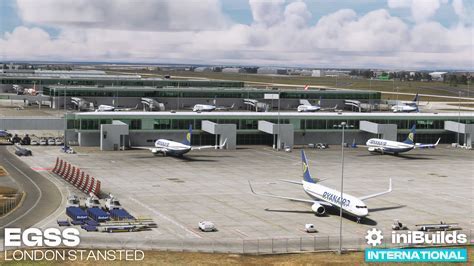
London Stansted Airport functions as Ryanair’s single largest base, critical to the airline’s point-to-point model. With its tailored infrastructure supporting high aircraft turnaround speeds, the airport offers optimal conditions for low-cost carriers. The Ryanair operation benefits from Stansted’s dedicated gates, APV deployment during peak schedules, and fast aircraft access to runways.
Stansted’s role in supporting ultra-efficient operations cements its value within the broader European and transcontinental aviation ecosystem.
Looking Ahead: Stansted’s Position in the UK’s Aviation Landscape
With Heathrow and Gatwick often reaching their capacity ceilings, London Stansted remains a critical pressure valve in balancing London’s air traffic. Its strategic location, strong rail connectivity to Liverpool Street Station, and scalable infrastructure position it well for future growth.
Supported by MAG’s investment and increasingly sustainable operations, Stansted is poised to handle emerging aviation challenges, whether tied to environmental regulations, technological disruption, or fluctuating global travel patterns.
As the UK navigates a new aviation future post-Brexit and post-COVID, London Stansted stands equipped not just to participate—but to lead the next generation of airport innovation, sustainability, and passenger experience.