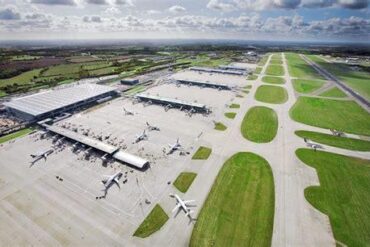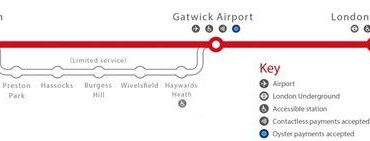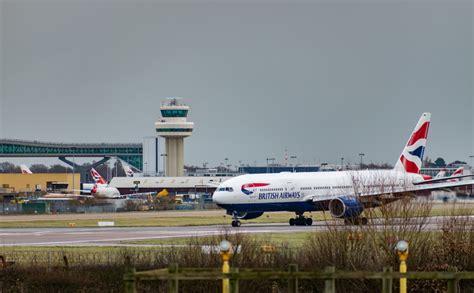
Located in Crawley, West Sussex, London Gatwick Airport (IATA: LGW, ICAO: EGKK) has long held a pivotal role in connecting Greater London to the global air network. With its dual-terminal structure and an extraordinary single-runway configuration, Gatwick is not merely a transport node—it is a case study in efficient aviation logistics, dynamic airline competition, and adaptive infrastructure. In 2023 alone, Gatwick processed 40.9 million passengers and over 253,000 aircraft movements, solidifying its status as the UK’s second-busiest airport and a cornerstone of the region’s economic vitality.
A Deep-Rooted Legacy: From Beehive to Global Gateway
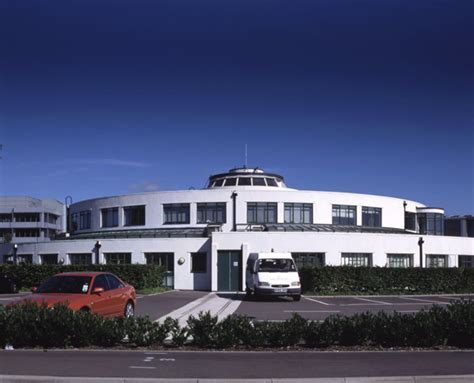
Gatwick’s history traces back to 1928, when it first opened as an aerodrome. By 1933, commercial flights were in operation, and in 1935, it made headlines with the introduction of the world’s first circular airport terminal—The Beehive. This innovative structure, designed for efficiency and passenger comfort, still stands today, albeit repurposed as part of the City Place Gatwick office complex.
During World War II, Gatwick transformed into RAF Gatwick, underscoring its strategic importance. Post-war reconstruction began in the 1950s, leading to the airport’s official reopening on 30 May 1958 with designs by Yorke Rosenberg Mardall, pioneers of British airport architecture. Throughout the 1960s and 1970s, Gatwick became a bustling hub for British United Airways, Dan-Air, and British Caledonian, catering to both charter and scheduled flights.
The airport’s transatlantic significance emerged between 1978 and 2008 under the restrictive Bermuda II agreement, which limited US–UK flights to specific carriers and airports. Gatwick thrived as a result, hosting major US airlines until the EU–US Open Skies Agreement of 2008 redirected much of this traffic to Heathrow. Notably, JetBlue reintroduced direct transatlantic services in 2021, signaling a resurgence in US connectivity.
Ownership, Corporate Governance, and Strategic Direction
Gatwick has undergone notable shifts in ownership since it was operated by the British Airports Authority (BAA) beginning in 1966. In 2009, following regulatory pressure, BAA sold Gatwick to Global Infrastructure Partners (GIP) for £1.51 billion. GIP subsequently brought in key investors including the Abu Dhabi Investment Authority (ADIA), CalPERS, and Canada’s PSP Investments.
In a major development, Vinci Airports acquired a 50.01% controlling stake in 2019, while the remaining ownership rests with GIP-led consortiums. Leadership was further strengthened by the appointment of Baroness Margaret Ford as Chair in September 2023, positioning Gatwick for an era of strategic growth and sustainability.
Terminal Layout: North and South Divisions of Operation
Gatwick operates with a two-terminal system: the South Terminal, spanning 160,000 m², and the North Terminal, encompassing 98,000 m². These terminals are connected by a 1.21 km automated people mover, allowing for efficient inter-terminal passenger movement.
The South Terminal, Gatwick’s older facility, was revolutionary when it debuted with its modular layout and enclosed pier design. It includes 32 jetbridge gates and 7 remote stands, with a circular satellite pier servicing high-volume routes. Notably, this terminal was temporarily closed between June 2020 and March 2022 due to the pandemic.
The North Terminal, opened in 1991, hosts 31 jetbridge gates, three of which are Airbus A380-compatible. Its standout feature is a double-level passenger bridge, one of the largest in the world, facilitating simultaneous boarding across multiple gates.
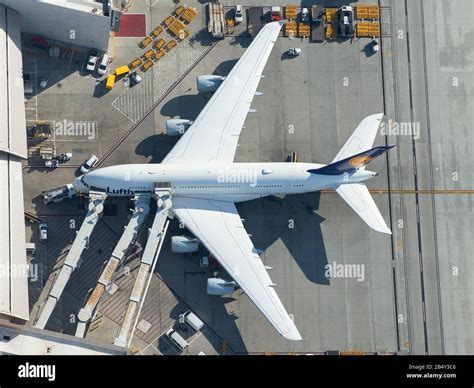
In January 2017, easyJet consolidated its operations in the North Terminal, while British Airways and Virgin Atlantic swapped terminals to optimize operational logistics and reduce airside congestion.
Runway Operations: Single Runway Mastery and Future Expansion
Gatwick is globally renowned for its remarkable single-runway operation—the busiest of its kind until 2017. The primary runway, 08R/26L, offers a Takeoff Run Available (TORA) of 3,255 meters westbound and 3,159 meters eastbound. A secondary standby runway, located south of the main strip, is used only when maintenance or emergencies disable the primary.
Despite its limitations, Gatwick has maintained operational excellence through CAT III ILS, RNAV approaches, and night-time noise quota restrictions. Proposals are under review to activate the southern runway for routine dual-runway operations, a move that could exponentially increase slot capacity and reduce delay incidents.
Passenger Experience and Facilities
Gatwick offers an extensive portfolio of amenities designed to enhance passenger comfort and convenience. The airport houses Virgin Atlantic’s Clubhouse lounge, premium independent lounges, a conference centre, and multi-faith chapels. Additionally, on-site and nearby hotels accommodate transit passengers and early flyers.
Security is enforced by the Sussex Police Gatwick District, comprising 150 dedicated officers. Meanwhile, immigration controls are bolstered by the Brook House Immigration Removal Centre, which opened on 18 March 2009 adjacent to the airfield.
Gatwick also hosts CAA’s Safety Regulation Group headquarters and the WesternGeco seismic services centre, illustrating the airport’s role beyond commercial aviation.
Airlines and Connectivity: A Balanced Ecosystem
Gatwick serves as a melting pot for full-service, low-cost, and charter airlines, delivering unmatched diversity in destination choice. Key full-service carriers include British Airways, Emirates, Delta, Qatar Airways, and Singapore Airlines. On the low-cost front, easyJet, Wizz Air, and Ryanair dominate short-haul and intra-European markets, while TUI and Tunisair provide leisure and seasonal charter options.
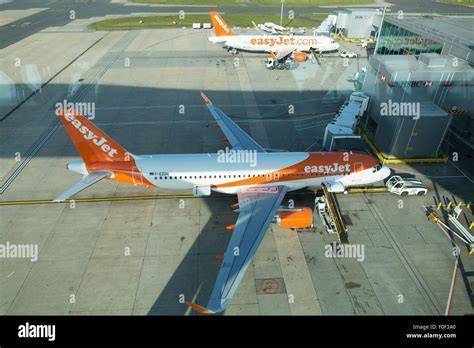
In 2016, easyJet alone accounted for over 61% of all seat capacity, operating more than 100 routes with a fleet exceeding 60 aircraft. That year, it carried 17.4 million passengers, representing nearly 45% of Gatwick’s total throughput.
International routes span Europe, North America, Africa, and Asia, with notable services to Montreal via Air Transat, Boston via JetBlue, and new Sierra Leone connections starting June 2025.
City Place and the Aviation Museum: Preserving Legacy and Innovation
The City Place Gatwick development incorporates the original 1935 Beehive terminal, preserving a vital piece of aviation history while offering premium office space. Tenants have included Virgin Atlantic, Caledonian Airways, GB Airways, and Fastjet, reflecting the building’s enduring aviation heritage.
Meanwhile, the Gatwick Aviation Museum, situated northwest near Charlwood, offers an immersive journey into British aviation. The museum showcases a range of historic aircraft, aviation engines, and WWII-era memorabilia, serving both enthusiasts and educational institutions.
Challenges and Recovery Post-Pandemic
Like many global airports, Gatwick faced unprecedented challenges during the COVID-19 pandemic. In 2020, it was forced to cut significant portions of its workforce, and by the first half of 2021, the airport reported a substantial net loss. However, strategic resilience, revised slot allocations, and renewed airline partnerships have spurred a robust rebound.
The temporary closure of the South Terminal was one of the most visible impacts, and its reopening in 2022 marked a symbolic return to normalcy. With international travel demand surging and infrastructure plans on the table, Gatwick is positioning itself to reclaim and expand its pre-pandemic prominence.
Conclusion: Gatwick’s Strategic Role in UK Aviation
Gatwick Airport exemplifies efficiency, resilience, and innovation in modern aviation. Its unique position as the busiest single-runway airport, coupled with its agile adaptation to global trends, sets it apart from other hubs. With ongoing expansion discussions, robust airline partnerships, and a deep historical foundation, Gatwick is not merely a secondary airport to Heathrow—it is a global gateway in its own right.
As air travel continues to evolve, Gatwick’s role will remain pivotal—not just in ferrying millions of passengers annually, but in defining what a 21st-century international airport can achieve with strategic foresight and infrastructure excellence.