Europe has no shortage of major aviation hubs, but one airport stands apart by nearly every meaningful metric that defines modern air travel. Passenger demand, international reach, airline density, slot scarcity, and global connectivity all converge in one place. That place is London Heathrow Airport, the undisputed heavyweight of European aviation and one of the most consequential airports on the planet.
Airports can be ranked in many ways, but scheduled seat capacity has become the clearest indicator of real-world commercial intensity. It reflects not only how many flights operate, but how much demand airlines are confident enough to sell in advance. When measured this way, Heathrow’s dominance is no accident, nor is it temporary. It is the result of geography, economics, airline strategy, infrastructure constraints, and London’s unique gravitational pull on global travel.
Heathrow’s position as Europe’s busiest airport is not a post-pandemic anomaly. It represents a return to form after a brief disruption, reclaiming a role the airport held for decades. In 2025, Heathrow once again proved that no other European airport can match its scale, its international depth, or its strategic importance to global aviation.
London’s aviation story, however, is bigger than one airport. Heathrow sits at the center of the world’s busiest multi-airport system, acting as both the crown jewel and the primary pressure valve for intercontinental traffic flowing into Europe.
What Defines Europe’s Busiest Airport in the Modern Aviation Era
The idea of “busiest” depends on what is being measured. Aircraft movements tell one story, passenger numbers another, and total flights yet another. For airlines, investors, and planners, scheduled seat capacity is the most revealing metric. It captures how much traffic airlines expect to carry and how valuable an airport’s slots truly are.
In 2025, London Heathrow Airport handled 52.11 million scheduled seats, surpassing every other European airport. This figure exceeded its 2024 total and even surpassed pre-pandemic levels seen in 2019. Globally, that performance placed Heathrow fourth worldwide, behind only Atlanta, Dubai, and Tokyo Haneda.
More striking is Heathrow’s international profile. With 48.97 million international seats, Heathrow ranked second in the world for international capacity, trailing only Dubai International Airport. No European airport came close. Amsterdam Schiphol, Paris Charles de Gaulle, Frankfurt, and Madrid-Barajas all followed at a distance, each constrained by different combinations of geography, regulation, and network structure.
Heathrow’s strength lies not in sheer domestic volume but in its ability to sustain premium-heavy long-haul traffic at extraordinary scale. That characteristic defines its role as Europe’s primary global gateway.
London’s Airport System: A Global Anomaly
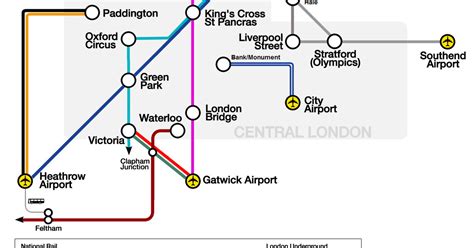
London is not served by a single airport but by a six-airport metropolitan system, the busiest of its kind in the world. Heathrow anchors this system, supported by Gatwick, Stansted, Luton, London City, and Southend. Collectively, these airports make London the most aviation-connected city on Earth.
Heathrow absorbs the vast majority of long-haul and premium traffic. Gatwick plays a dual role, hosting both long-distance leisure routes and high-volume short-haul services. London City caters almost exclusively to time-sensitive business travelers, operating under strict performance and noise constraints. Stansted and Luton are dominated by low-cost carriers, while Southend remains the smallest and least utilized.
What makes this system unusual is how sharply roles are defined. Unlike Paris or New York, where long-haul traffic is more evenly distributed, London’s intercontinental demand overwhelmingly funnels through Heathrow. This concentration amplifies Heathrow’s importance and magnifies the economic consequences of its capacity limits.
Heathrow’s Traffic Levels and Global Standing
Heathrow’s 2025 seat count reflects steady, disciplined growth rather than explosive expansion. Slot controls prevent sudden surges, forcing airlines to optimize aircraft size, frequency, and yield. As a result, Heathrow has evolved into a high-density, high-value airport, where nearly every movement must justify itself economically.
Compared with 2019, Heathrow now carries more seats with fewer operational margins. Airlines deploy larger aircraft, such as the Airbus A350 and Boeing 787, and prioritize routes with strong premium demand. This strategy has allowed Heathrow to outpace other European hubs that expanded more aggressively but struggled to restore long-haul traffic post-pandemic.
Within Europe, Heathrow leads a pack that includes Istanbul Airport, Paris Charles de Gaulle, Amsterdam Schiphol, Frankfurt, Madrid-Barajas, Barcelona El Prat, Rome Fiumicino, Istanbul Sabiha Gökçen, and Munich. Among these, Istanbul has shown the fastest growth, while traditional hubs in Germany and France remain below their pre-2020 peaks.
Heathrow’s consistency, rather than rapid expansion, is what keeps it at the top.
British Airways and Virgin Atlantic: The Twin Pillars of Heathrow
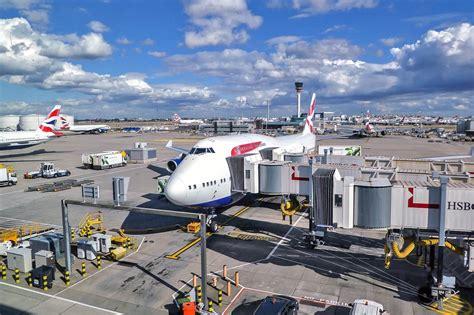
Heathrow is unusual in that it is effectively anchored by two home airlines, each with distinct strategies but overlapping ambitions. British Airways, a founding member of oneworld, dominates the airport with a fleet of nearly 280 aircraft and operations centered on Terminal 5. Its network spans short-haul European routes and an expansive long-haul portfolio reaching every inhabited continent.
British Airways’ scale gives Heathrow unmatched network density. Through oneworld partnerships, the airline provides enormous connecting feed, making Heathrow especially attractive for alliance members seeking access to London’s market.
Virgin Atlantic, by contrast, operates a focused long-haul-only model. With a fleet of just 43 widebody aircraft, Virgin competes head-to-head with British Airways on key intercontinental routes. Despite its smaller size, the airline exerts outsized influence, particularly on North Atlantic services, where competition drives product upgrades and fare discipline.
Virgin’s exclusive long-haul focus reinforces Heathrow’s identity as a premium international hub rather than a short-haul volume airport.
Terminal Infrastructure and Operational Density
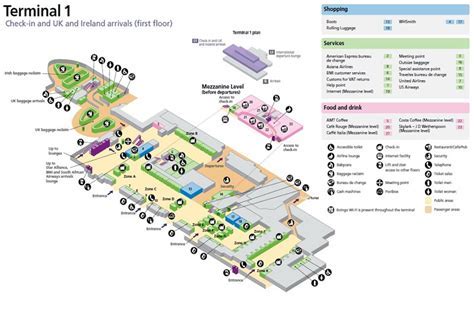
Heathrow’s terminal layout reflects decades of incremental expansion rather than master-planned growth. Terminal 5, the largest freestanding building in the United Kingdom, functions as British Airways’ global hub. Terminals 2 and 3 host a mix of Star Alliance, oneworld, SkyTeam, and independent carriers, while Terminal 4 supports additional long-haul operations.
Despite aging infrastructure in parts of the airport, Heathrow remains remarkably efficient given its constraints. Aircraft turnaround times are tightly managed, gate utilization is maximized, and air traffic control operates at near-saturation levels during peak periods.
This operational density is both Heathrow’s strength and its Achilles’ heel. It enables extraordinary throughput but leaves little room for disruption, making resilience a constant challenge.
Global Connectivity and the Power of the London Market
London is one of only two cities, alongside New York, that can sustain massive volumes of business, leisure, and premium leisure travel simultaneously. Heathrow sits at the center of this demand. In 2025, the London Heathrow–New York JFK route ranked among the world’s busiest international city pairs, a title it has held in various forms for decades.
Heathrow’s connectivity is unmatched. Nearly 90 airlines serve the airport, offering flights to 226 destinations across six continents. During peak periods, passengers can access over 59,000 onward connections within six hours, a figure no other airport can replicate.
This connectivity feeds itself. Airlines are drawn to Heathrow because demand is strong, and demand remains strong because connectivity is unparalleled. It is a classic network effect, reinforced by London’s role as a financial, cultural, and diplomatic capital.
Slot Scarcity and the Economics of Congestion
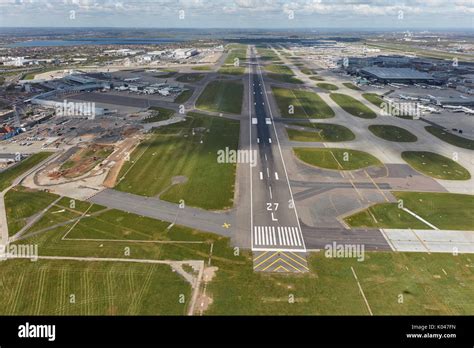
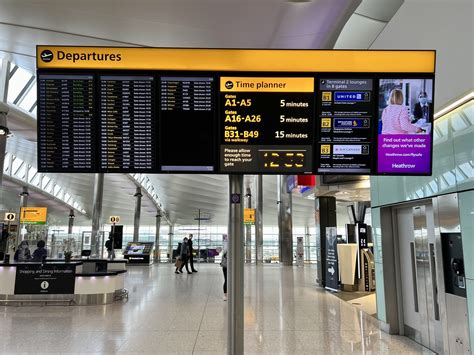
Heathrow is the world’s busiest two-runway airport by aircraft movements, operating at the limits of what is technically feasible. Because of this, it is strictly slot-controlled. Airlines must secure permission for each takeoff and landing at specific times, and peak-hour slots are effectively unavailable.
The result is a secondary market where slots can trade for tens of millions of dollars, sometimes exceeding the value of regional aircraft. This scarcity shapes airline behavior, discouraging low-yield routes and reinforcing Heathrow’s premium orientation.
Slot scarcity also explains why Heathrow grows slowly despite overwhelming demand. Growth comes through aircraft upgauging, schedule optimization, and yield management rather than new frequencies.
The Third Runway Debate and Heathrow’s Long-Term Future
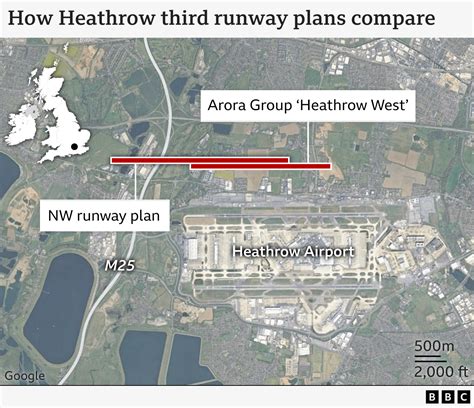
To address chronic capacity constraints, plans for a third runway have been formally selected by the UK government. The proposed runway, located northwest of the current airfield, would include new terminals and major road infrastructure changes.
The project’s estimated cost of £49 billion and its projected completion in the 2040s make it one of the most ambitious infrastructure efforts in Europe. Opposition from local communities and environmental groups remains intense, focusing on noise, emissions, and land use.
From an aviation perspective, a third runway would fundamentally alter Heathrow’s trajectory, enabling meaningful growth for the first time in decades. Until then, Heathrow will continue to operate as a finely tuned, capacity-constrained machine where every slot is precious and every decision carries global consequences.
Why Heathrow Remains Europe’s Aviation Benchmark
London Heathrow is Europe’s busiest airport not because it is the largest by land area or runway count, but because it sits at the intersection of global demand, airline strategy, and economic gravity. Its dominance reflects London’s unique position in the world and the airport’s ability to extract maximum value from limited infrastructure.
As other European hubs expand outward, Heathrow grows upward, squeezing more connectivity, more premium traffic, and more economic impact from every movement. That reality makes Heathrow not just Europe’s busiest airport, but its most strategically important one—a status it is unlikely to relinquish anytime soon.