Southwest Airlines has built its reputation on scale, efficiency, and consistency. With a fleet composed almost entirely of Boeing 737 aircraft and a route network that spans hundreds of cities across North America, the airline operates one of the largest domestic flight schedules in the world. Every month, thousands of departures leave Southwest hubs, connecting travelers to major metropolitan areas, leisure destinations, and regional cities.
For years, Denver International Airport (DEN) held the title as Southwest’s busiest airport by departure volume. Its central location in the United States made it an ideal connecting hub, allowing the airline to efficiently link the East Coast, West Coast, and Midwest. However, recent operational data reveals an interesting development in Southwest’s network strategy: Las Vegas has temporarily taken the crown.
This change highlights how airline networks constantly evolve. Passenger demand, route expansions, aircraft deployment strategies, and seasonal travel patterns can all influence which airports dominate airline schedules.
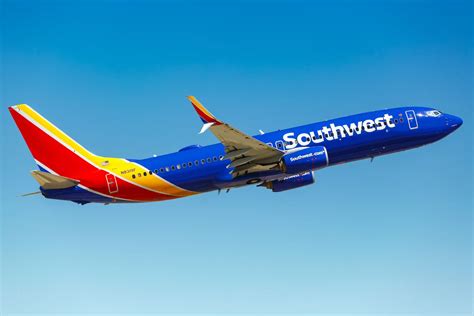
Harry Reid International Airport Becomes Southwest’s Busiest Base
In April 2026, Harry Reid International Airport (LAS) in Las Vegas officially surpassed Denver as the airport with the most Southwest Airlines departures. According to aviation analytics data from Cirium, Las Vegas recorded 7,367 scheduled one-way departures, edging past Denver’s 7,304 departures during the same month.
Although the difference is modest, the symbolic shift is significant. Denver has long served as Southwest’s busiest operational base, making Las Vegas’ temporary takeover an unexpected but telling moment.
Interestingly, while Las Vegas had more flights, it actually offered slightly fewer total seats. The Nevada airport scheduled around 1,183,927 seats, while Denver provided 1,185,746 seats despite having fewer departures. This discrepancy reflects differences in aircraft types used at each hub, with Denver utilizing slightly larger configurations more frequently.
The competition between the two airports is expected to remain dynamic. Current schedules indicate that Las Vegas will continue leading in May, but Denver will likely reclaim the top position later in the year before Las Vegas returns to the lead again in October.
Such fluctuations demonstrate how airline hub dominance is often seasonal, especially when leisure travel markets like Las Vegas experience spikes in demand.
Why Las Vegas Is Growing So Fast for Southwest
Las Vegas has always been a crucial destination in Southwest’s network. The city’s tourism-driven economy attracts millions of travelers each year, making it an ideal market for a high-frequency airline model.
Southwest’s business strategy thrives in locations where short-haul leisure travel and weekend trips are common, and Las Vegas fits this pattern perfectly. Travelers from California, Arizona, Texas, and other nearby states regularly fly into the city for entertainment, conventions, and vacation experiences.
Recently, Southwest has strengthened its Las Vegas footprint even further by expanding international service. Beginning in June 2026, the airline plans to introduce new routes connecting Las Vegas with major vacation destinations in Mexico.
These new flights include:
- Las Vegas – Cancun
- Las Vegas – Los Cabos
- Las Vegas – Puerto Vallarta
The Cancun route is particularly notable because it will become the only nonstop flight between Las Vegas and Cancun, adding a valuable leisure connection to Southwest’s growing international network.
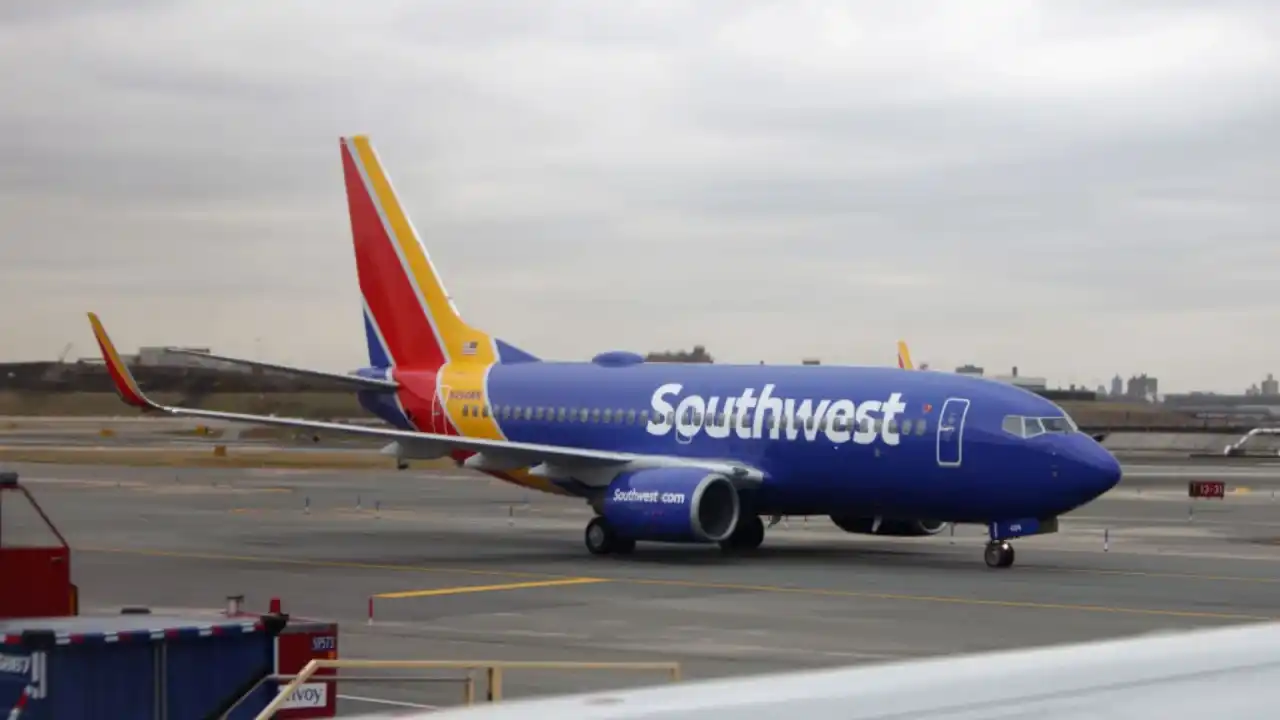
A Closer Look at Southwest’s Las Vegas Flight Operations
Examining the airline’s detailed schedule reveals how heavily Southwest relies on Las Vegas as a high-volume operating base.
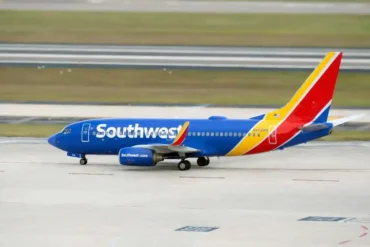
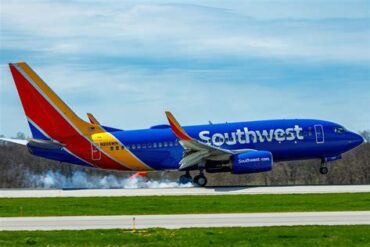
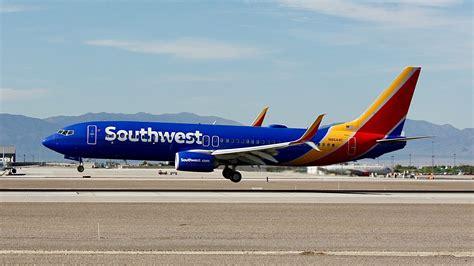
In May 2026, Southwest plans to operate 7,611 departures from LAS. These flights will be distributed across several variants of the Boeing 737 fleet, reflecting the airline’s standardized aircraft strategy.
The breakdown includes:
- 3,094 flights using the Boeing 737 MAX 8
- 2,863 flights operated by the Boeing 737-700
- 1,654 flights flown by the Boeing 737-800
This balanced fleet deployment allows Southwest to adjust capacity depending on route demand. The 737 MAX 8, with its improved fuel efficiency and larger seating capacity, is increasingly becoming the backbone of the airline’s operations.
When it comes to destinations, Southwest’s Las Vegas network focuses heavily on short and medium-haul domestic routes that generate frequent passenger traffic.
The airline’s busiest destinations from Las Vegas include:
- San Diego International Airport (SAN) – 320 departures
- Phoenix Sky Harbor International Airport (PHX) – 316 departures
- Sacramento International Airport (SMF) – 302 departures
- Denver International Airport (DEN) – 291 departures
- Oakland International Airport (OAK) – 284 departures
These routes reflect the airline’s strong presence in the western United States, where short travel distances enable high-frequency scheduling.
At the opposite end of the spectrum, long-distance routes appear less frequently. For example, Anchorage, Alaska, sees only 17 flights from Las Vegas during the same month.
Comparing Denver’s Role in the Southwest Network
While Las Vegas may temporarily lead in departures, Denver remains one of Southwest’s most critical hubs.
The airline plans to operate 7,504 flights from Denver in May 2026, slightly fewer than Las Vegas but still representing a massive operation. Denver’s central geographic position makes it invaluable for connecting traffic across the country.
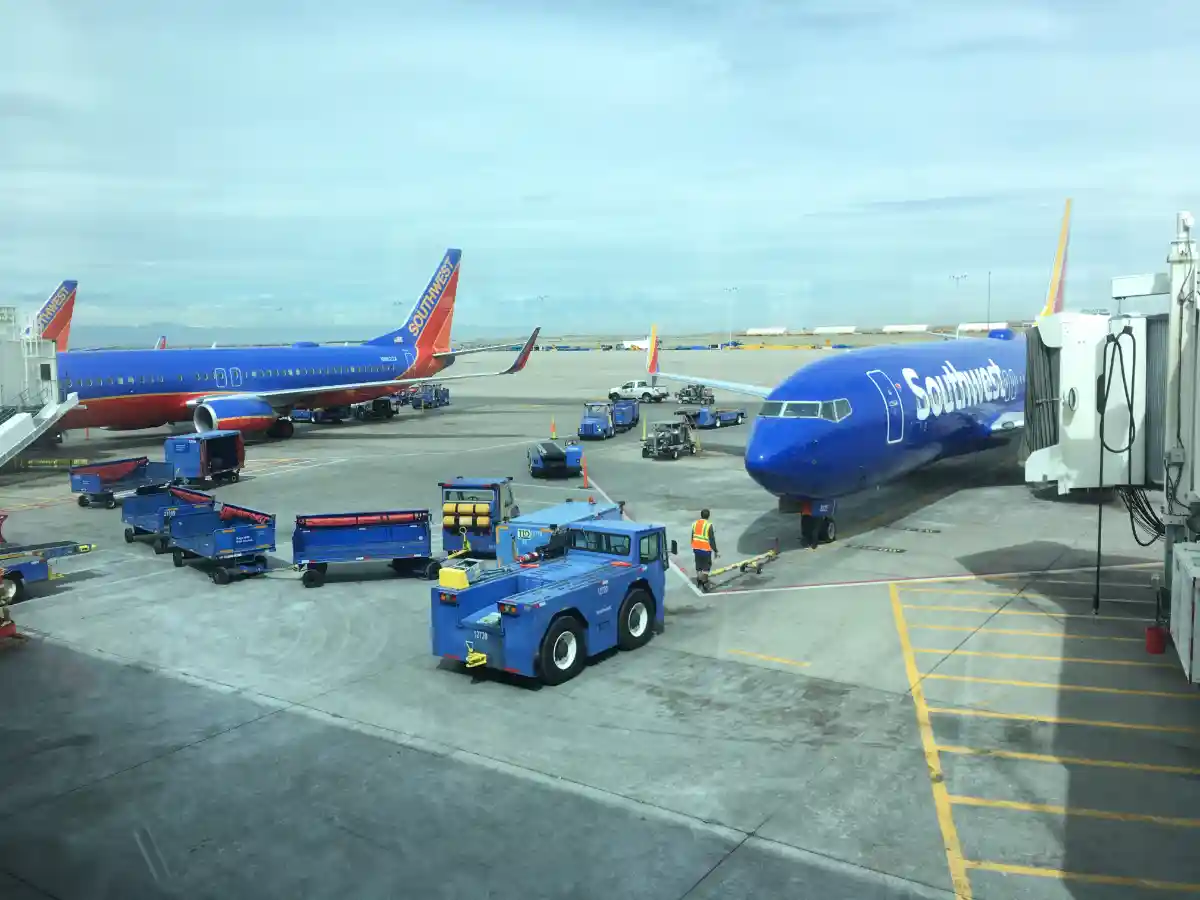
Denver’s fleet allocation shows a similar mix of aircraft types:
- 3,207 Boeing 737 MAX 8 flights
- 2,426 Boeing 737-700 flights
- 1,871 Boeing 737-800 flights
These flights connect Denver with dozens of cities, forming one of the most extensive domestic networks in the United States.
The most frequent destination from Denver is Phoenix Sky Harbor International Airport, with 368 scheduled flights in May. Other major routes include Las Vegas, Dallas Love Field, Austin, and San Diego.
This pattern highlights Denver’s role as a connecting powerhouse, linking multiple regions rather than focusing solely on leisure destinations.
Interestingly, some routes from Denver operate only a handful of times each month. For instance, Charlotte Douglas International Airport receives just four Southwest flights from Denver in May, demonstrating how route demand can vary dramatically.
Year-Over-Year Changes in Southwest’s Schedule
Despite the intense competition between Las Vegas and Denver, both airports are experiencing slight year-over-year declines in total departures.
In May 2025, Southwest scheduled 7,718 flights from Las Vegas, compared to 7,611 in May 2026, representing a 1.4% decrease.
Denver’s reduction is more noticeable. The airport handled 7,838 departures in May 2025, but that number will fall to 7,504 flights in May 2026, marking a 4.3% drop.
These adjustments may reflect broader airline strategies such as capacity optimization, route restructuring, and fleet modernization.
Airlines frequently adjust schedules to match demand trends, improve profitability, and deploy aircraft more efficiently across their networks.
What This Shift Says About Southwest’s Strategy
The temporary shift from Denver to Las Vegas as Southwest’s busiest airport reveals a deeper story about the airline’s evolving priorities.
Las Vegas represents a high-demand leisure market where frequent short-haul flights can quickly fill seats. By increasing service here, Southwest can capture large volumes of travelers seeking affordable and convenient travel options.
Meanwhile, Denver continues to function as a strategic hub for nationwide connectivity, ensuring that passengers can easily transfer between different regions of the United States.
Rather than replacing Denver’s importance, Las Vegas’ rise simply highlights how flexible Southwest’s network strategy has become. The airline can rapidly adjust capacity between major bases depending on seasonal demand, route opportunities, and competitive pressures.
In the long run, both airports will remain essential pillars of Southwest’s operations. The title of “busiest airport” may shift from month to month, but the broader picture is clear: Southwest Airlines continues to dominate the skies with an enormous and highly adaptable network.