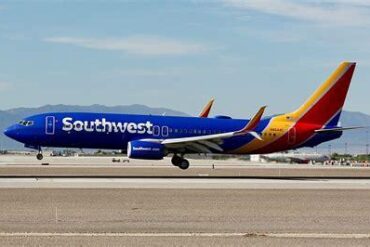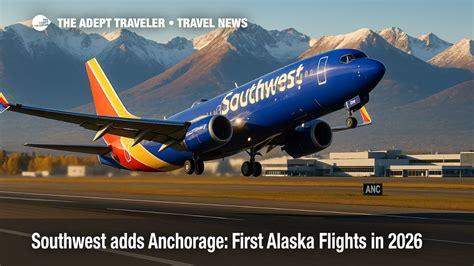
Southwest Airlines has officially expanded into one of the most geographically challenging and strategically significant regions in the United States, marking a historic milestone with the launch of its first-ever flights to Alaska. The Dallas-based carrier, widely recognized as the world’s largest low-cost airline and the dominant operator of the Boeing 737 fleet, inaugurated service to Ted Stevens Anchorage International Airport (ANC) on May 15, opening a new chapter in its network evolution.
This long-anticipated move introduces seasonal nonstop flights connecting Anchorage with two major Southwest hubs—Denver International Airport (DEN) and Las Vegas Harry Reid International Airport (LAS). Both routes are timed to capitalize on peak summer demand, when Alaska’s tourism surges and daylight stretches late into the evening, making it an ideal window for expansion.
Southwest’s Strategic Leap Into Alaska Aviation
The arrival of Southwest in Anchorage is more than symbolic—it represents a calculated expansion into a market where air travel is not just convenient but essential. Alaska’s vast terrain and limited road infrastructure make aviation a critical lifeline, connecting communities and supporting economic activity.
By adding Anchorage as its 122nd destination and 43rd U.S. state served, Southwest strengthens its domestic footprint while tapping into a high-demand, underserved corridor. The airline’s presence is expected to intensify competition, potentially lowering fares and improving accessibility for both residents and visitors.
The decision to launch service from Denver and Las Vegas is no coincidence. Both cities function as high-capacity connecting hubs, allowing passengers from across the Southwest network to seamlessly access Alaska with minimal friction.
Route Details: Distances, Aircraft, and Frequencies
Southwest’s Alaska routes are notable not only for their geography but also for their operational scale. These flights rank among the longest domestic services in the airline’s history, pushing the limits of its traditionally short-haul model.
- Denver (DEN) to Anchorage (ANC) spans approximately 2,405 miles (3,871 km)
- Las Vegas (LAS) to Anchorage (ANC) covers 2,304 miles (3,708 km)
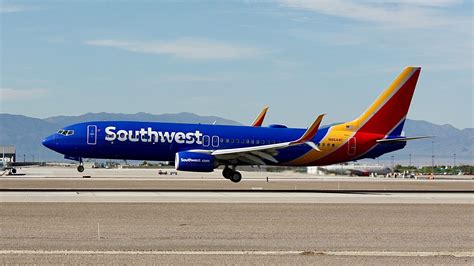
Both routes are operated daily using the Boeing 737 MAX 8, a fuel-efficient aircraft well-suited for extended narrowbody operations. This choice reflects Southwest’s commitment to maintaining cost efficiency while expanding route length capabilities.
Flight Schedules Designed for Maximum Connectivity
Southwest has carefully structured its schedules to optimize both passenger convenience and network connectivity. Evening departures from Denver and Las Vegas allow travelers to arrive in Anchorage at night, while red-eye return flights maximize aircraft utilization and provide early-morning arrivals back in the contiguous United States.
From Denver:
- Departure: 5:40 PM → Arrival: 9:15 PM
- Return: 10:25 PM → Arrival: 5:30 AM (+1 day)
From Las Vegas:
- Departure: 6:10 PM → Arrival: 10:45 PM
- Return: 11:55 PM → Arrival: 6:05 AM (+1 day)
These timings are particularly attractive for leisure travelers and visiting friends and relatives (VFR), two segments expected to drive strong demand throughout the summer season.

Anchorage Becomes a Key Summer Destination Hub
Anchorage is not just another addition—it is a gateway to Alaska’s vast wilderness, offering access to Denali National Park, glacier cruises, and wildlife tourism. Southwest’s entry is poised to significantly boost visitor numbers, especially from regions already well-served by its network.
Local officials have welcomed the airline’s arrival enthusiastically. Alaska’s transportation leadership emphasized that enhanced air service directly supports community connectivity, tourism growth, and economic resilience.
At the same time, the routes are expected to generate strong inbound traffic into Southwest’s system, funneling Alaskan travelers into major U.S. cities with greater ease than before.
A New Benchmark: Southwest’s Longest Domestic Route
The Denver–Anchorage route now stands as the longest domestic flight in Southwest Airlines’ network, narrowly trailing its longest overall route between Denver and San José, Costa Rica. This shift signals a subtle but meaningful transformation in Southwest’s operational philosophy.
Historically focused on short-haul, high-frequency routes, the airline is increasingly demonstrating its ability to compete in longer-haul markets without abandoning its low-cost DNA. The use of the 737 MAX 8 plays a critical role here, offering the range and efficiency needed to make such routes viable.
Pricing and Market Positioning
Initial pricing reflects strong demand and the premium nature of Alaska travel during peak season. One-way fares in the basic category are currently averaging:
- Around $890 from Denver
- Approximately $618 from Las Vegas
While these prices may appear elevated compared to Southwest’s typical fare structure, they remain competitive within the Alaska market, where limited capacity and high demand often drive up ticket costs.
Why This Expansion Matters for Travelers
Southwest’s Alaska debut is more than a network update—it’s a meaningful shift in the competitive landscape. Travelers now gain access to:
- More affordable options on traditionally expensive routes
- Seamless connections across a 100+ destination network
- The airline’s signature perks, including no change fees and free checked bags
For Alaska, it means increased accessibility. For Southwest, it’s a bold step into a frontier that tests both operational limits and strategic vision.
And for passengers? It’s a rare win-win—longer routes, better options, and a new way to reach the Last Frontier without breaking the bank.