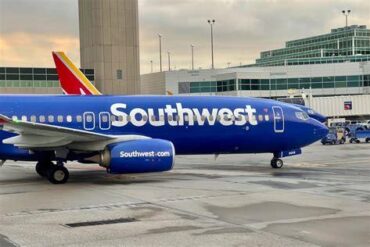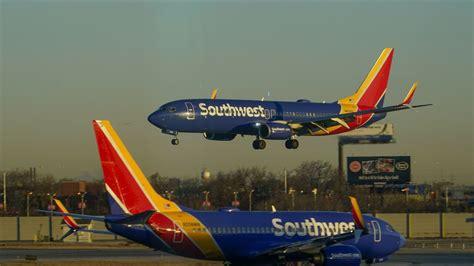
Southwest Airlines has quietly rewritten the boundaries of domestic flying in the United States, unveiling its longest-ever route from its busiest operational hub. The new nonstop service linking Denver International Airport to Anchorage, Alaska, marks a strategic and symbolic leap for a carrier traditionally associated with short-haul efficiency rather than endurance flying. With block times stretching beyond five and a half hours, this route signals a calculated expansion into longer domestic sectors that were once outside Southwest’s core identity.
The scale of this move becomes clearer when viewed against the airline’s massive footprint in Denver. With nearly 90,000 scheduled departures and over 14.6 million seats annually, the airport has evolved into Southwest’s most critical stronghold. From this high-altitude hub, the airline has steadily pushed outward, extending its network deeper into both coasts—until now, when it has reached decisively north into Alaska.
What makes this route particularly compelling is not just its duration, but its timing and operational structure. The inaugural Denver–Anchorage service departed in mid-May, establishing a daily rotation that blends late-afternoon departures with evening arrivals. The outbound flight clocks in at approximately 5 hours and 35 minutes, though actual airtime has often trended closer to five hours, depending on wind patterns and routing efficiencies.
A Strategic Leap Into Ultra-Long Domestic Flying
The introduction of this route is not a random experiment—it is a calculated extension of Southwest’s evolving network strategy. Historically, the airline’s longest flights from Denver barely approached the five-hour mark, with routes to cities like New York LaGuardia and Boston Logan topping out at around 4 hours and 50 minutes. Even popular leisure and business destinations such as Miami, Orlando, and Fort Lauderdale fell short of the new Anchorage service by a noticeable margin.
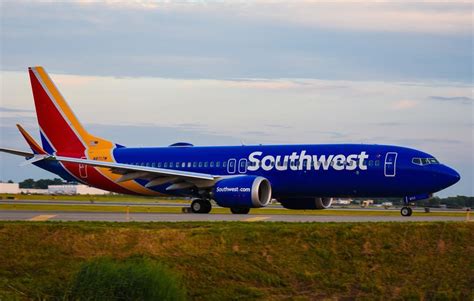
By surpassing its previous longest routes by roughly 45 minutes, Southwest is testing the elasticity of its low-cost model. Longer flights typically demand more fuel efficiency, tighter scheduling precision, and enhanced passenger comfort—all factors that can strain a budget airline’s operational blueprint. Yet, the use of the Boeing 737 MAX 8 provides a crucial advantage, offering extended range capabilities while maintaining the cost discipline that defines Southwest’s brand.
Why Anchorage Matters More Than It Appears
Anchorage is not just another destination on the map—it represents a gateway to one of the most geographically challenging and economically unique regions in the United States. Air travel in Alaska is not a luxury; it is an essential service. Communities depend heavily on reliable flight connections for both commerce and daily life, making any increase in capacity or competition highly impactful.
Southwest’s entry into this market introduces a new layer of accessibility. By connecting Anchorage directly to Denver—a major inland hub—the airline opens up a broader network of onward connections across the continental United States. This not only benefits Alaskan travelers but also strengthens tourism flows into the state, particularly during the peak summer travel season when demand surges.

Operational Details That Reveal Bigger Ambitions
The return leg from Anchorage to Denver adds another dimension to the route’s design. Operating overnight, the flight departs late in the evening and arrives early the next morning, with a slightly shorter block time of just over five hours. This scheduling approach maximizes aircraft utilization while offering passengers flexible travel options—an essential factor in competitive long-haul domestic markets.
Interestingly, Denver is not the only launch point for Southwest’s Alaska expansion. Las Vegas also serves as a departure base for Anchorage flights, with a marginally higher frequency over the same seasonal period. However, the Denver route stands out due to its role within Southwest’s broader network architecture. As the airline’s busiest hub, Denver provides a deeper pool of connecting passengers, making the route more than just a point-to-point service—it becomes a critical artery within the airline’s domestic system.
Redefining the Limits of a Low-Cost Carrier
This move challenges long-standing assumptions about what a low-cost carrier can achieve within domestic boundaries. Traditionally, ultra-long domestic routes have been the domain of legacy airlines equipped with wide-body aircraft and premium-heavy cabin configurations. Southwest, by contrast, is proving that narrow-body aircraft like the 737 MAX 8 can efficiently handle extended routes without sacrificing profitability.
The implications are significant. If successful, this model could pave the way for additional long-haul domestic expansions, potentially linking other underserved or geographically distant markets. It also positions Southwest to compete more directly with full-service carriers on routes where duration once acted as a natural barrier.
A Route That Signals the Future of Domestic Aviation
The Denver–Anchorage service is more than a milestone—it is a signal. It reflects shifting dynamics in domestic aviation, where technological advancements and evolving passenger expectations are reshaping route economics. Airlines are no longer confined by traditional distance limitations; instead, they are exploring how far they can stretch existing fleets while maintaining operational efficiency.
For Southwest Airlines, this route is both a test and a statement. It demonstrates confidence in its fleet, its network strategy, and its ability to adapt in a competitive landscape. More importantly, it hints at a future where the definition of “short-haul” and “long-haul” continues to blur, opening new possibilities for travelers and airlines alike.