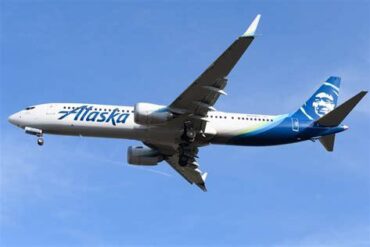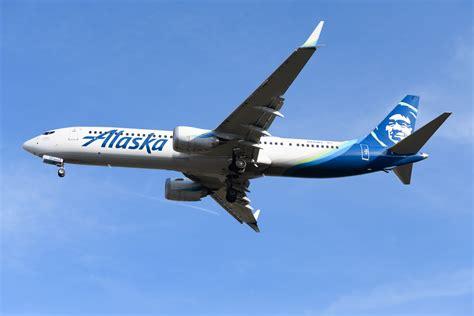
For decades, the idea of connecting Anchorage, Alaska, and Boston, Massachusetts with a regularly scheduled nonstop flight on a Boeing 737 would have sounded unrealistic. The sheer distance, relatively modest passenger demand, and economics of operating such a long domestic flight traditionally favored either larger aircraft or one-stop itineraries. Yet in the summer of 2026, that assumption quietly changed. Alaska Airlines launched a seasonal nonstop service linking the two cities using the Boeing 737 MAX 8, creating one of the longest Boeing 737 routes anywhere in the world while demonstrating how advances in aircraft efficiency are reshaping domestic aviation.
Rather than representing a publicity stunt, the new route highlights a broader transformation taking place across airline networks. Improvements in fuel efficiency, engine technology, and operating economics have enabled modern narrowbody aircraft to perform missions that once belonged almost exclusively to aging Boeing 757s or much larger widebody jets. Airlines are no longer forced to fill hundreds of seats simply to justify flying nearly eight-hour sectors. Instead, they can profitably connect smaller city pairs with aircraft that are optimized for lower operating costs instead of maximum capacity.
The significance of the Anchorage–Boston service extends well beyond Alaska itself. It represents a new philosophy in network planning where airlines prioritize flexibility, frequency, and profitability over aircraft size. In doing so, Alaska Airlines has effectively expanded the range of nonstop city pairs that can realistically be connected within the United States.
Alaska Airlines Opens a New Frontier Between Anchorage and Boston
Beginning June 13, 2026, Alaska Airlines inaugurated nonstop seasonal flights between Ted Stevens Anchorage International Airport (ANC) and Boston Logan International Airport (BOS). Operating until August 15, the service runs once weekly on Saturdays from Anchorage, with return flights departing Boston on Monday mornings.
While the schedule appears limited, it is carefully designed around seasonal leisure demand. Summer represents Alaska’s busiest tourism season, drawing travelers from across the northeastern United States seeking glaciers, wildlife, national parks, fishing expeditions, and adventure cruises. Instead of forcing these passengers through Seattle or other connecting hubs, Alaska Airlines now offers a direct option that significantly reduces total travel time.
The route covers approximately 2,940 nautical miles (5,444 kilometers). Scheduled block times reach approximately 7 hours and 15 minutes eastbound and nearly 7 hours and 53 minutes westbound, placing the service among the longest regularly scheduled Boeing 737 flights currently operating anywhere in the world.
Although nearly eight hours in a single-aisle aircraft may seem unusual, advances in aircraft performance have transformed what is operationally possible. Fifteen years ago, a route of this length would almost certainly have required a Boeing 757-200 or even a Boeing 767 to make the economics work. Today, the Boeing 737 MAX 8 accomplishes the mission while burning substantially less fuel and carrying fewer passengers, creating a much stronger business case.
Why This Route Would Have Been Nearly Impossible a Decade Ago
Historically, airlines faced a difficult balancing act when considering extremely long domestic routes. Aircraft capable of flying the distance generally carried far more passengers than the market could consistently support.
The Boeing 757-200 became famous for its exceptional range among narrowbody aircraft and served countless long-haul domestic and transatlantic routes throughout the 1990s and early 2000s. However, it also consumed significantly more fuel than modern replacements. Even though it seated around 200 passengers in many airline configurations, consistently filling those seats on routes such as Anchorage to Boston proved challenging.
Moving to a larger aircraft only worsened the problem. Widebody aircraft like the Boeing 767 or Airbus A330 introduced even greater fuel consumption, higher maintenance expenses, additional airport handling costs, and substantially larger seating capacities. Unless airlines could reliably sell hundreds of tickets on every departure, profitability quickly disappeared.
Consequently, passengers traveling between Alaska and the northeastern United States generally connected through Seattle, Minneapolis, Denver, or Chicago, where airlines could consolidate traffic from multiple origins before continuing onward.
Today’s aircraft technology has fundamentally altered that equation.
The Boeing 737 MAX 8 Makes Long Domestic Flights Economically Viable
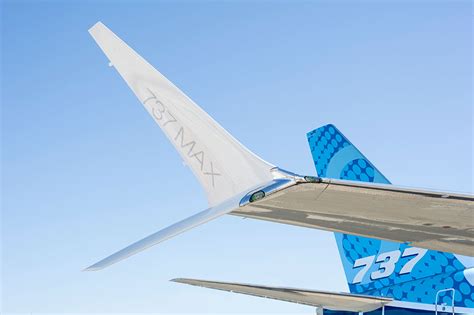
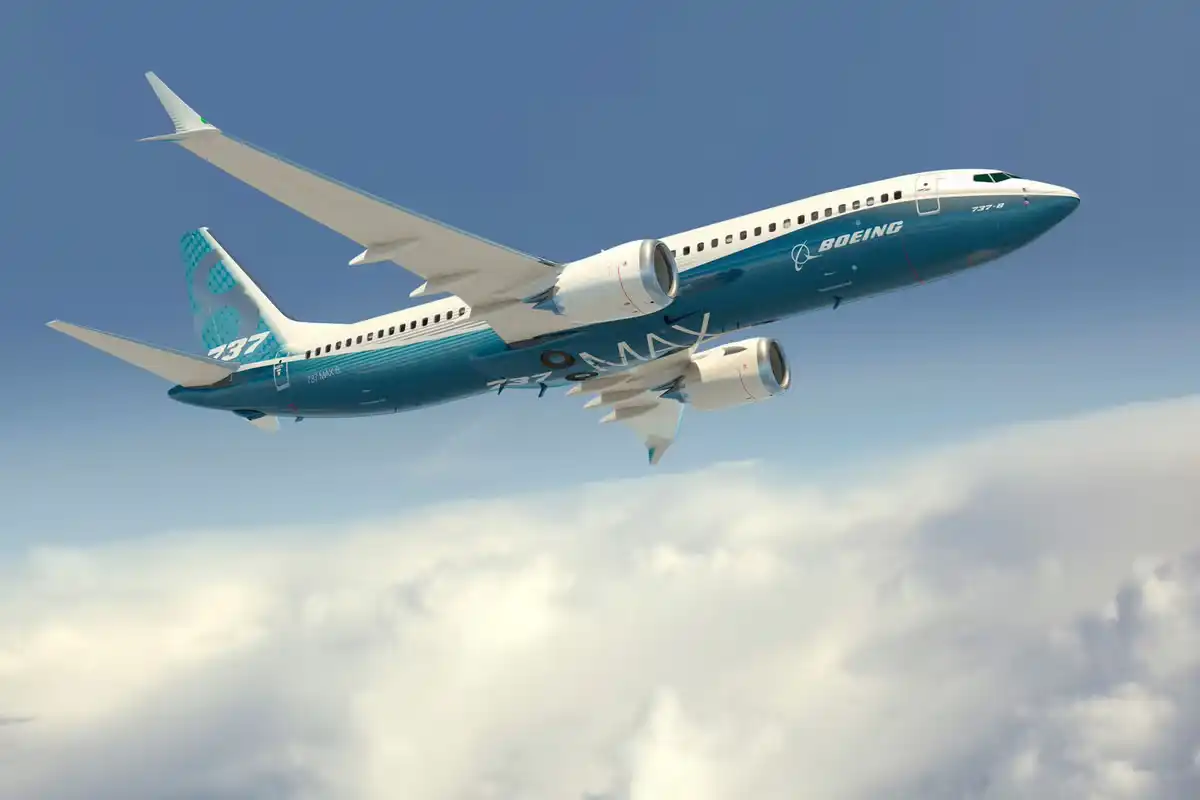
The success of Alaska Airlines’ new service depends largely on one aircraft: the Boeing 737 MAX 8.
Unlike earlier members of the 737 family, the MAX 8 combines advanced aerodynamics with CFM LEAP-1B engines, significantly reducing fuel consumption while extending operational range. These improvements allow airlines to operate missions approaching eight hours without incurring the high trip costs associated with previous-generation aircraft.
Equally important is the aircraft’s seating capacity.
Alaska Airlines configures its 737 MAX 8 with approximately 159 passengers, creating an ideal balance between capacity and demand. Instead of attempting to fill 250 to 300 seats on every departure, the airline only needs enough passengers to make a much smaller aircraft profitable.
This dramatically lowers financial risk.
Rather than relying on exceptionally high passenger volumes, airlines can now focus on matching aircraft size to actual demand. This strategy minimizes empty seats while maintaining attractive operating margins.
Fuel efficiency further strengthens the business case. Because fuel remains one of the largest operating expenses for any airline, even modest improvements in consumption can translate into millions of dollars in annual savings across an entire fleet.
Why Alaska Airlines Uses the MAX 8 for Specialized Missions
Although Alaska Airlines operates hundreds of Boeing aircraft, the 737 MAX 8 represents only a relatively small portion of its fleet.
The airline’s primary narrowbody fleet consists largely of:
- Boeing 737-900ER
- Boeing 737 MAX 9
- Boeing 737 MAX 10 (future deliveries)
- Boeing 737-800
These larger variants handle the overwhelming majority of domestic operations because they offer superior economics on routes with stronger passenger demand.
The MAX 8 occupies a specialized role.
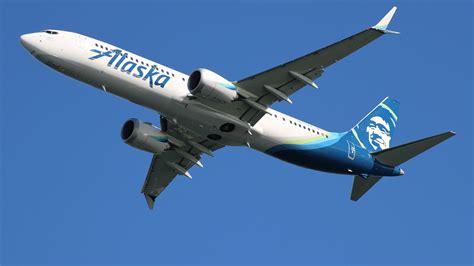
Compared with the larger MAX 9, it sacrifices around 17 passenger seats while gaining approximately 200 nautical miles of additional operational range. That extra capability becomes extremely valuable on flights operating near the limits of the aircraft’s performance envelope.
As a result, Alaska Airlines deploys the MAX 8 primarily on routes requiring exceptional range rather than maximum capacity. In addition to Boston, the aircraft serves destinations such as New York JFK and even international services from Seattle to Reykjavik, demonstrating its versatility across a wide range of markets.
Anchorage Is Becoming Better Connected to the Northeast
Boston is only the latest addition to a growing collection of nonstop routes linking Alaska with the northeastern United States.
Today, passengers can fly nonstop between Anchorage and several major eastern gateways using modern narrowbody aircraft.
Among the longest nonstop connections are:
- Anchorage – Boston (Alaska Airlines)
- Anchorage – New York JFK (Alaska Airlines)
- Anchorage – Newark (United Airlines)
- Anchorage – Washington Dulles (United Airlines)
Remarkably, nearly all of these services rely on the Boeing 737 MAX 8 rather than widebody aircraft.
This trend reflects changing airline economics rather than changing geography. The cities themselves have always been separated by similar distances. What has changed is the availability of aircraft capable of serving these routes efficiently without requiring enormous passenger demand.
Even New York, despite being the country’s largest aviation market, illustrates the flexibility of the MAX 8. Airlines no longer need to dedicate expensive widebody aircraft simply because a route is long. Instead, they can tailor aircraft size to expected passenger volumes.
Low Trip Costs Are More Important Than Maximum Capacity
One of the biggest misconceptions in airline economics is that larger aircraft automatically produce greater profits.
In reality, profitability depends on trip costs, not simply passenger capacity.
Every flight incurs expenses regardless of how many seats are occupied. Fuel, maintenance, airport charges, navigation fees, aircraft ownership, and crew salaries all contribute to the overall cost of operating a flight.
If an airline deploys a large aircraft but cannot consistently fill it, those fixed expenses become spread across fewer paying passengers.
Modern narrowbodies like the Boeing 737 MAX 8 solve this challenge by reducing the total cost of operating each flight. Even though they generate less overall revenue because of their smaller size, they often produce stronger margins on routes where demand does not justify larger aircraft.
This flexibility also allows airlines to increase frequency instead of concentrating all passengers onto one oversized daily departure.
The Rise of Long-Haul Narrowbody Flying
The Anchorage–Boston route reflects a broader global shift toward long-range narrowbody operations.
For many years, airlines depended on the Boeing 757 for these specialized missions. After production ended, carriers searched for aircraft capable of replacing its unique combination of range and passenger capacity.
The Boeing 737 MAX 8 has emerged as one solution.
United Airlines now operates the aircraft on numerous international routes departing Newark, including services to destinations such as Nuuk, Glasgow, Ponta Delgada, Santiago de Compostela, and Funchal.
Elsewhere, Brazilian carrier GOL operates what is currently regarded as one of the world’s longest Boeing 737 services between Brasília and Orlando, covering approximately 3,282 nautical miles (6,079 kilometers) and approaching eight hours in duration.
Meanwhile, Airbus has developed the A321LR and A321XLR, aircraft specifically optimized for long-range narrowbody flying. These models are rapidly becoming popular for thinner transatlantic markets where passenger demand cannot justify daily widebody operations.
Together, these aircraft are redefining how airlines think about route planning.
The Eight-Hour Barrier Still Matters
Despite their impressive capabilities, long-range narrowbody aircraft are not without limitations.
One particularly important threshold is eight hours.
Many aviation regulations require additional flight crew once scheduled flight times exceed this duration. Introducing augmented crews increases labor costs while creating another operational challenge: narrowbody aircraft generally lack dedicated crew-rest compartments.
Instead, airlines must block passenger seats for resting pilots or flight attendants, reducing revenue capacity.
For widebody aircraft carrying 250 to 300 passengers, losing several seats has relatively little impact.
For a Boeing 737 MAX 8 carrying roughly 159 passengers, however, blocking multiple seats represents a much larger percentage of available capacity.
This is one reason many of today’s longest Boeing 737 routes cluster just below the eight-hour mark. Airlines maximize aircraft utilization while avoiding the additional costs associated with augmented staffing.
Technology Is Expanding the Definition of a Domestic Nonstop Route
Perhaps the most fascinating aspect of the Anchorage–Boston service is not simply its distance but what it represents for the future.
For decades, route planning was constrained by aircraft capability. Airlines often knew there was sufficient passenger demand between two cities but lacked an aircraft that could serve the market economically.
Modern narrowbodies have changed that calculation.
Instead of asking whether enough passengers exist to fill a widebody, airlines now ask whether enough demand exists to profitably fill a highly efficient narrowbody.
That subtle shift opens countless possibilities.
Previously overlooked city pairs can now support nonstop service. Seasonal routes become easier to justify. Airlines gain flexibility to experiment with new destinations while minimizing financial exposure.
The result is an aviation landscape where travelers increasingly enjoy direct flights that would have seemed improbable only a generation ago.
A Small Aircraft Is Quietly Transforming Airline Networks
The Anchorage–Boston nonstop service is more than another seasonal addition to an airline schedule. It illustrates how aircraft technology continues to reshape commercial aviation in ways that passengers immediately appreciate.
The Boeing 737 MAX 8 is not replacing widebody aircraft on major intercontinental corridors, nor is it eliminating the need for larger jets on high-demand routes. Instead, it is unlocking opportunities that previously existed in an economic gray area—routes too long for traditional narrowbodies yet too small to justify larger aircraft.
For Alaska Airlines, the nearly eight-hour journey between Anchorage and Boston showcases the value of operating the right aircraft rather than simply the biggest one. For travelers, it means fewer connections, shorter total travel times, and direct access between regions that once seemed too distant to link efficiently.
As airlines continue refining their fleets with increasingly capable single-aisle aircraft, the definition of what qualifies as a practical nonstop route will continue to expand. The Anchorage–Boston flight stands as compelling evidence that the future of long-distance aviation is not always about flying larger airplanes—it is often about flying smarter ones.