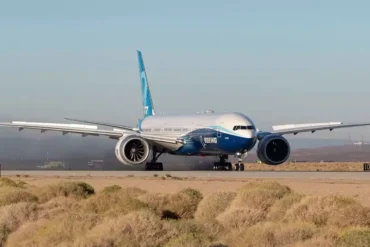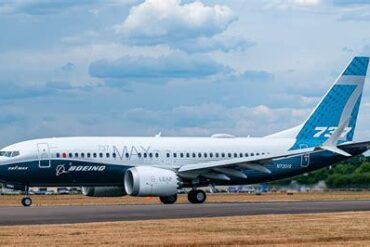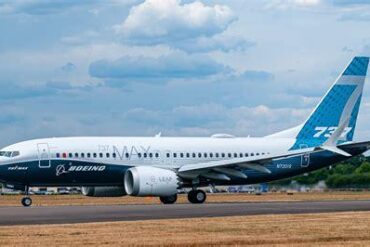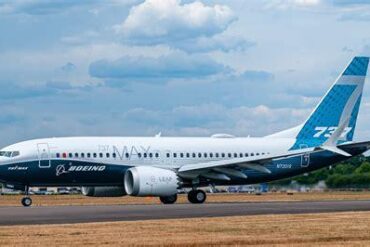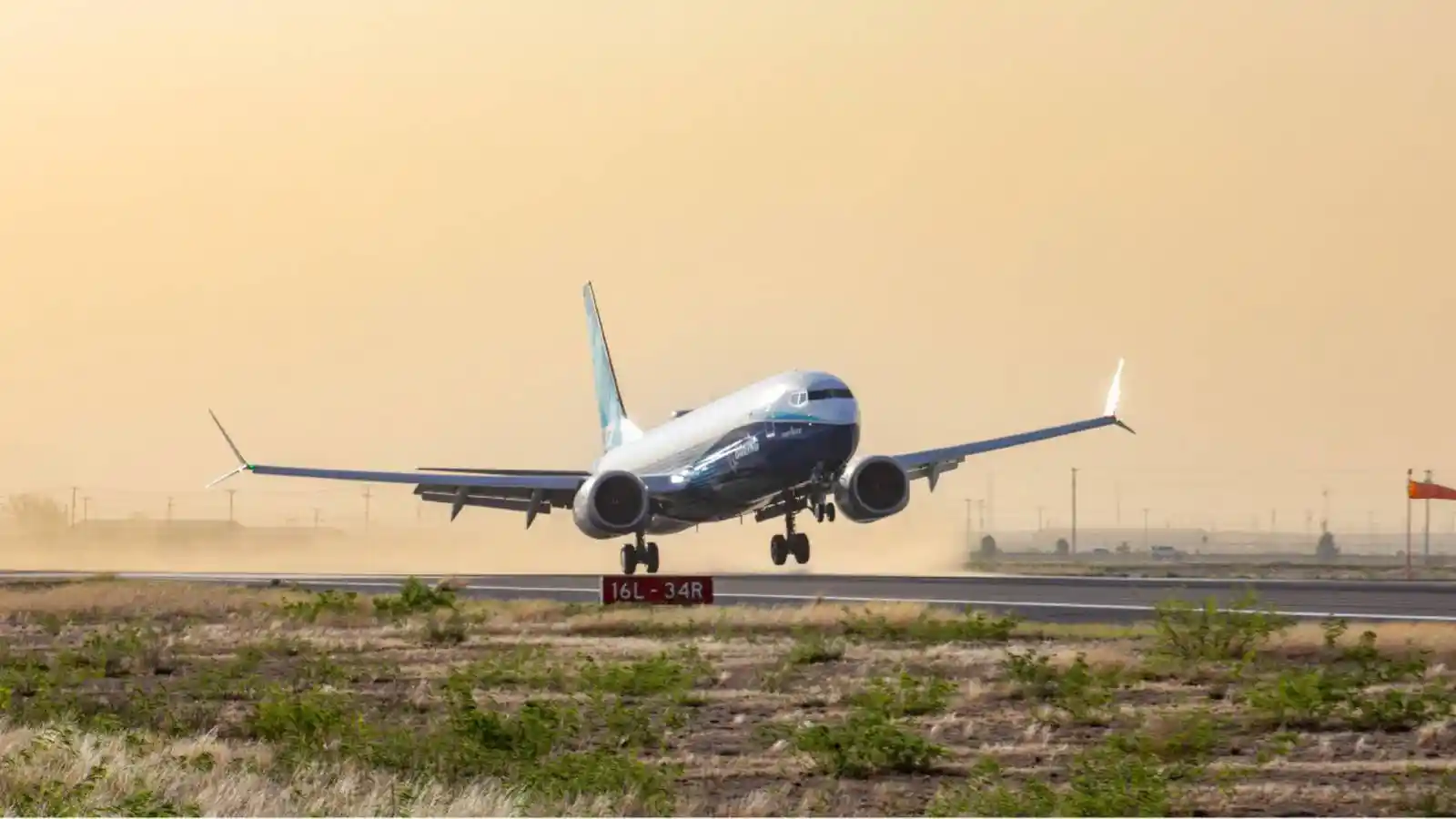
The Boeing 737 MAX 10 has reached another significant milestone on its path toward certification after completing a demanding series of extreme crosswind autoland evaluations. Rather than avoiding severe weather, Boeing’s flight-test teams deliberately sought powerful and unpredictable winds across Texas to determine whether the aircraft’s automated landing system could maintain precision when exposed to conditions well beyond those encountered during routine airline operations. The campaign highlights the extensive engineering and validation work required before the largest member of the 737 MAX family enters commercial service.
Pursuing Nature’s Toughest Crosswinds for Certification
Aircraft certification rarely unfolds under ideal skies. Instead, manufacturers intentionally search for challenging weather that allows engineers to validate critical flight systems under realistic operational stress. For the 737 MAX 10, Boeing focused its latest certification effort on evaluating autoland performance during severe crosswind operations, one of the most technically demanding situations faced by modern commercial aircraft.
Flight crews positioned themselves around Midland International Air & Space Port in Texas, where rapidly shifting wind patterns provided an ideal natural testing laboratory. Rather than scheduling flights months in advance, engineers continuously monitored weather forecasts and remained prepared to deploy test aircraft within only a few days whenever favorable conditions appeared.
According to Boeing flight test engineer Lauren Auerbach, the engineering teams effectively stay on constant “wind watch,” allowing certification crews to respond quickly whenever forecasts predict unusually strong gusts capable of challenging the aircraft’s automatic landing systems.
Evaluating Precision Beyond Standard Landing Requirements
The objective extended far beyond proving that the aircraft could simply touch down safely. Engineers carefully measured whether the 737 MAX 10’s autoland system continuously calculated and applied precise corrections throughout the entire approach while remaining accurately aligned with the runway centerline.
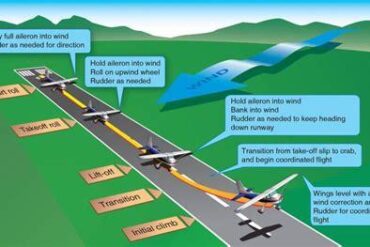
Crosswinds present one of aviation’s most dynamic landing challenges because lateral wind forces constantly attempt to push an aircraft away from its intended flight path. Even steady winds require continuous control inputs, but gusting conditions become considerably more demanding as both wind strength and direction may fluctuate dramatically within seconds.
During these evaluations, Boeing pilots examined how rapidly the aircraft’s flight control computers detected changing atmospheric conditions, processed incoming sensor data, and executed corrective control movements. Every adjustment had to occur smoothly while maintaining passenger comfort, aircraft stability, and runway tracking accuracy.
Test pilot Dan Mangel explained that many certification flights actually exceeded the minimum regulatory requirements by a substantial margin, exposing the aircraft to wind conditions significantly stronger than those officially required for certification testing. Successfully demonstrating reliable autoland capability under such demanding circumstances provides valuable confidence that the aircraft can perform consistently during challenging real-world airline operations.
Why the Boeing 737 MAX 10 Required Specialized Engineering
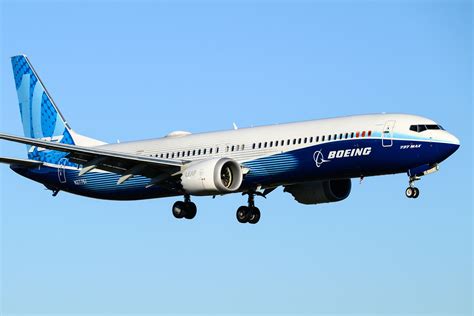
Although the MAX 10 shares its heritage with previous members of the 737 MAX family, its larger physical dimensions required far more than a simple fuselage stretch. Measuring approximately 143 feet 8 inches (43.8 meters) in length, the aircraft is over five feet longer than the MAX 9, allowing airlines to accommodate approximately 204 passengers in a standard two-class configuration or up to 230 passengers in higher-density layouts.
Increasing passenger capacity inevitably changes an aircraft’s weight distribution, structural loading, and landing characteristics. Boeing therefore introduced several important engineering modifications to preserve the handling qualities pilots expect across the MAX family.
The most visible change involves a redesigned levered main landing gear, allowing additional ground clearance despite the aircraft’s longer fuselage. Engineers also strengthened structural components and refined aircraft systems to support the increased maximum takeoff weight approaching 198,000 pounds (90,000 kilograms).
Despite these physical differences, Boeing engineers intentionally tuned the flight control characteristics so that pilots transitioning between MAX variants experience nearly identical handling behavior, minimizing additional training requirements while preserving operational consistency across airline fleets.
High Performance Designed for Competitive Airline Operations
Powering the MAX 10 are two CFM LEAP-1B turbofan engines, each generating approximately 29,300 pounds of thrust. Together they enable the aircraft to cruise efficiently at approximately Mach 0.79, or roughly 453 knots, while offering a maximum operational range approaching 3,560 miles (5,740 kilometers) depending on passenger and cargo configuration.
These performance characteristics position the aircraft squarely within one of commercial aviation’s most competitive market segments. Airlines increasingly seek narrow-body aircraft capable of transporting more passengers over longer distances while maintaining lower fuel consumption and operating costs. The MAX 10 has therefore become Boeing’s direct competitor in the high-capacity single-aisle market, where operational efficiency plays an increasingly important role in airline fleet planning.
Certification Extends Far Beyond Flight Testing
Although dramatic crosswind landings attract public attention, they represent only one element of an enormously comprehensive certification program. Modern commercial aircraft undergo hundreds of flight hours, countless laboratory evaluations, and extensive engineering reviews before aviation regulators authorize passenger service.
Certification specialists systematically analyze virtually every major aircraft system, including braking performance, hydraulic redundancy, engine reliability, electrical architecture, flight controls, avionics integration, and emergency failure scenarios. Boeing engineers simultaneously perform detailed System Safety Assessments, evaluating how individual components behave during failures and how backup systems respond across multiple interconnected aircraft systems.
These investigations examine not only immediate failures but also secondary and tertiary consequences, ensuring that redundant systems maintain safe aircraft operation even under highly unlikely combinations of technical malfunctions.
Strong Commercial Demand Reinforces the Program’s Importance
The certification effort carries enormous commercial significance. The 737 MAX 10 has accumulated more than 1,200 orders and commitments worldwide, reflecting substantial confidence among airline customers seeking higher-capacity narrow-body aircraft.
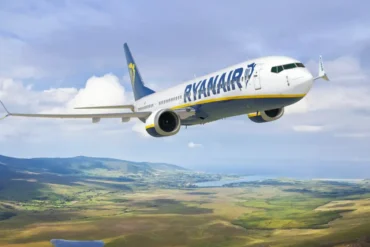
Among its most prominent customers is Ryanair, which committed to acquiring as many as 300 MAX 10 aircraft, including 150 firm orders and 150 purchase options. Such large fleet investments demonstrate airlines’ expectations that the aircraft will become a central component of future short- and medium-haul operations.
For passengers, the months of engineering analysis, meteorological planning, and intensive flight testing will remain almost invisible. Yet every automated landing ultimately reflects thousands of hours spent validating systems under conditions deliberately chosen to exceed normal operational demands. By successfully challenging the 737 MAX 10 in powerful crosswinds, Boeing is demonstrating that its largest single-aisle aircraft is being evaluated not merely for routine performance, but for the extraordinary situations that define modern aviation safety.