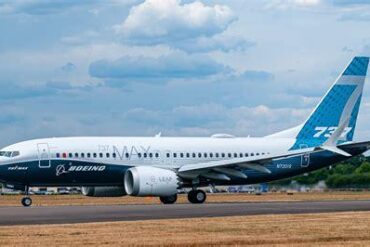
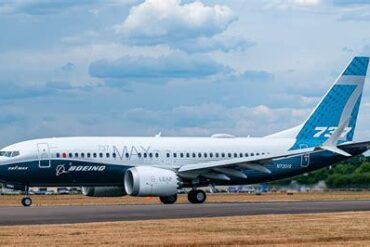
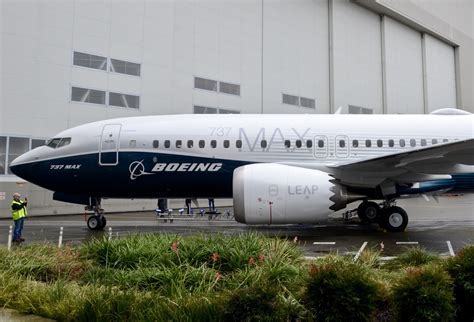
Boeing has formally requested a two-year extension to a critical exemption granted by the Federal Aviation Administration (FAA) concerning its 737 MAX 7 aircraft. The exemption, initially approved in 2023, pertains to the Flap-Slat Electronics Unit (FSEU) — a non-flight-critical system integral to on-ground diagnostics. The current exemption is set to expire on March 1, 2027, but Boeing now seeks to extend this to March 1, 2029, citing certification delays that have slowed progress on both the 737 MAX 7 and MAX 10 programs.
Boeing’s Exemption Request: A Technical and Strategic Necessity
The root of Boeing’s request lies in a software issue affecting the Built-In Test Equipment (BITE) function within the FSEU. The BITE function is designed exclusively for on-ground testing and maintenance diagnostics and does not impact the aircraft’s performance in flight. Boeing discovered an error in the flap load relief test portion of this function during the assembly of the first 737 MAX 7 aircraft — a discovery that led to the realization that a software update would be required.
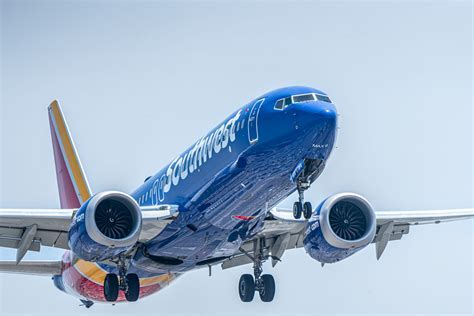
Despite being certified and deployed successfully on other MAX variants like the 737 MAX 8, 8-200, and 9, the original FSEU failed to comply with certain regulatory requirements when installed on the MAX 7. The FAA had granted Boeing a Time-Limited Exemption (TLE No. 21006) under strict conditions:
- Boeing must submit a Service Bulletin (SB) for the FSEU software update by August 1, 2025.
- The updated FSEU must be installed on all newly produced MAX 7 aircraft by March 1, 2027.
- Aircraft flying under the exemption must include instructions in their airworthiness documentation that prohibit flight after March 1, 2027, without the retrofit.
The conditions were originally timed based on the expected certification schedule of the 737 MAX 10. However, with that timeline now shifting, Boeing asserts that a two-year extension is necessary to ensure compliance and maintain its production and delivery schedules.
Certification Bottlenecks and Regulatory Implications
The delay in MAX 7 certification has had cascading effects across Boeing’s narrowbody program. The company argues that the new FSEU — designed to address the BITE anomaly — has become the baseline configuration for the 737 MAX 7. Unfortunately, this new unit was found to be non-compliant with a section of the Code of Federal Regulations (CFR), which stipulates that any changes to type-certified equipment must meet updated regulatory requirements.
As the new FSEU is intended to be a standard feature in the MAX 10 program, Boeing has integrated its resolution into the MAX 10 certification workflow, further justifying the requested extension. The company states that it cannot certify the updated FSEU for MAX 7 aircraft until the broader system updates — currently under development for MAX 10 — are completed.
Operational Disruptions and Airline Impacts
In its request, Boeing emphasized the potential for widespread operational disruptions should the FAA decline to approve the extension. The company noted that the BITE test, required under the Maintenance Planning Data (MPD) document, must be performed:
- After component replacement involving the FSEU or its control valve.
- Approximately every 5,000 flight hours, equating to three times per aircraft over the duration of the TLE.
If airlines are forced to revert to older FSEUs or more invasive test procedures, this would lead to delayed or canceled flights, increased maintenance times, and elevated costs for carriers — a significant concern given the aircraft’s role in high-frequency, short-haul operations.
Boeing’s Strategic Argument to the FAA
Boeing contends that extending the exemption aligns with public interest and maintains operational efficiency across the commercial aviation sector. More than one hundred 737 MAX 7 aircraft would be affected by the requirement to undergo alternate BITE procedures — a burden that could be significantly eased by allowing the newer FSEU’s use during the extension period.
The plane maker further argues that the updated FSEU delivers a level of safety equivalent to the current one, though it remains formally uncertified under updated rules. The exemption, therefore, would serve as a transitional mechanism, allowing airlines to take delivery of newer MAX 7 aircraft without waiting for full certification of the new unit.
Timeline of Regulatory Interactions
Boeing’s interaction with the FAA over this issue has spanned several years. Key milestones include:
- August 25, 2023: FAA grants original exemption (TLE No. 21006).
- August 1, 2025: Deadline for Boeing to submit retrofit Service Bulletin.
- March 1, 2027: Deadline for updated FSEU integration on new aircraft and end of flight eligibility for non-compliant units.
- June 2025: Boeing submits formal request to extend the exemption through March 1, 2029.
The new request repositions Boeing’s certification strategy by aligning it more closely with the MAX 10’s development schedule, thereby optimizing engineering resources and reducing redundant certification activities.
Stakeholder Response and Market Implications

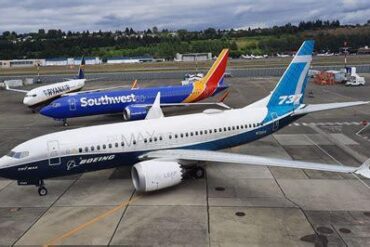
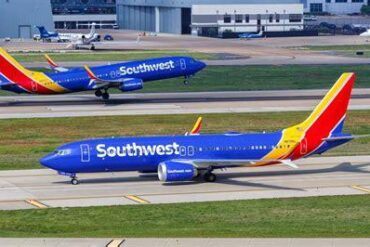
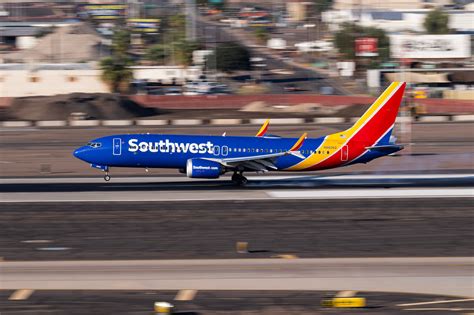
While the FAA has yet to publicly respond to Boeing’s new request, the agency is expected to weigh the operational urgency against the stringency of regulatory compliance. For Boeing, approval is not merely a matter of convenience but a strategic imperative to prevent bottlenecks in delivery to key customers like Southwest Airlines, the launch customer for the MAX 7.
Southwest Airlines, which plans to integrate dozens of MAX 7s into its all-Boeing fleet, faces significant scheduling uncertainties tied to this exemption. An unfavorable ruling from the FAA could lead to aircraft delivery delays, fleet planning disruptions, and capacity constraints, especially during peak travel seasons.
Boeing’s Broader Regulatory Challenges
The MAX 7 and MAX 10 programs have been under intense regulatory scrutiny since the broader MAX crisis grounded the family globally in 2019. While the MAX 8 and MAX 9 have since resumed service, the certification delays for the MAX 7 and MAX 10 are emblematic of a broader regulatory reset in the post-MAX era.
The company’s concurrent request for a stall-management system exemption — also under FAA review — reflects the continued technical debt from initial program decisions made over a decade ago. Boeing’s reliance on exemptions, while not unprecedented, underscores the difficulty of updating legacy platforms like the 737 to meet evolving safety standards.
Looking Ahead: A Tense Path to Certification
Boeing’s path to certification for the 737 MAX 7 remains narrow and complex. The requested exemption extension buys the manufacturer critical time to complete integration testing, secure regulatory approval for the new FSEU, and streamline the software update into the production line.
However, each extension request adds to the scrutiny the program faces — not only from regulators but also from airline customers, shareholders, and aviation safety watchdogs. The FAA’s decision will therefore have significant ripple effects across the industry, influencing certification strategies, aircraft deliveries, and long-term trust in Boeing’s development process.
The outcome of this exemption request will serve as a litmus test for how the FAA balances regulatory rigor with the practical realities of modern commercial aircraft certification — especially for legacy platforms adapted to meet new demands.
Conclusion
Boeing’s request for a two-year FAA exemption extension for the 737 MAX 7 highlights the delicate interplay between engineering timelines, regulatory expectations, and operational continuity. As the aerospace giant awaits a ruling, the clock is ticking for both Boeing and its airline partners, who depend on a predictable delivery schedule to meet demand. Whether or not the FAA grants the extension, this development underscores the high stakes involved in certifying complex commercial aircraft in an environment still shaped by the reverberations of past crises.