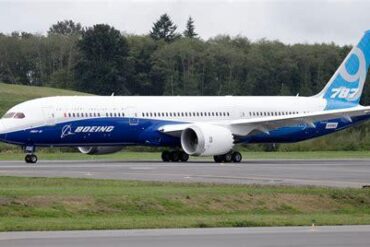
The Boeing 787 Dreamliner has earned a reputation as one of the most capable long-range aircraft for operating from airports where altitude and temperature create serious performance challenges. From Bogotá El Dorado International Airport high in the Andes to Mexico City International Airport and Addis Ababa Bole International Airport, airlines have selected the 787 because it can maintain strong payload capability in environments where older widebody aircraft often face restrictions.
However, the claim that the Boeing 787 can serve hot and high airports that limit competing widebodies needs some explanation. The aircraft does have a meaningful advantage over previous-generation aircraft such as the Boeing 767, early versions of the Boeing 777, and the Airbus A330ceo, but it is not uniquely immune to the effects of thin air. Modern competitors such as the Airbus A350 use many of the same technologies and can perform equally well in extreme conditions.
The Dreamliner’s advantage comes from a combination of advanced engines, lightweight composite construction, and an efficient wing design. Together, these features allow the aircraft to carry more fuel, passengers, and cargo from challenging airports while maintaining the range required for long-haul operations.

What Makes an Airport “Hot and High” for Widebody Aircraft?
Aircraft performance depends heavily on air density. At sea level, engines receive a large volume of air, and wings generate lift efficiently because the atmosphere is relatively dense. As altitude increases, the air becomes thinner, reducing both engine thrust and wing lift.
High temperatures make the problem worse. Warm air expands and becomes less dense than cold air, meaning engines have fewer air molecules available for combustion and wings must move faster to generate the same amount of lift.
The aviation industry describes this combination as hot and high conditions. It is one of the most demanding operating environments for commercial aircraft because it directly reduces the amount of weight an aircraft can safely carry during takeoff.
For a widebody aircraft leaving a major airport such as New York John F. Kennedy International Airport or Dubai International Airport, performance margins are usually generous. The aircraft can often depart close to its maximum takeoff weight with full passenger loads, cargo, and fuel.
The situation changes dramatically at airports located thousands of feet above sea level. Bogotá El Dorado International Airport sits at approximately 8,361 feet (2,548 meters), while Mexico City International Airport is located at about 7,316 feet (2,230 meters). At these elevations, the atmosphere is already significantly thinner before temperature effects are considered.
An aircraft departing these airports on a warm afternoon may effectively experience conditions similar to an airport much higher than its actual elevation. This measurement is known as density altitude, and it is one of the most important factors pilots and airline dispatchers consider before departure.
Why Density Altitude Creates Problems for Older Widebody Aircraft
Density altitude determines how an aircraft’s engines and wings perform compared with standard atmospheric conditions. A runway located at 7,000 feet elevation may behave like an 8,500-foot runway environment on a hot day because the aircraft “feels” the thinner air.
The result is reduced takeoff capability. Airlines operating older widebody aircraft may need to reduce weight by carrying fewer passengers, removing cargo, or limiting fuel loads. These restrictions can make certain long-range routes commercially difficult.
For example, a previous-generation aircraft such as the Boeing 767-300ER could operate from high-altitude airports, but it might require payload limitations on demanding long-distance routes. A flight from Bogotá to Europe requires large amounts of fuel, and every kilogram of additional payload matters.
Similarly, the Airbus A330ceo, despite being a highly successful aircraft family, was designed before many of the latest advances in engine efficiency and composite materials became standard. Under hot and high conditions, it may not have the same performance margin as newer aircraft.
This does not mean older aircraft cannot operate from these airports. Instead, it means airlines have fewer operational options when they need maximum range combined with maximum payload.
Three Key Boeing 787 Features That Improve Hot and High Performance
The Boeing 787 Dreamliner’s ability to handle demanding airports comes from several design choices working together rather than one single breakthrough.
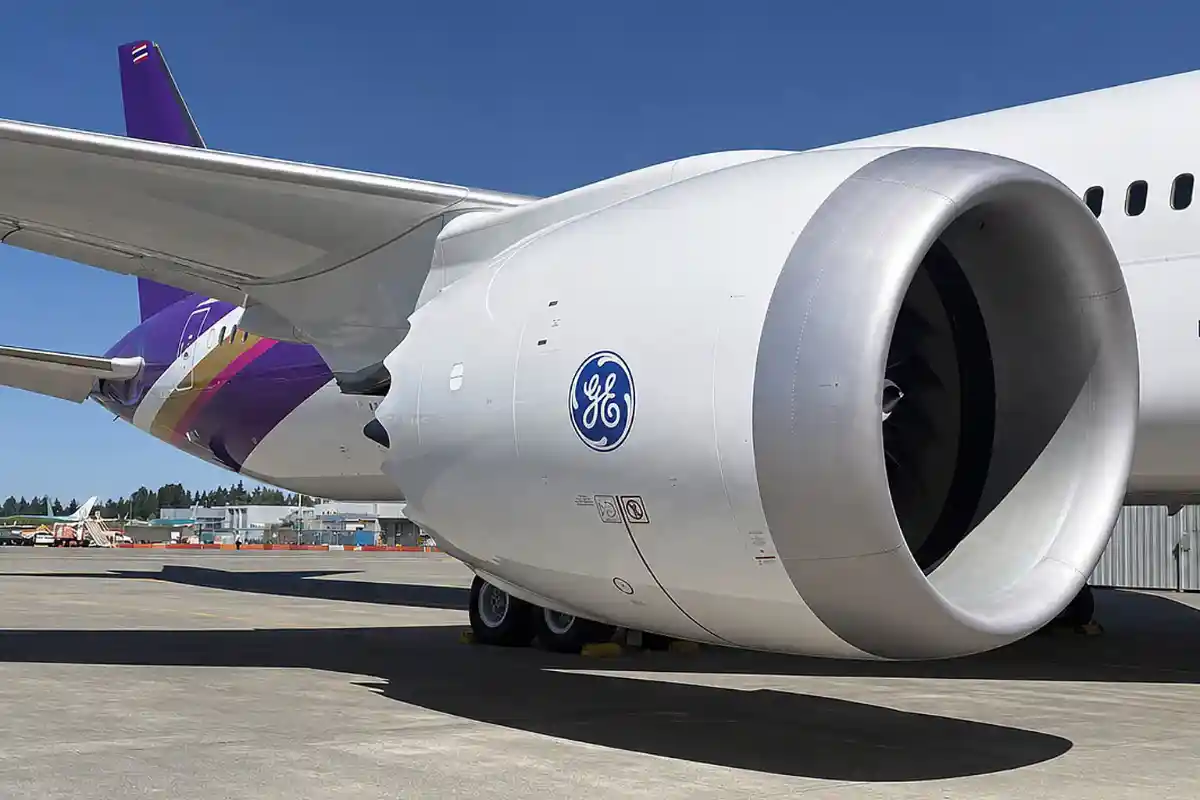
The first major advantage is the aircraft’s high-performance engine technology. The 787 is powered by either the General Electric GEnx-1B or the Rolls-Royce Trent 1000 engine family. These high-bypass turbofan engines were designed specifically for modern long-range operations and provide substantial thrust margins.
The GEnx-1B produces up to approximately 76,100 pounds of thrust, while some versions of the Trent 1000 produce around 81,000 pounds of thrust. Although all engines lose performance in thin air, engines with higher thrust ratings begin with more available power.
This additional margin helps the aircraft accelerate during takeoff and maintain stronger climb performance after leaving the runway. At high-altitude airports, where every bit of available thrust matters, engine capability becomes a major operational advantage.
The second factor is the 787’s composite wing design. The aircraft uses a high-aspect-ratio wing that is longer and more aerodynamically efficient than many previous widebody designs.
A more efficient wing produces lift with less aerodynamic drag. This allows the aircraft to reach takeoff speed more effectively and improves climb capability after departure. These benefits become particularly valuable when the atmosphere reduces the wing’s natural ability to generate lift.
The third advantage is weight reduction through composite materials. Approximately half of the 787’s structure by weight is made from advanced composites, including carbon-fiber-reinforced materials.
A lighter aircraft requires less thrust to accelerate and less lift to become airborne. This improves the aircraft’s thrust-to-weight ratio and provides additional performance flexibility at airports where the environment already reduces aircraft capability.
Bogotá Shows Why Airlines Choose the Boeing 787
Few airports demonstrate the Dreamliner’s strengths better than Bogotá El Dorado International Airport.
Located high in the Colombian Andes, Bogotá is one of the world’s busiest high-altitude airports serving international widebody operations. Airlines operating long-range routes from Bogotá must balance fuel requirements, passenger demand, and reduced aircraft performance.
A Boeing 767 operating a long-haul flight from Bogotá may face payload restrictions during warm weather. By contrast, airlines such as Avianca have selected the Boeing 787 for international routes because the aircraft provides better performance margins.
The 787 allows carriers to operate routes with fewer compromises, especially when flights require large fuel loads for destinations in Europe or North America. The aircraft’s combination of efficiency and payload capability makes it particularly attractive for airlines based at challenging airports.
The same advantage applies to Mexico City. Located more than 7,000 feet above sea level, Mexico City presents similar challenges. Airlines operating long-distance routes need aircraft that can depart with enough fuel while carrying commercially viable passenger loads.
Aeroméxico operates Boeing 787 aircraft on long-haul international services from Mexico City, including routes connecting the Mexican capital with destinations across Europe, Asia, and South America. The Dreamliner’s performance characteristics allow these routes to remain practical despite the airport’s demanding environment.

Addis Ababa and Johannesburg Highlight the Global Advantage
Africa provides another example of why the Boeing 787 has become popular among airlines operating from elevated airports.
Addis Ababa Bole International Airport sits at approximately 7,657 feet (2,334 meters), making it one of the highest major international airports in the world. Ethiopian Airlines operates one of the largest Boeing 787 fleets globally and uses the aircraft extensively across its long-haul network.
The airport’s elevation creates challenges for aircraft departing with maximum fuel loads. The 787’s efficiency and performance allow Ethiopian Airlines to connect Addis Ababa with destinations across Europe, Asia, and North America while maintaining strong operational flexibility.
Johannesburg’s O.R. Tambo International Airport, located at approximately 5,558 feet (1,694 meters), presents similar but slightly less severe conditions. Airlines operating long-range flights from Johannesburg also benefit from aircraft designs optimized for reduced air density.
Even airports such as Denver International Airport demonstrate the importance of aircraft performance. Denver sits at 5,434 feet (1,657 meters), making it the highest major commercial airport in the United States. While its extremely long runways reduce some limitations, aircraft still experience reduced performance compared with sea-level operations.
The Airbus A350 Changes the Comparison
The Boeing 787’s reputation is accurate when comparing it with older widebody aircraft, but the situation changes when compared with the Airbus A350.
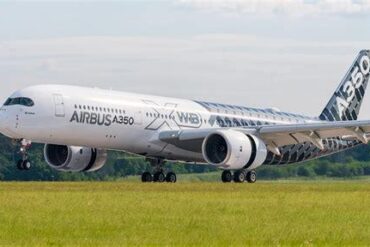
The A350 was developed as a direct competitor to aircraft such as the 787 and includes many similar technologies. It features a composite-intensive structure, an advanced aerodynamic wing, and powerful next-generation engines.
The A350-900 uses the Rolls-Royce Trent XWB-84 engine, producing approximately 84,200 pounds of thrust per engine. The larger A350-1000 uses the Trent XWB-97, producing around 97,000 pounds of thrust.
These engines provide significant power, and the aircraft’s composite structure offers similar weight advantages. As a result, the A350 performs extremely well at hot and high airports.
A Boeing 787-9 and an Airbus A350-900 departing from Bogotá or Addis Ababa would both benefit from modern design advantages. Neither aircraft has a decisive advantage simply because of altitude or temperature.
The real difference is that the 787 represents a major improvement over previous generations. The aircraft replaced older designs that lacked the same combination of efficiency, thrust, and lightweight construction.
How Airlines Calculate Hot and High Performance Limits
Before every departure from a challenging airport, airlines calculate aircraft performance using factors such as temperature, pressure altitude, runway length, aircraft weight, and wind conditions.
Density altitude calculations help determine the aircraft’s maximum allowable takeoff weight. Pilots and dispatchers use this information to establish safe takeoff speeds, required runway distances, climb performance, and engine settings.
A small change in temperature can significantly affect performance at high elevations. A hot afternoon departure from a mountain airport can create dramatically different conditions compared with an early morning departure on a cooler day.
This is why airlines value aircraft that provide additional performance margin. The ability to carry more payload under difficult conditions improves profitability and expands route possibilities.
The Boeing 787’s Hot and High Reputation Is Real, But Has Limits
The statement that the Boeing 787 Dreamliner can serve hot and high airports that limit competing widebodies is broadly true, but it depends on which aircraft it is compared against.
Against older aircraft such as the Boeing 767, early Boeing 777 variants, and Airbus A330ceo, the 787 offers a clear advantage. Its modern engines, efficient wing, and lightweight composite structure allow airlines to operate demanding long-haul routes with fewer restrictions.
However, against the Airbus A350, the advantage largely disappears because both aircraft were designed around similar goals. The A350 is equally capable of handling difficult airport environments.
The Dreamliner’s greatest achievement is not that it can defeat every competitor at high-altitude airports. Instead, it brought next-generation efficiency to routes where previous widebody aircraft often faced difficult compromises. For airlines operating from challenging airports around the world, that capability has transformed what long-haul networks are possible.