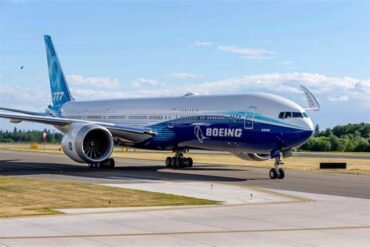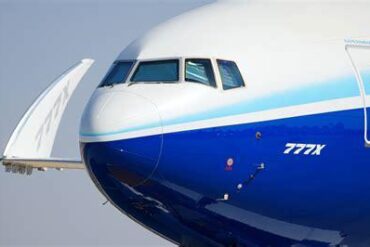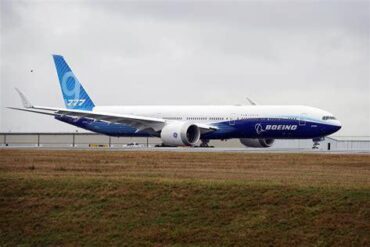
The sight of a gleaming Boeing 777-9, the largest twin-engine jet ever built, descending toward the turquoise coastline of Curaçao International Airport, looked almost surreal. This was not a delivery flight. It was not a publicity stunt. It was not a tropical detour for executives craving sunshine. It was a calculated, technically necessary, high-stakes maneuver in one of the most scrutinized aircraft certification programs in modern aviation.
By early 2025, Boeing’s long-delayed 777X certification campaign had resumed after months of grounding triggered by structural concerns involving engine thrust links. The program needed momentum. It needed data. And above all, it needed validation under the harshest operational environments regulators could demand. That is precisely why Boeing flew the 777X to Curaçao.
The decision was rooted in physics, certification law, and engineering reality. Tropical heat and humidity are not cosmetic variables. They alter the very behavior of air, and when you are certifying a 351-foot-long aircraft powered by GE9X engines, air behavior matters.
Curaçao: A Natural Laboratory For Hot And Humid Performance Testing
Hot-weather testing is a formal requirement during aircraft certification. Regulators such as the Federal Aviation Administration (FAA) require manufacturers to demonstrate performance at the limits of temperature, density altitude, and environmental stress. Curaçao, with average daytime temperatures around 87°F (30°C) and humidity levels frequently exceeding 80%, offers exactly the atmospheric cocktail engineers need.
High temperature reduces air density. Humidity reduces it further. Less dense air contains fewer oxygen molecules per cubic meter. For a turbofan engine, that means less oxygen available for combustion. Less oxygen means lower thrust output. Lower thrust directly affects acceleration, takeoff roll, climb rate, and fuel efficiency.
Lift is also tied to air density. Wings generate lift because air flows over and under them, creating pressure differences. In thinner air, wings must move faster to generate the same lift force. That translates into longer takeoff distances and altered climb profiles. For a jet as large as the 777-9, those differences are not academic—they are operational limits that must be precisely mapped.
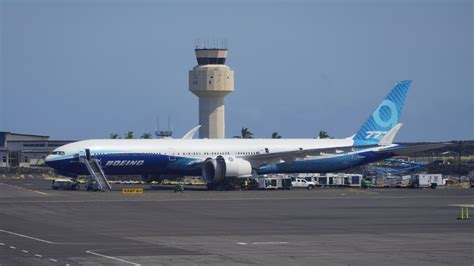
Boeing had already conducted similar tests in Hawaii in 2024. It was during those earlier evaluations that technicians discovered a severed thrust link on one of the test aircraft’s engines. That discovery halted the program for five months. The return to tropical testing in Curaçao was not just about weather data—it was about proving resilience after correction.
Understanding Density Altitude: Why Heat And Humidity Matter
Pilots often use the phrase “hot and high” to describe performance-degrading environments like Mexico City or Johannesburg, where elevation compounds temperature effects. Curaçao is not high elevation, but the intense humidity creates a comparable performance stress through density reduction.
Density altitude is essentially the altitude at which the air “feels” like it exists, based on temperature and pressure. On a humid tropical day, sea level conditions can behave like a much higher altitude airport. Engines breathe less effectively. Wings lift less efficiently. Brakes absorb more energy due to longer ground rolls.
For the 777-9, certification requires precise validation of:
- Engine thrust output under reduced oxygen conditions
- Takeoff performance margins
- Climb gradient compliance
- Fuel burn characteristics
- Brake and tire thermal loads during extended takeoff rolls
During a week-long campaign in February 2025, aircraft N779XX completed seven dedicated test flights totaling nearly 30 hours. These sorties were not sightseeing circuits. They involved repeated takeoffs at varying weights, climb performance measurements, rejected takeoff simulations, and system evaluations under sustained thermal stress.
Each flight generated gigabytes of performance data. Certification is not about whether the aircraft flies—it is about whether it meets tightly defined regulatory margins in worst-case scenarios.
The Thrust Link Crisis That Changed The Timeline
To understand why Curaçao mattered so much, one must zoom out to the structural setback that delayed the program.
A thrust link, sometimes referred to as a thrust strut, is a structural component connecting the engine to the airframe. It transmits forward thrust forces from the engine to the wing structure while also managing vibration and alignment loads. Failure is not a minor inconvenience. It is a structural hazard with potentially catastrophic consequences.
When Boeing discovered that one of the forward thrust links had been severed during Hawaii testing, it grounded all four test aircraft. Subsequent inspections revealed that the issue affected the entire test fleet.
Fixing the problem required more than replacing a bolt. Boeing engineered a reinforced solution that strengthened the forward engine attach bolt and modified the surrounding pylon structure to redistribute loads. The challenge was surgical precision: resolve the issue without triggering a full redesign of the engine mounting system.
Collaboration with GE Aerospace ensured the modifications would not alter engine performance characteristics. Static load testing, dynamic vibration analysis, and structural fatigue validation consumed the final quarter of 2024. Only after FAA review and approval were the aircraft cleared to fly again in January 2025.
The Curaçao mission was among the first major field deployments after that clearance. Symbolically and technically, it represented regained momentum.
Meet The 777X Certification Fleet
The 777X test fleet consists of four primary aircraft:
- N779XW – The first 777X built and the program’s inaugural flight aircraft.
- N779XX – The second aircraft and the one deployed to Curaçao.
- N779XY – Distinctive for its blue tail and white fuselage, destined for Lufthansa as D-ABTE.
- N779XZ – An all-white airframe configured with a full passenger cabin for systems and cabin testing.
Each aircraft serves a distinct purpose within the certification matrix. N779XZ focuses heavily on cabin systems validation and cold-weather operations. N779XW has logged the most hours across varied stress profiles. N779XX carried the burden of tropical validation.
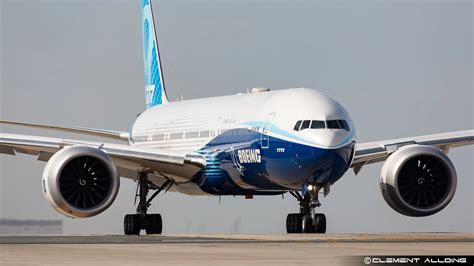
The fleet operates primarily out of Paine Field (PAE), Boeing Field (BFI), and Moses Lake (MWH) in Washington State. However, certification demands geographic diversity.
A Fifth Aircraft Signals Program Acceleration
In August 2025, a fifth 777-9 joined the test program: N2007L. Its maiden flight marked the first new 777-9 test aircraft introduction in nearly five years. This aircraft is dedicated primarily to High Intensity Radiated Field (HIRF) testing, ensuring avionics resilience against electromagnetic interference.
HIRF testing often takes place in Arizona, where controlled electromagnetic environments allow validation of shielding effectiveness and system redundancy. The aircraft is slated for eventual delivery to Singapore Airlines, which holds 31 orders for the type.
The addition of a fifth aircraft indicated growing confidence within the program. Certification campaigns expand only when engineering leadership believes the core design has stabilized.
The Geography Of Certification: Why Field Trips Matter
Curaçao was one stop in a global tour designed to expose the 777-9 to operational extremes.
Colorado provided high-altitude conditions above 5,000 feet to validate takeoff performance and de-icing systems. Montana offered extreme cold for environmental system evaluation. Texas enabled crosswind landing trials between 40 and 60 knots, pushing the aircraft’s controllability envelope. Oklahoma hosted an extensive 63-day dry-runway brake certification campaign involving hundreds of high-energy stops.
Each location targets a specific regulatory requirement. Certification is modular but interconnected. Performance in Curaçao informs dispatch reliability calculations. Brake data from Oklahoma influences operational limits in tropical airports. Crosswind testing in Texas defines airport usability worldwide.
The 777X program surpassed 4,000 cumulative flight test hours in 2025 and is projected to exceed 5,000 before certification concludes.
Where Certification Stands Now
In July 2025, the FAA cleared Boeing to proceed with Type Inspection Authorization (TIA) 2C, the fourth and penultimate phase of certification. This stage focuses on system demonstrations conducted by FAA pilots and inspectors. It includes validation of emergency procedures, avionics redundancy, and ETOPS certification for long-range overwater operations.
ETOPS approval is particularly significant for a long-haul aircraft like the 777-9. It determines how far the aircraft can operate from a diversion airport on a single engine. Demonstrating compliance requires rigorous engine reliability data and in-flight shutdown simulations under controlled conditions.
International regulators such as EASA are expected to conduct parallel validation campaigns. Certification today is multinational, reflecting the global nature of aircraft operations.
Why Curaçao Truly Matters
On the surface, flying to Curaçao may appear picturesque. In reality, it was strategic risk mitigation.
Airlines operate in climates ranging from Arctic cold to equatorial humidity. Lufthansa, Qatar Airways, and Singapore Airlines—among the first customers—serve routes that include tropical hubs. Performance data in humid heat directly influences payload calculations, runway length requirements, and route economics.
Without validated tropical performance margins, dispatch reliability suffers. Without dispatch reliability, airline confidence erodes. And without airline confidence, a flagship program like the 777X cannot succeed commercially.
Curaçao provided controlled, repeatable, high-humidity conditions without the air traffic congestion of larger tropical hubs. That operational flexibility allows test crews to execute repeated takeoff and climb sequences without slot restrictions.
Production And Delivery Outlook
While certification continues, Boeing has advanced production of early customer aircraft at Everett. Lufthansa remains the launch customer for the 777-9, though delivery timelines have shifted. Initial hopes for 2026 deliveries have now moved to 2027.
Meanwhile, airframes for Qatar Airways and other customers are progressing along the assembly line. Production ramp-up must be carefully synchronized with certification approval to avoid excessive inventory buildup.
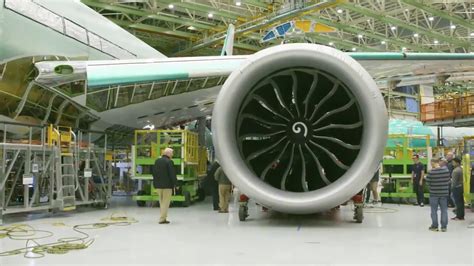
The 777X represents Boeing’s answer to high-capacity long-haul efficiency. Featuring folding wingtips, advanced composite wings, and the world’s largest commercial turbofan engines, it promises double-digit fuel burn improvements over older large twin-aisle aircraft.
Looking Ahead: Final Hurdles Before Entry Into Service
The remaining phases of certification will involve:
- FAA-operated flight tests of all systems
- Emergency evacuation validations
- Final ETOPS demonstrations
- International authority approvals
Every hour logged adds statistical confidence. Every location visited closes a performance envelope gap. Curaçao was one chapter, but a crucial one.
The 777X program has endured delays, engineering challenges, and heightened regulatory scrutiny. Yet the resumption of global flight testing in 2025 marked a tangible shift from stagnation to progress.
Flying the 777X to Curaçao was not about sunshine. It was about density altitude, thrust margins, and regulatory compliance under tropical extremes. It was about proving that the largest twin-engine jet ever built can perform not only in ideal conditions, but in the steamy, oxygen-thin air of real-world operations.
When the first 777-9 eventually enters commercial service, passengers boarding in humid equatorial airports may never realize that part of their aircraft’s safety margin was earned during a week of rigorous testing over the Caribbean. But aviation certification is built precisely on those invisible margins.
Curaçao was not a detour. It was a data-driven milestone in bringing the 777X to the world.