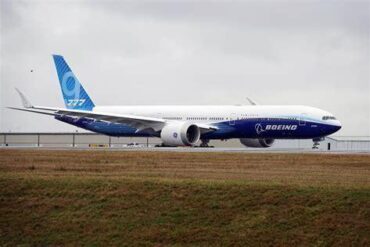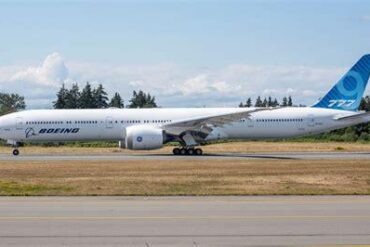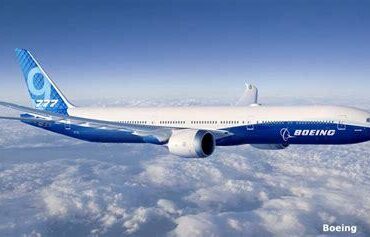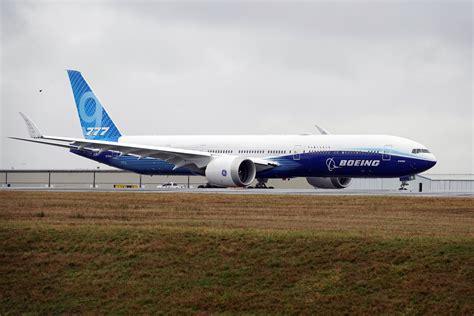
Boeing’s 777X program represents a monumental leap forward in commercial aviation, merging the legacy of the 777 family with next-generation aerospace engineering. Despite an extended delay in FAA certification, Boeing has already constructed more than 32 aircraft, some of which have been parked at Paine Field for years. This decision, though unconventional, is underpinned by strategic foresight, production logistics, and competitive necessity.
The Scale of Premature Production: Over 32 Aircraft and Counting
When observers first noted that Boeing had built at least 26 777X aircraft—with only four actively involved in flight testing—the immediate question was why a manufacturer would construct so many aircraft before securing regulatory approval. Satellite imagery and on-site reports now suggest the number has grown to 32 or more, distributed across Boeing’s Everett site.
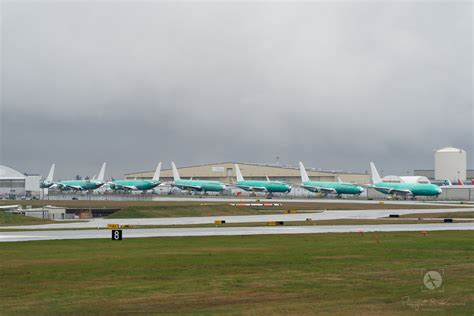
These aircraft include:
- Four test aircraft (painted and fully outfitted for flight trials)
- Over two dozen additional airframes, many still in their distinctive teal primer coating
While at first glance this seems like an inventory liability, Boeing’s actions reflect a carefully calculated gamble designed to minimize downstream delivery delays.
Certification Bottlenecks and the Need for Production-Ready Units
The FAA’s certification process is rigorous, especially in the post-737 MAX landscape. The 777X, as a heavily modified derivative of the 777, but with novel features such as folding wingtips, GE9X high-bypass turbofan engines, and advanced fly-by-wire systems, must undergo exhaustive flight testing.
To execute this, Boeing produced four dedicated aircraft:
- N779XW – the first to fly in January 2020
- N779XX, N779XY, and N779XZ
Each aircraft is subjected to stress testing across performance envelopes—high-altitude, low-speed, crosswind landings, engine-out procedures, and more.
Yet certification requires more than just test aircraft. The FAA’s process includes full-scale conformity inspections and documentation that only fully assembled, production-standard aircraft can fulfill. This necessity fuels Boeing’s decision to keep the production lines moving despite regulatory headwinds.
Building Before Approval: Strategic Logic Behind the Decision
Constructing aircraft before certification may appear reckless, but Boeing’s reasoning is grounded in manufacturing logistics and market positioning.
Building a widebody jet like the 777X is not a quick process. It takes an average of three to four months per aircraft to move from final assembly to delivery readiness—including testing, painting, and customer interior customization. By continuing production:
- Boeing ensures immediate delivery capability once certification is achieved
- Avoids a production freeze and restart scenario, which could take six to nine months to scale up again
- Maintains supplier engagement and workforce momentum
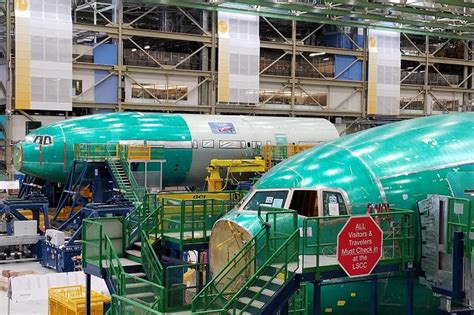
The long delays—initially targeting 2020 certification, now pushed to 2027—mean that Boeing is essentially playing the long game, banking on a future where the backlog will transform into a rapid delivery schedule across multiple global customers.
The Evolution of Standards: Why Older 777Xs Won’t Be Delivered First
An important revelation from Boeing VP Darren Hulst at the 2025 Dubai Airshow was that older 777X airframes will not be the first delivered. Despite being built years ago, the initial aircraft were constructed to pre-certification specifications, necessitating post-production upgrades.
These upgrades involve:
- Incorporating changes mandated by regulatory adjustments
- Ensuring alignment with the latest production standard
- Reworking certain avionics, software, or structural elements based on test data
This decision also confirms that some of the jets stored at Paine Field for years will likely serve secondary delivery waves, with newer aircraft being prioritized.
This approach ensures Boeing’s earliest airline customers receive the most current variant—potentially reducing after-delivery modification costs and simplifying early operational deployment.
Lufthansa and Emirates: Who Gets the First 777X?
With production rolling and certification targeted for 2027, Lufthansa remains the most likely launch customer. The German flag carrier was the first to order the 777X back in 2013, securing 34 777-9s, later increased to 41.
However, Emirates is Boeing’s largest customer for the 777X, with 270 aircraft on order, followed by Qatar Airways with 124. Other major customers include:
- Korean Air: 48 orders
- Cathay Pacific: 35
- Singapore Airlines: 31
- All Nippon Airways: 20
Despite Lufthansa’s historical role, Boeing has hinted that deliveries to multiple carriers will begin within weeks or months of each other, signaling a rapid post-certification rollout.
Boeing’s Risk Balancing Act: Cost, Storage, and Reputation
Storing dozens of large-body aircraft is not cost-free. Paine Field has become a virtual airplane parking lot, with airframes stored:
- On closed runways
- In former employee parking lots
- Along the ramps near the Future of Flight museum
Yet, Boeing is leveraging this downtime effectively. Some aircraft are periodically powered on for system checks, engine run-ups, and minor movements to preserve readiness. The company also uses the opportunity to trial new delivery customization flows, ensuring minimal downtime between certification and airline deployment.
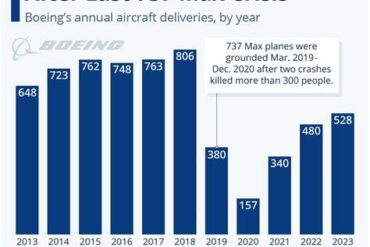
The longer-than-expected delays—initially caused by post-MAX crash scrutiny, later worsened by COVID-19 supply disruptions and extended FAA reviews—have pushed Boeing into a delicate balancing act:
- Minimize idle production assets
- Avoid overbuilding to obsolescence
- Maintain supplier and workforce engagement
In this context, building over 30 777X aircraft is not recklessness but calculated operational strategy.
Impact on Airline Strategies: Fleet Planning Disruptions
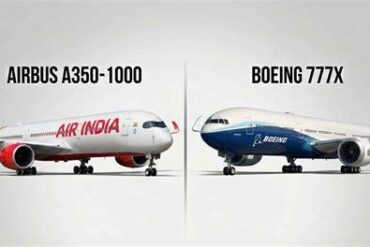
The 777X’s repeated delays have triggered significant strategic pivots among its launch customers. Emirates, originally relying on the type for its future flagship, placed a compensatory order for 73 Airbus A350-900s, reshaping its long-term fleet balance.
Lufthansa responded by reactivating its A380 fleet and advancing its Allegris cabin concept to the A350 platform. Meanwhile, Qatar Airways, another large 777X buyer, was forced to extend the operational life of its legacy 777-300ERs and A380s to support post-pandemic demand.
These strategic shifts have lasting implications for Boeing, as airlines adapt cabin investments and route planning around new delivery timelines, forcing Boeing to maintain transparent and flexible communication channels with each customer.
Production Ramp-Up Post Certification: Plans and Challenges
Upon FAA certification, Boeing aims to quickly ramp up 777X production to three to five aircraft per month. For context, the 787 production line currently runs at around seven jets per month from Charleston. This would position the 777X as Boeing’s premier widebody offer, alongside the Dreamliner.
But challenges remain:
- Retraining and scaling production personnel post-delay
- Ensuring quality and conformity across the already-built airframes
- Coordinating global delivery logistics and customer training
Still, Boeing’s early production initiative means that unlike a typical ramp-up—where deliveries lag behind certification—airlines will see near-immediate deliveries. This could allow carriers to launch new routes, test premium cabins, and generate early revenue far faster than competitors introducing other next-generation aircraft.
Looking Forward: A Program Poised to Turn the Corner
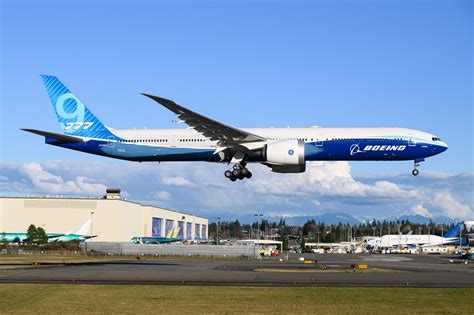
The 777X remains the largest twin-engine jet ever built. With a wingspan of 235 feet, powered by the world’s most powerful turbofan (GE9X), and featuring innovations like folding wingtips, the aircraft is designed for long-range efficiency and modern passenger comfort.
Though its path to market has been marred by delay, the groundwork laid by Boeing—both in production and testing—means the aircraft will not enter service as vaporware, but as a ready fleet.
By pre-building over 30 aircraft, Boeing has chosen proactive risk over reactive delays. While expensive and logistically complex, the decision positions the 777X for a powerful launch, supporting multiple global carriers and restoring Boeing’s leadership in long-haul, widebody aviation.
With over 600 orders across 15 airlines, and production standards maturing with every new unit, the 777X is no longer just a concept—it is a real, tangible fleet waiting to take flight. Certification is now the final barrier before Boeing’s bold bet begins to pay off.