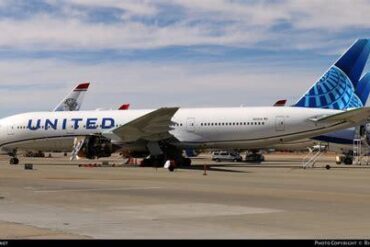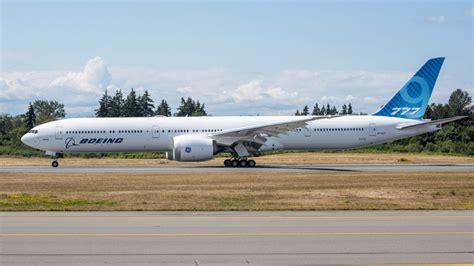
The Boeing 777X was designed to become the future flagship of long-haul aviation. Instead, it has evolved into one of the most expensive and technically complicated commercial aircraft programs in modern aerospace history. More than six years behind schedule and carrying roughly $15 billion in accumulated charges, the aircraft remains undelivered while Boeing faces an unusual and costly problem: around 30 already-built 777X aircraft now require years of rework before airlines can accept them.
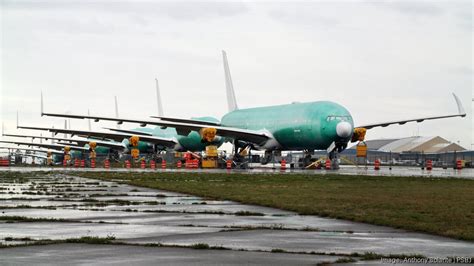
What makes the situation remarkable is not simply the delay itself. Aircraft programs slip all the time. The deeper issue is that Boeing continued producing 777X airframes while certification standards, engineering requirements, and FAA oversight kept changing. The result is a fleet of nearly completed aircraft sitting at Paine Field in Everett that no longer fully match the configuration Boeing is trying to certify.
For Boeing, those jets represent billions of dollars tied up in inventory. For airlines waiting on fleet modernization plans, they represent years of uncertainty. And for the aviation industry, they have become a visible symbol of how dramatically aircraft certification changed after the 737 MAX crisis reshaped the FAA’s relationship with Boeing.
The company now faces an operational balancing act rarely seen in commercial aviation: certifying the aircraft, launching customer deliveries, restarting production momentum, and simultaneously rebuilding dozens of already-manufactured jets to a new engineering standard.
Why Boeing’s Stored 777X Aircraft Need Extensive Rework
Aircraft manufacturing depends heavily on stable engineering configurations. Once a design matures, manufacturers typically lock specifications before large-scale production begins. The 777X program never reached that stability.
As Boeing continued certification testing throughout the early 2020s, engineers repeatedly modified systems, structures, software, and safety components in response to FAA findings and technical problems uncovered during testing. Every change created a new production standard. Aircraft already assembled before those changes became progressively outdated.
The oldest stored 777X aircraft now differ substantially from the latest certification configuration. Some require relatively straightforward software updates and systems modifications. Others reportedly need significant structural retrofits involving wiring, flight control architecture, and internal airframe reinforcements.
Boeing refers to this process as “change incorporation.” In practice, it means partially disassembling sections of completed aircraft so they can be rebuilt to the newest standard.
That work is neither quick nor inexpensive.
CEO Kelly Ortberg confirmed in May 2026 that retrofitting the stored fleet will take years to complete. Boeing has established dedicated engineering and modification teams to standardize the aircraft before final delivery preparation begins. The scale of the effort effectively turns these stored aircraft into semi-finished production units rather than completed jets.
What makes the challenge especially unusual is Boeing’s decision to bypass many of the earlier-built aircraft and instead deliver newer production-standard jets first. Lufthansa is expected to receive one of those later-built aircraft in mid-2027.
That approach breaks from the traditional “first-built, first-delivered” manufacturing sequence that has historically defined commercial aviation programs.
How Certification Delays Turned New Aircraft Into Obsolete Inventory
The 777X program officially launched in 2013 with enormous expectations. Boeing marketed the aircraft as the natural successor to the wildly successful 777-300ER, promising lower operating costs, greater efficiency, increased passenger comfort, and record-setting twin-engine performance.
Entry into service was originally targeted for 2020.
The timeline began unraveling during certification testing in 2019. A pressurization test conducted under FAA supervision resulted in a cargo door blowing outward during extreme stress evaluation. While no injuries occurred, the incident immediately triggered deeper regulatory scrutiny.
The timing could hardly have been worse.
The aviation industry was already reeling from the aftermath of the two 737 MAX crashes, which fundamentally changed how regulators viewed Boeing’s certification practices. The FAA shifted from a more delegated oversight structure to significantly more direct involvement in aircraft approval processes.
Every certification issue on the 777X suddenly carried far greater regulatory consequences.

Flight testing resumed in January 2020, but further problems soon emerged. Boeing identified flaws in the aircraft’s flight control system, forcing another pause in testing and requiring engineering changes.
Then came additional complications involving software integration, structural components, and the enormous GE9X engines powering the aircraft.
The situation worsened again in August 2024 when Boeing grounded the 777X test fleet after discovering damage in the aircraft’s thrust link assembly following inspections in Hawaii. The thrust link is a critical structural component connecting the engine pylon to the wing structure. Any issue involving engine attachment systems immediately becomes a major certification concern.
Testing eventually resumed in early 2025 after repairs and redesign efforts, but by that point the aircraft was already years behind schedule.
Meanwhile, Boeing continued building aircraft.
That decision was driven largely by industrial reality. Halting production entirely would have risked damaging supplier networks, disrupting workforce continuity, and weakening long-term manufacturing capacity. Aerospace supply chains are notoriously fragile. Once highly specialized suppliers shut down production lines, restarting them becomes enormously expensive.
So Boeing kept building 777X airframes despite certification uncertainty.
Those aircraft accumulated at Everett while engineering standards continued evolving around them.
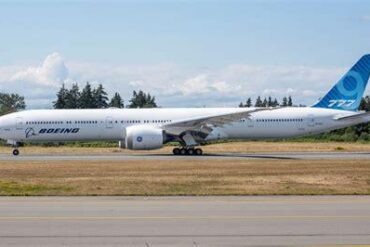
The result is the unusual sight now visible at Paine Field: dozens of pristine widebody aircraft parked outdoors awaiting redesign work before they can enter service.
The FAA’s Post-MAX Oversight Changed Everything
The 737 MAX crisis did not directly involve the 777X, but its impact on the program has been enormous.
Before the MAX accidents, Boeing operated with substantial delegated authority during certification programs. Engineers working for Boeing often performed compliance analysis on behalf of the FAA under established regulatory frameworks.
That environment no longer exists in the same form.
Following intense political scrutiny, congressional investigations, and criticism of FAA oversight processes, regulators adopted a far more aggressive certification posture. Every Boeing program now faces heightened examination, expanded documentation requirements, and stricter validation standards.
For the 777X, that translated into slower certification timelines and reduced tolerance for unresolved technical risks.
The aircraft itself also introduced several entirely new technologies requiring close examination. The most visible is the folding wingtip system, never before certified on a commercial passenger aircraft.
The 777-9’s wingspan stretches to approximately 235 feet, too large for many existing airport gates. Boeing’s solution involved folding the outer wing sections upward while on the ground, reducing operational width to fit existing infrastructure.
The system sounds simple conceptually, but certification is extraordinarily complex. Regulators must verify fail-safe operation under every conceivable condition, ensuring the wings cannot remain folded during flight or deploy incorrectly during taxi operations.
Every added layer of verification extended timelines further.
The GE9X Engine Added Another Layer Of Complexity
The GE9X is central to the 777X’s performance promises and also one of the program’s biggest technical hurdles.
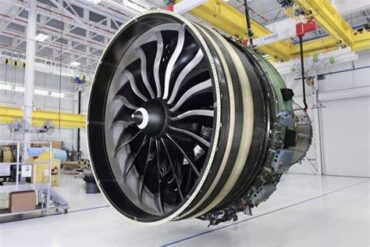
Developed by GE Aerospace, the engine is the largest and most powerful commercial turbofan ever built. Its massive composite fan blades, ultra-high bypass ratio, and advanced materials are designed to deliver roughly 10% better fuel efficiency per seat compared to the older 777-300ER.
For airlines operating ultra-long-haul routes, that improvement carries enormous financial value. Fuel remains the largest operating expense for most international carriers.
But pushing efficiency boundaries also increases engineering complexity.

The GE9X program experienced its own durability and certification challenges throughout development. Engine testing revealed issues requiring redesigns and component modifications, contributing to delays separate from Boeing’s airframe certification problems.
Supply chain disruptions further complicated production schedules. Aerospace manufacturing depends on globally distributed precision suppliers producing highly specialized components. Even small bottlenecks can delay final assembly for months.
Because the 777X depends exclusively on the GE9X, Boeing lacks alternative engine flexibility. Unlike some previous widebody programs offering multiple engine choices, the 777X is tied entirely to GE’s development timeline.
That dependency increased overall program vulnerability whenever engine certification slowed.
What Airlines Still See In The Boeing 777X
Despite the delays, airlines have not abandoned the aircraft.
In fact, the 777X order book remains surprisingly resilient. As of early 2026, Boeing holds orders for more than 550 aircraft from major international carriers including Emirates, Lufthansa, Qatar Airways, British Airways, Cathay Pacific, Singapore Airlines, and Etihad Airways.
That continued demand reflects the aircraft’s long-term economic appeal.
The 777-9, the primary passenger variant, occupies a unique position in the market. It offers near-747 passenger capacity while maintaining twin-engine efficiency. Airlines can transport more passengers on heavily traveled long-haul routes without incurring the operating costs associated with four-engine aircraft.
The aircraft typically seats around 350 passengers in three-class layouts, though higher-density configurations can exceed 420 seats. Range reaches approximately 7,300 nautical miles, enabling routes connecting Europe, Asia, the Middle East, Australia, and North America with substantial payload flexibility.
Airlines replacing aging 777-300ER fleets see the aircraft as a natural transition.
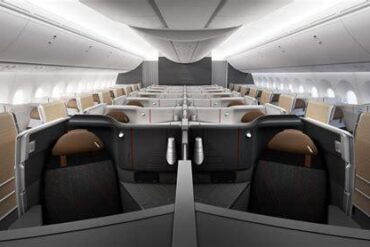
Passengers will also notice significant cabin upgrades. Boeing redesigned the interior with larger windows, higher cabin humidity, improved air pressure systems, wider seating layouts, and higher ceilings intended to reduce fatigue on long-haul flights.
Those features matter increasingly in premium international travel markets where airlines compete heavily on passenger experience.
Lufthansa Becomes The Critical First Delivery
All eyes now focus on Lufthansa.
The German carrier remains the launch customer for the 777X and is expected to receive the first production-standard aircraft in mid-2027. Boeing reiterated that timeline during its 2026 earnings discussions, signaling renewed confidence after years of shifting schedules.
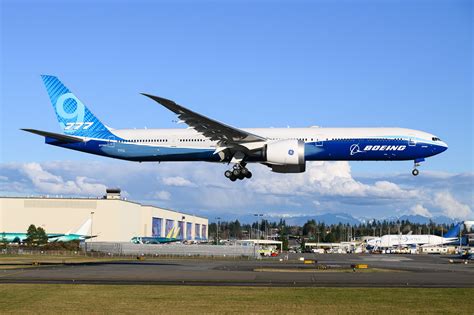
The aircraft intended for Lufthansa completed its first flight in April 2026, marking an important milestone toward final certification.
For Boeing, the first delivery carries importance far beyond a standard handover ceremony.
It represents proof that the program can finally transition from development disaster into revenue-generating production. Until deliveries begin, Boeing continues absorbing enormous financial pressure tied to stored inventory, delayed payments, engineering costs, and manufacturing inefficiencies.
The company must now execute several difficult tasks simultaneously:
- Complete FAA certification
- Deliver Lufthansa’s first aircraft
- Increase production stability
- Retrofit stored 777X aircraft
- Manage supplier recovery
- Restore customer confidence
Individually, each challenge is manageable for a large aerospace manufacturer. Combined, they create one of the most demanding execution periods Boeing has faced in decades.
The 30 Stored Jets Represent A Massive Financial Gamble
The aircraft parked at Everett are not merely delayed deliveries. They represent billions of dollars frozen in industrial limbo.
Commercial aircraft are typically paid for in stages, with substantial revenue arriving upon final delivery. Until airlines officially accept the aircraft, Boeing cannot fully recognize those payments.
That creates enormous balance sheet pressure.
Every additional month of delay ties up capital while generating storage, maintenance, and retrofit expenses. Even parked aircraft require ongoing preservation work to protect systems, engines, hydraulics, and structural components from environmental degradation.
The longer aircraft remain undelivered, the more complicated their eventual reactivation becomes.
Yet Boeing appears convinced the long-term economics still justify the effort.
The global widebody market is expected to expand significantly over the next two decades as international travel demand continues recovering and growing. Airlines increasingly want fuel-efficient long-range aircraft capable of replacing older quad-engine fleets.
The 777X remains one of the few aircraft positioned to dominate that segment.
Airbus offers strong competition with the A350-1000, but Boeing still believes the 777X’s combination of capacity, range, and operating economics gives it a distinct niche.
Boeing’s Next 18 Months Could Define The Program’s Future
The next phase of the 777X story is less about engineering ambition and more about execution discipline.
Most major technical hurdles appear solvable. Certification testing has advanced into later FAA inspection phases, production-standard aircraft are flying, and airlines continue supporting the program publicly.
The remaining question is whether Boeing can stabilize the broader industrial system around the aircraft.
The company is still recovering from multiple crises spanning the MAX grounding, 787 manufacturing issues, supply chain instability, labor disruptions, and intense regulatory scrutiny. The 777X enters service against that backdrop rather than in isolation.
Successfully delivering Lufthansa’s first aircraft in 2027 would mark the symbolic end of the program’s development nightmare. But the real challenge begins afterward.
Boeing must steadily ramp production while simultaneously retrofitting the 30 stored jets that no longer match certification standards. Some of those aircraft may require years before delivery readiness is achieved.
That unusual reality explains why the 777X program feels historically unique. Most delayed aircraft eventually reach service with manageable backlog complications. Few accumulate dozens of near-complete airframes requiring major redesign work before customers can even take possession.
The 777X was supposed to represent Boeing’s next-generation triumph in long-haul aviation. Instead, it became a case study in how technical complexity, regulatory transformation, and industrial momentum can collide inside a modern aerospace program.
Now Boeing faces the final and most important test of all: proving the aircraft can finally leave the ground commercially after spending years trapped between certification and completion.