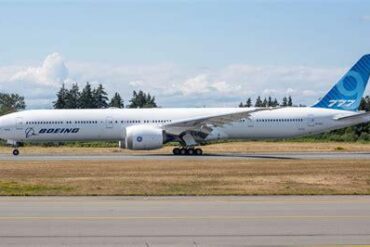
The Boeing 777X was supposed to represent the future of long-haul aviation. Bigger than the Airbus A350, dramatically more fuel efficient than older Boeing widebodies, and equipped with some of the most advanced technology ever installed on a commercial aircraft, the jet was designed to secure Boeing’s dominance in the lucrative twin-engine long-range market for decades.
Instead, the aircraft has become one of the most expensive and prolonged certification struggles in modern aerospace history.
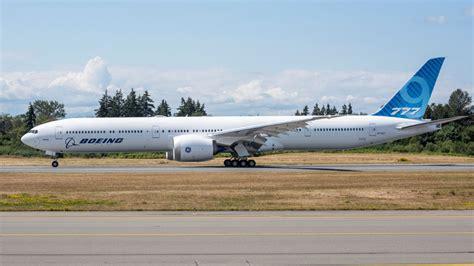
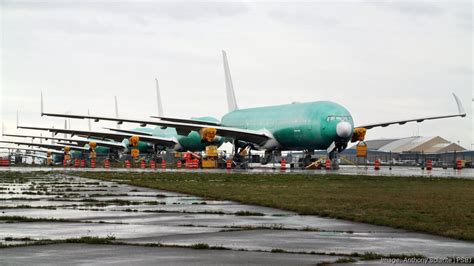
Now, Boeing faces another extraordinary challenge. Roughly 30 completed Boeing 777X aircraft sitting in storage cannot simply be handed over to airlines once certification arrives. Many of them must first undergo a massive “change incorporation” process that will require engineers to partially dismantle already-finished jets, reopen structural sections, replace components, update systems, and rebuild portions of the aircraft before passengers ever step onboard.
For Boeing, this is not a routine production adjustment. It is a costly consequence of years of delays, evolving certification requirements, engineering redesigns, and the decision to continue building aircraft long before regulators approved the final configuration.
The scale of the effort reveals how deeply the 777X program has changed since its launch and why airlines waiting for the aircraft may still face years of operational uncertainty.
The 777X program began in 2013 with enormous expectations. Boeing envisioned the aircraft as the natural successor to the hugely successful 777 family, combining the capacity airlines wanted with the efficiency demanded by rising fuel costs and environmental pressure. The aircraft introduced several major innovations, including enormous GE9X engines, folding composite wingtips, advanced aerodynamics, and redesigned cabin architecture.
The flagship 777-9 variant promised seating for approximately 426 passengers, while the smaller 777-8 targeted ultra-long-haul routes with around 395 seats. Airlines immediately responded with enthusiasm. Emirates, Qatar Airways, Lufthansa, Singapore Airlines, Cathay Pacific, and several other global carriers placed large orders.
At the time, Boeing expected the aircraft to enter service around 2020.
That timeline collapsed.
The Delays That Changed Everything
The 777X suffered repeated certification setbacks that transformed what should have been a straightforward derivative aircraft into a years-long engineering battle.
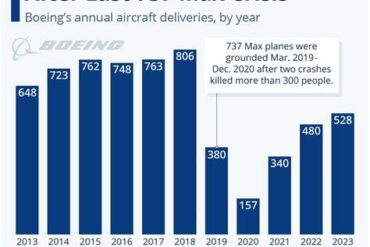
Early testing exposed issues involving structural loads, software integration, flight control systems, and certification documentation. Then the global regulatory environment changed dramatically after the two fatal Boeing 737 MAX crashes in 2018 and 2019.
Before those disasters, derivative aircraft programs often moved through certification relatively efficiently because regulators trusted Boeing’s internal processes. After the MAX crisis, that trust evaporated.
The Federal Aviation Administration adopted far more aggressive oversight procedures. Certification standards became stricter. Documentation requirements expanded. Every engineering assumption received deeper scrutiny. Aircraft systems that previously may have passed with limited review suddenly faced exhaustive examination.
The 777X became trapped in that new regulatory reality.
As delays stretched from months into years, Boeing faced a dangerous production dilemma. Shutting down a widebody assembly line is extraordinarily expensive. Restarting one can be even worse. Aerospace supply chains rely on continuity, and disruptions ripple through hundreds of suppliers worldwide.
Boeing therefore chose to continue building 777X aircraft despite the lack of certification approval.
That decision created today’s problem.
Why Boeing Kept Building Aircraft Nobody Could Use
At first glance, producing dozens of aircraft before certification sounds irrational. In reality, Boeing believed the strategy would protect manufacturing stability while preparing for rapid deliveries once approval finally arrived.
Several completed aircraft were always intended for testing and certification activities. Flight-test campaigns require multiple airframes configured for different evaluations, including structural testing, avionics validation, operational assessments, and environmental trials.
But Boeing built far beyond the number normally associated with testing programs.
The company wanted to maintain workforce continuity at Everett, preserve supplier relationships, and avoid the industrial disruption caused by stopping production entirely. Aerospace manufacturing systems are not designed like automobile factories that can quickly pause and restart. Highly specialized workers, suppliers, tooling systems, and assembly sequencing all depend on long-term consistency.
Unfortunately for Boeing, the certification process continued evolving while those aircraft were already completed.
Every new regulatory requirement, engineering modification, software update, or structural redesign widened the gap between the stored jets and the final approved standard.
The result is a fleet of completed aircraft that are effectively outdated before entering service.
What “Change Incorporation” Really Means
When Boeing CEO Kelly Ortberg described the upcoming rework effort, the language sounded almost clinical. Internally, however, the project is considered enormous.
“Change incorporation” essentially means bringing older aircraft into alignment with the final certified design. The challenge is that many of those aircraft were built years ago under earlier engineering assumptions.
That means Boeing cannot simply upload new software and call the jets complete.
Some aircraft reportedly require structural modifications significant enough to involve reopening sections of the fuselage and wings. Engineers may need to remove interior panels, disconnect systems, access sealed structural areas, reinforce components, modify mounting hardware, and reinstall updated equipment.
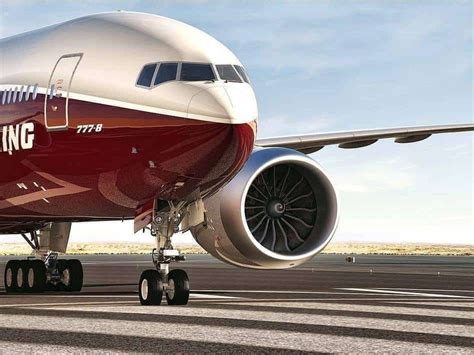
The oldest aircraft are expected to require the most extensive work because they reflect the earliest production standards. Newer builds already incorporate many later changes and therefore need fewer modifications.
Industry analysts believe the rework may involve several critical areas simultaneously.
These likely include:
- Structural reinforcements driven by certification analysis
- Updated flight-control software
- Revised avionics systems
- Engine attachment modifications
- Wiring updates
- Safety-system redesigns
- Compliance retrofits for revised FAA requirements
- Changes related to operational reliability testing
For completed aircraft, even relatively small engineering changes can become extraordinarily labor-intensive. Accessing buried systems inside a finished widebody often requires dismantling major interior and structural sections.
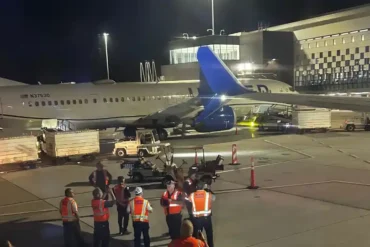
In practical terms, Boeing must partially tear apart aircraft that already look complete from the outside.
The Hidden Financial Cost Of Stored 777X Aircraft
Every parked 777X represents billions of dollars in trapped industrial capital.
Widebody aircraft are immensely expensive to manufacture. By the time an aircraft reaches final assembly completion, Boeing has already invested enormous sums into materials, labor, engines, avionics, testing, and supplier contracts.
Yet none of those aircraft generate revenue until delivery occurs.
For years, completed 777X jets have occupied valuable storage space around Everett and Paine Field while requiring continuous maintenance and preservation work. Aircraft sitting idle outdoors are not simply abandoned. They must be protected from corrosion, environmental damage, fluid degradation, and system deterioration.
Storage itself becomes expensive.
The rework effort adds another layer of financial pain because Boeing must now dedicate additional engineering teams, tooling resources, inspection programs, and manufacturing capacity to aircraft already considered finished.
The situation becomes even more serious when considering accounting realities. Delayed deliveries postpone airline payments, increase inventory carrying costs, and complicate cash-flow projections across the entire program.
For Boeing, the 777X has become a rolling accumulation of deferred revenue.
Boeing’s Dedicated Rework Team Signals A Massive Challenge
Ortberg’s announcement that Boeing established a specialized team solely for the 777X reconfiguration effort reveals the scale of the crisis.
This is not a minor production cleanup operation.
The company now requires a dedicated organization focused entirely on bringing dozens of stored aircraft into compliance with the final certified configuration. Boeing reportedly intends to standardize all parked jets into a common baseline before applying final delivery-specific updates.
That strategy simplifies logistics but also underscores how fragmented the fleet configurations had become during years of evolving design changes.
The timing is particularly difficult because Boeing’s engineering resources remain under strain. The company spent years dealing with the aftermath of the 737 MAX crisis, quality-control controversies, production slowdowns, and workforce reductions.
In late 2024, Boeing announced plans affecting roughly 10% of its workforce, including engineering and technical personnel. Those reductions occurred even as the 777X program continued facing unresolved certification hurdles.
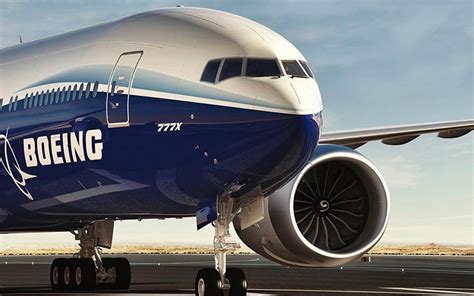
The aircraft itself also proved more technically demanding than originally expected.
Its massive composite wing introduced manufacturing and certification complexities that required extensive engineering attention. Boeing additionally attempted to modernize fuselage production processes in ways that ultimately consumed valuable development time.
The company effectively found itself managing several major technological transitions simultaneously while operating under the most intense regulatory scrutiny in decades.
Against that backdrop, the need for a specialized rework organization becomes understandable.
Certification Is Finally Moving Forward
Despite years of delays, Boeing has recently achieved meaningful progress in the certification campaign.
In March 2026, the FAA authorized Boeing to begin Phase 4A of the Type Inspection Authorization process for the 777-9. This represented a significant milestone because it allowed FAA personnel to conduct formal onboard evaluations during real-world operational testing.
Phase 4A focuses heavily on natural icing conditions and environmental performance validation. These tests examine how aircraft systems behave under realistic operational stresses rather than controlled laboratory scenarios.
Testing reportedly shifted to Alaska because of its reliable icing environments and challenging weather conditions.
The broader TIA process remains divided into multiple phases:
| Phase | Purpose | Status |
|---|---|---|
| Phase 1 | Initial conformity inspections | Completed |
| Phase 2A-2D | System-by-system certification analysis | Completed |
| Phase 3 | Major flight certification testing | Largely completed |
| Phase 4A | Operational environmental validation | Active |
| Phase 4B | Failure-condition operational testing | Awaiting approval |
| Phase 5 | Final certification checks | Pending |
Phase 4B is expected to include additional operational reliability scenarios and failure-condition evaluations. Afterward, Boeing must still complete Function and Reliability testing as well as ETOPS certification required for long-range twin-engine operations.
Those steps are critical because airlines plan to use the 777X on some of the world’s longest overwater routes.
Unlike early developmental testing, these later phases require aircraft configured very close to final delivery standards. That reality partly explains why Boeing now urgently needs configuration alignment across its stored fleet.
Airlines Are Running Out Of Patience
For airlines, the delays are becoming operationally painful.
Emirates alone ordered more than 200 Boeing 777X aircraft and designed major portions of its long-term network strategy around the jet’s arrival. Lufthansa, Qatar Airways, Cathay Pacific, ANA, and Singapore Airlines also planned fleet modernization schedules assuming the aircraft would already be in service.
Instead, carriers continue operating aging fleets longer than intended.
Older Boeing 777s and Airbus A380s consume more fuel, require heavier maintenance, and create complications for environmental sustainability targets. Cabin modernization programs have also been delayed because airlines prefer introducing new-generation interiors alongside next-generation aircraft.
Route planning suffers as well. Airlines cannot efficiently allocate future capacity without knowing when replacement aircraft will arrive.
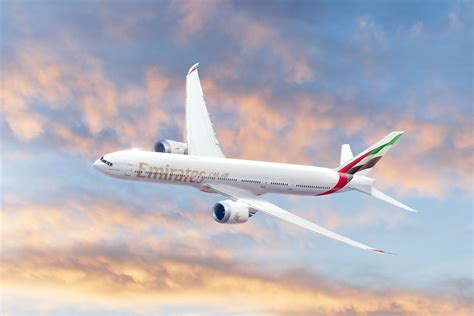
The uncertainty affects pilots, maintenance planning, crew scheduling, financing structures, and competitive positioning against carriers already operating Airbus A350 fleets.
Every additional year of delay increases operational inefficiencies across the global airline industry.
Why The 777X Still Matters To Boeing
Despite the program’s enormous problems, the 777X remains critically important for Boeing’s future.
The aircraft occupies a unique segment of the market that Airbus only partially covers with the A350-1000. Boeing still believes many airlines want a larger twin-engine aircraft capable of replacing older 777-300ERs and even certain A380 operations.
The 777X also serves as Boeing’s flagship long-haul passenger program at a time when the company desperately needs commercial stability.
A successful 777X entry into service would provide more than revenue. It would restore some confidence in Boeing’s engineering capabilities after years of reputational damage.
That explains why the company continues pushing aggressively toward a 2027 delivery target despite the massive rework effort now underway.
The irony is impossible to ignore. Boeing built aircraft early to preserve production momentum and accelerate future deliveries. Instead, those same aircraft now require extensive reconstruction before they can ever carry passengers.
The 777X remains technologically impressive. Its engines are revolutionary, its aerodynamics are highly advanced, and its efficiency promises substantial operational advantages once airlines finally receive the aircraft.
But the path to that moment has become one of the most expensive lessons in modern aerospace manufacturing.
Before the Boeing 777X can redefine long-haul aviation, Boeing must first tear open dozens of its own completed jets and rebuild them almost from the inside out.