The completion of a commercial aircraft is typically a moment of precision, pride, and profit. For manufacturers, it marks the final checkpoint before billions in revenue are realized. For airlines, it signals imminent expansion—new routes, increased capacity, and improved operational efficiency. Yet in one of the most unusual chapters in modern aviation manufacturing, Boeing found itself tearing apart fully assembled aircraft—not due to catastrophic failure, but because of something far subtler and arguably more troubling: manufacturing inconsistencies buried deep within the aircraft’s structure.
This was not a cosmetic fix. It was not a minor tweak. It was a painstaking, weeks-long disassembly of aircraft that had already rolled off the production line, painted in airline liveries, and were ready—at least on the surface—to fly. The implications rippled across supply chains, airline schedules, and Boeing’s already fragile reputation.
A Crisis Hidden Beneath the Surface of the 737 MAX
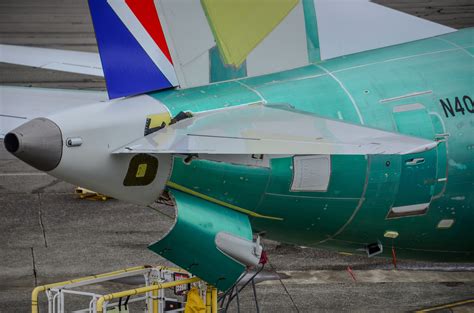
In April 2023, a revelation emerged from Spirit AeroSystems, the primary supplier responsible for building the fuselage of the 737 MAX. The issue was not immediately visible. It involved two of the eight critical fittings used to connect the vertical stabilizer—the tail fin—to the fuselage. These fittings had been manufactured using a non-standard process by a subcontractor.
On paper, the deviation seemed minor. In reality, it triggered a massive operational disruption. These fittings are located in the empennage, a structurally sensitive area where precision is non-negotiable. Even though regulators determined the issue posed no immediate safety risk for aircraft already in service, undelivered planes were another matter entirely.
Every aircraft still in Boeing’s possession had to be taken apart, inspected, and corrected—a process that required partial disassembly of the tail section. This wasn’t a simple panel removal. It involved accessing deeply embedded structural components, often requiring technicians to undo weeks of prior assembly work.
Why Boeing Had to Tear Apart Completed Aircraft
The necessity to dismantle completed jets stems from one core principle in aviation manufacturing: traceability and compliance. Every component must meet exact specifications, not just functionally, but procedurally. If a part is manufactured using a non-approved method, it becomes non-compliant—even if it performs adequately.
For Boeing, this meant:
- Every affected aircraft had to be revalidated
- All suspect components needed replacement or rework
- Documentation had to be updated and re-certified
Unlike in-service aircraft, which can be monitored and maintained under operational oversight, undelivered aircraft must meet absolute manufacturing compliance before entering service. There is no margin for ambiguity.
What made this situation particularly bizarre was the scale. Roughly 170 completed 737 MAX aircraft—many already painted and awaiting delivery—were impacted. Each required multi-week repair cycles, tying up valuable production space and delaying deliveries.
The Shadow of the 737 MAX Grounding
To understand why Boeing had so many completed aircraft sitting idle, one must revisit the shadow cast by two devastating accidents: Lion Air Flight 610 in October 2018 and Ethiopian Airlines Flight 302 in March 2019.
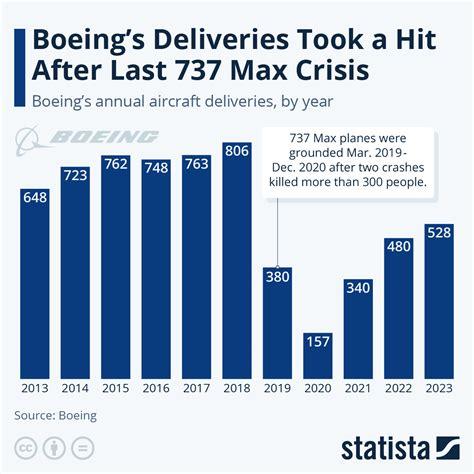
These tragedies led to the global grounding of the 737 MAX fleet, halting deliveries for nearly two years. During this period, Boeing continued producing aircraft, resulting in a staggering backlog of over 450 undelivered jets.
When the aircraft was finally recertified in late 2020, Boeing faced a logistical puzzle:
- Hundreds of aircraft needed delivery
- Some customers had canceled orders
- New buyers had to be found for “white tail” aircraft
- Stored planes required maintenance before handover
By 2023, despite significant progress, around 250 aircraft were still in inventory. This backlog became the stage upon which the manufacturing defect crisis unfolded. Instead of clearing inventory, Boeing was forced to reverse progress—literally dismantling aircraft to move forward.
A Supply Chain Weak Link: The Role of Spirit AeroSystems
The root cause of the issue traced back not to Boeing’s final assembly line, but to its supply chain. Spirit AeroSystems, once a Boeing division, had been spun off in 2005 as part of a cost-cutting strategy aimed at outsourcing major components.
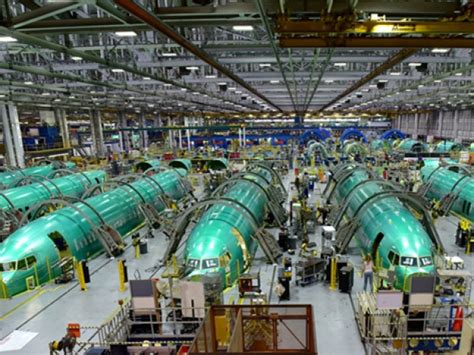
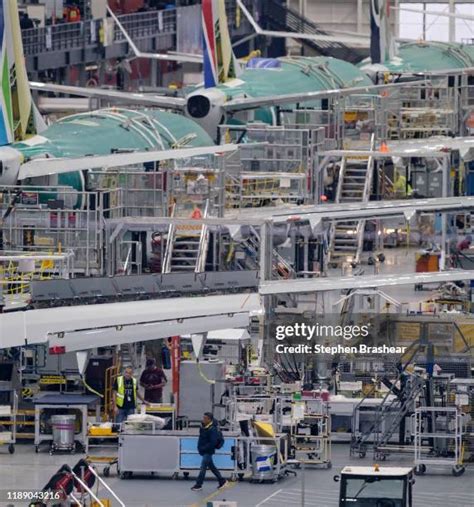
This decision, while financially strategic at the time, introduced a layer of complexity and risk. Spirit was responsible for delivering fully assembled fuselages, which Boeing would then integrate with wings, engines, and systems in Renton, Washington.
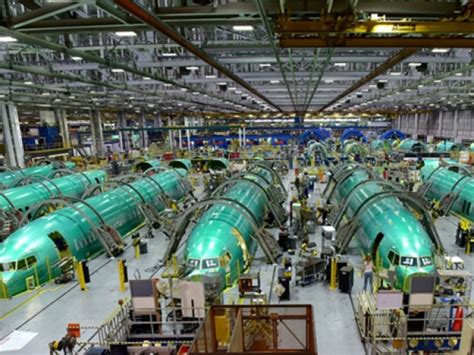
Over time, quality control issues began to accumulate. The 2023 fitting defect was just one of several incidents:
- Improperly drilled fastener holes in the aft pressure bulkhead
- Structural inconsistencies in window frame assemblies
- Repeated deviations from manufacturing specifications
These were not isolated errors—they pointed to systemic weaknesses in process control and oversight.
The financial consequences were severe. Spirit recorded $23 million in contra revenue for the fitting issue alone and ended 2023 with a staggering $633 million loss. The company’s struggles mirrored Boeing’s own, as both grappled with the consequences of fragmented manufacturing.
The Domino Effect of Manufacturing Errors
The fitting issue was only the beginning. In August 2023, another defect surfaced—this time involving incorrectly drilled holes in the aft pressure bulkhead, a critical component that maintains cabin pressure at altitude.
Unlike the earlier issue, this one required:
- Extensive X-ray inspections
- Examination of hundreds of fastener holes per aircraft
- More invasive repair procedures
The scale of the problem was staggering. Over 75% of the remaining inventory was affected. Each aircraft became a complex project, with engineers and technicians working through layers of structural verification.
Then came January 2024.
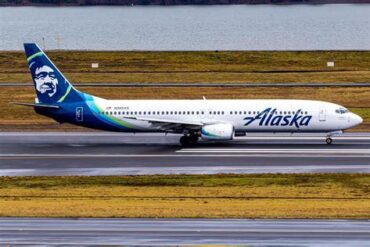
A door plug blowout on an Alaska Airlines 737 MAX 9 during flight triggered an explosive decompression event. Investigations revealed that four critical bolts were missing, raising serious questions about assembly protocols and workforce training.
While this incident involved a different variant and a separate issue, it reinforced a growing narrative: quality assurance failures were no longer isolated—they were systemic.
Boeing’s Strategic Response: Reclaiming Control
Faced with mounting challenges, Boeing made a critical decision: bring production back in-house.
In June 2024, Boeing announced plans to reacquire Spirit AeroSystems in a deal valued at $4.7 billion. The move marked a significant reversal of its earlier outsourcing strategy.
The rationale was clear:
- Increase oversight of critical manufacturing processes
- Reduce dependency on external suppliers
- Streamline quality control and accountability
By December 2025, the acquisition was finalized. Key Spirit facilities in Wichita, Tulsa, and Belfast were integrated into Boeing’s operations, while Airbus-related assets were divested.
This restructuring signaled a broader shift in aerospace manufacturing philosophy—a return to vertical integration in an era that had favored outsourcing.
The Economic Toll of Reworking Completed Aircraft
Dismantling completed aircraft is not just technically complex—it is economically brutal. Each rework cycle introduces:
- Labor costs from highly skilled technicians
- Opportunity costs from delayed deliveries
- Cash flow disruptions as payments are postponed
- Storage and maintenance expenses
For Boeing, the impact was immediate. In 2023, the company delivered 396 aircraft, falling short of its target range of 400–450 units. While the shortfall may seem modest, in an industry where each aircraft represents tens of millions of dollars, the financial implications are enormous.
Moreover, delays ripple outward:
- Airlines must adjust fleet plans
- Route launches are postponed
- Leasing costs increase
- Passenger capacity is constrained
The result is a multi-layered economic impact that extends far beyond the manufacturer.
The Resilience of the 737 MAX Program
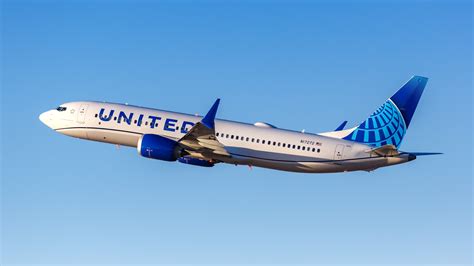
Despite its troubled history, the 737 MAX remains a highly competitive aircraft. The MAX 8 variant, in particular, offers:
- Fuel efficiency comparable to the Airbus A320neo
- Slightly higher passenger capacity
- Extended range capabilities
Airlines continue to place orders, signaling confidence in the aircraft’s long-term viability. Boeing has also introduced the 737 MAX 10, aimed at competing directly with the Airbus A321neo—a segment it had long neglected.
Production caps imposed by regulators following the Alaska Airlines incident initially limited output to 38 aircraft per month, later increased to 42 units. Boeing aims to scale further, but only after demonstrating consistent quality improvements.
The company asserts that major quality issues have been resolved, shifting focus toward broader supply chain challenges affecting the entire aviation industry.
A Turning Point in Aviation Manufacturing
The decision to dismantle completed aircraft may seem bizarre, but it underscores a deeper truth about aviation: precision is absolute, and compliance is non-negotiable.
This episode represents more than a manufacturing hiccup. It is a case study in:
- The risks of outsourcing critical components
- The importance of process discipline
- The cascading effects of small deviations in high-stakes systems
For Boeing, it marks both a low point and a potential turning point. By reclaiming control over its supply chain and reinforcing quality standards, the company is attempting to rebuild trust—one aircraft at a time.
In an industry where safety is paramount and margins for error are razor-thin, the lesson is clear: even the smallest deviation can ground an entire fleet—and sometimes, it takes tearing things apart to put them back together the right way.