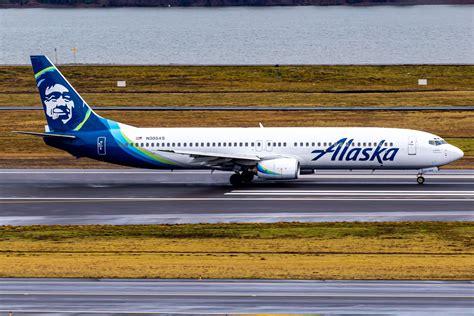
For more than two decades, the Boeing 737-900 quietly served as an important part of Alaska Airlines’ narrowbody fleet. It arrived at a time when the airline was expanding aggressively across the western United States and needed a larger aircraft without introducing an entirely new fleet type. The aircraft fulfilled that mission admirably, transporting millions of passengers while maintaining the fleet commonality that Alaska Airlines has long valued.
Yet by the time the last aircraft left service in September 2025, there was remarkably little nostalgia surrounding its retirement. Unlike the retirement of iconic aircraft such as the Boeing 747 or MD-80, the departure of the 737-900 generated relatively little debate. That wasn’t because the airplane performed poorly. Rather, it was because aviation economics had moved on.
The original 737-900 found itself squeezed between newer, more capable aircraft that could perform the same missions more efficiently. With dozens of 737-900ERs already flying alongside an expanding fleet of 737 MAX 9s, Alaska Airlines simply no longer had a compelling business reason to retain its oldest high-capacity Next Generation 737s.
By retiring just twelve aging aircraft, the airline simplified fleet planning, lowered maintenance costs, and accelerated a modernization strategy that had already been underway for years.
The Boeing 737-900 Entered Alaska Airlines at Exactly the Right Time
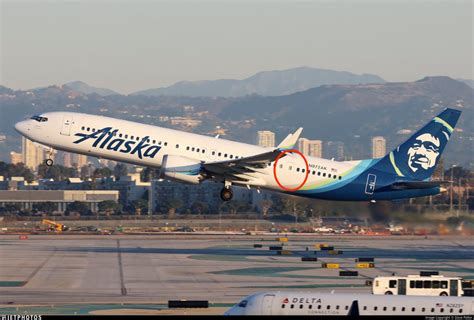
When Alaska Airlines introduced the Boeing 737-900 in 2001, the aircraft represented an attractive solution for growing passenger demand without dramatically changing operational procedures.
As Boeing’s longest member of the original Next Generation 737 family, the aircraft provided additional seating while maintaining cockpit commonality with the airline’s existing 737 fleet. Pilot training remained straightforward, maintenance procedures required minimal adaptation, and spare parts inventories stayed largely compatible.
That commonality translated directly into lower operating costs compared with introducing an entirely different aircraft family.
Alaska ultimately operated 12 Boeing 737-900s, each configured with 178 seats across two classes. The aircraft primarily served busy domestic routes where additional capacity mattered more than extreme range.
For an airline whose network concentrated heavily along the U.S. West Coast before gradually expanding eastward, the aircraft initially fit well into its strategy.
At the beginning of the 2000s, few could have predicted that the aircraft would eventually become one of the least successful variants Boeing ever produced.
Why the Original 737-900 Was Never Boeing’s Best Seller
Although the 737-900 looked impressive because of its stretched fuselage, it entered the market with several important limitations that restricted its appeal.
The most significant weakness involved its performance.
While Boeing lengthened the fuselage to accommodate more passengers, the aircraft retained many of the operational limitations of earlier variants. Unlike later developments, it lacked the additional emergency exits that would eventually permit significantly higher certified seating capacities.
Its range also proved less competitive than airlines desired for increasingly diverse route networks.
These shortcomings meant many carriers saw little advantage over purchasing the highly successful 737-800, which offered nearly identical economics while serving a broader range of missions.
Only three airlines ever became operators of the standard 737-900:
- Alaska Airlines
- KLM
- Korean Air
That extraordinarily small customer base demonstrated how quickly airlines concluded that the original design was something of a transitional aircraft rather than a long-term solution.
The Arrival of the Boeing 737-900ER Changed Everything
Boeing addressed nearly every major criticism when it introduced the 737-900ER.
Rather than simply stretching the fuselage, engineers substantially enhanced the aircraft’s operational capabilities.
The improved variant incorporated optional additional emergency exits, structural refinements, greater maximum takeoff weight, aerodynamic improvements, and significantly increased fuel capacity. These changes transformed the aircraft into a far more flexible platform capable of serving routes that had previously been beyond the reach of the standard 737-900.
With a range approaching 3,775 miles, the 737-900ER became suitable for demanding domestic sectors, transcontinental services, and numerous international routes.
For Alaska Airlines, this represented exactly the aircraft it actually wanted.
Beginning in 2012, the airline steadily expanded its 737-900ER fleet while gradually reducing the operational importance of the earlier model.
Although passengers noticed little difference inside the cabin—the airline maintained the same 178-seat configuration—the operational advantages behind the scenes were enormous.
Pilots transitioned seamlessly.
Maintenance remained highly standardized.
Dispatchers gained considerably greater scheduling flexibility.
Fleet planners suddenly possessed an aircraft capable of serving virtually every domestic market Alaska wished to operate.
Fleet Commonality Made Retirement Surprisingly Easy
Many airlines struggle when retiring aircraft because replacements are unavailable or require extensive pilot retraining.
Neither problem existed for Alaska Airlines.
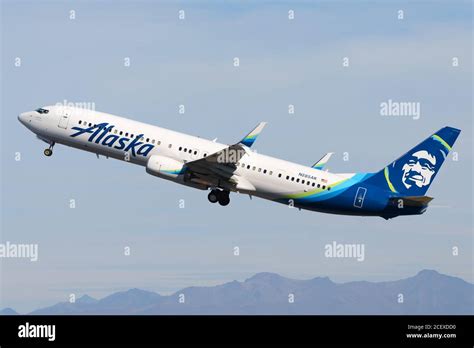
By the time retirement began, the carrier already operated 79 Boeing 737-900ERs, creating one of the world’s largest fleets of the improved variant.
That meant replacing the original twelve aircraft required almost no disruption.
Flight crews already possessed the necessary qualifications.
Maintenance organizations already stocked components.
Operational procedures remained virtually identical.
Passengers experienced almost no noticeable differences.
Instead of introducing uncertainty, retirement actually simplified fleet management by eliminating the least capable member of an otherwise highly standardized family.
From an operational perspective, this represented one of the smoothest fleet transitions an airline could hope to achieve.
Age Was Only Part of the Story
By 2025, Alaska’s original Boeing 737-900s had accumulated nearly 24 years of service.
The first aircraft, N302AS, exited the fleet in April 2025, marking the beginning of the retirement program. The remaining aircraft followed over the next several months until the final examples departed in September.
Age certainly influenced the decision.
Older aircraft inevitably require more extensive inspections, increasing maintenance costs and reducing availability.
However, age alone rarely justifies retirement.
Many commercial aircraft continue flying safely for three decades or longer when economics support their operation.
In Alaska’s case, the deciding factor wasn’t simply that the airplanes had become old.
It was that substantially better alternatives already existed within the airline’s own fleet.
Every time scheduling managers selected a 737-900 instead of a 737-900ER or MAX 9, they accepted unnecessary operational compromises.
Those compromises gradually became impossible to justify.
The Boeing 737 MAX 9 Became the New Standard
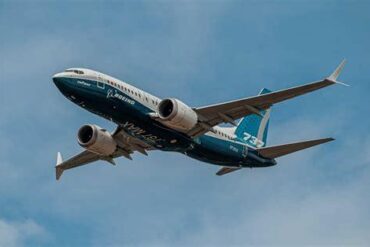
As Alaska Airlines modernized, the 737 MAX 9 emerged as the carrier’s preferred high-capacity narrowbody aircraft.
Although the aircraft accommodates passenger numbers similar to the earlier 737-900, virtually every major performance metric improved.
The MAX family introduced:
- Better fuel efficiency through advanced CFM LEAP-1B engines
- Lower carbon emissions
- Modernized avionics
- Reduced operating costs
- Improved overall economics
- Longer-term manufacturer support
For airlines operating hundreds of daily flights, even relatively small fuel savings quickly translate into millions of dollars annually.
Those savings become especially meaningful when fuel remains one of aviation’s largest operating expenses.
Despite similarities visible to passengers, airlines evaluate aircraft primarily through lifetime operating economics rather than cabin appearance.
In that calculation, the MAX 9 consistently outperformed its predecessor.
The MAX Program’s Challenges Did Not Derail Alaska’s Strategy
The Boeing 737 MAX family has endured one of the most difficult chapters in modern commercial aviation.
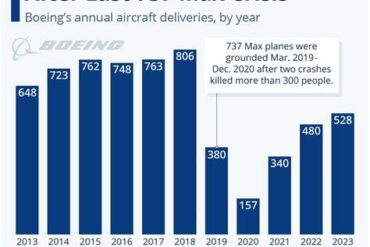
Following the tragedies involving Lion Air Flight 610 and Ethiopian Airlines Flight 302, the worldwide grounding fundamentally altered public perceptions of the aircraft.
Alaska Airlines later faced its own highly publicized challenge when a 737 MAX 9 experienced a door plug failure shortly after departure in January 2024.
The incident prompted another temporary grounding and renewed regulatory scrutiny.
Despite those events, Alaska Airlines continued investing in the MAX program.
That decision reflected long-term confidence in both Boeing’s engineering corrections and the aircraft’s economic advantages.
Large airlines rarely base fleet planning solely on short-term headlines.
Instead, they evaluate decades of expected operational performance.
Following comprehensive inspections, regulatory oversight, and design improvements, Alaska maintained its modernization roadmap.
The retirement of the older 737-900 therefore reflected strategic fleet planning rather than any reaction to isolated events.
Retiring the 737-900 Improved Network Flexibility
One of the greatest advantages of eliminating the original 737-900 involved scheduling flexibility.
Airlines constantly move aircraft among routes to match seasonal demand, weather disruptions, maintenance requirements, and changing passenger bookings.
Aircraft with shorter range or additional operational restrictions complicate that process.
Every scheduling limitation reduces efficiency.
By standardizing around the 737-900ER and MAX family, Alaska gained the freedom to assign aircraft across a much wider variety of missions without worrying about performance constraints.
That flexibility becomes increasingly valuable as the airline continues expanding beyond its traditional Pacific Northwest network.
Longer domestic services, transcontinental flights, and potential future international opportunities all benefit from aircraft capable of operating virtually any mission within the airline’s narrowbody network.
Fleet simplification therefore supports both daily reliability and long-term strategic growth.
Alaska Airlines Is Building Around Boeing’s Future
Alaska Airlines remains one of Boeing’s most loyal airline customers.
Its fleet today includes multiple generations of the 737 family, including the 737-700, 737-800, 737-900ER, 737 MAX 8, and 737 MAX 9.
The airline’s future plans extend even further.
Additional 737 MAX 8s are scheduled for delivery, while an enormous order for 168 Boeing 737 MAX 10s positions Alaska for continued expansion once certification is completed.
Beyond narrowbody operations, the airline is also preparing for broader international ambitions through the addition of Boeing 787-9 aircraft following its integration with Hawaiian Airlines.
This strategy reflects a carefully coordinated modernization program rather than isolated fleet decisions.
Every retirement supports the next phase of growth.
Every aircraft acquisition improves long-term operating efficiency.
Every step increases standardization across one of North America’s most Boeing-centric fleets.
Why Alaska Airlines Never Looked Back
The retirement of the Boeing 737-900 wasn’t driven by emotion, nostalgia, or public perception. It was the result of clear operational logic supported by decades of experience.
The aircraft had served Alaska Airlines well since entering service in 2001, helping the carrier grow during an important period of expansion. However, aviation is an industry where incremental improvements in efficiency, flexibility, and maintenance economics eventually outweigh sentiment.
The arrival of the far more capable 737-900ER eliminated many of the original aircraft’s shortcomings, while the 737 MAX 9 pushed efficiency even further with lower fuel burn, advanced technology, and reduced operating costs. Because Alaska already operated large fleets of both types, replacing just twelve aging 737-900s required almost no operational disruption.
In the end, the decision reflected disciplined fleet management rather than dramatic change. Removing an aircraft with limited range, fewer operational advantages, and declining economic competitiveness allowed Alaska Airlines to focus entirely on more capable airplanes that better matched its future network.
For passengers, the transition was largely invisible. For the airline, however, retiring the Boeing 737-900 represented another important step toward a more efficient, standardized, and future-ready fleet built to support continued domestic growth and expanding international ambitions.