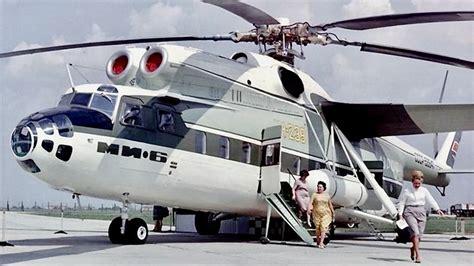
The world of aeronautical engineering has witnessed its fair share of strange and bold designs, but few aircraft spark curiosity quite like the Mil Mi-6 helicopter. As one of the Soviet Union’s most ambitious aviation projects, the Mi-6 combined sheer power with unconventional features — none more notable than its stubby fixed wings. In a world where helicopters are defined by their rotors, the sight of short, airplane-like wings on such a massive rotorcraft naturally raised eyebrows. So why exactly did this Soviet colossus have wings?
The Cold War Context: Building a Heavy-Lift Champion
The Mil Mi-6 was born out of the Soviet Union’s Cold War-era ambition to dominate both militarily and technologically. During the 1950s, Western powers had begun refining heavy-lift capabilities, not just in cargo planes but in helicopters as well. The USSR responded in kind, and the Mil Design Bureau was tasked with producing the world’s most powerful and capable helicopter.
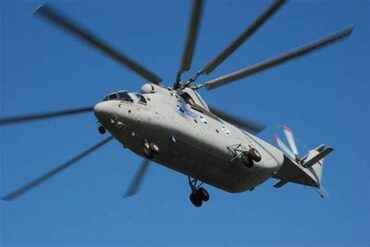
First flown in 1957, the Mi-6—originally known as the V-6 prototype—immediately distinguished itself. It was not just large. It was enormous. Measuring 108 feet 10 inches in length and nearly 115 feet in rotor span, it dwarfed every other helicopter of its era. Its twin Soloviev D-25V turboshaft engines, producing 5,500 horsepower each, gave it the power to challenge the limits of rotorcraft capability. This made the Mi-6 the first turboshaft-powered helicopter to reach speeds exceeding 300 km/h (187 mph).
But what really captured the imagination of both enthusiasts and engineers was the presence of short, cantilever wings mounted to the fuselage. In the minds of many, the addition seemed counterintuitive. Helicopters rely on their rotors for lift, so why would an aircraft that already possesses a main rotor need wings at all?
The Physics Behind the Wings: Unburdening the Rotor
The secret behind the Mi-6’s wings lies in the aerodynamic challenges of heavy-lift helicopters. At cruising speeds—typically around 270 km/h (167 mph) for the Mi-6—the rotor must constantly fight to keep the massive body aloft. This creates enormous stress on both the rotor system and the engine components, limiting fuel efficiency, speed, and operational range.
To alleviate this, the engineers incorporated stub wings that generated lift as the helicopter gained forward velocity. Once airborne and moving at speed, these wings would contribute up to 20% of the total lift required, reducing the burden on the rotor system. This design not only enhanced performance but also enabled longer mission durations and increased payload capabilities.
In essence, the wings acted like an aerodynamic crutch—not necessary for vertical takeoff or hover, but invaluable during fast, level flight. This hybrid behavior allowed the Mi-6 to take advantage of both fixed-wing principles and rotary-wing functionality, merging the strengths of planes and helicopters in one design.
From Battlefield to Civilian Use: Versatility of the Mi-6
What truly elevated the Mi-6’s status was not just its engineering but its versatility. Though initially developed as a military heavy-lift transport, the Mi-6 quickly found use across a wide spectrum of roles. In its military form, designated Mi-6T, the aircraft could carry up to 70 fully-equipped troops or 12,000 kg of cargo in its cavernous hold.
The civilian variant, the Mi-6A, increased seating capacity to 90 passengers, transforming it into a short-haul shuttle in remote areas of the Soviet Union. Specialized versions emerged for different tasks:
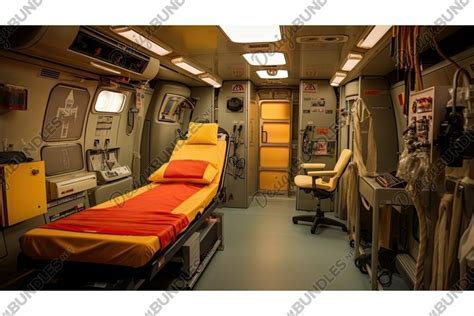
- Mi-6S for medevac missions
- Mi-6TZ and Mi-6TAZ as fuel transporters
- Mi-6PP for electronic reconnaissance and communications
During its peak, the Mi-6 became a vital cog in Soviet infrastructure, capable of lifting mobile missile units, large radar assemblies, and even small boats. It also played a key role in disaster relief and scientific expeditions in the Arctic and Siberian regions.
Records and Achievements: Breaking Barriers
In its operational prime, the Mi-6 set world records for both payload capacity and speed. It could lift more than 20 metric tons—a feat unheard of for a helicopter at the time. Its top speed also made it the fastest production helicopter in the world until the arrival of newer models decades later.
But perhaps the most impressive aspect was its engine performance. The turboshaft engines used in the Mi-6 rivaled the output of those found in modern powerhouses like the CH-47F Chinook Block II and the Sikorsky CH-53K King Stallion. And yet, these were engineered in the 1950s—testament to the technological audacity of Soviet aerospace design.
Engineering the Wings: More Than Just Aesthetic
From a technical perspective, the Mi-6’s wings weren’t an afterthought or aesthetic whim—they were a calculated engineering solution. The fixed wings were mounted slightly above the cargo bay and were designed with a 5-degree anhedral angle, helping balance the aircraft during high-speed flight. The wings also featured hardpoints for auxiliary fuel tanks or armaments when needed.
These wings were crucial in combat scenarios where extended range or loiter time was essential. By offloading lift from the rotor system, the aircraft could spend more time in the air or travel longer distances without refueling. The Mi-6 essentially blurred the line between a rotary-wing and fixed-wing aircraft, creating an operational envelope that was wider than anything previously attempted in rotary aviation.
The Legacy of the Mi-6: A Design That Inspired Generations
While the Mi-6 was eventually retired in favor of more modern helicopters like the Mi-26 Halo, its influence remains unmistakable. Engineers and military planners studied its hybrid wing-rotor design as a blueprint for future heavy-lift platforms. The aircraft demonstrated that adding wings to helicopters was not only feasible but potentially advantageous in certain roles.
Aircraft such as the Bell Boeing V-22 Osprey and even experimental tiltrotor concepts owe part of their lineage to the bold experimentation embodied by the Mi-6. It proved that a helicopter doesn’t have to be limited by rotor blades alone, and that with the right engineering, fixed-wing enhancements could revolutionize rotorcraft operations.
Today, surviving Mi-6 units sit in aerospace museums across the former Soviet Union and Eastern Europe. Each one serves as a towering reminder of an era when aviation dared to break all conventions. Even now, the silhouette of the Mi-6—rotors spinning and stubby wings gliding through the sky—remains one of the most iconic in the history of vertical flight.
Final Thoughts: A Helicopter Ahead of Its Time
The Mil Mi-6 was not just a helicopter; it was a statement of Soviet engineering might, an embodiment of innovation in a time of fierce geopolitical rivalry. Its wings were not oddities but critical enablers of its mission: to haul, to rescue, to transport, and to endure. In combining the principles of fixed-wing flight with the vertical prowess of a helicopter, the Mi-6 became a unique and unmatched example of hybrid aerospace design.
Even decades after its last operational sortie, the Mi-6 continues to spark curiosity, admiration, and inspiration—its winged design standing as proof that the sky, quite literally, has no limits.