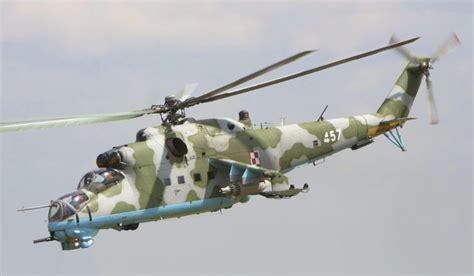
The Mil Mi-24, a Soviet-designed helicopter gunship, has earned its reputation as one of the most formidable and versatile military helicopters ever produced. Since its introduction in 1972, the Mi-24 has become a symbol of power and resilience in air combat, serving as both a ground attack platform and a troop transport vehicle. Known by its nicknames ‘Flying Tank’ and ‘Crocodile,’ the Mi-24 has earned its place in the history books through a combination of its lethal weaponry, robust design, and its ability to provide critical fire support in a variety of combat scenarios. In this article, we will explore the Mi-24’s design, capabilities, historical significance, and enduring legacy in military aviation.
Design and Development of the Mil Mi-24
The Mil Mi-24 was developed by the Soviet Union during the Cold War as a response to the need for a multi-role helicopter capable of supporting ground troops and engaging enemy targets. The Mi-24 was built with the lessons of the Vietnam War in mind, where the United States had successfully used helicopters like the Sikorsky S-67 to provide close air support and transport troops in combat zones. Drawing inspiration from these tactics, the Mi-24 was designed to combine both fire support and troop transport functions into a single airframe, a unique feature for the time.
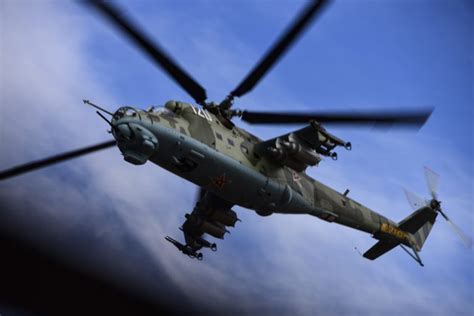
The helicopter’s design features a tandem rotor system, which provides superior lift capacity and stability, especially in hot and high-altitude environments. The Mi-24’s dual engines ensure redundancy and reliability, allowing it to operate even if one engine fails. The fuselage is armored to protect the crew and passengers from small arms fire and shrapnel, while the helicopter’s wide range of weaponry enables it to engage various targets, including tanks, infantry, and fortifications.
Armament and Combat Capabilities
One of the key features of the Mi-24 is its extensive armament, which allows it to perform a variety of missions, from anti-tank operations to close air support for ground troops. The Mi-24 is equipped with a variety of weapon systems, including:
- Anti-Tank Guided Missiles (ATGMs): The Mi-24 can carry a range of ATGMs, such as the 9M114 Shturm, capable of destroying heavily armored vehicles at long ranges.
- Rockets: The Mi-24 is equipped with various rocket pods, including 80mm and 122mm rockets, which can be used to target both ground troops and fortifications.
- Guns: A powerful 12.7mm or 23mm nose-mounted cannon allows the Mi-24 to engage infantry, light vehicles, and even aircraft in some cases.
- Bombs: The Mi-24 can carry bombs, including cluster munitions, for more generalized attacks on enemy positions.
This combination of weaponry makes the Mi-24 one of the most effective ground-attack helicopters in the world, capable of delivering devastating firepower while also providing crucial support to infantry forces.
Mil Mi-24 in Combat: A Legacy of Success
The Mi-24 first saw widespread combat during the Soviet-Afghan War (1979-1989), where it proved its effectiveness in providing close air support for Soviet ground troops. The helicopter’s ability to deliver a mix of precision-guided missiles, rockets, and heavy cannon fire made it a formidable force against insurgent groups and equipped Soviet forces with an indispensable asset in the fight against guerilla tactics.
The Mi-24’s role in Afghanistan highlighted its dual-use capability. While primarily an attack platform, the Mi-24 could also transport troops into combat zones, evacuate casualties, and provide extraction for special forces operations. This versatility made it a key asset for Soviet forces, allowing them to maintain air superiority and deliver precision strikes in difficult terrain.
Following the Soviet-Afghan War, the Mi-24 continued to see action in numerous conflicts worldwide. It participated in the Iran-Iraq War, where it was used for both close air support and troop transport. The Mi-24 also played a role in the Falklands War, serving as an effective counter to the British Harrier jets and providing support for Argentine ground forces.
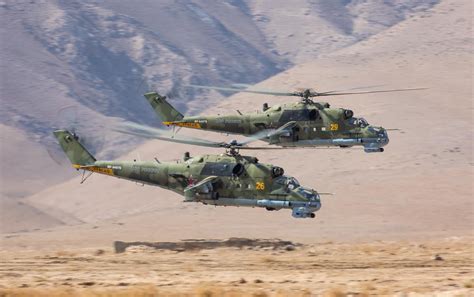
In more recent years, the Mi-24 has continued to serve in various global conflicts, including the Syrian Civil War, where it has been used by Russian and Syrian forces to provide air support to ground operations against insurgent groups. The Mi-24’s robust design and adaptability have allowed it to remain in service despite the development of newer helicopters and weapons systems.
Comparison with Western Counterparts
The Mi-24 has often been compared to Western helicopters like the American AH-64 Apache and the Sikorsky S-67. While these helicopters share similar roles as attack platforms, the Mi-24’s combination of attack and transport capabilities sets it apart. The Apache, for example, is designed primarily for ground attack and does not possess the Mi-24’s ability to carry troops or conduct transport missions.
The Mi-24’s design is often considered more rugged and capable of operating in harsher environments. The tandem rotor configuration, while less common than the more traditional single rotor design found in many Western helicopters, offers superior lift and stability, especially in challenging terrain like mountains or deserts.
Upgrades and Variants: The Mi-35 and Beyond
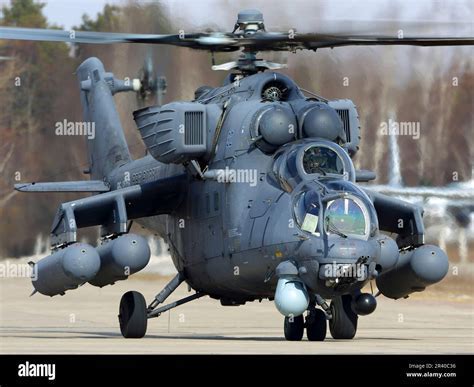
Over the years, the Mi-24 has undergone a series of upgrades to maintain its combat effectiveness and adapt to modern warfare. The most notable of these upgrades is the Mi-35, which was introduced in the 1990s as an advanced version of the original Mi-24. The Mi-35 features modern avionics, improved weapon systems, and upgraded engines for better performance.
The Mi-35 can carry a wider range of guided missiles, including the advanced 9M120 Ataka ATGM, and is equipped with new electronic warfare systems to protect against modern air defense systems. The cockpit has been modernized with digital displays, night vision systems, and more sophisticated targeting equipment, making the Mi-35 a highly effective platform for modern combat scenarios.
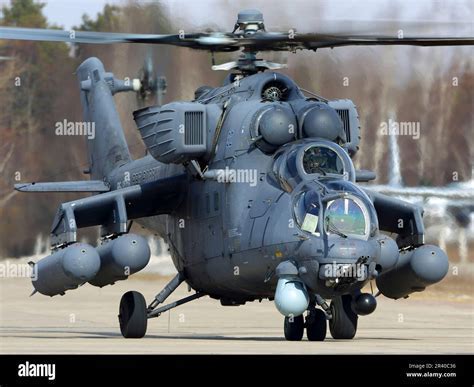
Additionally, many Mi-24s have been retrofitted with new technology, including GPS navigation, laser-guided bombs, and more advanced weapon systems. These upgrades have allowed the Mi-24 to remain a relevant and formidable force, even as new helicopters have entered service around the world.
The Mi-24 in Service Today
Despite being introduced over 50 years ago, the Mi-24 remains in service with over 58 countries worldwide. Its continued use speaks to its enduring value as a multi-role combat helicopter. Modern militaries have kept the Mi-24 in service through a series of upgrades and retrofits, ensuring that it remains capable of performing a variety of missions, from anti-tank operations to troop transport and air support.
Countries such as Russia, India, and Angola still rely on the Mi-24 and its variants for frontline combat, while many others use it in more specialized roles, including counterinsurgency operations and peacekeeping missions. The Mi-24’s adaptability, combined with its rugged design and potent armament, ensures that it remains a key asset for air forces around the world.
Conclusion: A Legacy of Power and Versatility
The Mil Mi-24, with its lethal weaponry, versatile design, and proven combat record, has earned its place as one of the most iconic helicopters in military history. Its combination of attack capabilities and troop transport functionality set it apart from many of its Western counterparts and allowed it to serve in a wide range of combat scenarios. From its early days in the Soviet-Afghan War to its continued service in modern conflicts like the Syrian Civil War, the Mi-24 has proven time and again that it is a force to be reckoned with. As military forces continue to evolve, the Mi-24 remains a key player in global air combat, ensuring that its legacy endures for years to come.