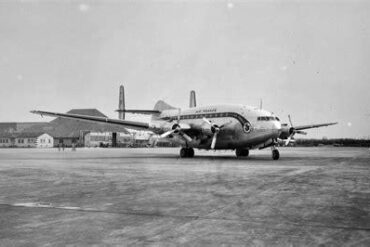
The history of commercial aviation is a living chronicle of technological risk, national ambition, and global connection. When we speak of the oldest airlines still flying under their original names, we are examining more than a series of corporate anniversaries; we are tracing the evolution of modern travel. These carriers have not merely survived decades of economic turbulence, political upheaval, and technological reinvention—they have shaped the sky’s very infrastructure. Their stories illuminate the roots of today’s aviation industry and demonstrate how legacy, identity, and engineering progress can intertwine across more than a century.
The five airlines explored here—KLM, Qantas, Iberia, LOT Polish Airlines, and Cubana de Aviación—each represent distinct national and cultural narratives, all converging in the relentless pursuit of flight. They differ in geography and scale, yet each embodies a rare heritage: uninterrupted operation under the same name since their founding. This continuity allows their stories to unfold like long-haul journeys spanning continents and decades, filled with discoveries, detours, and remarkable achievements.
KLM Royal Dutch Airlines: The First to Take Flight
KLM Royal Dutch Airlines stands as the eldest of all continuously operating airlines still using their original identity. Founded on October 7, 1919, the carrier launched with a remarkably ambitious mission—one that would not only define Dutch aviation but set a worldwide precedent. Established by eight investors from the banking and business sectors, the airline bore the formal Dutch name Koninklijke Luchtvaart Maatschappij voor Nederland en Koloniën, a title reflecting the global aspirations of the Netherlands at the dawn of the commercial aviation era.
By May 17, 1920, KLM completed its first official flight—a journey from London to Amsterdam aboard a leased De Havilland DH-16, piloted by Jerry Shaw. The aircraft transported two journalists, a diplomatic letter, and a stack of newspapers. This simple gesture marked the start of a historic international network that now spans continents and influences global transport.
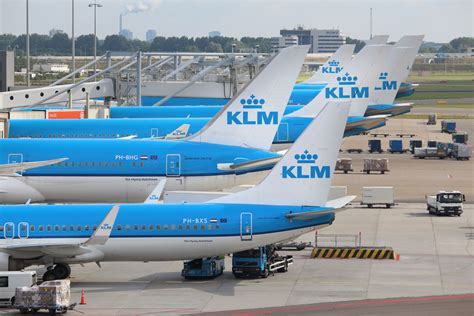
Across a century of expansion, reinvention, and adaptation, KLM’s identity has grown stronger. Today the airline anchors its operations at Amsterdam Schiphol Airport, functioning as a central hub that merges regional, European, and intercontinental flows. Its present scale is extraordinary: more than 266,000 flights, over 43 million seats, and nearly 72 billion available seat miles scheduled in 2025 alone. KLM’s fleet of 186 aircraft, with an average age of 12.3 years, reflects a balanced approach to modernization across Airbus, Boeing, and Embraer types. The result is a global powerhouse that blends heritage with forward-looking strategy.
Qantas: Australia’s Vision of Connection
Qantas, founded just over a year after KLM on November 16, 1920, emerged from the dreams of two Australian Flying Corps veterans—Paul McGinness and Hudson Fysh. The pair envisioned an airline capable of linking the vast Australian continent to global destinations, a bold idea considering the isolation and distance that defined early 20th-century Australia. Short for Queensland and Northern Territory Aerial Services, the Qantas name carried both regional pride and adventurous purpose.
The carrier’s first aircraft, an Avro 504K built in Sydney, carried its inaugural passenger in November 1922: Alexander Kennedy, an 84-year-old outback pioneer whose presence symbolized aviation’s capacity to reduce barriers between Australia’s remote interior and its emerging cities. Over the following century, Qantas transformed from a regional service into one of the world’s most prominent international airlines, carrying Australia’s identity across oceans and continents.
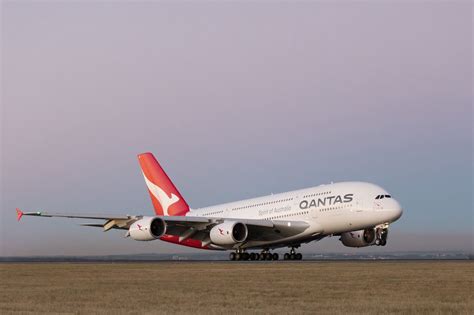
Today, Qantas handles more than 278,000 annual passenger flights, transporting 40 million travelers across a global network reaching Europe, North America, and beyond. Its fleet of 127 mainline aircraft, averaging 14.9 years, includes the Airbus A330 and A380, Boeing 787s, and the reliable Boeing 737 for domestic and regional missions. With an order book featuring the A321XLR, A350-1000, and additional Dreamliners, Qantas is positioned to maintain its long-range prominence well into the future.
Iberia: Spain’s Airline of Continental and Transatlantic Influence
Founded June 28, 1927, Iberia emerged as Spain’s flagship airline during a period of rapid modernization. Its full name, Iberia, Compañía Aérea de Transporte, reflected the desire to build a national aviation identity matching Spain’s growing international presence. Iberia’s first route—Madrid to Barcelona in December 1927—introduced a new era of domestic travel, connecting Spain’s political and cultural centers through the sky.
While the airline initially focused on domestic and nearby regional routes, expansion soon followed. By 1939, Portugal entered the network, strengthening Iberian connectivity. After WWII, Iberia’s global ambitions took flight, culminating in transatlantic services to Buenos Aires. This marked the beginning of a long-standing relationship between Spain and Latin America—one that continues to shape Iberia’s long-haul strategy today.
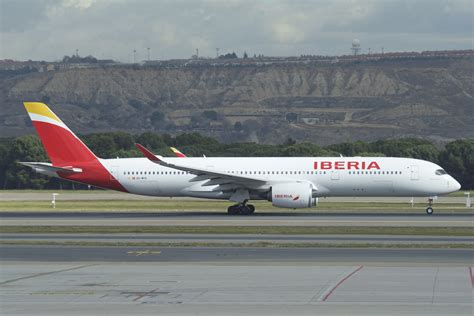
In 2025, Iberia will operate 227,928 flights, providing nearly 37 million seats and over 61 billion available seat miles. Unlike its contemporaries, Iberia maintains an almost exclusively Airbus-based fleet, currently consisting of 122 aircraft with an average age of just 10.3 years. A homogeneous fleet—spanning the A320 family, A330 variants, and A350—gives Iberia unusual consistency and operational efficiency.
LOT Polish Airlines: A Story of Resilience in Europe
LOT Polish Airlines, founded on December 29, 1928, entered aviation history as a state-owned national carrier built to unify Poland’s domestic air traffic and position the country within Europe’s expanding aviation map. Within days of its founding, LOT launched operations on January 1, 1929, using a modest fleet for internal routes that helped connect Poland’s major cities.
The airline’s growth halted during the turbulence of WWII, yet LOT reemerged in the post-war era with renewed strategic focus. The 1950s brought major milestones, including LOT’s millionth passenger in 1955 and a robust European expansion anchored in a rapidly industrializing region. By the 1970s and 1980s, LOT had stretched its wings across continents, flying to New York, Toronto, and even Singapore—ambitious moves for a carrier from Central and Eastern Europe.
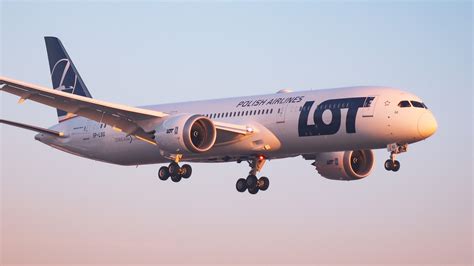
LOT also became a regional pioneer by introducing the Boeing 767, marking the airline as the first Central-Eastern European carrier to operate major US-built jets. Today the airline schedules 110,529 flights, offering almost 14 million seats annually. Its fleet of 89 aircraft, averaging 12.3 years, is small but notably diverse, ranging from Embraer regional jets to Boeing 737NG, 737 MAX, and 787 Dreamliner models.
Cubana de Aviación: A Distinctive Flag Carrier of the Caribbean
Cubana de Aviación presents a unique chapter in this narrative. Founded on October 8, 1929, by American businessman Clement Melville Keys, the airline began with charter and mail operations paired with a flying school. Scheduled services began in October 1930, opening pathways across Cuba and into wider Latin America at a time when air travel in the Caribbean was still in its infancy.
The airline’s fleet evolved through a remarkable mix of aircraft that reflected changing geopolitical climates—from early American models like the Douglas DC-3 and Lockheed Model 10 Electra to later Soviet-built designs such as the Antonov An-158, Tupolev Tu-204, and Ilyushin Il-96. This combination makes Cubana’s operational history unusually illustrative of global political shifts and aviation supply chains.
Cubana today remains comparatively small, with a fleet of 17 aircraft (many inactive) and an average age of 20.6 years. Only a few Western types—such as a leased Airbus A340-300 and ATR turboprops—support its limited network. With just 2,400 flights scheduled in 2025, the airline’s activity stands as a modest contrast against its century-long legacy. Yet its historical significance remains profound, preserving a cultural and national identity that has endured through decades of global change.

A Century of Continuity in an Ever-Changing Sky
The five airlines still operating under their original names form a rare constellation of endurance in the aviation universe. Their longevity is not merely the product of age; it is the result of persistent adaptation, national support, engineering innovation, and commitment to identity. These carriers represent the earliest roots of commercial flight, and their continued operation creates a thread of continuity linking the wood-and-canvas era to today’s composite-built, long-range fleet.
Their stories show how aviation is more than transportation—it is a living archive of human ambition. Each airline has weathered wars, political transformations, technological revolutions, and shifting passenger expectations. Each has played a unique role in shaping regional and global mobility. Together, they embody the legacy of an industry that has continually reinvented itself while remaining grounded in the pioneering efforts of its earliest innovators.
The histories of KLM, Qantas, Iberia, LOT, and Cubana remind us that every modern flight carries invisible echoes of the past. The sky may be shared by countless carriers today, but only a select few can claim to have witnessed—and helped shape—the entire story of commercial aviation from the beginning.