In an industry where brand names have vanished like contrails in a headwind, only a select few carriers have endured. Pan Am, Eastern, Braniff, TWA—once titans of American aviation—are now case studies in volatility. Yet several airlines founded in the earliest decades of commercial flight continue to operate today under their original names, their logos still emblazoned across modern composite fuselages and winglets. These carriers did not survive by clinging to nostalgia. They survived by evolving—fleet by fleet, merger by merger, regulation by regulation—while protecting a brand identity that became an asset in itself.
Commercial aviation in the United States was never a gentle business. It was forged in a crucible of airmail contracts, federal oversight, economic collapse, wartime mobilization, jet-age transformation, deregulation in 1978, and relentless consolidation. Through all of this, only a handful of airlines managed to maintain their original names while adapting to technological revolutions that reshaped flight itself. From fabric-covered biplanes to carbon-fiber widebodies, their journeys mirror the arc of American aviation history.
What distinguishes these airlines is not simply age. It is continuity—of brand, of operational presence, and of strategic reinvention. Their aircraft have changed, their route maps have multiplied, and their corporate structures have expanded through acquisitions. But their names remain, connecting modern travelers to nearly a century of airborne history.
Delta Air Lines: From Crop Dusting to Global Dominance
Delta Air Lines holds the distinction of being the oldest continuously operating U.S. airline under the same name. Its origins in 1925 were not in passenger travel but in agriculture. Founded as Huff Daland Dusters, the company specialized in aerial crop dusting across the cotton fields of the American South, combating boll weevil infestations that threatened entire regional economies. Aviation, at that moment, was less about glamour and more about utility.
In 1928, C.E. Woolman and a group of investors reorganized the business into Delta Air Service, named after the Mississippi Delta region it initially served. By 1929, Delta entered passenger service, launching routes between Dallas, Jackson, Shreveport, and Monroe. These early flights operated on piston-driven aircraft that required resilience as much as engineering, flying through weather and infrastructure conditions that modern pilots would scarcely recognize.
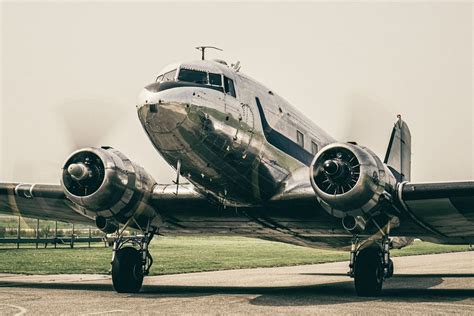
Delta’s fleet evolution traces the development of commercial aviation itself. In the 1930s and 1940s, the Douglas DC-2 and DC-3 transformed reliability and passenger comfort, enabling airlines to expand beyond niche mail routes. After World War II, surplus technology and trained pilots accelerated expansion. In 1959, Delta became the first airline to operate the Douglas DC-8, marking its full embrace of the jet age. Soon after came the Convair 880 and the McDonnell Douglas DC-9, and by 1970, Delta had transitioned to an all-jet fleet.
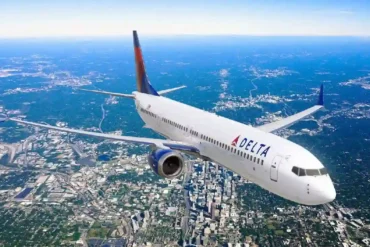
The modern Delta fleet, approaching 1,000 aircraft, is among the most diversified in the world. It operates Airbus A220s, A320-family jets, A330s, and A350s alongside Boeing 717s, 737s, 757s, and 767s. The 2008 merger with Northwest Airlines expanded Delta’s international reach and introduced Airbus widebodies that strengthened long-haul operations across the Atlantic and Pacific. Fleet modernization continues, with fuel-efficient Airbus A350s and next-generation aircraft reinforcing Delta’s global network.
Delta’s survival has never been passive. It navigated deregulation, economic downturns, and Chapter 11 bankruptcy in 2005. Yet the name remained. From crop dusters to transoceanic flagships, Delta exemplifies how continuity and adaptation can coexist.
American Airlines: Constructing a National Aviation Powerhouse
American Airlines emerged in 1934 from the consolidation of numerous small carriers operating mail routes across the United States. Under the leadership of C.R. Smith, American Airways became American Airlines, a unified brand at a time when federal policy reshaped aviation contracts and forced industry realignment.
Unlike Delta’s singular origin story, American was built piece by piece. Early revenue depended heavily on airmail contracts, which provided the financial backbone for expansion. Smith introduced operational innovations that shaped modern airline management, including one of the first airline-specific credit cards in the 1930s—an early indicator of customer loyalty strategies that would later dominate the industry.
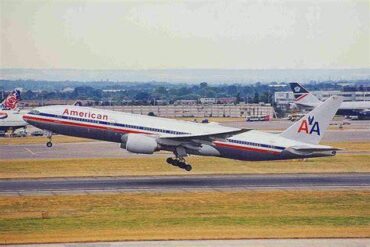
The jet age redefined American’s ambitions. The Boeing 707 and 727 allowed the airline to scale domestic routes, while widebody aircraft such as the McDonnell Douglas DC-10 and later Boeing 777 expanded intercontinental service. By the 1990s and 2000s, American had constructed one of the most extensive route networks in the world, anchored by major hubs in Dallas/Fort Worth, Chicago, Miami, and Charlotte.
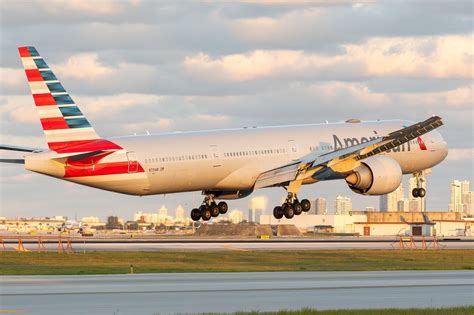
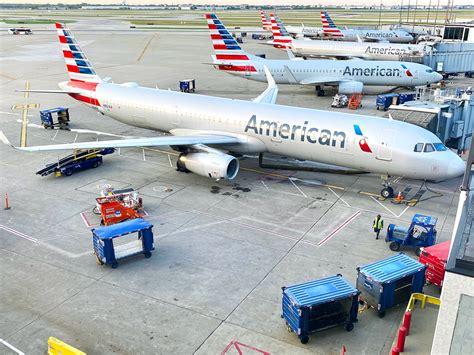
Today, American operates more than 1,000 aircraft, making it one of the largest airline fleets globally. Its strategy in the 2020s focused on simplification and modernization. Aging MD-80s and older widebodies were retired in favor of Boeing 737 MAX aircraft, Airbus A321neos, and Embraer regional jets. In 2024, the airline placed a major order for 260 new aircraft across Boeing, Airbus, and Embraer platforms, signaling long-term confidence in network growth.
Through bankruptcy restructurings and its merger with US Airways in 2013, American preserved its original brand identity. The silver fuselage and stylized eagle evolved but remained recognizable. Nearly a century after its formation, American Airlines continues to operate under the same name, now representing one of the largest passenger networks in the world.
United Airlines: Transcontinental Roots and Global Reach
United Airlines traces its lineage to 1931, when William E. Boeing helped assemble United Aircraft Transport Corporation, an umbrella organization that consolidated several early air transport companies. These included Boeing Air Transport, National Air Transport, Pacific Air Transport, and Varney Air Lines—each vital to early airmail service across the United States.
In 1934, federal regulations required aircraft manufacturing and airline operations to separate, and United Airlines emerged as a distinct carrier headquartered in Chicago. Its early transcontinental routes formed the backbone of coast-to-coast air travel, linking New York and San Francisco long before jet engines shortened the journey.
United introduced several service innovations, including early use of flight attendants on long-haul routes, establishing service standards that influenced the entire industry. The airline operated pioneering aircraft such as the Boeing 247, one of the first all-metal airliners, and later embraced the Boeing 747, which transformed long-distance international travel.
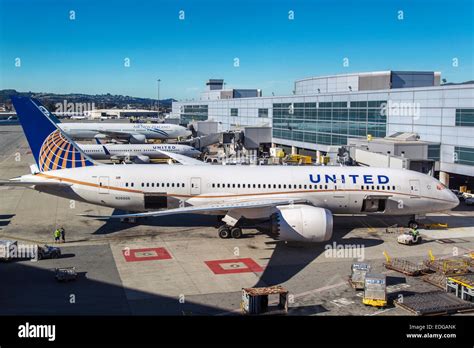
In the modern era, United launched its “United Next” initiative, ordering large numbers of Boeing 787 Dreamliners and Airbus A321neos to reduce fleet age and enhance efficiency. Today, United operates more than 1,080 aircraft—the largest fleet of any airline in the world. Narrowbody Airbus and Boeing aircraft handle domestic and short-haul routes, while Boeing widebodies dominate intercontinental service.
The 2010 merger with Continental Airlines expanded United’s global footprint dramatically. Yet the United name endured, reinforcing a sense of historical continuity stretching back to the formative years of American aviation. Few airlines can claim such a direct connection to the nation’s earliest transcontinental routes while simultaneously operating one of the most modern long-haul fleets in service.
Hawaiian Airlines: Inter-Island Origins and Pacific Expansion
Founded on January 30, 1929, as Inter-Island Airways, Hawaiian Airlines began by connecting Honolulu and Hilo—two vital centers in an island chain where air travel quickly surpassed sea voyages in speed and practicality. Long before Hawaii became a U.S. state, aviation was already knitting its communities together.
The airline adopted the Hawaiian Airlines name in 1941, reflecting a broader identity rooted in regional culture. Its early operations relied on small propeller aircraft suited to short island hops. Over time, Hawaiian expanded beyond interisland routes, adding mainland U.S. destinations and later international service across the Pacific.
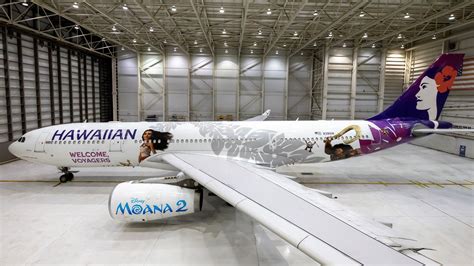
The introduction of widebody aircraft, particularly the Airbus A330, enabled nonstop service between Hawaii and Asia, Australasia, and major U.S. mainland cities. These aircraft provided the range and capacity necessary for transpacific travel, elevating Hawaiian from a regional carrier to a long-haul competitor.
In 2024, Alaska Airlines completed its acquisition of Hawaiian Airlines. Despite operational integration, the Hawaiian brand continues to operate as a distinct identity, preserving its cultural symbolism and market positioning. The airline remains the largest carrier serving Hawaii, and its name retains deep resonance among residents and travelers alike.
Hawaiian Airlines demonstrates that longevity can be tied not only to scale but also to cultural authenticity. Its identity is inseparable from the geography it serves, and that connection has proven durable through decades of industry turbulence.
Alaska Airlines: Frontier Aviation to Transcontinental Strategy
Alaska Airlines traces its origins to 1932 as McGee Airways, operating in one of the most demanding environments in commercial aviation. Early pilots flew into remote communities across Alaska, navigating rugged terrain and unpredictable weather. Aircraft were not merely transportation; they were lifelines delivering mail, cargo, and essential supplies.
The airline adopted the Alaska Airlines name in 1944. Over the decades, it transitioned from bush flying and cargo service to scheduled passenger operations, gradually building a network that extended beyond the Pacific Northwest. Its fleet strategy emphasized operational consistency, relying heavily on Boeing aircraft—particularly the 737 family—for decades.
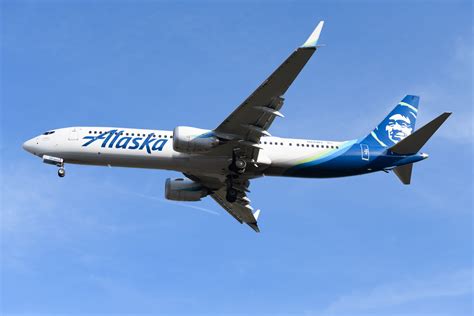
In recent years, Alaska diversified strategically. The acquisition of Hawaiian Airlines expanded its operational reach into long-haul markets and introduced widebody aircraft into the broader Alaska Air Group portfolio. The airline also incorporated Boeing 787 aircraft, marking a new chapter in international service expansion.
Alaska Airlines may not be as old as Delta or American, but it represents one of the longest continuously operating brands in U.S. aviation under its original name. Its evolution from frontier operator to integrated network carrier reflects adaptability rooted in operational discipline.
Endurance in a Consolidated Industry
The survival of these airlines is not accidental. Commercial aviation has experienced repeated cycles of consolidation, financial crisis, and regulatory change. The Airline Deregulation Act of 1978 unleashed competitive forces that led to fare wars, bankruptcies, and mergers. Only carriers that managed costs, modernized fleets, and expanded strategically endured.
Fleet strategy has been central. The transition from piston aircraft to jets, from early widebodies to composite long-haul aircraft like the Airbus A350 and Boeing 787, demanded capital and foresight. Airlines that delayed modernization often fell behind. Those that embraced efficiency reduced fuel consumption, expanded route networks, and improved passenger experience.
Brand continuity also played a role. In a crowded marketplace, a recognizable name builds trust. Delta, American, United, Hawaiian, and Alaska leveraged their histories as strategic assets. Their identities evolved visually and operationally, but the core names remained intact, anchoring them through change.
Today, these airlines operate some of the most technologically advanced fleets in history. Their aircraft cross oceans in hours, powered by engines that generate thrust levels unimaginable to early aviation pioneers. Yet beneath the composite skins and digital cockpits lies a lineage that stretches back to airmail contracts, rural airstrips, and propeller-driven beginnings.
The United States’ oldest airlines still flying under their original names represent more than corporate endurance. They embody the story of American aviation itself—a narrative of risk, reinvention, and relentless forward motion. Each departure under their banners carries not only passengers but also nearly a century of history into the sky.