Commercial aviation is often synonymous with thunder. The roar of high-bypass turbofan engines, the rumble of reverse thrust, and the whine of auxiliary power units create a soundscape that defines modern airports. Yet across the United States, several international airports have engineered quieter operations, balancing global connectivity with community peace. These airports are not silent—no busy airfield ever is—but through strict curfews, innovative flight procedures, and extensive home insulation programs, they have earned a reputation as some of the quietest international airports still in operation.
Unlike Europe, where dense urban populations force national regulators to impose tight noise caps and curfews, the United States historically allowed airports greater flexibility. With over 500 commercial airports and a comparatively lower population density, many hubs operate around the clock. However, in metropolitan regions where neighborhoods press up against runways, airport authorities have crafted complex noise mitigation strategies. These airports reveal how aviation can coexist with residential life without surrendering efficiency or safety.
Noise is not merely an annoyance; it is a measurable environmental impact. Aircraft generate sound from engines and from aerodynamics—air rushing over flaps, landing gear, and fuselage structures at low altitude. While modern high-bypass turbofan engines are dramatically quieter than early turbojets, a departing narrowbody still produces significant decibel levels. Regulators certify aircraft under strict noise standards, yet airports remain the front line of mitigation. That is where procedure, geography, and policy intersect.
The Science of Airport Noise Reduction and Modern Aircraft Technology
Understanding why some airports are quieter begins with the physics of sound. Noise intensity decreases with distance; doubling the distance from a sound source reduces its intensity significantly. Airports exploit this principle by designing departure paths over water or industrial zones, minimizing exposure to residential areas.
Modern aircraft technology also plays a crucial role. High-bypass turbofan engines—where a large volume of air bypasses the engine core—reduce exhaust velocity and therefore reduce noise. Engine nacelles incorporate acoustic liners that absorb sound waves. Even wing design contributes: smoother aerodynamic profiles generate less low-altitude turbulence noise.
However, technology alone cannot eliminate the acoustic footprint. Aircraft must still produce immense thrust to climb safely. That is where procedural innovation comes into play. Airports can require:
- Steeper climb gradients after takeoff
- Offset approach paths to avoid dense neighborhoods
- Preferential runway use during nighttime hours
- Strict curfews limiting departures or arrivals
The United States’ quietest international airports combine these tools with community partnerships, often investing millions into residential soundproofing.
The New York Metropolitan Airports and the “Fly Quiet” Initiative
The New York metropolitan region operates the busiest airport system in the United States. John F. Kennedy International Airport (JFK), LaGuardia Airport (LGA), and Newark Liberty International Airport (EWR) together handle tens of millions of passengers annually. Despite this staggering traffic, they participate in one of the country’s most coordinated noise reduction frameworks: the Port Authority’s Fly Quiet Program.
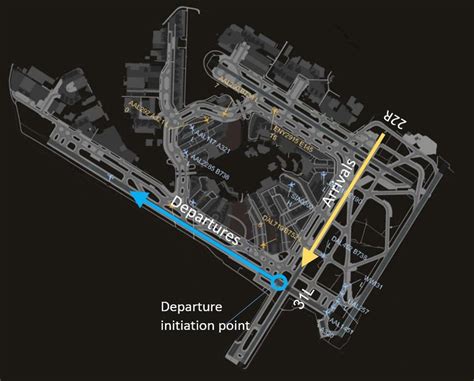
Rather than imposing sweeping curfews—which would be operationally complex in such a vital airspace—the Port Authority developed collaborative strategies with airlines and air traffic controllers. These include recommended early turns after departure to route aircraft over Jamaica Bay instead of residential Queens, and offset approach paths to minimize direct overflight of densely populated neighborhoods.
The concept of preferential runways is central. During late-night hours when traffic is lighter, specific runways are designated based on which flight paths produce the least community disturbance. The Port Authority monitors compliance and publicly grades airlines, encouraging voluntary adherence. The program’s transparency exerts subtle pressure; carriers benefit reputationally when they comply.
New York’s system demonstrates a distinctly American model: partnership instead of prohibition. Even without strict curfews, procedural optimization reduces cumulative noise exposure significantly.
San Francisco International Airport and the Landmark Noise Insulation Program
San Francisco International Airport (SFO) presents a different case study. Positioned along the edge of San Francisco Bay, much of its air traffic naturally departs and arrives over water. Geography itself acts as a noise buffer. Yet not all operations remain offshore. Certain departures from Runways 28L and 28R pass over populated neighborhoods before reaching the Pacific Ocean.
Recognizing procedural limits, SFO pioneered a groundbreaking approach in the 1980s: the Noise Insulation Program (NIP). Instead of solely adjusting aircraft operations, the airport invested directly in the built environment.
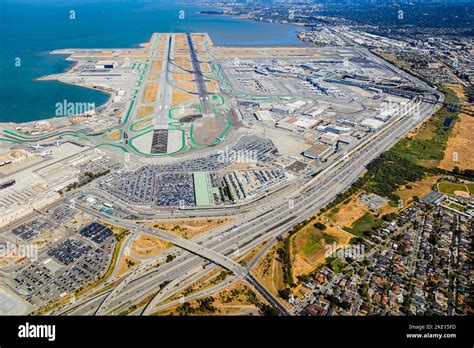
Under this initiative, properties exposed to noise levels exceeding 65 decibels became eligible for upgrades. These improvements include enhanced windows, reinforced doors, improved insulation, and advanced ventilation systems that allow residents to keep windows closed without sacrificing air circulation.
More than 15,200 homes, eight places of worship, and seven schools have been upgraded. The program reports over 90% homeowner satisfaction. Unlike punitive curfews, this model accepts that a global gateway airport will generate sound—and instead strengthens the resilience of surrounding structures.
SFO’s approach reflects long-term thinking. Rather than endlessly tweaking flight paths, it acknowledges physical constraints and invests in community adaptation.
San Diego International Airport: The Busiest Single-Runway Airport With a Curfew
San Diego International Airport (SAN) is a marvel of constrained efficiency. With over 200,000 annual aircraft movements, it is the busiest single-runway airport in the United States. Surrounded by dense urban development, it lacks the spatial luxury of many American airports.
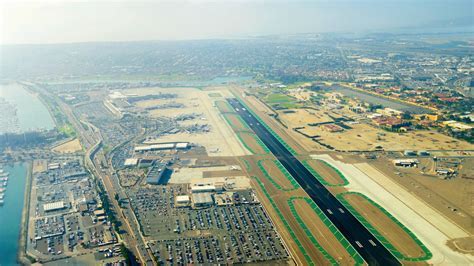
Arrivals to Runway 27 follow a notably steep descent path. Departures climb directly over residential neighborhoods before reaching the Pacific coastline. In response to persistent community concerns, SAN enforces one of the country’s most defined curfews: no departures between 11:30 p.m. and 6:30 a.m. Violations incur substantial fines.
Arrivals, interestingly, are not subject to the same prohibition, reflecting operational realities. Emergency and medical flights remain exempt. The airport also launched the Quieter Home Program, refurbishing nearly 6,000 homes with soundproofing enhancements.
San Diego demonstrates a hybrid model: limited curfew enforcement combined with structural mitigation. Despite its intense operational tempo and international connectivity—including nonstop flights to London, Amsterdam, Munich, and Tokyo—it maintains measurable community safeguards.
John Wayne Airport: America’s Strictest Noise Abatement Procedures
If one airport embodies procedural precision, it is John Wayne Airport (SNA) in Santa Ana, California. Serving affluent Orange County, the airport operates under some of the most stringent noise abatement rules in the United States.
Its primary runway, 20R/02L, measures just 5,700 feet—exceptionally short for commercial jet operations. Aircraft departing Runway 20R perform a dramatic maneuver. Pilots apply full takeoff thrust while holding the brakes. Upon release and rotation, the aircraft climbs at an unusually steep angle—approximately 25 degrees.
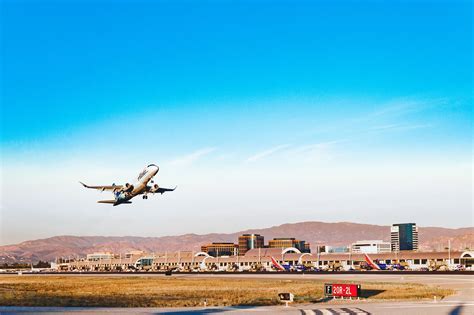
At 800 feet, thrust is reduced abruptly to lower noise output. The aircraft banks left and maintains a precise track until reaching the Pacific Ocean before initiating further turns. This procedure produces a distinct acoustic pattern: an initial surge of sound followed by a sudden quieting as power reduces.
John Wayne Airport enforces a strict curfew: no departures between 10:00 p.m. and 7:00 a.m., and no arrivals between 11:00 p.m. and 7:00 a.m., with extended Sunday restrictions. These measures are legally embedded, reflecting decades of negotiation between airport authorities and local residents.
The choreography required for each departure is extraordinary. Pilots operating from SNA undergo specific training to execute the climb profile accurately. The result is a high-density airport functioning under uniquely tight acoustic discipline.
Why Quiet International Airports Matter in Modern Aviation
Noise abatement is not merely a public relations exercise. Chronic exposure to elevated decibel levels correlates with stress, sleep disturbance, and cardiovascular strain. Airports that proactively mitigate noise protect public health and preserve property values.
At the same time, global connectivity demands flexibility. International airports anchor regional economies, facilitating tourism, trade, and business travel. The quietest American international airports reveal a delicate balancing act: economic vitality without acoustic excess.
Technological advancement continues to improve prospects. Next-generation aircraft like the Airbus A220 and Boeing 787 incorporate advanced engine and airframe designs that significantly reduce perceived noise footprints. Sustainable aviation fuels may further enable optimized engine performance profiles. Future electric or hybrid-electric regional aircraft promise even lower noise levels, particularly during takeoff and landing phases.
Yet infrastructure and policy will remain decisive. Curfews, preferential runways, insulation programs, and precise departure procedures all represent adaptive strategies. The United States’ quietest international airports illustrate that noise reduction does not require eliminating traffic; it requires intelligent design.
The Future of Quiet Flight in the United States
Looking ahead, the evolution of urban air mobility, electric vertical takeoff aircraft, and next-generation air traffic management systems will reshape the soundscape of cities. Airports that already maintain strong noise governance frameworks will be best positioned to integrate emerging technologies responsibly.
The quietest international airports still in operation today—JFK, Newark, LaGuardia, San Francisco, San Diego, and John Wayne—serve as living laboratories. They prove that even within the vast American aviation system, localized constraints can foster innovation.
Silence is impossible in aviation. Precision, restraint, and thoughtful policy are not. In a country defined by mobility and scale, these airports demonstrate that the roar of progress can, at least in part, be softened.