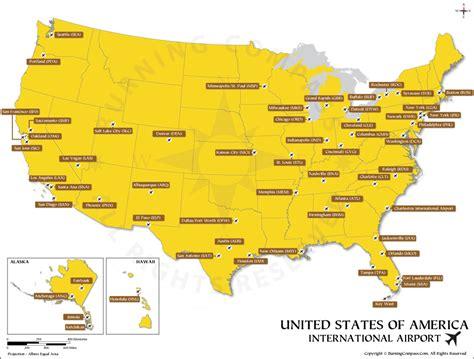
Isolation in aviation is not a poetic metaphor. It is a measurable, operational condition that shapes aircraft choice, scheduling reliability, public funding, and the daily lives of people who depend on air service not for convenience, but for survival. In the United States, some airports exist at the outer limits of geography, weather, infrastructure, and economics, operating in places where roads vanish, seas dominate, and terrain actively resists human movement. These facilities are not marginal footnotes in the aviation system. They are structural necessities, quietly holding together communities that would otherwise be functionally cut off from the rest of the country.
What makes an airport truly isolated is not simply distance from a major hub or low passenger numbers. Plenty of small airports sit near highways or rail lines and can afford to be optional. The airports that matter most in this discussion are those where aviation replaces surface transport entirely, where a missed flight is not an inconvenience but a cascading logistical failure. These airports operate under conditions that would be considered unacceptable elsewhere, yet they persist because the alternative is isolation in its most literal sense.
Across Alaska, the Pacific territories, Hawaii, and even parts of the continental United States, these airports function as medical corridors, supply lines, and administrative lifelines. Their continued operation reveals how American aviation adapts when market logic collapses and geography wins.
Understanding Isolation in the American Aviation System
The concept of isolation in US aviation resists simple ranking. Some facilities are isolated because there is no road access at all. Others are reachable by land in theory, but not reliably or safely. Still others sit behind regulatory, environmental, or cultural barriers that intentionally limit access. What unites them is that air service is not competing with other modes of transport. It is the mode.
From an operational standpoint, isolated airports expose the fixed-cost reality of aviation. Runway inspections, navigation aids, weather reporting, trained staff, fuel delivery, and emergency services do not shrink proportionally with demand. A community of a few hundred people still requires a runway that meets federal standards, still needs pilots willing to operate into marginal conditions, and still depends on schedules that work more often than they fail.
Public policy fills the gap. Programs like Essential Air Service (EAS), territorial subsidies, state ownership models, and tribal governance structures keep these airports alive. Without them, most would disappear overnight, not because they lack purpose, but because they lack profit.
Adak Airport: Military Scale at the End of the Aleutians
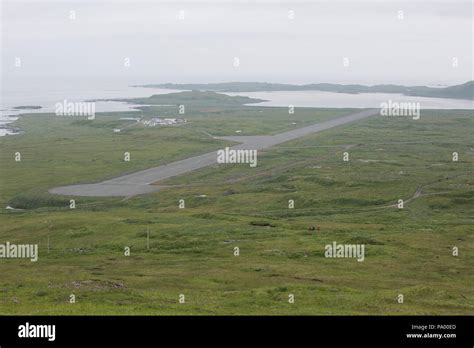
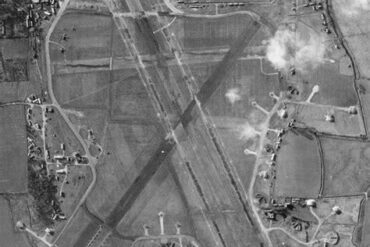
Adak Airport (ADK) occupies one of the most paradoxical positions in American aviation. Located on Adak Island at the far western edge of Alaska’s Aleutian chain, it sits closer to Asia than to most US cities. The surrounding environment is unforgiving: constant wind, heavy cloud cover, sudden storms, and cold maritime air that erases forecasts with little warning. Yet the airport itself is massive by local standards, boasting long runways and robust pavement inherited from its Cold War military past.
This contrast between infrastructure and demand defines Adak’s isolation. The airport can physically handle large aircraft, but the population it serves is tiny. Commercial flights are infrequent, fragile, and absolutely critical. When weather cancels a flight, there is no alternative route, no nearby airport to divert passengers by road, and no redundancy in the system. Everything from groceries to construction materials depends on those aircraft touching down.
Adak illustrates a key truth about isolation: it is not always correlated with minimal facilities. Some of the most isolated airports in the country are technically overbuilt, remnants of strategic priorities that no longer exist. What remains is a piece of global-scale infrastructure serving a hyper-local need, kept alive because removing it would sever the only reliable connection to the outside world.
Kalaupapa Airport: Isolation by Geography and Intent
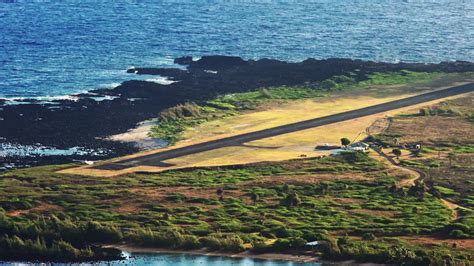
Kalaupapa Airport (LUP), on the island of Moloka‘i in Hawaii, represents a completely different form of isolation. Here, remoteness is not just imposed by nature, but reinforced by policy and history. The airport serves the Kalaupapa Peninsula, a place defined by towering sea cliffs, limited overland access, and a legacy as a former settlement for people with Hansen’s disease.
The runway is short, the approach constrained, and the surrounding terrain unforgiving. Expansion is neither practical nor desired. The airport exists to serve a specific community, not to attract traffic or stimulate growth. In this context, isolation is preserved rather than solved, with aviation providing controlled access instead of mass connectivity.
Passenger numbers hover in the low thousands annually, making Kalaupapa one of the quietest commercial airports in the United States. Yet its importance is disproportionate to its traffic. For residents, staff, and essential visitors, the airport is the safest and most reliable way in and out. Overland routes exist, but they are physically demanding and weather-dependent, unsuitable for routine logistics or emergency response.
Kalaupapa demonstrates how isolation can be institutional. The airport is not merely remote; it is deliberately limited, operating at the intersection of geography, culture, and public stewardship.
Ofu Airport: Outer-Island Aviation in American Samoa
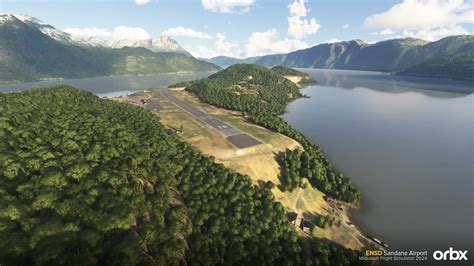
Ofu Airport (OFU) distills isolation to its purest form. Located on Ofu Island in American Samoa, it sits thousands of miles from the continental United States and far from major Pacific aviation corridors. The runway is short, the climate humid and storm-prone, and the operational margins thin. There is no illusion of redundancy here. Flights operate because they must.
In outer-island environments like Ofu, aviation compresses time in a way that fundamentally alters daily life. Medical care, education, government services, and family connections all hinge on the ability of small aircraft to move people and supplies across open water. Without air service, these activities would require days of planning and dependence on boats that are even more weather-sensitive.
From a systems perspective, Ofu highlights how US aviation extends beyond the fifty states into territories where isolation is the norm rather than the exception. These airports rarely appear in national discussions, yet they embody the most extreme operational challenges faced by American civil aviation.
Lava Falls Heliport: Vertical Isolation in the Grand Canyon
Lava Falls Heliport defies conventional airport definitions altogether. Serving Supai Village on the Havasupai Tribe reservation near the Grand Canyon, it is a private-use heliport embedded in one of the most dramatic landscapes in North America. There are no roads to the village. Access is limited to foot, mule, or helicopter, each constrained by weather, terrain, and physical endurance.
In this setting, aviation is not scheduled convenience. It is an emergency valve. Helicopter operations move medical patients, essential supplies, and time-sensitive cargo that cannot reasonably be transported any other way. Tribal governance controls access tightly, reflecting the fact that aviation here is inseparable from community autonomy.
The heliport underscores an often-overlooked reality: runways are not required for aviation to be essential. Isolation can be vertical as well as horizontal, shaped by cliffs, canyons, and elevation rather than distance alone. When weather shuts down flying, the fallback is a grueling trek out of the canyon, a reminder of how thin the margin really is.
Why These Airports Continue to Exist
The continued operation of America’s most isolated airports is not an accident. It is the result of deliberate decisions by federal agencies, state governments, territorial authorities, and tribal nations to prioritize access over efficiency. These airports would not survive under pure market conditions. Their value is social, not financial.
They also reveal how flexible the US aviation system can be when required. Aircraft types adapt, operating rules bend, and funding models evolve to meet the demands of places that refuse to fit standard templates. In many ways, these airports represent aviation stripped to its core purpose: moving people and goods when nothing else will.
The Bottom Line on America’s Most Isolated Airports
Isolation in US aviation is not a static ranking or a trivia question. It is a living condition that shapes infrastructure, policy, and human experience. From the wind-lashed runways of Adak to the cliff-bound strip at Kalaupapa, from the outer islands of American Samoa to a helicopter pad deep in the Grand Canyon, these facilities exist because they must.
They serve few passengers, generate little revenue, and operate under constant uncertainty. Yet removing them would fracture communities and erase access that cannot be replaced. In a country defined by mobility, these airports mark the edges of the system, where flight is not about speed or scale, but about connection in its most literal form.
As long as people live in places the map resists, the United States will continue to operate airports that look improbable, uneconomic, and utterly indispensable.