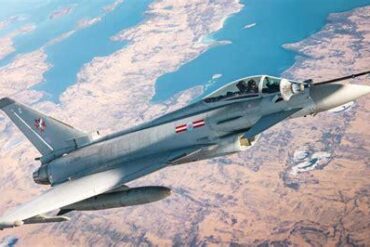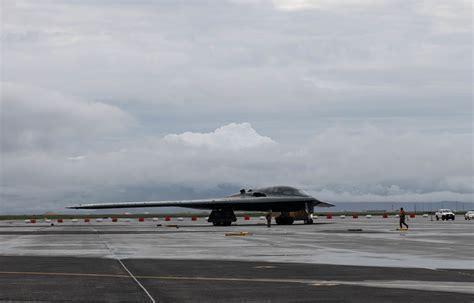
The Royal Air Force once operated from a sprawling network of stations that stretched across the British Empire, linking continents through military airpower and maritime dominance. Many of those outposts disappeared as colonies gained independence or as Cold War priorities shifted. Yet a small number of strategically positioned RAF bases remain active in some of the world’s most isolated regions. These installations are far more than lonely airfields surrounded by ocean, mountains, or frozen Atlantic winds. They are critical nodes in Britain’s defense architecture, acting as surveillance hubs, rapid-response launch points, intelligence centers, and logistical lifelines connecting the United Kingdom to distant territories and allied operations.
From the storm-lashed Scottish Highlands to the volcanic isolation of Ascension Island and the windswept Falklands, these remote stations reveal how geography still shapes military power in the twenty-first century. Distance creates vulnerability, but it also creates opportunity. The RAF’s remote bases allow Britain and its NATO allies to monitor strategic chokepoints, project force into unstable regions, and maintain sovereignty over overseas territories separated from London by thousands of miles of ocean.
What makes these bases remarkable is not merely their remoteness, but the scale of responsibility carried by relatively small detachments of personnel. In many cases, a single runway in the middle of nowhere can influence maritime security, nuclear deterrence patrols, anti-submarine warfare, or the balance of military influence across an entire region.
RAF Lossiemouth: Scotland’s Northern Shield
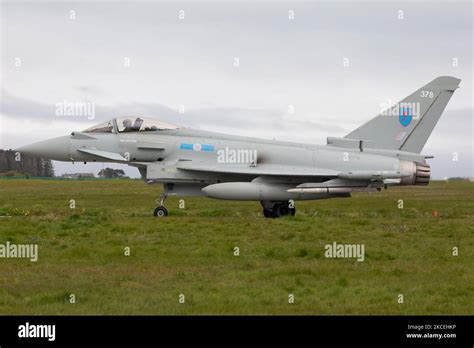
RAF Lossiemouth sits on the Moray coast in northeast Scotland, exposed to the harsh weather systems rolling in from the North Atlantic. Although technically located on mainland Britain, it is among the most geographically isolated active RAF fast-jet stations in the United Kingdom. Following the closure of RAF Leuchars as an operational air defense station, Lossiemouth became Scotland’s primary RAF base and one of the busiest military airfields in Europe.
The station plays a central role in protecting British airspace. Its Quick Reaction Alert mission ensures armed Eurofighter Typhoons can launch within minutes to intercept unidentified or hostile aircraft approaching UK-controlled skies. Russian military aircraft operating near NATO airspace are frequent targets of these intercept missions, especially bombers flying routes through the Arctic and North Atlantic approaches.
Lossiemouth also hosts the RAF’s fleet of Boeing P-8 Poseidon maritime patrol aircraft, which are tasked with anti-submarine warfare and maritime reconnaissance. This mission has grown increasingly important as Russian submarine activity in the North Atlantic has intensified. The location of Lossiemouth gives the RAF rapid access to the Greenland-Iceland-UK Gap, one of NATO’s most strategically important maritime corridors.
The surrounding Highlands amplify the sense of isolation. Winter storms regularly batter the airfield, and the base operates in conditions that test both aircraft and crews. Yet this harsh environment is precisely why the station is strategically valuable. From Lossiemouth, the RAF can monitor northern approaches to Britain while supporting NATO operations across the Arctic region.
RRH Benbecula: Britain’s Silent Atlantic Watchtower
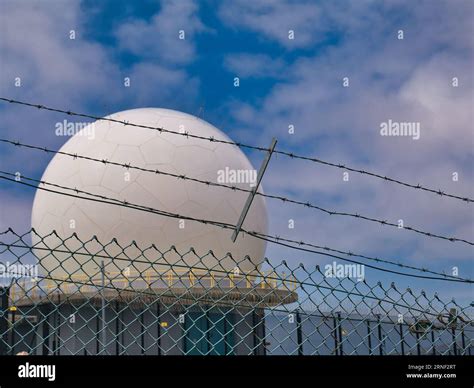
RRH Benbecula does not receive the same public attention as larger RAF stations, yet its importance to British air defense is immense. Located in the Outer Hebrides approximately sixty miles west of mainland Scotland, the radar installation sits in one of the most remote inhabited parts of the British Isles.
Originally operating as RAF Benbecula, the site evolved into a Remote Radar Head integrated into the UK’s Air Surveillance and Control System. Today, it functions largely unmanned, relying on advanced systems capable of continuously monitoring air traffic across the North Atlantic.
Its Lockheed Martin TPS-77 radar is designed to detect aircraft at extremely long ranges, including military bombers approaching from the Arctic. The station forms part of NATO’s broader early-warning network and contributes directly to the RAF’s Quick Reaction Alert operations. Every unidentified aircraft approaching British airspace from the northwest is likely detected first by radar systems such as those at Benbecula.
The isolation of the station is striking. The Outer Hebrides are known for fierce Atlantic storms, sparse populations, and dramatic coastlines where communication with mainland Britain once depended entirely on ferries and weather conditions. Even in the digital era, the remoteness reinforces the strategic advantage of the site. Its unobstructed position facing the Atlantic provides radar coverage impossible to replicate from more urbanized locations.
Although there are no fighter squadrons permanently stationed there, RRH Benbecula serves as one of the invisible guardians of British airspace. Without installations like this, Britain’s northern radar shield would contain dangerous gaps.
RAF Gibraltar: Guardian Of The Mediterranean Gateway

For more than three centuries, Gibraltar has been one of Britain’s most strategically significant military possessions. Located at the narrow entrance to the Mediterranean Sea, the territory controls one of the world’s most important maritime chokepoints. Every vessel entering or leaving the Mediterranean must pass near the Rock of Gibraltar, making the area invaluable for both naval and air operations.
RAF Gibraltar occupies a narrow strip of land squeezed between the famous limestone rock and the Spanish border. The runway itself became globally recognizable because a public road once crossed directly over it, forcing traffic to halt whenever aircraft landed or departed. While a tunnel completed in 2023 reduced that unusual spectacle, the airfield remains one of the most visually dramatic military airports in the world.
Strategically, Gibraltar functions as a staging and refueling base for aircraft moving between Britain, Africa, and the Middle East. Heavy transport aircraft including the Airbus A400M Atlas and Boeing C-17 Globemaster III frequently transit through the base carrying personnel, vehicles, and military cargo.
The location also supports Royal Navy operations in the Mediterranean and Atlantic. British submarines and warships use Gibraltar as a logistical support point, while RAF aircraft benefit from rapid access to southern Europe and North Africa.
Its distance from mainland Britain, over 1,000 miles away, gives Gibraltar a frontier-like atmosphere despite its urban surroundings. The base is small compared to major RAF stations, but its strategic value far exceeds its size. In military terms, Gibraltar remains the locked gate controlling access between two continents.
RAF Akrotiri: Britain’s Middle Eastern Air Bridge
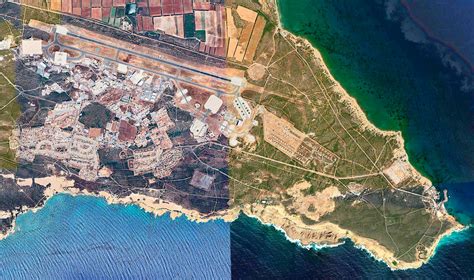
RAF Akrotiri in Cyprus represents one of the RAF’s most active overseas stations and one of the most strategically important military bases in the Eastern Mediterranean. Retained by Britain after Cypriot independence in 1960, the base operates as part of the UK Sovereign Base Areas on the island.
Its location places it within operational reach of the Middle East, North Africa, and parts of Eastern Europe. This geographical advantage has transformed Akrotiri into a critical forward operating hub for British and allied military operations.
Typhoon fighter jets based there have participated in operations targeting hostile drones and missile threats across the Middle East. The station also supports intelligence-gathering flights, surveillance missions, aerial refueling operations, and military transport movements. RAF aircraft departing Akrotiri can rapidly reach hotspots across the region without relying on longer deployment chains from Britain itself.
The base has also served humanitarian purposes. During regional crises, Akrotiri has acted as an evacuation center and logistics platform for aid deliveries. Its role extends beyond combat operations into broader regional stability efforts.
Unlike smaller remote installations, Akrotiri functions almost like a miniature military city. Personnel from multiple services rotate through the base, and aircraft movement remains constant throughout the year. Yet despite its activity, its separation from Britain by roughly 2,000 miles means the station must operate with considerable self-sufficiency.
The strategic logic behind Akrotiri is straightforward: control a stable airbase near volatile regions, and rapid military response becomes possible. In an era of unpredictable crises across the Middle East, that capability remains indispensable.
Naval Support Facility Diego Garcia: The Indian Ocean Fortress
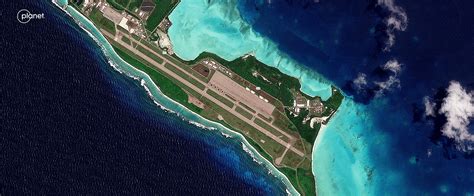
Diego Garcia is among the most isolated military facilities on Earth. Located deep within the Indian Ocean, thousands of miles from major population centers, the atoll serves as a massive joint UK-US military platform. Officially operated primarily by the United States, the facility still sits on British territory within the British Indian Ocean Territory.
The airfield’s remoteness is its greatest strategic strength. Surrounded by vast ocean, the base provides a secure location from which long-range bombers, surveillance aircraft, and naval forces can operate with reduced vulnerability to attack.
The United States has transformed Diego Garcia into a critical power-projection hub capable of supporting operations across the Middle East, East Africa, and the Indo-Pacific. Strategic bombers including the B-52 Stratofortress and stealthy B-2 Spirit have operated from the island during periods of heightened tension involving Iran and regional security threats.
Although the RAF does not permanently base combat aircraft there, British military personnel maintain a presence connected to administrative and sovereignty responsibilities. RAF aircraft also use the facility during exercises and transit operations.
Military planners often describe Diego Garcia as an “unsinkable aircraft carrier.” Unlike naval carriers vulnerable to missile attacks or mechanical limitations, the atoll provides a fixed and heavily defended runway system capable of sustaining high-tempo operations over long periods.
Its location roughly 6,000 miles from Britain highlights how modern British defense strategy still depends on overseas positioning. From Diego Garcia, allied airpower can influence events across an enormous geographic area stretching from the Persian Gulf to Southeast Asia.
RAF Ascension Island: The Mid-Atlantic Lifeline
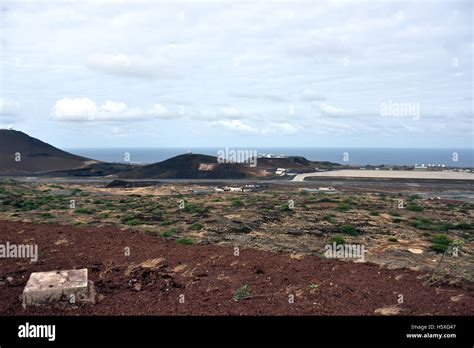
Ascension Island appears almost surreal when viewed from the air. Rising from the middle of the Atlantic Ocean, the volcanic island is one of the most isolated inhabited places on Earth. Yet its Wideawake Airfield has become indispensable to Britain’s military logistics network.
The island gained enormous importance during the Falklands War in 1982 when it served as the staging ground for long-range bombing raids and resupply missions traveling to the South Atlantic. Since then, its strategic role has only expanded.
Today, the RAF and United States Space Force jointly operate facilities on the island. Wideawake Airfield supports aerial refueling, cargo operations, communications systems, and satellite tracking infrastructure. Aircraft flying between Britain and the Falkland Islands frequently stop there, making the base a critical bridge across the Atlantic.
The island’s isolation also makes it ideal for space-tracking and communications operations. Its location provides uninterrupted coverage over large sections of the Atlantic, enhancing both military and civilian satellite capabilities.
Life on Ascension Island is famously remote. There are no indigenous inhabitants, and most residents are military personnel, contractors, or support workers. Supplies arrive primarily by air or sea, and the nearest continental landmasses are thousands of miles away.
Despite its small size, the island holds enormous strategic significance. Without Ascension Island, sustaining British military operations in the South Atlantic would become dramatically more difficult.
RAF Mount Pleasant: Britain’s South Atlantic Stronghold
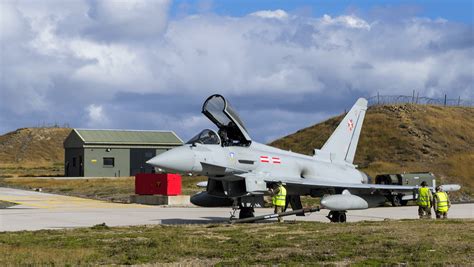
RAF Mount Pleasant in the Falkland Islands stands as Britain’s most remote and politically significant airbase. Built after the 1982 Falklands War, the station transformed Britain’s ability to defend the islands against future aggression.
Located approximately 8,000 miles from the United Kingdom, the base operates in one of the harshest military environments anywhere in the world. Powerful winds, freezing temperatures, and geographic isolation create constant logistical challenges. Yet the station remains fully operational year-round, sustaining a permanent military presence in the South Atlantic.
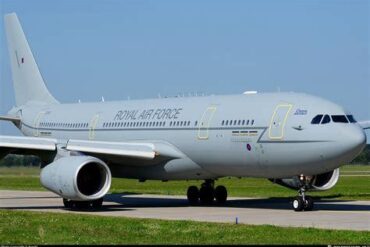
The RAF typically maintains a detachment of Eurofighter Typhoons, supported by Voyager tanker aircraft and Airbus A400M transports. These aircraft provide air defense, transport capability, and rapid-response capacity across the region.
Mount Pleasant is more than a military base. It serves as a critical transportation link connecting the Falklands to Britain and the outside world. Regular RAF-operated flights transport personnel, equipment, and civilians between the islands, Ascension Island, and RAF Brize Norton in England.
The psychological value of the base is just as important as its military role. Its existence demonstrates Britain’s long-term commitment to defending the Falkland Islands and maintaining sovereignty in the South Atlantic.
Few airbases on Earth combine such extreme remoteness with such geopolitical importance. Mount Pleasant exists as a fortress at the edge of the world, projecting British military presence into one of the planet’s most isolated regions.