The United States Navy operates one of the most capable aviation networks on Earth. Aircraft carriers often receive the spotlight, but the land bases that train crews, maintain aircraft, test new systems, and generate combat power are just as important. Without these massive air stations, carrier air wings would not deploy, maritime patrol missions would stall, and the pipeline producing new naval aviators would slow to a crawl.
These installations are more than runways and hangars. They are strategic engines that support fighter squadrons, helicopter units, reconnaissance fleets, logistics aircraft, and next-generation stealth programs. Some specialize in training, others in frontline readiness, while a few exist at the sharp edge of technology development.
Measured by the number of permanently based aircraft, several Navy air stations stand far above the rest. Together, they represent the backbone of American naval aviation from coast to coast.
The following ranking explores the six largest US Navy air stations by number of based aircraft, what flies there, and why each base remains essential to national defense.
6. Chambers Field (NAS Norfolk) – Around 100 Aircraft
Located within the wider Naval Station Norfolk complex in Virginia, Chambers Field—commonly associated with NAS Norfolk—serves a mission very different from a pure fighter base. Instead of rows of strike jets dominating the ramps, this installation supports command-and-control, logistics, helicopter, and fleet sustainment operations.
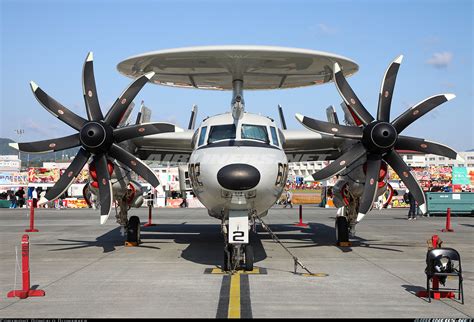
The air station is especially known as a major hub for the E-2 Hawkeye, the carrier air wing’s airborne early warning aircraft. Easily recognized by the rotating radar dome mounted above the fuselage, the Hawkeye acts as the eyes and battle manager of naval aviation. It detects threats at long range, coordinates fighters, and extends the awareness of carrier strike groups far beyond the horizon.
Chambers Field also hosts V-22 Osprey tiltrotors, utility helicopters, and the powerful MH-53 Sea Dragon, one of the largest helicopters in Western service. Its location beside the world’s largest naval base gives it unmatched access to carrier piers, amphibious ships, and logistics terminals.
That geography matters. Aircraft, passengers, spare parts, and urgent cargo flow through Norfolk constantly. When carriers prepare to deploy, Chambers Field becomes a staging platform where aviation support meets maritime power in real time. It may not have the glamour of a jet base, but it is one of the Navy’s most practical and operationally valuable airfields.
5. NAS Jacksonville – Around 100 Aircraft
Florida’s NAS Jacksonville, often simply called JAX, is a heavyweight in maritime patrol and anti-submarine warfare. While fighter jets often dominate headlines, controlling the seas depends heavily on detecting submarines, tracking vessels, and conducting wide-area surveillance. Jacksonville is central to that mission.
Its most visible resident is the Boeing P-8A Poseidon, the modern replacement for the legendary P-3 Orion. Based on the Boeing 737 airframe, the Poseidon combines speed, range, sensors, and networked warfare tools that make it one of the world’s premier maritime patrol aircraft.
The station also hosts multiple MH-60R Seahawk helicopter squadrons. These aircraft hunt submarines, support surface warfare, conduct rescue missions, and extend the sensor reach of warships at sea. Add in unmanned systems such as the MQ-4C Triton, plus Navy transport aircraft like the C-40 Clipper, and Jacksonville becomes a remarkably diverse aviation center.
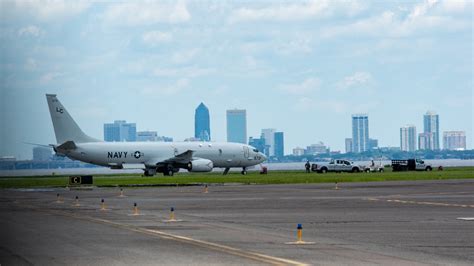
Beyond aircraft numbers, Jacksonville carries strategic weight through training ranges and operational support infrastructure. It controls major ranges including the East Coast’s only Navy live-fire range complex. That makes it a vital readiness platform, not merely a parking location.
JAX also carries heritage value: it was the birthplace of the Blue Angels in 1946. Some bases generate sorties. Jacksonville generates history too.
4. NAS Patuxent River – Around 140 Aircraft
If the Navy flies it, chances are NAS Patuxent River helped create, refine, or certify it. Known widely as Pax River, this Maryland installation is the Navy’s premier aviation research, development, testing, and evaluation center.
Unlike operational fleet bases where aircraft types are concentrated, Pax River hosts an unusually broad inventory. Fighters, helicopters, drones, patrol aircraft, trainers, and experimental systems may all be seen on the same day. Its roughly 140 aircraft span dozens of models and mission sets.
This is where the F/A-18 Super Hornet, F-35C Lightning II, P-8 Poseidon, and MQ-4C Triton undergo testing, upgrades, and systems integration. New radar packages, electronic warfare suites, weapons software, and survivability improvements often pass through Pax River before reaching operational squadrons.
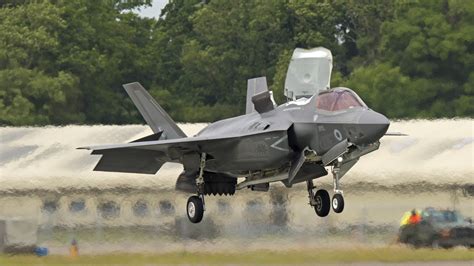
Its location on a peninsula near the Chesapeake Bay offers restricted airspace and access to sea-level testing conditions—ideal for sensitive flight trials. Long runways, laboratories, telemetry facilities, and specialized test chambers give engineers and pilots a rare full-spectrum environment.
Pax River is also home to elite pilot training programs and has strong ties to NASA. Nearly a hundred astronauts studied there over time, including icons such as John Glenn and Alan Shepard.
Operational bases may launch combat missions, but Pax River launches the future.
3. NAS Lemoore – Around 200 Aircraft
In California’s Central Valley sits NAS Lemoore, the Navy’s dominant West Coast jet base. If you are looking for concentrated strike fighter power in the Pacific theater, this is where much of it begins.
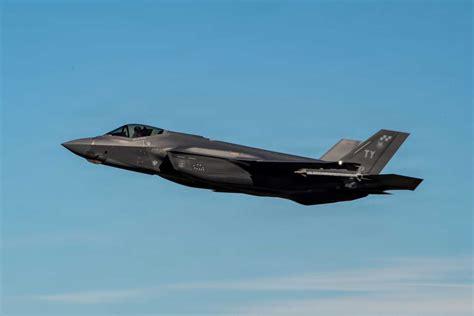
Lemoore hosts numerous operational squadrons, training units, and carrier air wing components. It is particularly important because it fields both the battle-proven F/A-18E/F Super Hornet and the Navy’s carrier-capable stealth fighter, the F-35C Lightning II.
As the Navy modernizes, Lemoore has become a focal point for the transition from fourth-generation to fifth-generation carrier aviation. More F-35C squadrons continue to stand up there, making the base a centerpiece of future Pacific readiness.
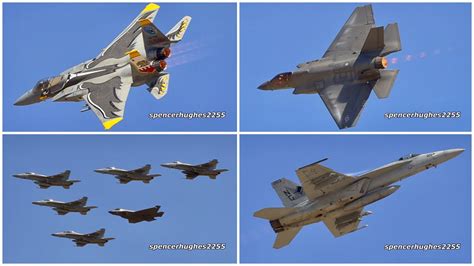
The base’s remote location is actually a strength. Surrounded by broad agricultural land buffers, pilots can conduct high-tempo training with fewer noise conflicts than urban bases face. That allows realistic operations, frequent sorties, and sustained readiness.
Lemoore was purpose-built as a jet base, and it shows. Its infrastructure supports heavy fighter traffic, maintenance depth, ordnance handling, and rapid squadron deployment cycles. For any future naval contingency in the Pacific, expect Lemoore to be heavily involved from day one.
2. NAS Oceana – Around 250 Aircraft
If Lemoore owns the West Coast fighter mission, NAS Oceana dominates the East Coast. Located in Virginia Beach, Oceana is one of the busiest military airfields in the United States and a critical concentration point for Navy strike fighters.
The station is home to a large number of Super Hornet squadrons, with constant training activity, deployments, and transient aircraft movements. Electronic attack aircraft, logistics transports, Hawkeyes, Ospreys, and visiting units frequently cycle through the base.
Its daily pace is intense. Hundreds of operations can occur in a single day, reflecting the demand placed on East Coast naval aviation forces. Nearby NALF Fentress supports carrier landing practice, where pilots rehearse the demanding approaches required for carrier decks. It is where many aviators become very humble, very quickly.
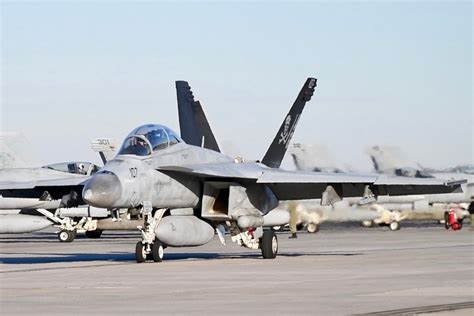
Oceana also carries deep cultural significance. It once housed the iconic F-14 Tomcat, and today it hosts one of the Navy’s largest public outreach events—the NAS Oceana Air Show, drawing massive crowds annually.
Because it sits near a growing metropolitan area, Oceana balances military necessity with urban development pressures. Even so, its strategic importance remains unquestioned. On the Atlantic side of the country, few aviation installations matter more.
1. NAS Whiting Field – 250+ Aircraft
The largest Navy air station by based aircraft is not a flashy fighter hub—it is NAS Whiting Field in Florida. Numbers alone place it at the top, but its true importance comes from mission volume. Whiting Field is one of the busiest military training airfields anywhere in the world.
Its fleet includes more than 250 aircraft, primarily trainers and helicopters. These include the T-6B Texan II for fixed-wing instruction and rotary-wing training platforms such as the TH-73A Thrasher and legacy helicopter trainers.
Why so many aircraft? Because Whiting Field trains the next generation of aviators for the US Navy, Marine Corps, and Coast Guard. Initial rotary-wing training is heavily centered here, and a large share of primary flight training also flows through the base.
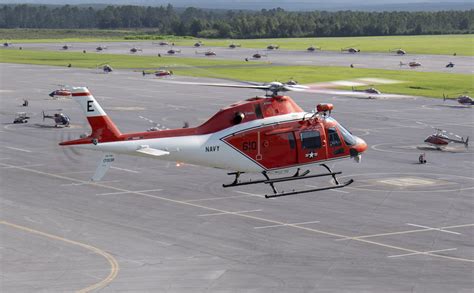
The operational tempo is enormous, with training sorties reaching staggering annual totals. To sustain that rhythm, Whiting uses multiple airfields and a network of outlying landing fields. Student pilots cycle constantly through takeoffs, landings, navigation routes, emergency procedures, and instrument training.
Every advanced pilot once needed a first solo, a first landing, and a first instructor correction delivered with suspicious enthusiasm. Many of those moments happen at Whiting.
Though less glamorous than a fighter base, Whiting may be the most essential station on this list. Without it, the pipeline producing future Navy aviators would slow dramatically.
Why These Air Stations Matter to US Naval Power
These six bases reveal how naval aviation actually works. It is not just carriers at sea. It is a complete ecosystem.
- Whiting Field creates pilots.
- Oceana and Lemoore generate fighter power.
- Jacksonville protects oceans through patrol aviation.
- Norfolk sustains deployed fleets.
- Patuxent River builds tomorrow’s capability.
Together, they allow the Navy to project power globally, defend sea lanes, support allies, deter rivals, and rapidly respond to crises.
Final Thoughts
The largest US Navy air stations by number of based aircraft are more than statistics on a spreadsheet. They are specialized hubs where people, machines, and doctrine combine into combat readiness. Some bases roar with fighters, others hum with trainers, patrol aircraft, or test programs—but each fills a mission no other site can easily replace.
When carrier strike groups sail, when submarines are tracked, when stealth jets evolve, and when new aviators earn their wings, these air stations are already at work. That is the real story behind the numbers.