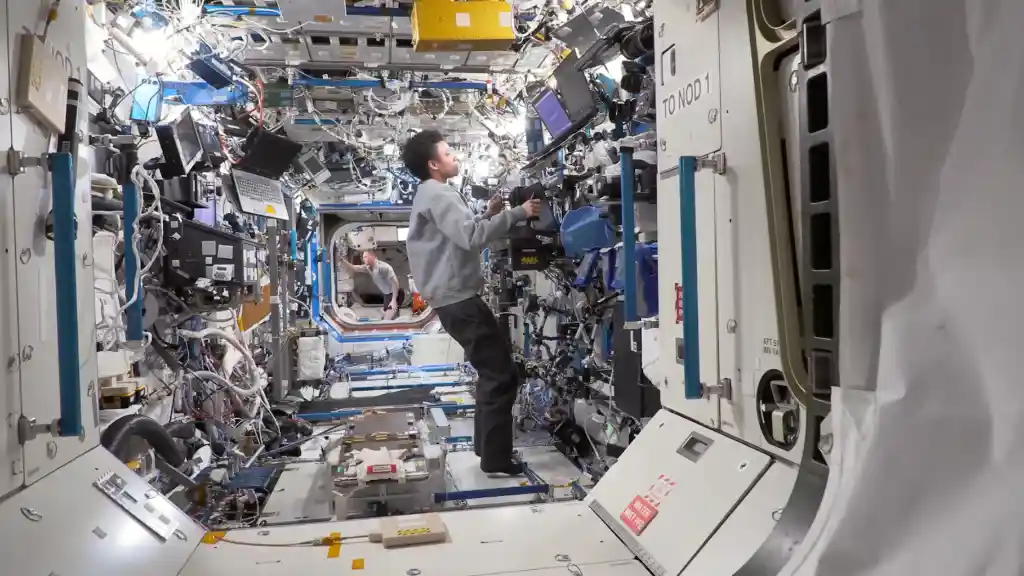
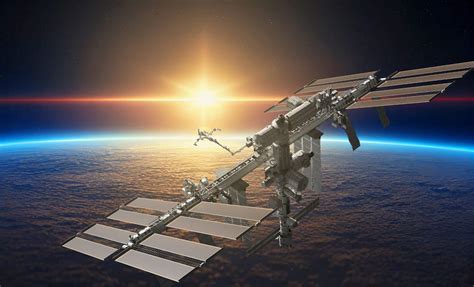
Humanity’s image of life in orbit has long been dominated by the International Space Station, a sprawling lattice of modules circling Earth every 90 minutes. Yet space habitation has quietly moved beyond a single symbol. Over the past decade, orbital infrastructure has entered a new phase defined by national ambition, commercial competition, and deep-space preparation. The ISS remains central, but it no longer stands alone as the sole example of a functioning or planned space station.
This shift reflects a deeper transformation in how space is approached. Where the ISS represented post–Cold War cooperation, today’s stations reveal a multipolar orbital ecosystem. Governments seek strategic autonomy, private companies pursue economic opportunity, and international coalitions prepare for exploration far beyond low Earth orbit. Together, these efforts answer a growing question: are there other space stations like the ISS, and what do they mean for the future of humans in space?
The answer is not only yes, but increasingly so. Some stations already operate independently, others are nearing launch, and a new generation is being designed for the Moon and beyond. Each has its own scale, purpose, and philosophy, redefining what a space station can be.
Tiangong Space Station and China’s Orbital Independence
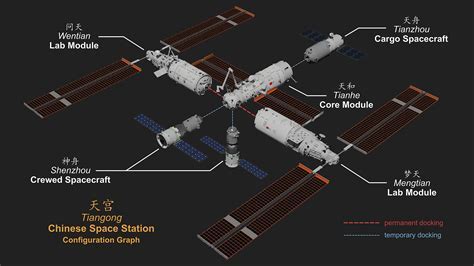
China’s Tiangong space station, whose name translates to Heavenly Palace, represents the most direct counterpart to the ISS currently in operation. Orbiting Earth at roughly 340 to 450 kilometers, Tiangong is a fully modular, permanently crewed station designed, built, and operated entirely by China. Its existence marks a decisive moment in space history: the emergence of parallel, self-sufficient human outposts in low Earth orbit.
Structurally, Tiangong consists of the Tianhe core module, which houses living quarters and life-support systems, and two laboratory modules, Wentian and Mengtian, dedicated to scientific research. Though smaller than the ISS, it is carefully optimized for efficiency and long-term habitation, supporting three taikonauts continuously and up to six during crew transitions. Its planned operational lifespan of 10 to 15 years ensures sustained human presence well into the 2030s.
Life aboard Tiangong reflects lessons learned from decades of orbital living. Adjustable lighting recreates Earth’s day-night cycle, helping regulate circadian rhythms. Advanced life-support systems maintain Earth-like air quality, while specialized equipment, including a zero-gravity oven, allows astronauts to enjoy familiar meals. Scientific work spans biotechnology, materials science, space medicine, and fluid physics, with even small animals such as mice participating in microgravity studies.
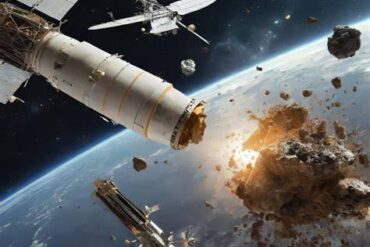
Operational challenges have underscored the complexity of orbital life. Incidents involving space debris damage required extended crew stays and contingency launches, highlighting both the risks of low Earth orbit and China’s growing ability to respond autonomously. Tiangong stands not merely as an alternative to the ISS, but as proof that independent orbital ecosystems are now viable.
Haven-1 and the Rise of Commercial Space Stations
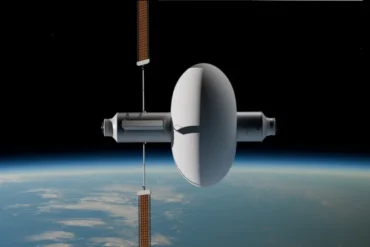
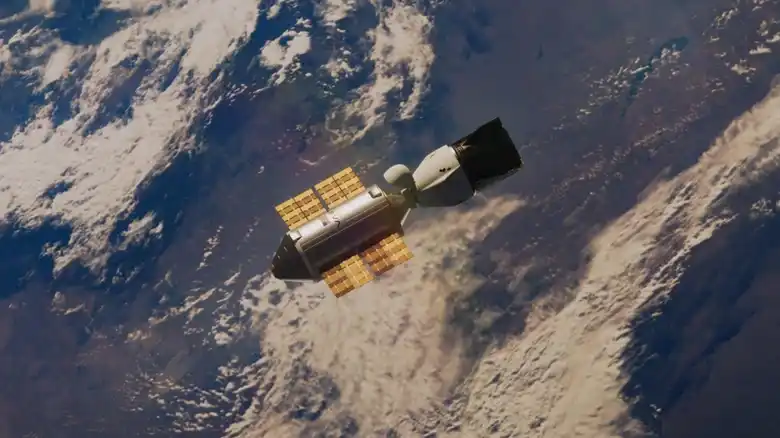
While national stations redefine sovereignty in orbit, the most radical change comes from the private sector. Haven-1, developed by California-based startup Vast, is poised to become the world’s first commercial space station. Scheduled for launch no earlier than May 2026, Haven-1 represents a fundamental shift: space habitation no longer reserved solely for governments.
Haven-1 is intentionally compact, offering approximately 45 cubic meters of pressurized volume and accommodating four astronauts for missions lasting from ten days to a month. Launched aboard a SpaceX Falcon 9 and serviced by Crew Dragon, the station leverages existing launch infrastructure to minimize cost and risk. Unlike the ISS, it is not intended as a decades-long habitat but as a proof of concept for a much larger successor, Haven-2.
Inside, the station is designed as a flexible laboratory environment. Modular payload racks support experiments in biotechnology, pharmaceutical research, and materials manufacturing, fields where microgravity offers unique advantages. Commercial astronauts, researchers, and international partners are all expected to participate, blurring the line between science mission and private enterprise.
The significance of Haven-1 lies less in its size than in its symbolism. It demonstrates that orbital real estate can be privately owned, operated, and monetized, potentially transforming low Earth orbit into an extension of the global economy. If successful, it could help replace the ISS after its planned retirement, ensuring continuity of human presence without relying solely on government funding.
Gateway Lunar Space Station and Deep-Space Strategy
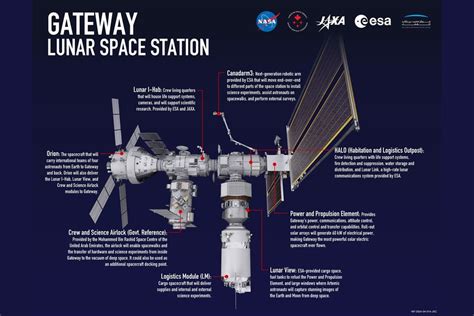
Beyond Earth’s orbit, a very different kind of station is taking shape. Gateway, the first planned lunar space station, will orbit the Moon rather than Earth, serving as a staging point for surface missions and deep-space exploration. Developed under NASA’s Artemis program, Gateway is designed not as a destination, but as an enabler.
Unlike the ISS, Gateway will be small and highly specialized. Its initial configuration includes two primary elements: a habitat and logistics module for crew operations and a power and propulsion element responsible for maintaining its unique orbit. Positioned in a near-rectilinear halo orbit, Gateway will maintain stable access to both the lunar surface and deep space, something no Earth-orbiting station can offer.
International collaboration remains central. Partners from Europe, Canada, Japan, and the United Arab Emirates contribute modules, robotics, and technology, ensuring Gateway continues the cooperative legacy of the ISS while extending it beyond Earth. Launches are planned using the Falcon Heavy, with the first elements expected no later than 2027.
Gateway’s role extends far beyond the Moon. It will function as a testbed for long-duration deep-space living, radiation exposure management, and autonomous operations, all critical for future human missions to Mars. In this sense, Gateway is less a replacement for the ISS and more a bridge between Earth orbit and interplanetary travel.
Future National Stations and a Multipolar Orbit
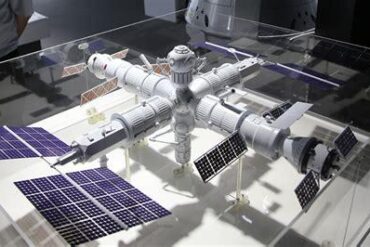
China is not alone in planning independent orbital platforms. India and Russia have both announced intentions to develop their own space stations in the 2030s, each reflecting distinct strategic priorities. For India, a national station would support human spaceflight ambitions following its Gaganyaan program, while Russia seeks to replace its ISS participation with a platform tailored to its technological preferences.
At the same time, commercial consortia such as Axiom Space, Orbital Reef, and Starlab are developing modular stations intended to host mixed crews of government astronauts, private citizens, and researchers. These projects envision orbit as a shared marketplace rather than a single international outpost, with specialized stations serving medicine, manufacturing, tourism, and research.
This diversification signals a decisive break from the era when one station defined human presence in space. Instead, multiple platforms with overlapping lifespans and purposes will coexist, each contributing to a resilient orbital infrastructure.
A New Era of Human Habitation in Space
The ISS remains one of humanity’s greatest engineering achievements, but it is no longer the sole blueprint for life beyond Earth. From China’s Tiangong to private habitats like Haven-1 and the lunar Gateway, space stations are evolving in form, ownership, and ambition. Together, they reflect a future where orbit is not a singular destination, but a layered environment supporting science, commerce, and exploration.
As these stations multiply, human presence in space becomes more robust and more diverse. The question is no longer whether there are other space stations like the ISS, but how these new habitats will redefine humanity’s relationship with space itself.