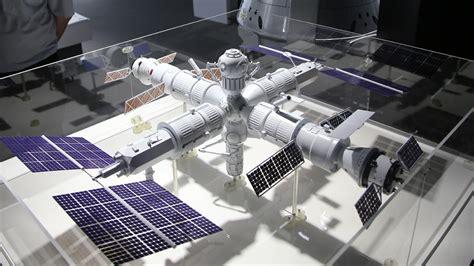
The future of the International Space Station (ISS) is now officially tied to its end-of-life mission: a controlled descent into the Pacific Ocean. But Russia is charting a different course for its own half of the ISS. Instead of letting its aging modules sink beneath the waves, Roscosmos intends to recycle its segment as the foundation for the Russian Orbital Station (ROS)—a dramatic pivot in the country’s long-stated goals for independent space exploration.
A Shift in Strategy: From Sovereign Ambitions to Salvaged Solutions
When Roscosmos first unveiled plans for the Russian Orbital Station, the vision was unapologetically ambitious. Russia aimed to break free from reliance on Kazakhstan’s Baikonur Cosmodrome by launching its new space station from the Vostochny Cosmodrome, a fledgling launch facility in the Russian Far East. The station was planned to orbit in a north-south polar trajectory, allowing full coverage of Russian territory and enhancing national security through domestic oversight.
However, this dream was not destined for lift-off. Russia’s 2022 invasion of Ukraine set off a cascade of economic fallout, including sweeping sanctions, capital flight, and isolation from global aerospace cooperation. The country’s economy could no longer sustain an entirely new orbital project. As a result, the original ROS plans were quietly dismantled.
Oleg Orlov, director at the Institute of Biomedical Problems of the Russian Academy of Sciences, confirmed what many in the space community suspected: the new ROS will now be cobbled together using Russia’s existing ISS infrastructure.

A Station in Decay: The Condition of Russia’s ISS Segment
Recycling parts of the ISS may sound sustainable, but in reality, the condition of the Russian modules presents enormous risks. Many components have been in space since the early 2000s, operating well past their designed lifespans. According to NASA and independent engineers, the Russian segment of the ISS has become a maintenance black hole.
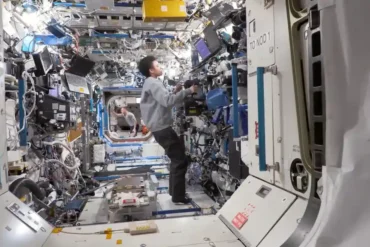
Cosmonauts reportedly spend up to half their time on maintenance tasks, instead of science or research. This is not a new phenomenon. Even before geopolitical tensions escalated, Roscosmos was already pushing for funding a new station by warning about the deteriorating conditions aboard its modules.
There are real threats beyond aging wiring and outdated control systems. One of the most insidious risks is biological contamination. Orlov highlighted the accumulation of bacteria and fungi that have mutated in space. These organisms thrive in microgravity, high-radiation environments, and elevated CO2 levels—creating unique biohazards to both humans and electronics.
Air Leaks and Cracks: The Structural Integrity Crisis
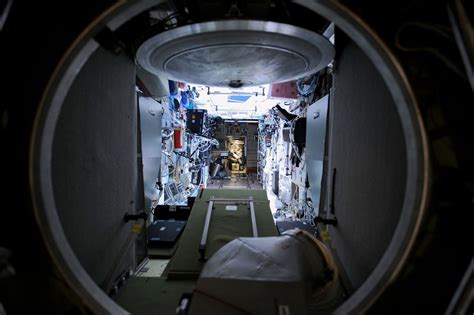
The structural degradation of the Russian half has also become a serious issue. In late 2024, NASA documented that over three pounds of air were leaking daily from the ISS, traced to fine cracks in the vestibule that links the Zvezda service module and the PrK transfer tunnel.
The situation became so tense that NASA began keeping the hatch between the American and Russian segments closed whenever the tunnel was in use. The fear of a catastrophic decompression event was not merely theoretical—it was seen as a plausible emergency scenario.
The Economics of Reuse: Cost as the Driving Force
Russia’s decision to salvage ISS parts isn’t based purely on technical evaluations—it’s a matter of economic survival in space. Building a space station from scratch, particularly in a polarized orbit, requires billions of rubles and access to a stable supply chain. Western sanctions, trade restrictions, and the war effort have siphoned resources from space development.
By choosing to reuse the ISS modules, Russia avoids the need for immediate infrastructure investments. This decision also forces a return to launches from Baikonur, since maintaining the ISS orbit (an inclination of approximately 51.6 degrees) requires using launch facilities at that latitude.
While Roscosmos claims this orbit was selected to enable future cooperation with India’s planned space station, experts widely believe that budget constraints are the primary motivator.
From Biolab to Biohazard: The Growing Microbial Menace
The presence of mutated microbes aboard the ISS is not a fringe concern. NASA’s studies have shown that microorganisms in space evolve rapidly, exhibiting antibiotic resistance, enhanced biofilm formation, and faster reproduction cycles.
On Earth, such evolution is rare and slow. In space, the conditions accelerate it. These biological changes could pose serious threats to cosmonauts’ health and to the functioning of sensitive systems, especially those controlling navigation, power, and environmental regulation.
Orlov acknowledged that any new station built from old ISS parts must undergo thorough decontamination and retrofitting. However, given the constraints, it is unclear whether Russia possesses the funding or technology to perform such high-precision upgrades.
Geopolitical Symbolism and National Pride
Russia’s space program has long been a source of national pride and geopolitical symbolism. The legacy of Sputnik, Yuri Gagarin, and Mir still commands reverence. But today, Roscosmos operates in a very different global environment—marked by technological lag, political isolation, and budget shortfalls.
Recycling the ISS segments instead of pioneering a new platform underscores the reality of diminished capabilities. Still, by salvaging what it can, Russia is staking its claim to remain a sovereign player in orbit, even if that role is now significantly scaled back.
There’s also a deep irony in returning to Baikonur, the site from which every major Soviet and Russian space mission launched, while symbolizing a future shackled by economic limitations and geopolitical dependence.
Future Collaborations and the India Connection
One of the most surprising justifications for maintaining the ISS orbit is to enable potential collaboration with India, which has its own plans to deploy a national space station in the 2030s. While no formal joint missions have been announced, orbital compatibility is the first step toward such cooperation.
India has already demonstrated significant capability with the Gaganyaan human spaceflight program, Chandrayaan lunar missions, and successful Mars Orbiter. Partnering with India would not only offer technological synergy but also allow Russia to diversify its international partnerships beyond traditional allies.
Whether this partnership materializes or remains a diplomatic talking point remains to be seen. The logistical and operational hurdles of international station cohabitation are considerable, especially when both programs are still in conceptual or transitional stages.
NASA’s Exit and the Countdown to Deorbiting
The entire backdrop to Russia’s plan is shaped by NASA’s commitment to deorbit the ISS after 2030, with SpaceX contracted to design a vehicle for the controlled descent of the massive 495-ton station. This timeline puts pressure on all ISS stakeholders, especially Russia, to transition to independent operations quickly.
NASA’s support for a U.S.-led commercial low-Earth orbit destination (LEO) underscores a future where space infrastructure is privatized and modular, leaving Russia out of the elite club unless it establishes ROS in time.
Roscosmos will need to complete the separation, stabilization, and reinforcement of its ISS modules before the station’s systems are shut down or dismantled. This window is tight—and fraught with engineering, biological, and logistical challenges.
Final Thoughts: Legacy vs. Longevity in Russian Spaceflight
The Russian Orbital Station, born from the debris of the ISS, is more than a cost-saving measure. It represents a test of Russia’s will and technical competence in an era where spacefaring nations are charting divergent paths.
While China builds the fully operational Tiangong space station, and Western firms design the next generation of privatized orbital platforms, Russia is attempting a delicate salvage operation—both literal and symbolic.
The success of ROS will depend on whether Roscosmos can transform aging, compromised, potentially hazardous hardware into a new era of orbital presence. If they fail, Russia risks becoming a footnote in the future of human spaceflight.