The global airline fleet is undergoing a quiet transformation in 2026. There is no single dramatic retirement wave dominating headlines, yet airlines across North America, Europe, Asia, and beyond are steadily removing older aircraft from passenger service. Many of these airplanes have spent decades defining commercial aviation, but their operating economics are becoming increasingly difficult to justify.
The aircraft being retired are not necessarily obsolete in a technical sense. Many remain reliable, comfortable, and capable of performing their original missions. The problem is that modern aircraft can accomplish similar missions while burning substantially less fuel, requiring fewer maintenance resources, and giving airlines greater flexibility when demand changes. In an industry where fuel, labor, maintenance, and aircraft utilization determine profitability, those differences quickly become significant.
The most important changes involve aircraft such as the Boeing 757, Boeing 767, Airbus A340, older Airbus A330 variants, Boeing 737NG, Airbus A320ceo, and Boeing 717. Their replacements reveal where commercial aviation is heading: toward efficient twin-engine widebodies, highly capable long-range narrowbodies, and smaller aircraft designed specifically for thinner routes.
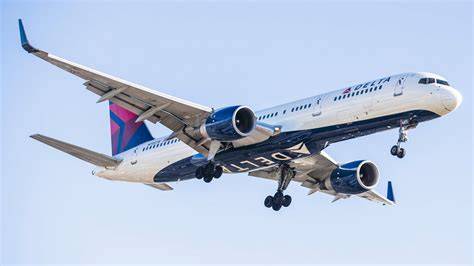
Boeing 757 Retirement Accelerates as the Airbus A321XLR Takes Over
Few aircraft have left such a distinctive mark on commercial aviation as the Boeing 757. Introduced in the early 1980s, the aircraft combined the performance of a relatively large jet with the economics and flexibility of a narrowbody. Its powerful engines and excellent takeoff performance made it particularly useful at airports with challenging runway conditions, while its range allowed airlines to operate transatlantic services that would have been difficult to justify with a conventional narrowbody.
For years, airlines struggled to find a true successor. Boeing never developed a direct replacement, and the gap remained unusually important because the 757 occupied a niche between traditional narrowbodies and smaller widebodies. That changed with the arrival of the Airbus A321LR and A321XLR. These aircraft finally give airlines a modern narrowbody capable of serving many of the missions that once depended on the 757.
Icelandair is one of the clearest examples. The carrier is accelerating the retirement of its Boeing 757 fleet while simplifying its operation around Airbus A321LR and A321XLR aircraft. The strategy makes particular sense for Icelandair because its Keflavik hub depends heavily on relatively thin North Atlantic routes. Instead of operating a larger aircraft simply because it has the required range, the airline can use a smaller jet with lower trip costs and still connect cities across the Atlantic.
United Airlines is pursuing a similar strategy on selected international routes. The A321XLR can carry fewer passengers than many traditional widebodies while offering enough range to open or maintain long-distance routes where demand does not justify a larger aircraft. This is an important distinction: the replacement for the 757 is not merely another airplane. It represents a different way of designing airline networks.
The 757’s retirement therefore marks more than the disappearance of a beloved aircraft. It demonstrates how long-range narrowbodies are changing international aviation. Routes once considered too long for single-aisle aircraft can now be operated with lower capacity and better economics, allowing airlines to serve secondary cities without filling a widebody every day.
Boeing 767 Passenger Fleets Enter Their Final Chapter
The Boeing 767 transformed long-haul aviation when it entered service in 1982. Its twin-engine configuration, wide cabin, and growing ETOPS capabilities made it one of the most important aircraft of its generation. It became a familiar sight on transatlantic routes, domestic services, and international missions around the world.
But by 2026, the economics that made the 767 revolutionary have become one of the reasons for its retirement. Modern engines are substantially more efficient, while newer aircraft also benefit from lighter structures, improved aerodynamics, and advanced systems. An older 767 may still perform its mission effectively, but airlines increasingly have access to aircraft that can perform the same mission at a lower cost.
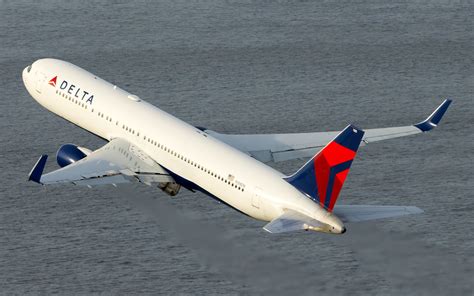
Delta Air Lines illustrates the complexity of the transition. Rather than selecting one aircraft to replace every Boeing 767-300ER, the airline is distributing the work among several modern types. The Airbus A321neo can handle domestic missions, while the Airbus A330-900neo and A350 family provide greater capacity and range for international services. The Boeing 787-10 also has a role in Delta’s longer-term fleet strategy.
This approach makes economic sense because aircraft utilization is highly dependent on route characteristics. A 767 serving a lower-demand international market does not necessarily need to be replaced by another widebody. In some cases, an A321neo-family aircraft can offer the right capacity. On busier routes, a newer widebody can provide the necessary seats while consuming less fuel per passenger.
The result is a gradual disappearance rather than a sudden retirement event. Travelers may continue seeing 767s for some time, but their presence is shrinking as airlines prioritize new-generation twin-engine aircraft.
Older Airbus A330s Are Being Replaced by Newer Widebodies
The Airbus A330 presents a more complicated retirement story because the family itself remains highly relevant. The aircraft is not disappearing from commercial aviation. Instead, older A330-200 and A330-300 variants are increasingly being replaced by newer designs, including the A330-900neo and A350-900.
The difference between an older A330 and a modern widebody can be substantial over thousands of flight hours. New engines, improved aerodynamic surfaces, lighter materials, and modernized systems reduce operating costs while also improving range and passenger experience. For airlines operating large fleets, even modest efficiency improvements can translate into major annual savings.
The Lufthansa Group is moving through a broad fleet simplification process that includes the eventual retirement of older A330-200 aircraft. ITA Airways also completed the removal of older Alitalia-era A330ceo aircraft in early 2026, replacing them with newer A330neo aircraft. Such transitions are about more than fuel savings because maintaining multiple generations of the same aircraft family can create additional costs in training, spare parts, maintenance procedures, and crew scheduling.
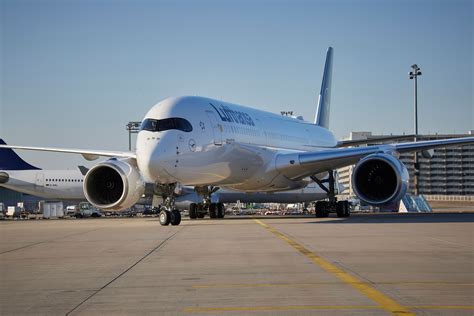
KLM is following another version of the same philosophy, with the Airbus A350-900 becoming increasingly important as the airline modernizes its long-haul fleet. The A350 can replace older aircraft across multiple missions while delivering lower fuel consumption and a newer passenger environment.
For passengers, the most visible change may be the cabin. For airlines, however, the bigger attraction is what happens behind the scenes. A modern aircraft can spend less time in maintenance, consume less fuel, and provide better fleet commonality. Those advantages become increasingly valuable as airlines seek to control costs.
Airbus A340 Retirement Ends Another Four-Engine Era
The Airbus A340 is perhaps the clearest symbol of aviation’s shift away from four-engine passenger aircraft. When it entered service, four engines were still considered a practical solution for many long-distance missions. Today, that logic has largely disappeared.
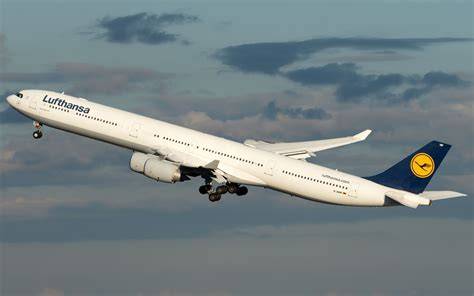
Lufthansa has been among the major airlines keeping the A340-600 alive, but its remaining aircraft are approaching the end of their passenger careers. The aircraft can still offer impressive range and a spacious cabin, yet its four engines create a structural economic disadvantage compared with modern twinjets.
The most obvious successors are the Airbus A350-900 and Boeing 787 family. These aircraft demonstrate how far engine technology has progressed. Modern high-bypass turbofans can provide the reliability and efficiency required for long-haul operations while using only two engines.
The expansion of ETOPS rules has also changed the commercial aviation equation. Twin-engine aircraft can now operate routes far from diversion airports that would once have been considered unsuitable for two-engine jets. That regulatory evolution removed one of the major operational advantages once associated with four-engine aircraft.
Consequently, the A340’s retirement is not simply about age. It represents the culmination of decades of progress in engine reliability, fuel efficiency, aerodynamics, and long-range twin-engine operations.
Boeing 737NG and Airbus A320ceo Fleets Are Also Disappearing
The quietest retirements may involve the aircraft passengers are most likely to encounter. Boeing 737NG and Airbus A320ceo aircraft have been the backbone of airline fleets for decades, but large numbers of early examples are now reaching the point where replacement becomes economically attractive.
The successors are familiar names: the Boeing 737 MAX, Airbus A320neo family, A321neo, and A321XLR. These aircraft retain the basic narrowbody concept while introducing more efficient engines, aerodynamic improvements, and modern systems.
The transition is particularly important because narrowbodies account for a huge proportion of global airline operations. Even a small reduction in fuel consumption becomes meaningful when multiplied across thousands of aircraft operating millions of flight hours.
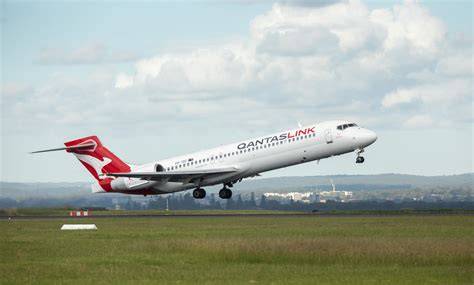
Qantas offers an especially interesting example. Through its fleet renewal strategy, the airline is replacing Boeing 737-800 aircraft with newer Airbus A321XLRs while also introducing A220-300s to replace smaller aircraft such as the Boeing 717. This gives Qantas a broader range of aircraft sizes and capabilities instead of relying on a relatively uniform fleet.
The A321XLR is particularly significant because its range allows airlines to rethink domestic and regional networks. Meanwhile, the A220 offers an efficient solution for routes where a traditional A320-family aircraft may provide more capacity than necessary.
Boeing 717 Retirement Is Making Room for the Airbus A220
The Boeing 717 occupies a special place in the retirement story because it was designed for a market that has become increasingly important again: smaller-capacity jet routes. The aircraft is comfortable and capable, but its production ended in 2006, making the remaining fleet increasingly difficult to justify as newer alternatives become available.
The Airbus A220-300 is emerging as one of the strongest modern successors. It offers a similar role with newer engines, improved aerodynamics, modern avionics, and better fuel economics.
For airlines, the A220 is attractive because it allows them to maintain jet service on thinner routes without operating an aircraft that is too large. That flexibility can help protect frequencies while reducing the risk of flying excess seats.
The replacement also illustrates an important trend in 2026: airlines are becoming less interested in simple one-for-one fleet replacement. Instead, they are asking which aircraft provides the best combination of capacity, range, frequency, and cost for each individual market.
Why Airlines Are Choosing Smaller and More Efficient Aircraft
The aircraft retiring in 2026 may look different, but the economic reasoning behind their replacements is remarkably consistent. Airlines want to reduce fuel consumption, simplify maintenance, increase utilization, and match aircraft capacity more closely with passenger demand.
This is why the A321XLR has become so important. It does not merely replace an old aircraft. It allows an airline to operate routes that previously required a larger aircraft while accepting fewer seats and lower trip costs. That can make seasonal or secondary international markets more viable.
Modern widebodies follow the same principle at a larger scale. The A350, A330neo, and 787 can provide long-range capability without the fuel and maintenance burden associated with many older widebody designs. Airlines can therefore operate longer routes with fewer resources while retaining the flexibility to adjust capacity.
There is also a network effect. When an airline has fewer aircraft types, crew training becomes easier, maintenance planning becomes more predictable, and spare-parts inventories can be reduced. Fleet commonality does not eliminate complexity, but it can make a large airline substantially easier to manage.
The 2026 Fleet Transition Is Only the Beginning
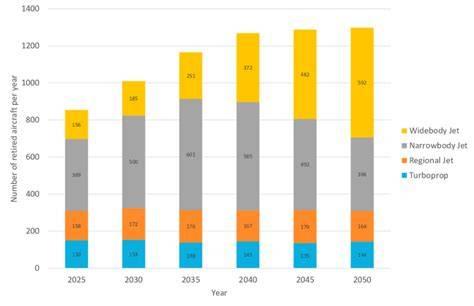
The retirement activity visible in 2026 should not be interpreted as the final stage of fleet modernization. It is better understood as one phase in a continuous process that will extend through the late 2020s and into the 2030s.
Airlines are already considering replacements for aircraft that will remain in service for several more years. American Airlines, for example, has begun looking toward the eventual replacement of its Boeing 777-200ER fleet. These decisions demonstrate how far ahead major airlines must plan. A fleet transition involving dozens of widebodies cannot be completed overnight.
The broader direction is clear. Older aircraft are being replaced not simply because they are old, but because newer aircraft fundamentally change the economics of airline networks. The Boeing 757 gives way to the A321XLR, older 767s increasingly yield to modern widebodies and long-range narrowbodies, A340s are replaced by efficient twinjets, and early-generation narrowbodies are gradually disappearing in favor of the latest 737 MAX and A320neo-family aircraft.
The passenger may notice a newer seat, larger overhead bin, quieter cabin, or improved entertainment system. The airline sees something much larger: lower fuel bills, fewer maintenance requirements, better utilization, and the ability to serve markets with greater precision.
That is why the aircraft retirements of 2026 deserve attention even when they happen quietly. The industry is moving away from the era when bigger aircraft and more engines were automatically associated with capability. In their place is a new generation of highly efficient aircraft designed around flexibility.
The Boeing 757, Boeing 767, Airbus A340, early A330s, 737NGs, A320ceos, and Boeing 717 will not vanish from the skies simultaneously. Some will continue flying for years, particularly with cargo operators or airlines that can operate them economically. But their shrinking presence is unmistakable.
What replaces them is equally significant. Airbus A321XLRs, A220s, A320neos, A321neos, A330neos, A350s, Boeing 737 MAX aircraft, and 787s are becoming the foundation of the next generation of airline fleets. The result is a commercial aviation system built around efficiency rather than sheer size—a transition that will quietly reshape where airlines fly, how often they fly, and which aircraft passengers see at the gate.