The economics of airline cabins have always been a delicate balancing act between loyalty, pricing psychology, and hard revenue math. For decades, complimentary upgrades functioned as both a marketing incentive and a status reward—an aspirational taste of luxury that kept frequent flyers emotionally tethered to their airline of choice. That model is now being systematically dismantled at Delta Air Lines. The Atlanta-based carrier is reducing near-free upgrades and repositioning premium cabins as core revenue engines rather than loyalty giveaways. The move signals not a minor policy tweak, but a structural transformation in how airline profitability is engineered.
Rising global demand for comfort has reshaped airline economics. Travelers who once viewed premium seating as indulgent now frame it as functional—extra space to work, sleep, or simply survive long journeys with dignity intact. As disposable income among certain traveler segments has recovered post-pandemic, airlines have responded by expanding premium inventory across both long-haul and domestic networks. Delta’s leadership sees this not as a cyclical opportunity, but as a durable behavioral shift.
Historically, upgrades were the grease in the machinery of loyalty programs. Elite status promised front-cabin access, often clearing automatically on domestic routes. This structure rewarded miles flown rather than dollars spent, allowing high-frequency travelers on discounted fares to enjoy First Class experiences without paying First Class prices. Over time, however, this created a paradox: one of the airline’s most expensive products was frequently consumed without generating proportional revenue.
From Loyalty Perk to Revenue Strategy
For years, Delta’s Medallion status hierarchy served as an upgrade pipeline. Platinum and Diamond members in particular could expect routine movement into premium cabins, especially on short-haul routes where demand variability left unsold seats. The upgrade list became a ritual—scrutinized at the gate, celebrated when cleared, mourned when missed.
Yet from a financial perspective, this tradition masked a structural inefficiency. Premium cabins often departed full, but not fully monetized. Seats filled by complimentary upgrades diluted yield, constraining the revenue potential of aircraft configured at significant cost. Airline executives began reframing the issue: loyalty benefits were cannibalizing premium pricing power.
At its 2024 Investor Day, Delta made its recalibration explicit. Executives emphasized that upgrades would no longer be treated as routine entitlements. Instead, premium seats would be merchandised, dynamically priced, and sold earlier in the booking cycle. The philosophical shift was bluntly summarized by President Glen Hauenstein, who described premium cabins as the airline’s former “biggest loss leader.”
Repricing Comfort: Making Premium More Reachable
One of the most consequential elements of Delta’s strategy has been pricing elasticity. Historically, First Class fares were positioned at steep premiums above economy—often multiples higher. This pricing gulf suppressed demand, leaving unsold inventory that was later filled through upgrades.
Delta narrowed that gulf.
By introducing more graduated pricing, targeted offers, and buy-up opportunities in the booking flow, the airline made premium seating financially attainable to a broader slice of passengers. The psychological shift was immediate: when the price delta shrinks from prohibitive to plausible, conversion rises.
Hauenstein noted that affordability drives trial—and trial drives habit. Once passengers experience the ergonomic and service advantages of premium cabins, many become repeat buyers. Delta’s internal data suggests 85% of travelers who purchase premium seats intend to do so again, reinforcing the long-term revenue logic of the strategy.
A Cabin Once Given Away, Now Mostly Sold
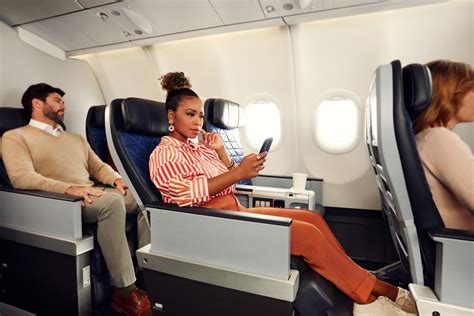
The transformation is quantifiable. In 2010, only about 10% of domestic First Class passengers were paying for their seats. The remainder occupied the cabin via upgrades, vouchers, or operational moves. From a load-factor standpoint the cabin looked healthy—but revenue per square foot told another story.
By 2014, the paid share had climbed to 55%. By 2019, it reached 63%. Today, more than 75% of First Class seats are sold, while complimentary upgrades account for roughly 12%.
Crucially, the overall load factor—hovering around 92%—has remained stable. The cabin isn’t fuller; it’s simply more profitable. Delta is monetizing the same physical space with far greater efficiency.
CEO Ed Bastian framed the change through retail logic. Earlier fare structures created sharp price cliffs between cabins. Modernized pricing smoothed those cliffs, allowing more passengers to “step up” rather than opt out entirely.
Premium Select and the International Opportunity
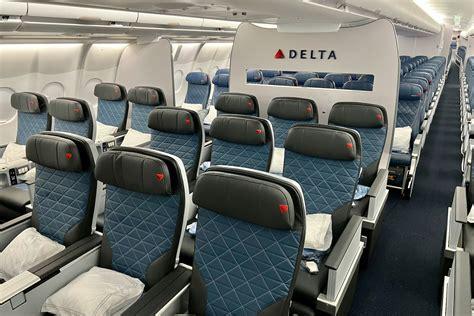
Delta’s domestic strategy is mirrored internationally through Premium Select, the airline’s premium economy product. Positioned between Main Cabin and Delta One business class, it offers enhanced recline, upgraded dining, and priority services at a mid-tier price point.
Installed on roughly 40% of long-haul routes, Premium Select consistently records load factors between 70% and 80%. Its performance underscores the growing segmentation of traveler demand: not everyone wants lie-flat luxury, but many will pay for meaningful comfort improvements.
This mid-cabin monetization is critical. It captures travelers priced out of business class while upselling them beyond economy. In revenue architecture terms, it fills the “yield gap” between cabins.
Revenue Results: Premium Outpaces Economy
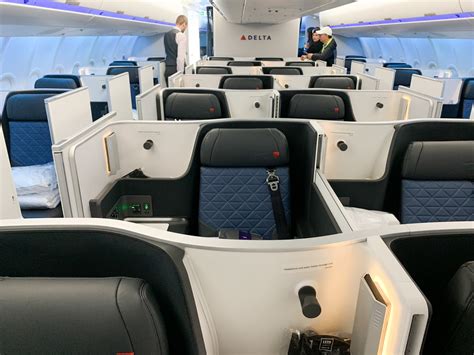
Financial data validates the pivot. In the first half of 2025, Delta’s Main Cabin revenue declined 4% year-over-year. Premium cabin revenue, however, rose 6% to $10.6 billion.
Premium now accounts for 43% of passenger revenue, up from 33% pre-pandemic. Analysts project premium revenue could surpass economy as Delta’s largest income source by 2027—a structural inversion of the traditional airline model.
Margins tell the deeper story. Premium seats generate disproportionately higher profit per passenger due to pricing power and relatively fixed service costs. As Delta refines segmentation, those margins continue expanding.
Fleet Investments Designed for High-Yield Travelers
Revenue strategy alone cannot drive premium growth; hardware must support it. Delta has invested heavily in cabin retrofits and next-generation seating to ensure product consistency across its fleet.
Key initiatives include:
- Expansion of Delta One Suites with sliding doors
- Wider deployment of Premium Select cabins
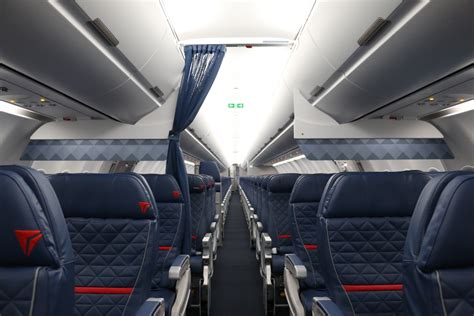
- Domestic First Class seat upgrades on A321neos
- Retrofit programs for A330-200 and A330-300 aircraft
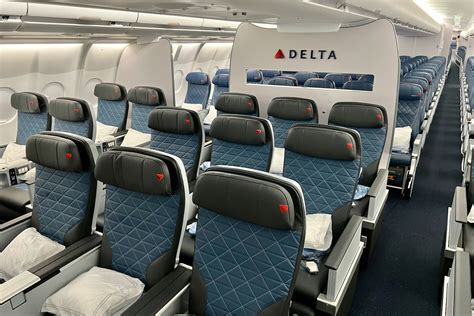
Older reverse-herringbone seats are being replaced with enclosed suites, aligning legacy widebodies with newer Airbus A350 and A330-900neo standards. The objective is experiential continuity—ensuring passengers receive comparable premium products regardless of aircraft assignment.
Deploying Premium Capacity Where Demand Is Strongest
Aircraft configuration is only half the equation; route deployment completes it. Delta strategically assigns refurbished widebodies to hubs with dense corporate and international demand, including Seattle.
These routes sustain higher yields due to tech, finance, and transpacific business travel flows. By aligning aircraft with premium-heavy demand corridors, Delta maximizes return on retrofit investments while standardizing onboard experience.
The strategy reflects airline network science at its most granular: matching seat mix, fare segmentation, and traveler demographics on a route-by-route basis.
New Fare Structures: Segmenting the Premium Buyer
Beyond hardware and pricing, Delta is redesigning how premium seats are sold. A new fare structure—introduced across Delta Comfort+, First Class, and Premium Select—adds layered pricing tiers labeled Classic and Extra.
The differentiation centers on flexibility and benefits:
- Refundability levels
- Mileage earning rates
- Change privileges
- Priority services
Rather than altering the seat itself, Delta is merchandising the conditions around the seat. This mirrors segmentation strategies long used in economy cabins, now applied upstream to premium products.
The logic is behavioral economics: travelers value flexibility differently. By pricing those preferences, Delta extracts incremental revenue without adding physical capacity.
Reducing Low-Fare Capacity to Elevate Yield
Interestingly, the premium push is paired with contraction at the opposite end of the cabin spectrum. Delta has trimmed Main Cabin capacity by approximately 1% in targeted markets, citing softer demand for ultra-low fares.
This deliberate scarcity reinforces pricing discipline. By limiting cheap inventory while expanding premium supply, Delta nudges demand upward through fare tiers. It is less about eliminating economy and more about recalibrating its proportion within the revenue mix.
The Loyalty Trade-Off
For frequent flyers, the shift carries emotional and practical consequences. Complimentary upgrades—once a defining Medallion perk—are becoming rarer, particularly on routes operated by premium-dense aircraft.
Upgrade lists remain, but competition is fiercer and clearance rates lower. Status still confers priority, yet the inventory available for upgrades has shrunk as more seats sell outright.
This recalibration reflects a broader industry trend: loyalty programs are evolving from mileage-based reward systems into revenue-based ecosystems. Dollars spent now matter more than miles flown.
Selling Experience Instead of Rewarding It
Delta’s repositioning reframes premium cabins not as aspirational surprises but as purchasable experiences. Marketing language, booking interfaces, and post-purchase offers all reinforce the same message: comfort is available—at a price calibrated to demand.
The airline’s data suggests travelers increasingly accept this framing. When premium pricing feels proportionate rather than punitive, conversion rises and resistance falls.
An Industry Blueprint in Motion
Delta is not alone in this trajectory. Major global carriers are expanding business class suites, premium economy cabins, and ancillary buy-up pathways. What distinguishes Delta is the scale and speed of its monetization shift—paired with transparent executive messaging about revenue intent.
The airline is effectively stress-testing a future where:
- Complimentary upgrades are scarce
- Premium cabins drive margin expansion
- Economy becomes the entry product, not the revenue core
The Math Behind the Strategy
At its essence, Delta’s decision is governed by yield optimization. Aircraft cabins are finite real estate. Every seat filled by a non-paying passenger represents opportunity cost.
By converting upgrade volume into paid demand, Delta increases revenue without adding flights, fuel burn, or crew costs. It is profitability through reallocation rather than expansion.
Financial performance indicates the equation is working.
What the Future Cabin Might Look Like
If current trends persist, the aircraft cabin of the late 2020s may look markedly different from its early-2010s counterpart:
- Larger premium footprints
- More segmented fare bundles
- Fewer unsold front-cabin seats
- Data-driven dynamic pricing at every tier
In that environment, loyalty benefits will likely evolve toward soft perks—priority services, mileage bonuses, flexibility—rather than hard seat upgrades.
Conclusion: Comfort as a Commodity
Delta’s scrapping of near-free upgrades is not a retreat from loyalty but a redefinition of value. Premium seats have transitioned from marketing expense to financial cornerstone, reflecting both shifting traveler psychology and airline revenue imperatives.
Front cabins once filled by algorithmic generosity are now curated marketplaces of monetized comfort. As long as passengers continue demonstrating willingness to pay—and financial data continues validating the model—complimentary upgrades will remain the exception rather than the expectation.
For Delta, the calculus is elegantly simple: selling comfort generates more value than giving it away.