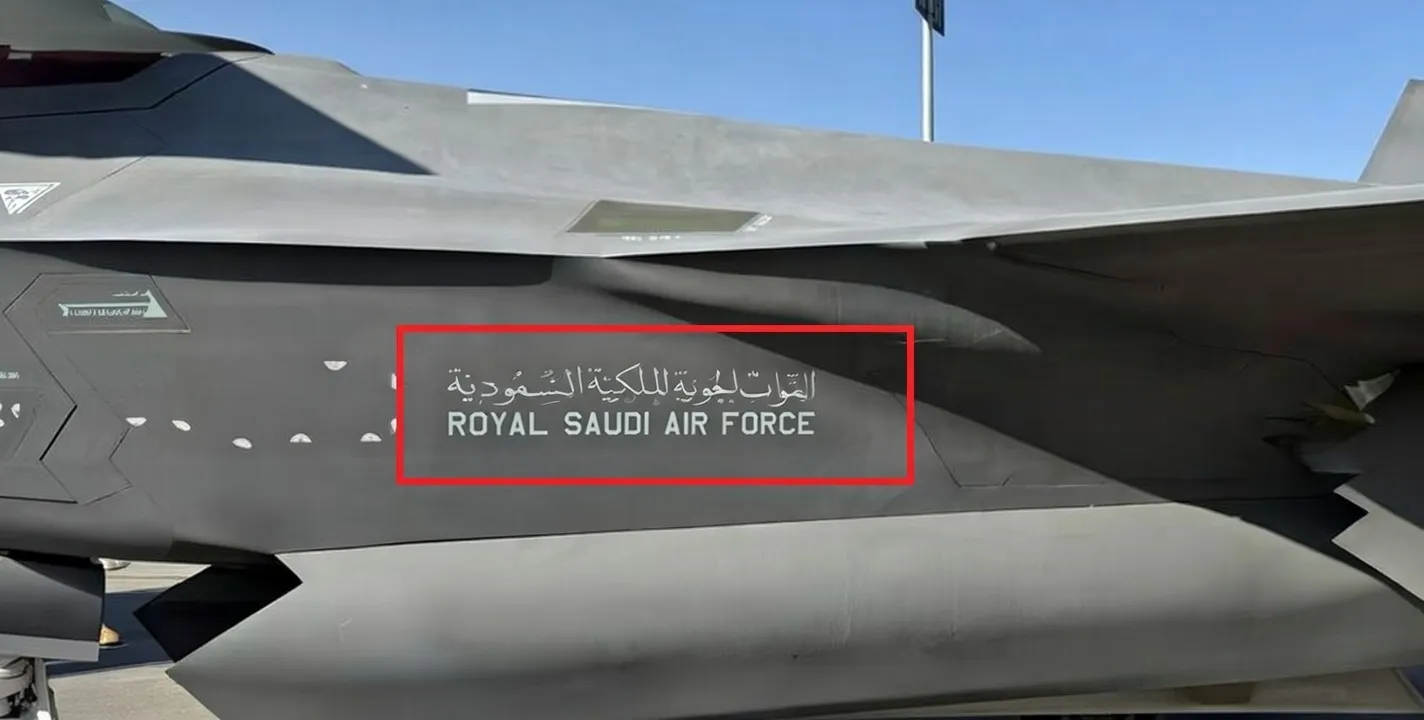
The appearance of an F-35 Lightning II mockup bearing Royal Saudi Air Force (RSAF) insignia at the 2026 World Defense Show in Riyadh was not a casual display choice. In a region where symbolism often precedes policy, placing America’s most advanced fifth-generation fighter under Saudi markings was a calculated message. It signaled ambition, strategic alignment, and perhaps a carefully staged hint that Riyadh’s long pursuit of the stealth jet is entering a decisive phase.
The World Defense Show, now in its third edition, has evolved into a geopolitical theater as much as a defense exhibition. With Chinese, Russian, American, and European defense giants presenting their flagship systems, Riyadh positioned itself not merely as a buyer, but as an emerging defense-industrial player. Saudi Arabian Military Industries (SAMI) showcased more than 60 national products spanning aerospace, land systems, advanced electronics, and MRO capabilities. Yet it was the full-scale F-35 display model with Saudi markings that dominated attention and speculation.
The timing is critical. Months earlier, in November 2025, U.S. President Donald Trump authorized the potential sale of the F-35 to Saudi Arabia following a strategic defense agreement with Crown Prince Mohammed bin Salman. The Kingdom was also designated a key non-NATO partner of the United States. Authorization, however, is not a contract. Between political green lights and signed Letters of Offer and Acceptance lies a labyrinth of congressional oversight, end-use assurances, and regional sensitivities—particularly those involving Israel’s Qualitative Military Edge (QME).
Why the F-35 Matters for Saudi Arabia’s Strategic Transformation
For Riyadh, the F-35 is more than a fighter jet. It represents entry into the exclusive club of stealth operators and a transformation of airpower doctrine. The RSAF already fields advanced platforms such as the F-15SA, one of the most capable fourth-generation fighters in existence. But the F-35 is a different animal entirely.
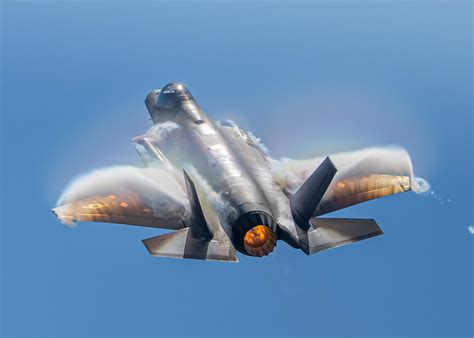
The Lightning II integrates stealth shaping, advanced radar-absorbent materials, sensor fusion, and network-centric warfare capabilities into a single combat ecosystem. Sensor fusion—the aircraft’s ability to combine inputs from radar, electro-optical systems, and electronic warfare suites into a unified tactical picture—turns the pilot into a battlefield data node. In modern warfare, information dominance is often more decisive than raw speed or payload. The F-35 is designed precisely for that paradigm.
Saudi Arabia faces a shifting threat environment. Iran continues to advance its missile and drone capabilities. Regional proxy conflicts remain volatile. Meanwhile, Israel operates the F-35I “Adir,” and Turkey’s removal from the F-35 program reshaped alliance dynamics. For Riyadh, operating a fifth-generation platform would recalibrate deterrence and signal technological parity within a competitive regional security architecture.
Yet ambition alone does not close deals.
The Israel Factor and the QME Constraint
Israel’s Qualitative Military Edge is a cornerstone of U.S. Middle East policy. Enshrined in U.S. law, QME ensures Israel maintains superior military capabilities relative to potential adversaries. Any sale of advanced weaponry—especially stealth aircraft—must pass the QME test.
Saudi Arabia’s evolving diplomatic posture, including tentative normalization discussions with Israel, complicates this equation. While strategic realignments in the region have become more fluid, Israel’s leadership remains vigilant regarding advanced arms transfers. Even if political conditions align, Washington must ensure that Saudi-operated F-35s do not undermine Israel’s operational advantage.
This does not automatically block a sale. It does, however, mean negotiations will likely involve technical configurations, basing considerations, and potentially modified capabilities. Such adjustments are not unprecedented; export variants often differ subtly from domestic or allied configurations. The balance between maintaining QME and strengthening U.S.-Saudi ties will define the contours of any final agreement.
A Cautionary Tale: The UAE’s Near Miss with the F-35
Saudi Arabia’s ambitions inevitably invite comparison with the United Arab Emirates’ protracted and ultimately stalled F-35 saga. The UAE pursued the stealth fighter for over a decade, viewing it as the logical successor to its F-16 fleet and a tool to cement strategic ties with Washington.
Interest surfaced as early as 2009. By 2017, Emirati officials publicly declared their intent to acquire the aircraft. Momentum accelerated following the 2020 Abraham Accords, which normalized relations between the UAE and Israel. Shortly thereafter, the U.S. State Department notified Congress of a proposed sale of 50 F-35A jets to Abu Dhabi, bundled with MQ-9 Reaper drones.
In January 2021, Letters of Offer and Acceptance were finalized. Costs, specifications, and delivery timelines were locked in. It appeared inevitable.
Then geopolitics intervened.
The incoming Biden administration paused the deal for review, citing concerns over end-use restrictions and regional stability. More consequential, however, were Washington’s concerns over the UAE’s deepening ties with China. Reports of alleged Chinese military facility construction and the continued presence of Huawei 5G infrastructure near sensitive bases triggered alarms in Washington.
The United States feared that Chinese telecommunications networks could potentially collect electronic signatures or intelligence on F-35 operations. Whether such risks were technically overstated or not, perception shaped policy. The F-35 program’s security requirements are uncompromising. Protecting stealth coatings, mission data files, and electronic warfare libraries is non-negotiable.
Frustrated with delays and operational constraints, the UAE pivoted. In December 2021, it signed a landmark deal with France’s Dassault Aviation for 80 Rafale F4 fighters. By 2024, Emirati officials publicly dismissed renewed speculation about acquiring the F-35, effectively closing the chapter.
The lesson is stark: political approval does not guarantee delivery. Strategic misalignment—even in adjacent domains like telecommunications—can derail multi-billion-dollar defense agreements.
Will Saudi Arabia Avoid the UAE’s Pitfalls?
Saudi Arabia’s situation differs in key respects. While Riyadh also maintains economic ties with China, it has been more cautious in allowing Chinese military or dual-use infrastructure that could jeopardize U.S. defense cooperation. The Kingdom understands that the F-35 comes with strict security expectations.
Moreover, the November 2025 defense agreement between Trump and Crown Prince Mohammed bin Salman suggests a renewed emphasis on strategic alignment. The designation of Saudi Arabia as a key non-NATO partner underscores Washington’s willingness to deepen military integration.
Still, challenges remain. Congressional scrutiny will be intense. Human rights concerns, regional escalation risks, and internal U.S. political debates could influence timelines. Even technical integration issues—such as infrastructure upgrades, maintenance ecosystems, and pilot training pipelines—require meticulous planning. Operating the F-35 is not simply a procurement decision; it is a long-term institutional commitment involving secure data networks, hardened facilities, and specialized supply chains.
The Marketing Signal: Symbolism or Substance?
The presence of the Saudi-marked F-35 mockup in Riyadh may represent more than optimism. Defense exhibitions often function as signaling platforms. For Lockheed Martin, showcasing the aircraft in Saudi colors reinforces its role as a preferred supplier. For Riyadh, it subtly communicates seriousness to both Washington and regional competitors.
Yet mockups are not contracts. Defense history is littered with display models that never transitioned into operational squadrons. The question is whether this display reflects advanced negotiations behind closed doors or a strategic nudge designed to build momentum.
Saudi Arabia’s Vision 2030 agenda adds another dimension. The Kingdom seeks to localize 50 percent of its defense spending. Any F-35 deal could potentially include industrial offsets, MRO participation, or technology transfer components aligned with SAMI’s growth ambitions. Such industrial participation could tip the scales in favor of a finalized agreement.
Regional Power Calculus: What an RSAF F-35 Fleet Would Mean
If Saudi Arabia acquires the F-35, the regional airpower balance would shift. Iran would face a stealth-equipped adversary capable of penetrating advanced air defenses. Gulf Cooperation Council states might accelerate their own modernization efforts. Israel would retain its operational edge, but coordination and deconfliction frameworks would grow more complex.
Conversely, if negotiations stall, Riyadh has alternatives. European manufacturers—Dassault with the Rafale, the Eurofighter consortium, or even emerging sixth-generation partnerships—remain viable options. Such diversification would reduce dependence on Washington but potentially dilute interoperability with U.S. forces.
Strategic partnerships are rarely binary. They evolve through incentives, leverage, and mutual constraints. The F-35 sits at the intersection of technology, diplomacy, and regional deterrence.
The Road Ahead for Riyadh’s Stealth Ambitions
The image of a Saudi-flagged F-35 in Riyadh captured headlines for good reason. It encapsulated aspiration, alliance politics, and the intricate choreography of modern arms diplomacy. Whether the aircraft eventually lands in RSAF hangars will depend on more than symbolism. It will require sustained political alignment, rigorous security assurances, and a shared strategic vision between Washington and Riyadh.
The UAE’s experience demonstrates how swiftly momentum can evaporate when trust erodes. Saudi Arabia now stands at a crossroads. If it navigates the geopolitical terrain with precision—balancing great-power relationships while meeting U.S. security expectations—it could secure the most advanced fighter aircraft on the market. If not, the Riyadh mockup may join the long list of defense exhibition icons that promised transformation but delivered only speculation.
In the end, the F-35 with Saudi insignia is both a statement and a test. The coming months will reveal whether it marks the dawn of a new stealth era for the Kingdom—or a reminder that in the Middle East’s defense arena, ambition must always contend with reality.