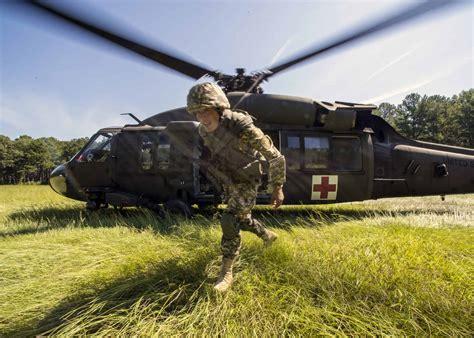
The United States Army marked a monumental milestone—250 years of service, sacrifice, and strength—with a grand spectacle that blended the echoes of history with the cutting-edge of military evolution. On the parade grounds, an awe-struck audience witnessed the might of legacy armored vehicles and agile aerial machines, symbolizing the journey from World War battlefields to modern combat theaters. The spotlight fell squarely on the M4 Sherman tank and a trio of Vietnam-era helicopters, each representing critical shifts in the Army’s tactical and operational doctrines.
Sherman Tank: The Backbone of WWII Might
Few armored vehicles carry the legendary status of the M4 Sherman tank, the steel behemoth that rolled through Europe, the Pacific, and North Africa during World War II. Named by the British after Union General William Tecumseh Sherman, the tank embodied the American wartime industrial surge and strategic adaptability. Nearly 50,000 units were produced, making it the most widely used Allied tank of the war. It wasn’t just a vehicle—it was an icon of American resilience.
With a 75mm main gun, an armor profile that allowed for swift mass production, and mechanical reliability that supported the fast-paced demands of wartime logistics, the Sherman redefined tank warfare. While German Tiger and Panther tanks outclassed the Sherman in armor and firepower, the M4 triumphed in its sheer numerical advantage, ease of repair, and superior maneuverability across varied terrains.
The return of the Sherman tank during the 250th Army birthday parade was not merely ceremonial—it was a thunderous tribute to the tank that carried a generation to victory. Restored units rolled across the parade ground in a clattering salute, their olive-drab armor gleaming under the summer sun, reminding spectators of a time when American steel reshaped the world order.
Helicopters of the Vietnam Era: Wings of Brotherhood and Survival
Fast-forward two decades to the jungles of Vietnam, and the battlefield had transformed. Tanks gave way to air mobility. The helicopter became the new warhorse, offering speed, agility, and multi-role versatility in a conflict where terrain often dictated tactics. Three rotary-wing legends were spotlighted in the parade: the OH-6 Cayuse, the AH-1 Cobra, and the UH-1 Huey—machines that not only reshaped warfare but also etched themselves into the cultural and emotional memory of a generation.
The OH-6 Cayuse, nicknamed “Loach,” was a nimble scout helicopter with a compact fuselage that enabled low-level flying and high maneuverability. Its reconnaissance missions were often flown under fire, guiding artillery and ground troops through dense terrain. The OH-6 was the eyes of the operation, darting in and out of danger zones with tenacity.
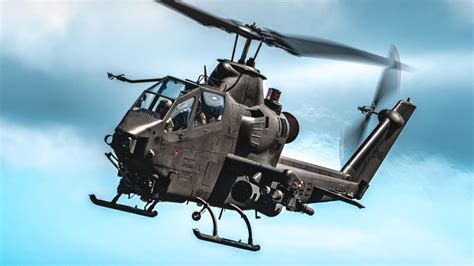
The AH-1 Cobra, sleek and slender, earned the moniker “The Snake” for good reason. As the U.S. Army’s first dedicated attack helicopter, the Cobra offered close air support with a terrifying array of weapons: miniguns, rocket pods, and a 20mm cannon. Its narrow profile and tandem-seat cockpit made it difficult to hit, while its speed made it a fierce hunter in dense enemy territory. More than just a support asset, the Cobra was a lethal extension of infantry firepower.
But perhaps no helicopter is as universally recognized and revered as the UH-1 Huey. As the first turbine-powered helicopter to serve the U.S. military, the Huey was the lifeline of the Vietnam War. From combat assault insertions, medevac evacuations, and troop transport, to gunship roles, the Huey could do it all. Its iconic rotor sound became synonymous with salvation or support. Veterans attending the parade grew visibly emotional as Huey replicas buzzed overhead—a stirring reminder of friendships, losses, and unbreakable bonds forged under fire.
Symbols in Sound: The First Cavalry Division Band’s Timeless Role
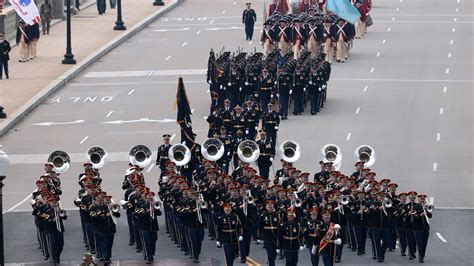
While the visuals of tanks and helicopters dominated the day, the auditory soul of the event came from the resounding music performed by the First Cavalry Division Band. Formed during the Army’s mounted warfare days, the band has evolved alongside its parent unit, moving from horseback pageantry to motorized precision. From the Korean War and Bosnia to the Global War on Terror, this band has marched forward, bolstering troop morale and bringing home a piece of continuity from generation to generation.
Their rendition of “Hit the Leather and Ride”—a march composed by Captain Robert Meredith Wilson—was a powerful reminder of transformation. The piece vividly captures the cavalry’s shift from horses to armored vehicles, a blend of speed and resilience wrapped in rich musical tradition. Played during the ceremony, the march evoked the enduring adaptability of the Army, adapting not just in tactics, but in spirit.
The band’s performance, precise and passionate, also underscored its role in shaping public perception, fostering community trust, and promoting the U.S. Army’s legacy. Their music is more than entertainment; it’s a continuation of duty, echoing stories of courage and progress through each note.
Bridging Centuries: The Army’s Living Legacy of Technology and Tradition
The 250th birthday of the U.S. Army was not merely a look back. It was a fusion of past and present, demonstrating how history informs future readiness. From Sherman tanks, whose steel treads helped free Europe, to Vietnam helicopters that saved countless lives in Asia, and the musical marches that tied it all together—each element represented an era, yet spoke with one voice.
Today’s Army continues to evolve with autonomous systems, AI-powered surveillance, and cybersecurity missions, but the parade served to ground this transformation in legacy. The vehicles and sounds of yesterday are not relics—they are living testimonies. Veterans, families, and future soldiers all stood witness as the Army bridged its centuries of service in one moving celebration.
A Day Etched in National Memory
For attendees at the Washington D.C. parade grounds, the Army’s 250th birthday was more than a military display. It was a story of endurance. A chronicle told in rumbling engines, thundering rotors, and resonant brass. It was a convergence of generations, each with its own battles and heroes, now woven together in a tapestry of shared purpose.
As the final notes of the band echoed across the field, and as the last rotor blades cut through the air, the crowd rose—not only in applause but in reverence. For in that moment, the U.S. Army wasn’t just a force. It was a legacy, a promise, and a testament to American resolve.