Breeze Airways is preparing to temporarily suspend its only scheduled service from Newark Liberty International Airport (EWR), marking a significant change for travelers in the northeastern United States who rely on the airline’s connection to Charleston, West Virginia. The airline’s Newark–Charleston route is expected to be paused after January 3, 2027, leaving passengers with fewer nonstop options between New Jersey and West Virginia.
The route, operated between Newark and Yeager Airport (CRW) in Charleston, was introduced as part of Breeze Airways’ strategy to connect underserved cities with convenient nonstop flights. The airline launched the service in November 2024 after announcing Newark as a new destination earlier that year. Since then, Breeze has operated the route twice weekly, primarily serving travelers looking for alternatives to larger network carriers.
The upcoming pause has attracted attention because the Charleston service represents more than a simple point-to-point connection. Breeze Airways has used the route as part of its unique BreezeThru concept, allowing passengers to continue to another destination without changing aircraft or flight numbers. The suspension could therefore affect travelers heading beyond Charleston, particularly those using the service as a one-stop option to reach Florida.
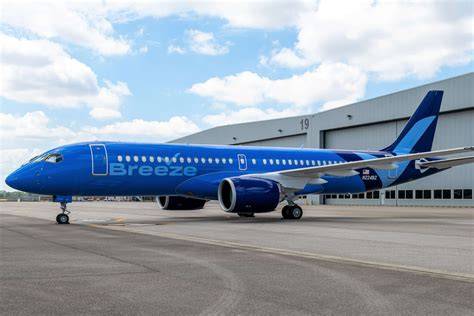
Why Breeze Airways Is Suspending Its Newark Route
According to reports, Breeze Airways has informed its airport partners that the Newark–Charleston route will be seasonally paused after early January 2027. A spokesperson for Yeager Airport confirmed that Breeze communicated the upcoming change, although the airline has not provided detailed public reasoning for the decision.
Industry observers have suggested that financial factors may play a role. Breeze Airways’ operations in Charleston have benefited from support provided by the State of West Virginia, helping strengthen air connectivity from the region. Questions remain over whether the Newark route can maintain profitability without continued support or during periods of weaker seasonal demand.
The decision does not necessarily mean Breeze is permanently abandoning Newark or Charleston. Airlines frequently adjust schedules based on demand patterns, aircraft availability, operating costs, and seasonal travel trends. A temporary pause allows carriers to review route performance while reallocating aircraft to markets with stronger opportunities.
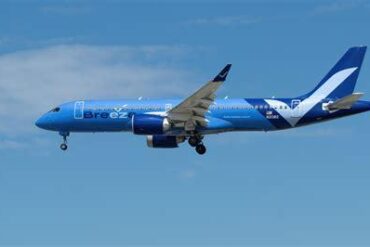
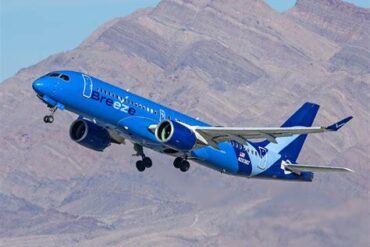
Currently, Breeze’s Newark service operates as flight MX140 from Charleston, departing at approximately 9:56 AM and arriving at Newark at 11:36 AM. The return flight, MX217, leaves Newark around 12:16 PM and reaches Charleston at 2:05 PM. The flights use Breeze’s Airbus A220-300 aircraft, a model that has become central to the airline’s growing network.
The Hidden Impact on BreezeThru Passengers
One of the most interesting aspects of the Newark–Charleston route is that it functions as part of a broader itinerary rather than only a standalone flight. Through BreezeThru, passengers can book a journey from Newark to destinations such as Orlando International Airport (MCO) with a single ticket while remaining on the same aircraft.
After arriving in Charleston, flight MX217 continues onward to Orlando, departing around 2:45 PM and arriving in Florida at approximately 4:53 PM. In the opposite direction, passengers can begin their journey in Orlando before continuing through Charleston to Newark.
This arrangement gives travelers in smaller markets access to convenient one-stop journeys without the inconvenience of transferring aircraft. For passengers traveling from the New York metropolitan area to Florida, the service offered an alternative to traditional hub-based connections operated by larger airlines.
The route pause will therefore impact not only travelers traveling between Newark and Charleston but also passengers who used Charleston as a connection point. While Breeze’s network remains focused mainly on domestic flying, its ability to create unique itineraries through smaller airports has been a key part of its business model.
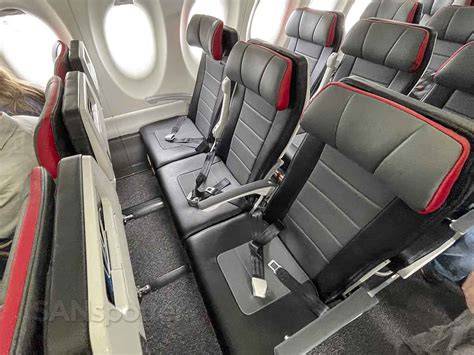
Breeze Airways’ Growing Airbus A220 Network
The Newark route suspension comes as Breeze Airways continues to reshape its fleet and network around the Airbus A220-300. The airline has rapidly moved away from smaller regional aircraft, building a fleet designed for efficient service between underserved city pairs.
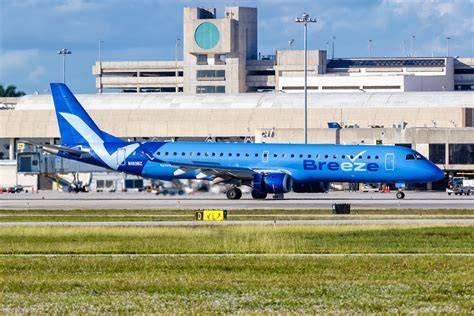
According to available fleet data, Breeze currently operates around 60 Airbus A220-300 aircraft, with additional aircraft on order. By comparison, the airline operates a much smaller number of Embraer E190 aircraft. The A220 has become the backbone of Breeze’s strategy because of its combination of range, passenger comfort, and operating efficiency.
The carrier’s A220 configuration provides a larger capacity compared with its regional jets, featuring premium seating options and more economical performance on longer domestic routes. This allows Breeze to connect cities that may not generate enough demand for traditional major airlines but can support efficient low-cost operations.
Despite the Newark route change, Breeze Airways continues to expand across the United States, focusing on markets where passengers have limited nonstop choices. The airline’s network strategy remains centered on connecting smaller cities directly while avoiding the traditional hub model used by legacy carriers.
What Travelers Should Know About the Route Change
For passengers who regularly use Breeze Airways between Newark and Charleston, the upcoming suspension means they will need to explore alternative travel options after January 2027. Other airlines may provide connecting services through larger hubs, but the convenience of Breeze’s nonstop flight and BreezeThru connections will be difficult to replace.
The decision highlights the challenges facing low-cost airlines as they balance growth ambitions with route profitability. Breeze Airways has built its reputation by entering markets overlooked by larger competitors, but maintaining those routes requires careful evaluation of demand, costs, and long-term sustainability.
As Breeze continues expanding its Airbus A220-focused network, some routes may be reduced while others receive additional investment. The Newark–Charleston pause demonstrates the airline’s willingness to adjust its operations as market conditions change, even when those routes provide valuable regional connectivity.